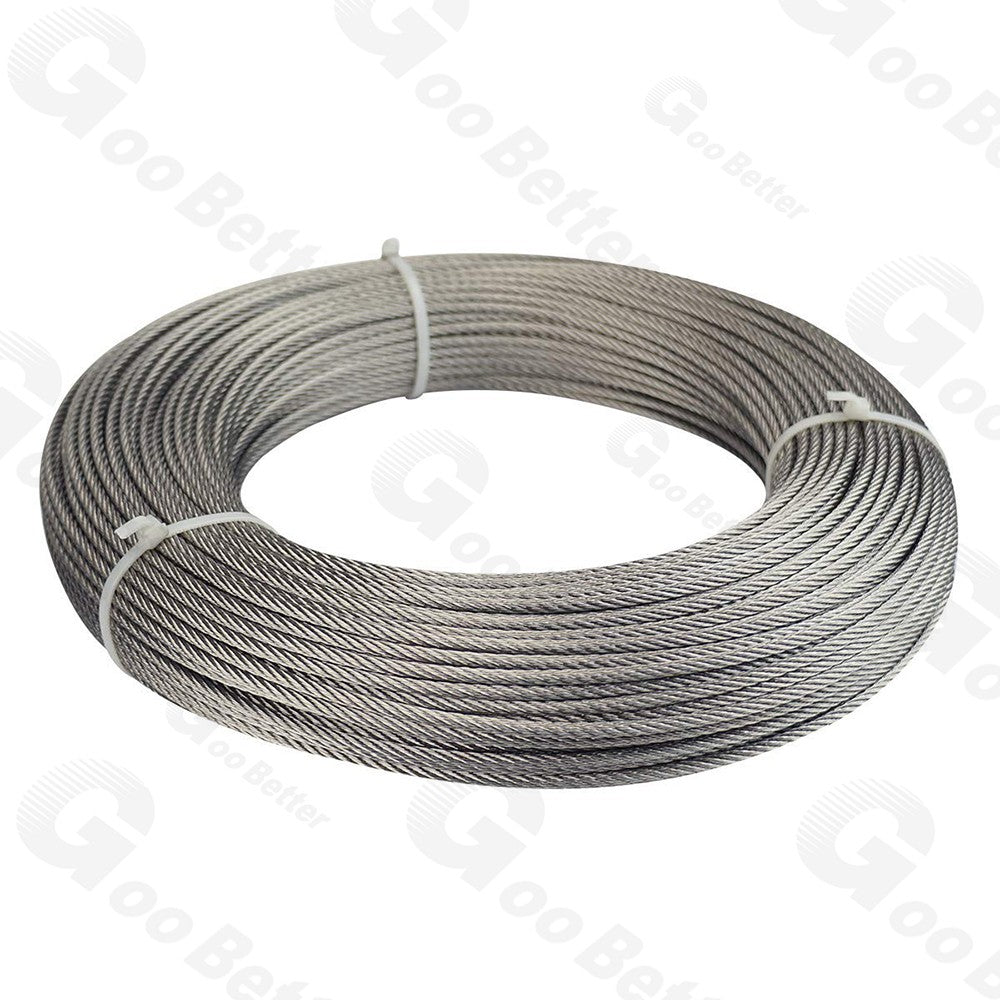
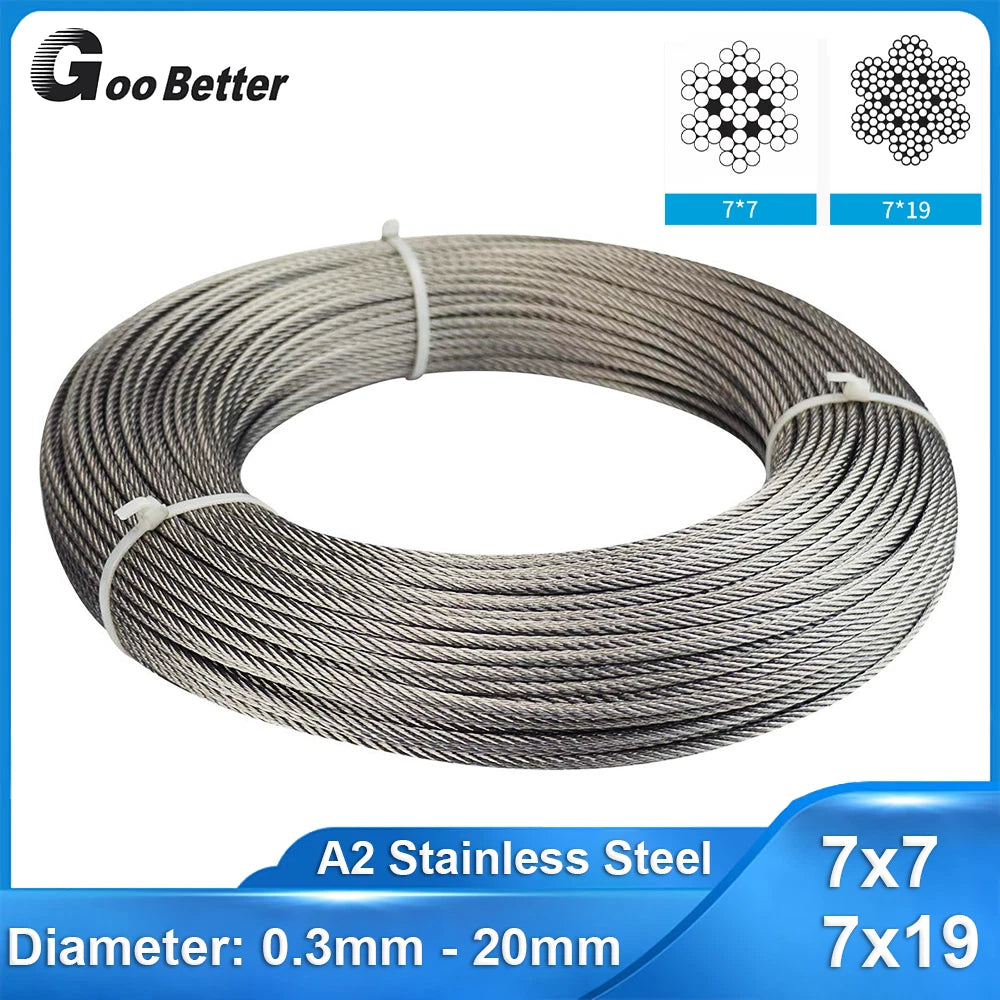
304 Stainless Steel Wire Rope Metal Cable Rigging 0.3mm 0.4mm 1mm 1.2mm - 20mm

No reviews

Price:
Sale price$2.27 USD
Stock:
In stock (500 units), ready to be shipped

Payment & Security

Ach Direct Debit Amazon American Express Apple Pay Bancontact Diners Club Discover Google Pay iDEAL Wero Mastercard PayPal Shop Pay USDC Visa

Your payment information is processed securely. We do not store credit card details nor have access to your credit card information.

Quantity Discount Promotion
🎯 BULK DISCOUNT: Buy More, Save More!
Buy 2 Items
5% OFF
Buy 4 Items
10% OFF
Buy 6 Items
15% OFF
Expert

DIY Expert Support

Get fitment advice & recommendations

Mon-Fri, 8:30AM-8PM
24-Hour Fast Ship
🚚
Arrives in 3-14 days
🌍
Global Reach
↩️
30-Day Returns
🌱 1 tree planted with every purchase

Description

304 Stainless Steel Wire Rope — Corrosion-Resistant Metal Cable for DIY, Rigging & Structural Use

When a project demands a cable that holds tension without corroding, rusting, or fatiguing under repeated load, standard galvanised wire simply falls short. Builders, riggers, deck installers, and DIY enthusiasts who need a reliable long-run solution turn to 304 stainless steel wire rope for its combination of tensile strength and environmental resistance.

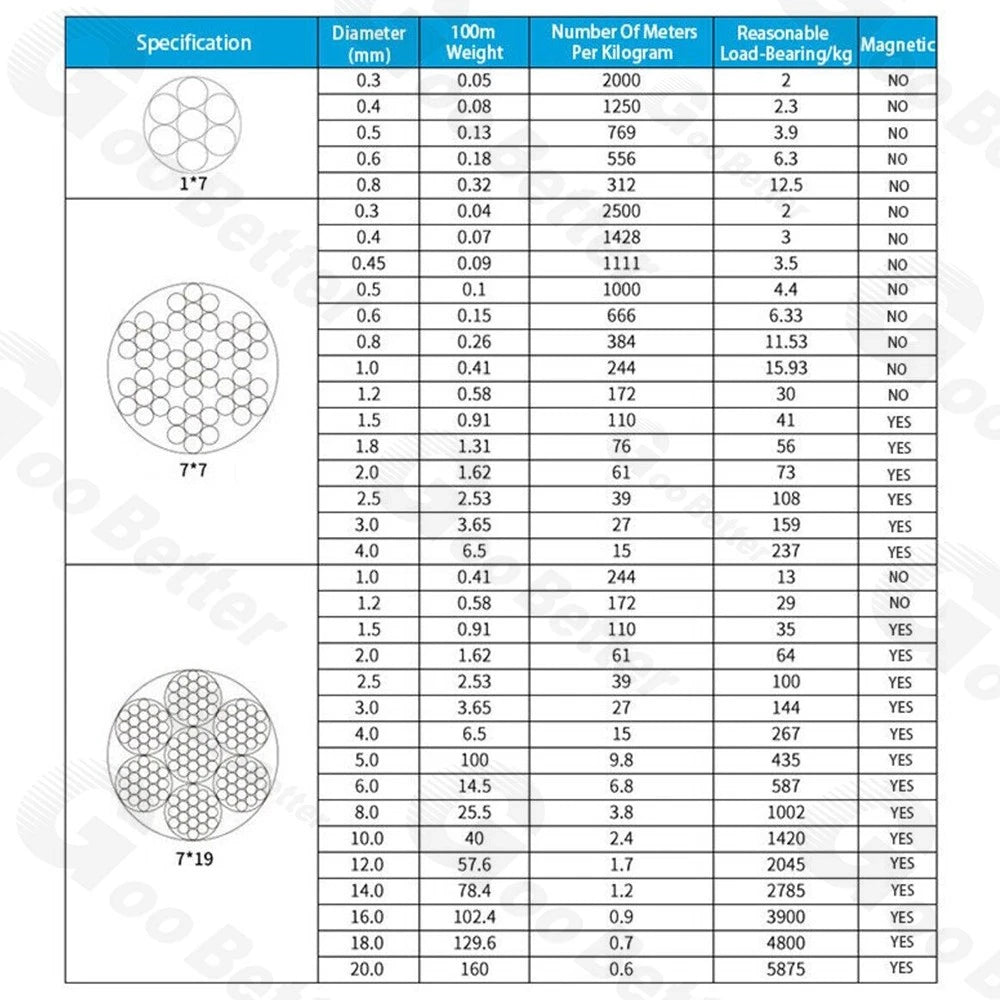
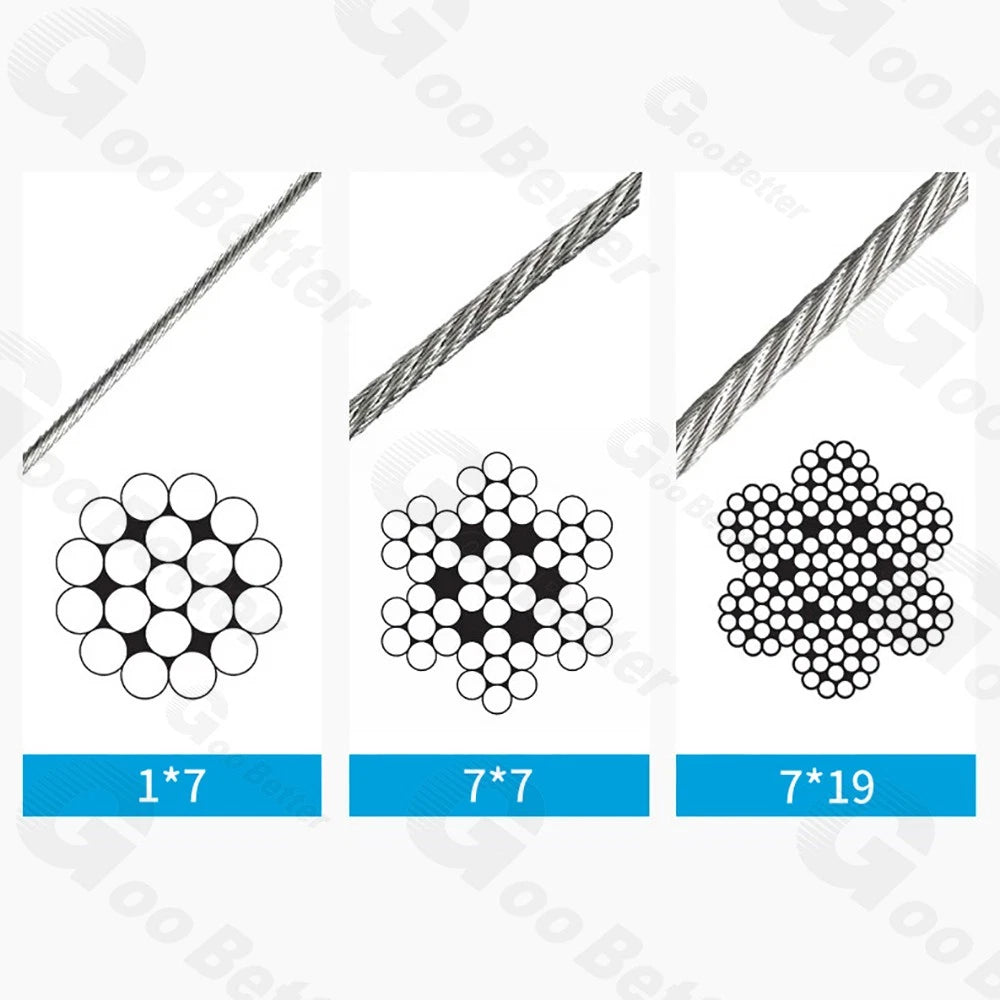
This 304 stainless steel wire rope is available in two strand constructions — 7×7 (stiffer, suited to fixed runs) and 7×19 (more flexible, suited to dynamic or curved applications) — with diameters ranging from 0.3 mm (approx. 1/64 in) up to 20 mm (approx. 25/32 in), and cut lengths from 1 m to 100 m. The silver-finish wire carries the characteristic bright appearance of 304-grade alloy.

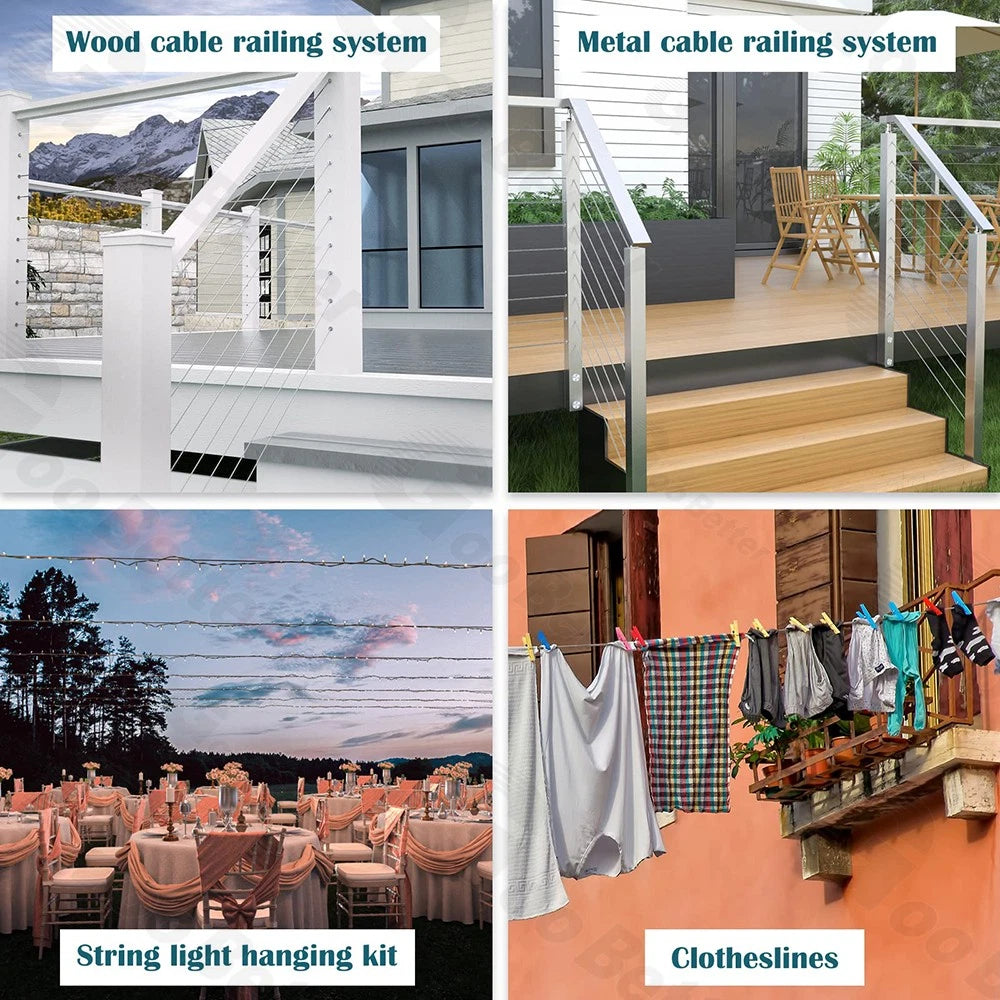
Typical applications include deck and balustrade wire railing systems, garden trellis tensioning, sailboat and marine rigging, cable management runs, greenhouse support lines, and light structural tie-back work. The 7×19 construction is particularly well suited to stainless steel wire rope for deck railing where the cable must bend around corner posts, while the 7×7 construction suits straight tensioned runs such as wire rope for pergola shade sail anchoring.

⚙️ Compatibility: Designed for use with standard swage fittings, wire rope clips, turnbuckles, and ferrule sleeves sized to match the selected diameter. Confirm fitting bore diameter before ordering.

✅ Key Features of These 304 Stainless Steel Wire Rope Cables

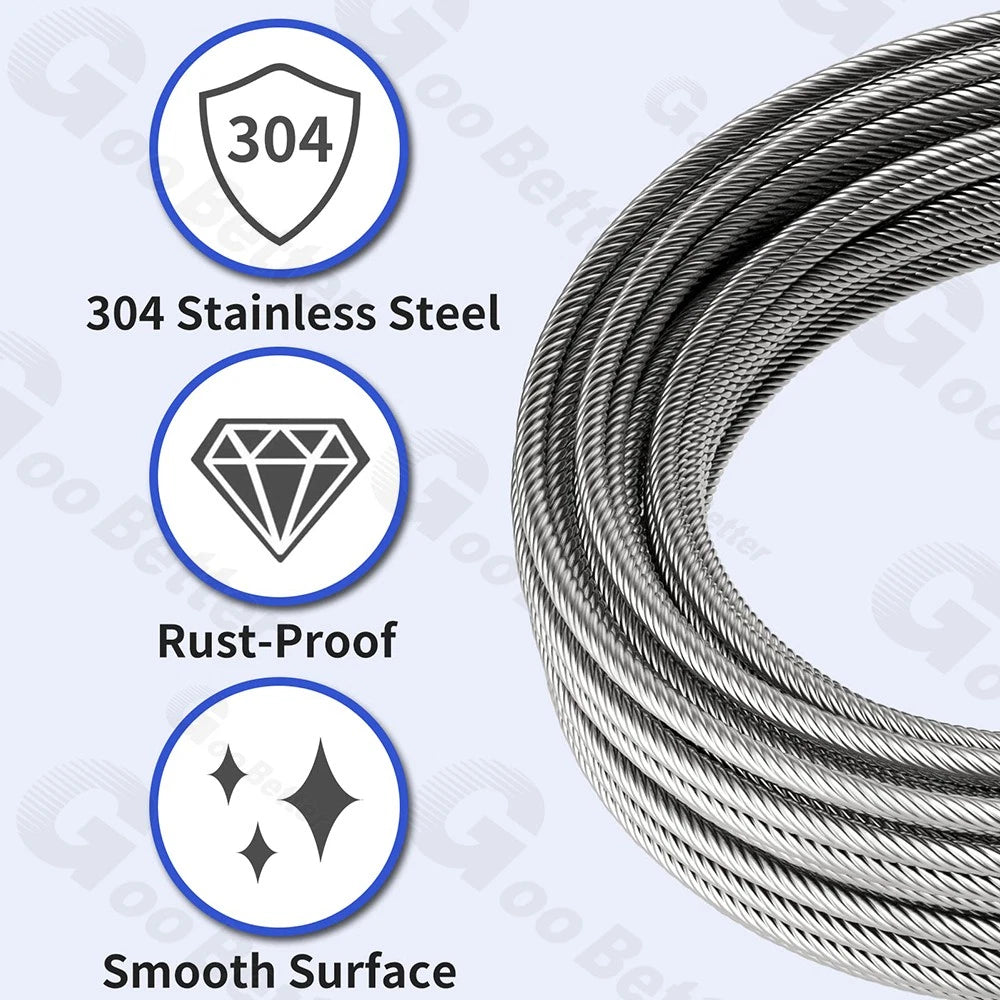
  • 🔩 304-Grade Alloy Construction — Contains 18% chromium and 8% nickel for resistance to oxidation, salt spray, and mild chemical exposure without surface coating.
  • 📐 Wide Diameter Range — Available from 0.3 mm to 20 mm, covering light craft wire through to structural rigging cable in a single product line.
  • 🔄 Two Strand Configurations — 7×7 construction for stiff, low-stretch fixed runs; 7×19 construction for flexible routing around bends and pulleys.
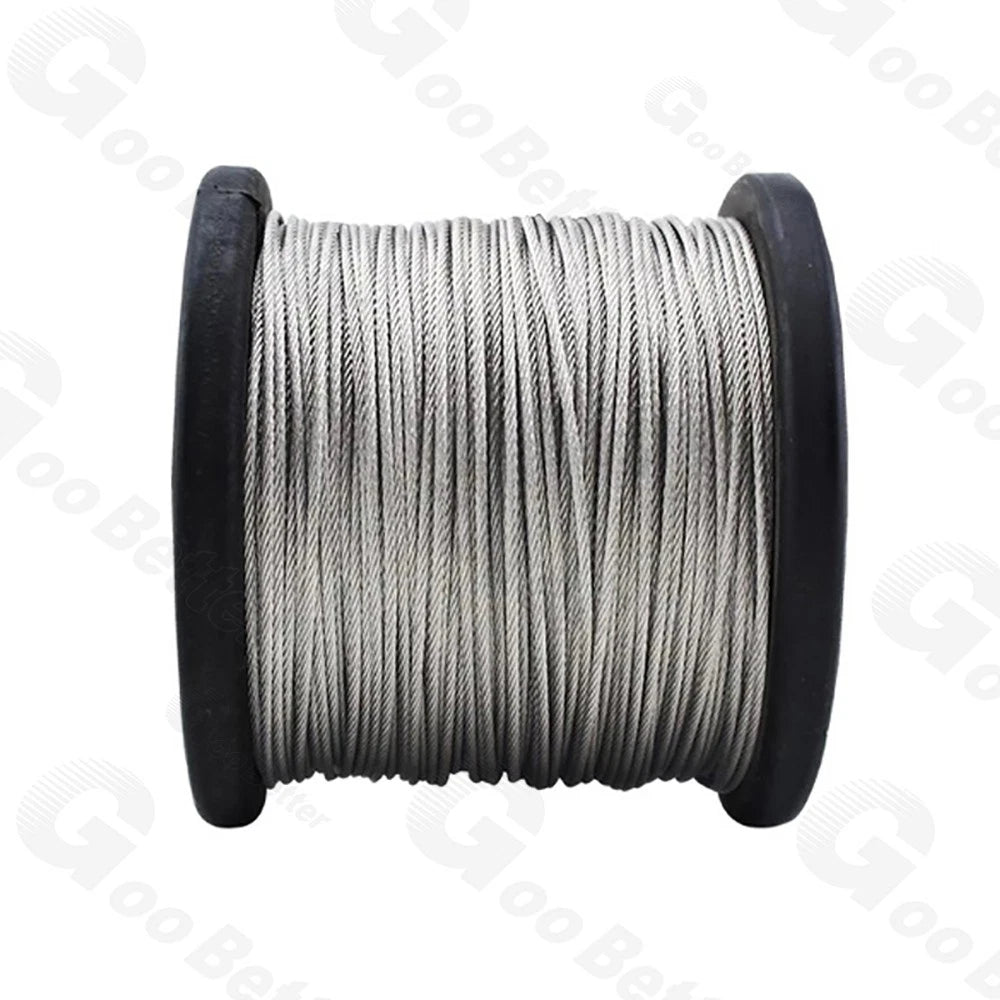
  • 📏 Cut-to-Length Options — Available in 1 m, 2 m, 5 m, 10 m, 15 m, 20 m, 25 m, 30 m, 50 m, and 100 m lengths to reduce offcut waste on your project.
  • 🌊 Suitable for Outdoor & Marine Environments — 304 stainless performs reliably in exposed outdoor settings including coastal gardens, boat rigging, and open pergola structures.
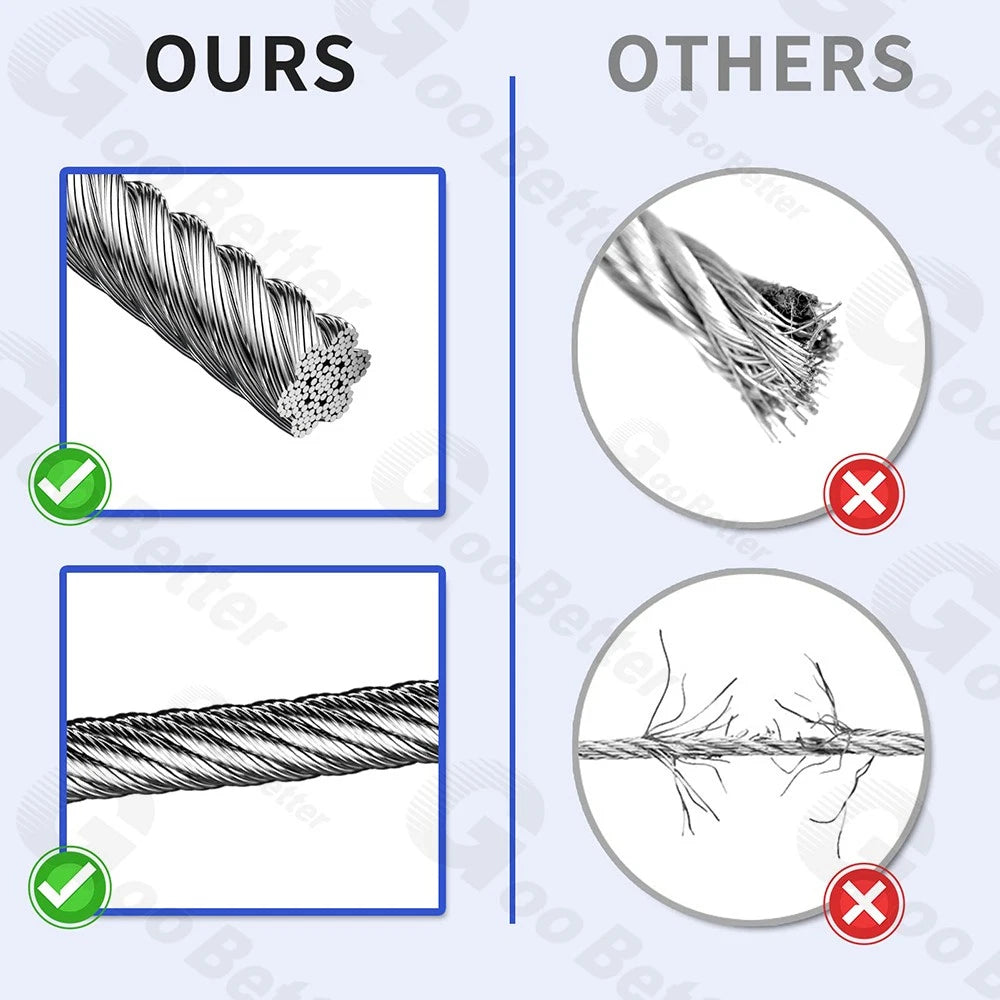
  • Consistent Lay and Diameter Tolerance — Uniform strand lay ensures even load distribution across the cable cross-section, reducing localised fatigue at termination points.

📐 Technical Specifications — Stainless Steel Wire Rope

Material 304 Stainless Steel (18/8 alloy)
Finish / Colour Bright silver (mill finish)
Strand Construction 7×7 or 7×19 (see variant options)
Diameter See variant options (0.3 mm – 20 mm)
Length See variant options (1 m – 100 m)
Breaking Load (approx.) See variant options — varies by diameter and construction
Minimum Bend Radius See variant options — typically 6–10× nominal diameter
Compatible Fittings Swage fittings, wire rope clips, ferrule sleeves, turnbuckles
Suitable Environments Outdoor, garden, marine, structural (non-load-bearing architectural)
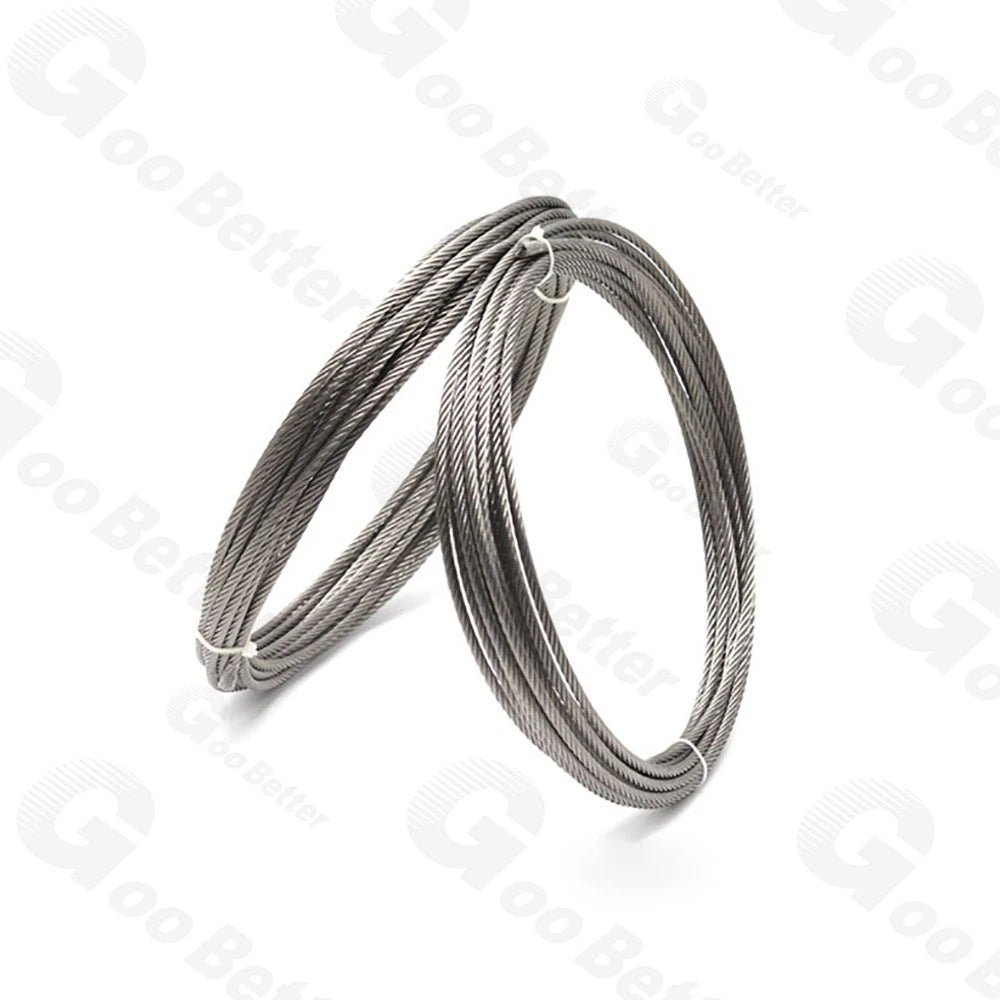
Packaging Cut length, supplied straight or coiled depending on length

❓ Frequently Asked Questions

What is the difference between 7×7 and 7×19 wire rope?

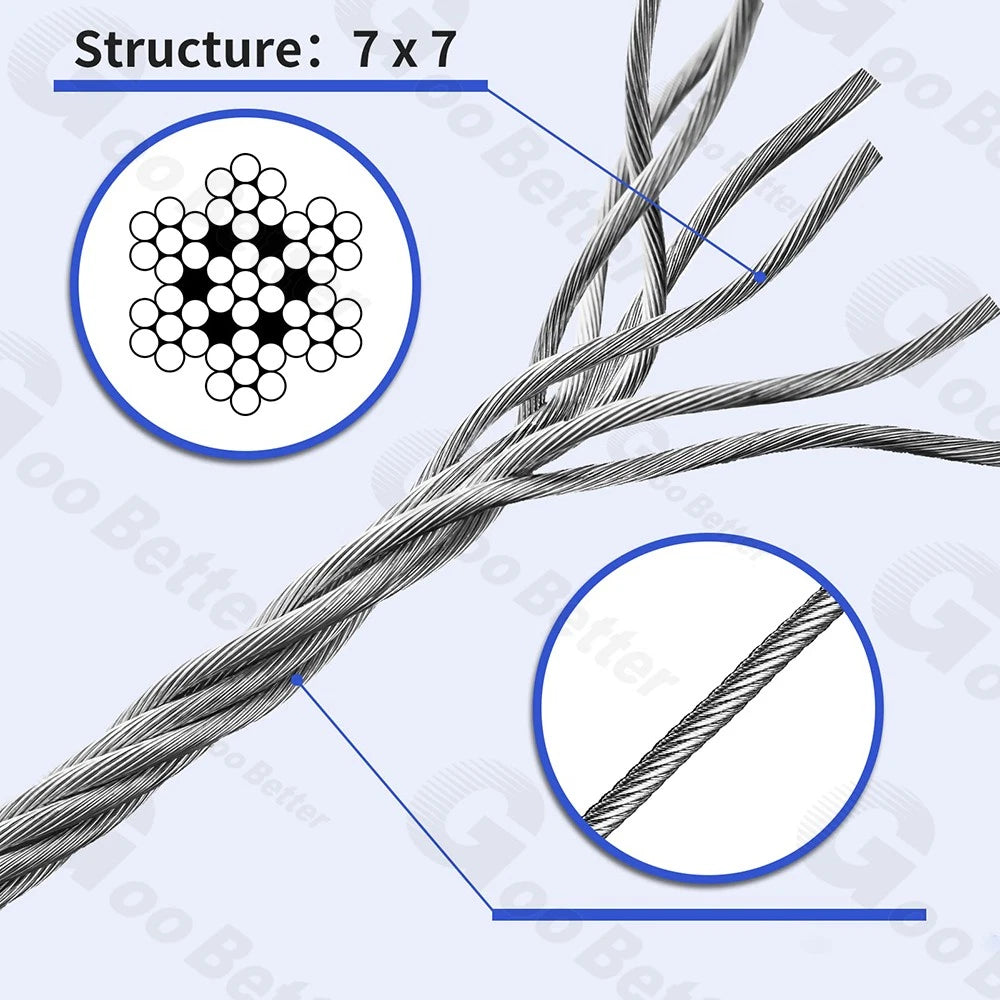
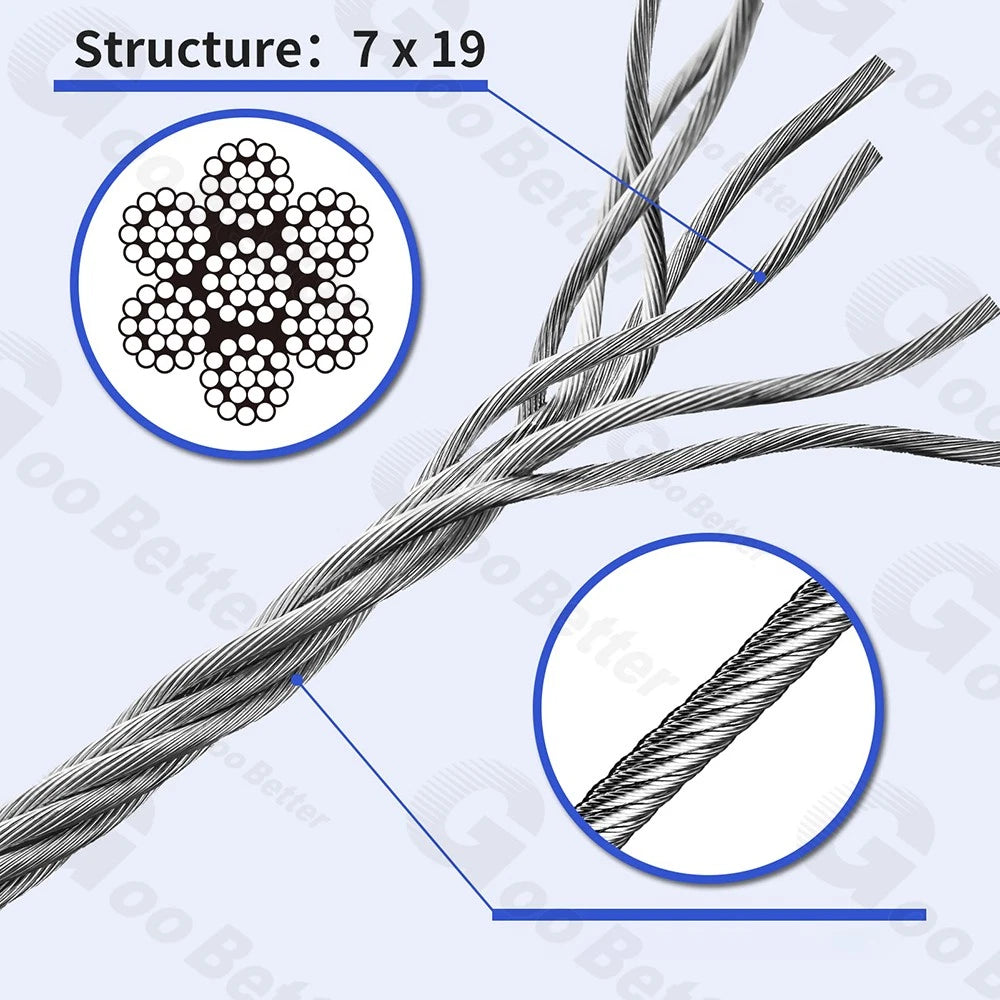
7×7 rope consists of 7 strands each made of 7 individual wires, giving a total of 49 wires. It is stiffer and holds its shape well, making it suited to straight tensioned runs such as balustrade infill cables or trellis lines. 7×19 rope has 7 strands of 19 wires each (133 wires total), which makes it significantly more flexible and better suited to applications where the cable must bend around sheaves, pulleys, or corner posts.

How do I choose the right diameter for my project?

Diameter selection depends on the load the cable must carry and the fittings you plan to use. For decorative balustrade or trellis work, 1.5 mm–3 mm is typical. For light rigging and sail control lines, 2 mm–5 mm is common. For structural tie-backs or heavier rigging, 6 mm and above is generally used. Always verify the working load limit for your specific diameter and construction before use, and match the cable diameter to your swage or ferrule fitting bore.

Is 304 stainless steel wire rope suitable for marine or coastal use?

304 stainless steel offers good corrosion resistance in most outdoor and light marine environments due to its chromium-nickel content. It performs well in freshwater, garden, and sheltered coastal settings. For highly aggressive saltwater immersion or offshore marine applications, 316-grade stainless is generally recommended as it contains molybdenum for enhanced chloride resistance. If your project is in a sheltered coastal garden or on a freshwater vessel, 304 is typically adequate.

What fittings are compatible with this wire rope?

This wire rope is compatible with standard swage fittings, wire rope clips (bulldog grips), aluminium or stainless ferrule sleeves, and turnbuckles — all sized to match the cable diameter you select. Always confirm the fitting's bore or jaw opening matches your chosen diameter before purchasing. For a secure termination, use a ferrule crimping tool rated for the ferrule size, or have swage fittings pressed by a rigging supplier.

Can I cut this wire rope to a custom length myself?

Yes. Stainless steel wire rope can be cut with angle grinder cutting discs, rotary tool cut-off wheels, or dedicated wire rope cutters. Before cutting, wrap the cut point tightly with electrical tape or bind with wire to prevent the strands from unravelling. After cutting, apply a small amount of clear epoxy or heat-shrink tubing to the cut end if the termination will not be immediately swaged or ferrule-crimped.

How do I tension wire rope for a deck railing or balustrade?

For deck railing applications, thread the cable through the post holes or swage eye fittings, then use a turnbuckle at one or both ends to apply tension. Tighten the turnbuckle until the cable deflects no more than approximately 25 mm (1 inch) under a firm lateral push at mid-span — this is a common code reference point for balustrade infill cables. Lock the turnbuckle with a jam nut or locking wire once the correct tension is achieved. Contact us to confirm if you need guidance on a specific installation.

What lengths are available and can I order a custom length?

Standard cut lengths available are 1 m, 2 m, 5 m, 10 m, 15 m, 20 m, 25 m, 30 m, 50 m, and 100 m. Select your required length from the variant options above. If you need a length not listed, please contact us before ordering and we will advise on availability.

🛒 Select your Diameter and Length above, then add to cart.

You may also like

Recently viewed