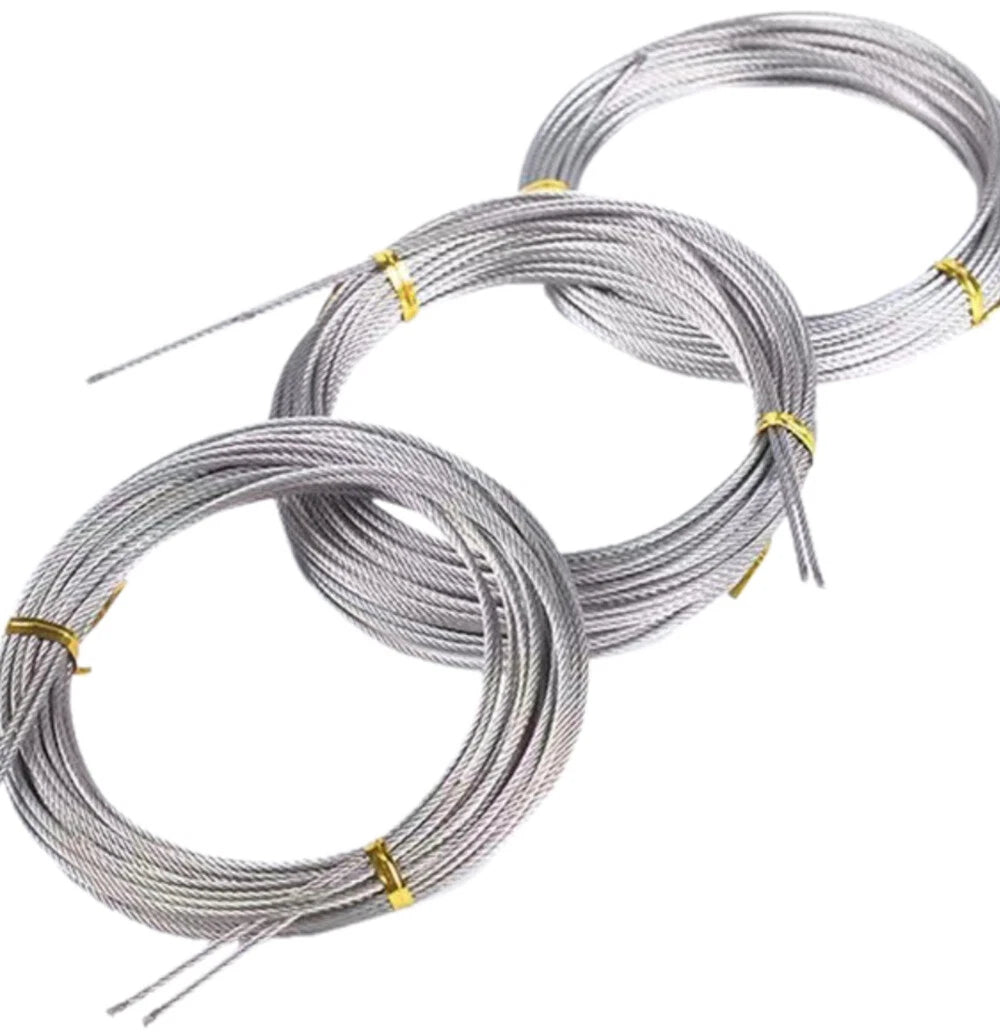
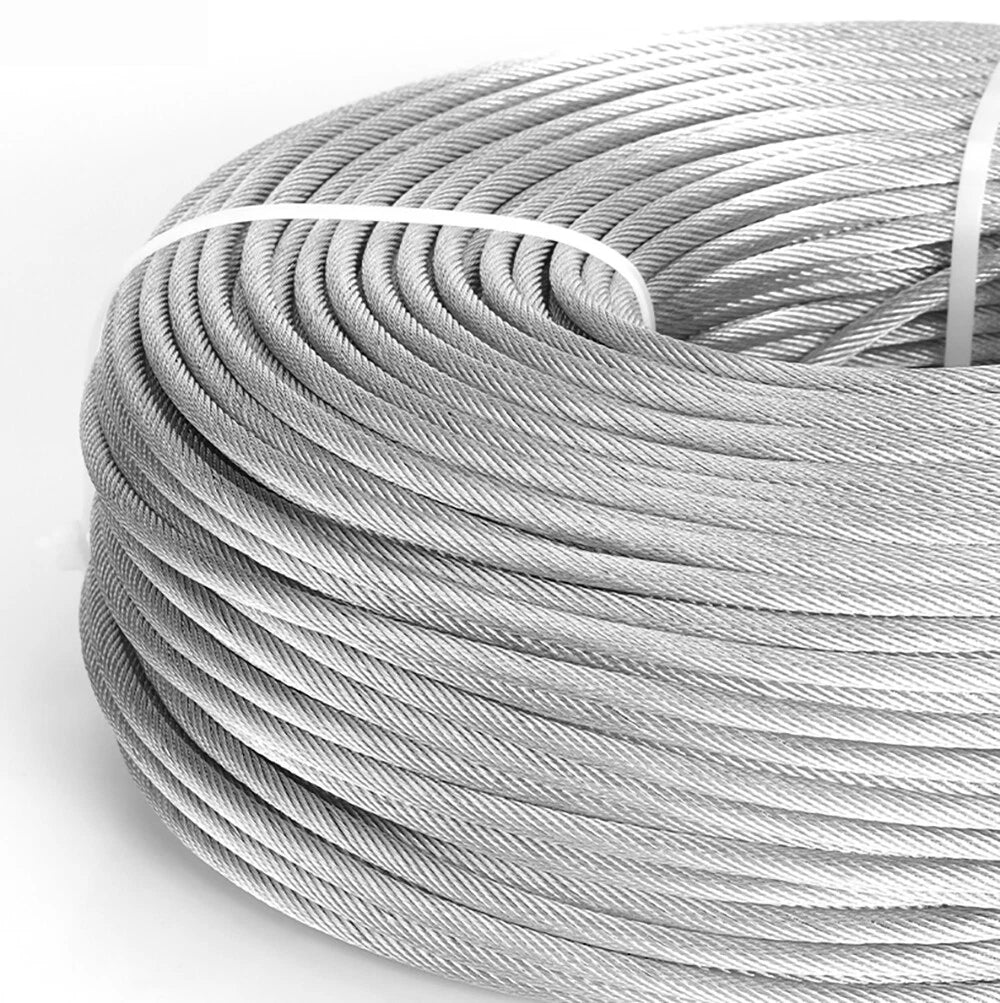
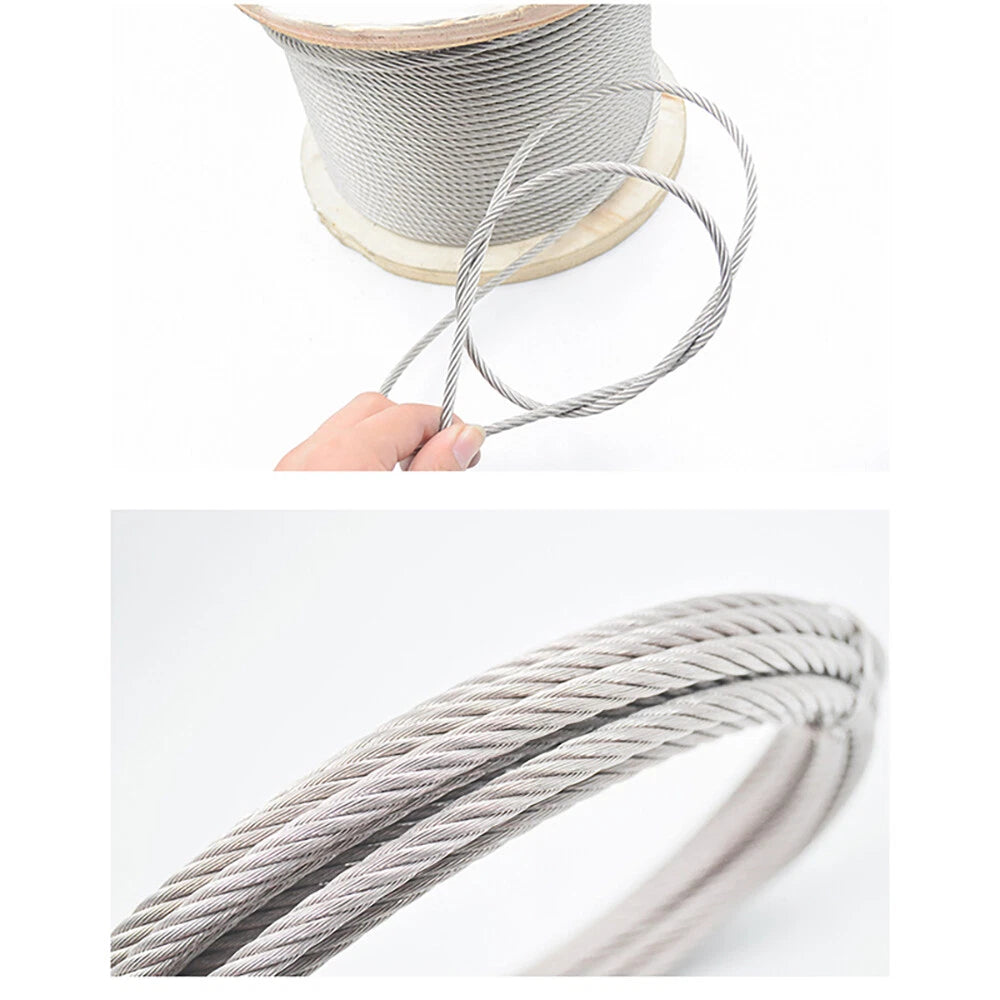
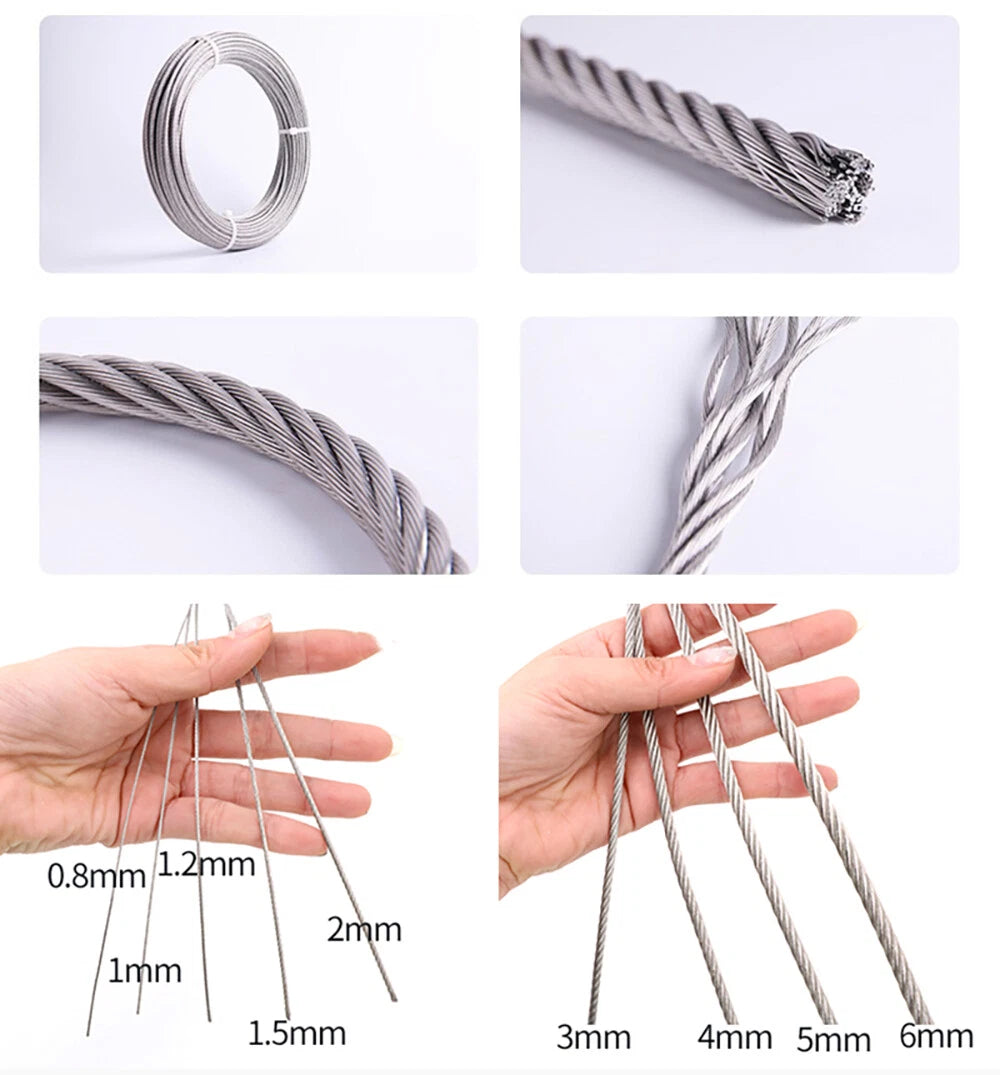
1mm 2mm 3mm 4mm To 12mm 316 Stainless Steel Steel Wire Rope Lifting Metal Cable

No reviews

Price:
Sale price$3.70 USD
Stock:
In stock (500 units), ready to be shipped

Payment & Security

Ach Direct Debit Amazon American Express Apple Pay Bancontact Diners Club Discover Google Pay iDEAL Wero Mastercard PayPal Shop Pay USDC Visa

Your payment information is processed securely. We do not store credit card details nor have access to your credit card information.

Quantity Discount Promotion
🎯 BULK DISCOUNT: Buy More, Save More!
Buy 2 Items
5% OFF
Buy 4 Items
10% OFF
Buy 6 Items
15% OFF
Expert

DIY Expert Support

Get fitment advice & recommendations

Mon-Fri, 8:30AM-8PM
24-Hour Fast Ship
🚚
Arrives in 3-14 days
🌍
Global Reach
↩️
30-Day Returns
🌱 1 tree planted with every purchase

Description

316 Stainless Steel Wire Rope — Corrosion-Resistant Lifting & Rigging Cable

When a project demands a cable that holds firm in salt spray, poolside humidity, or exposed outdoor conditions, standard mild-steel rope fails within months. Marine engineers, deck builders, balustrade installers, and workshop riggers who need long-term reliability turn to 316-grade stainless steel wire rope — a material that resists chloride-induced corrosion where lesser alloys pit and rust.

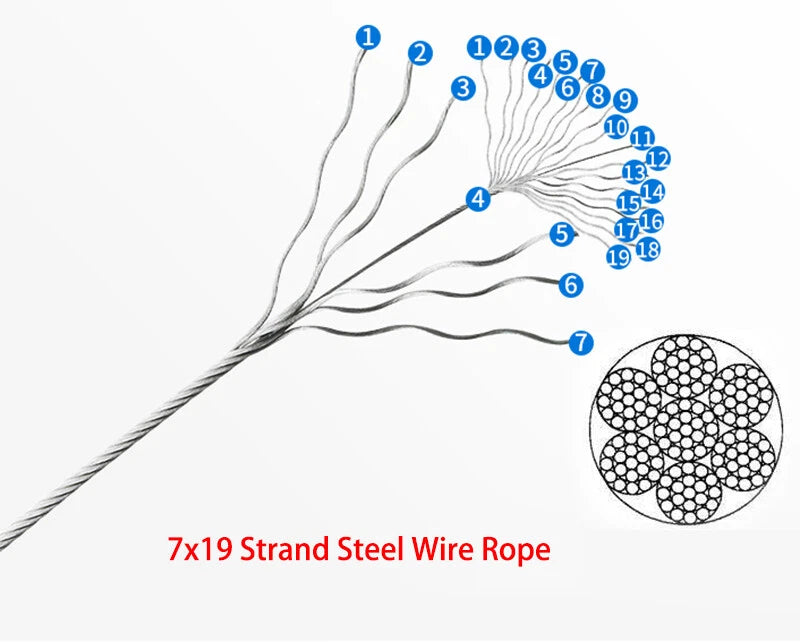
This 316 stainless steel wire rope is available in two strand constructions — 7×7 (stiffer, suited to static runs and tensioned balustrade wire) and 7×19 (more flexible, suited to running rigging, pulleys, and dynamic load applications). Diameters span 0.8 mm (approx. 1/32 in) through 12 mm (approx. 15/32 in), with cut lengths from 1 metre up to 500 metres, allowing you to order exactly what the job requires without waste.

Typical applications include stainless steel wire balustrade infill for decks and staircases, marine standing and running rigging, greenhouse and trellis tensioning systems, overhead cable management runs, and light-duty lifting slings in workshop environments. The silvery bare-wire finish integrates cleanly into architectural and industrial settings alike.

⚙️ Compatibility note: Verify your swage fittings, ferrules, and thimbles match the selected wire diameter before ordering. 7×7 construction is recommended for tensioned static runs; 7×19 is recommended where the cable passes over sheaves or pulleys.

✅ Key Features of These 316 Stainless Steel Wire Rope Cables

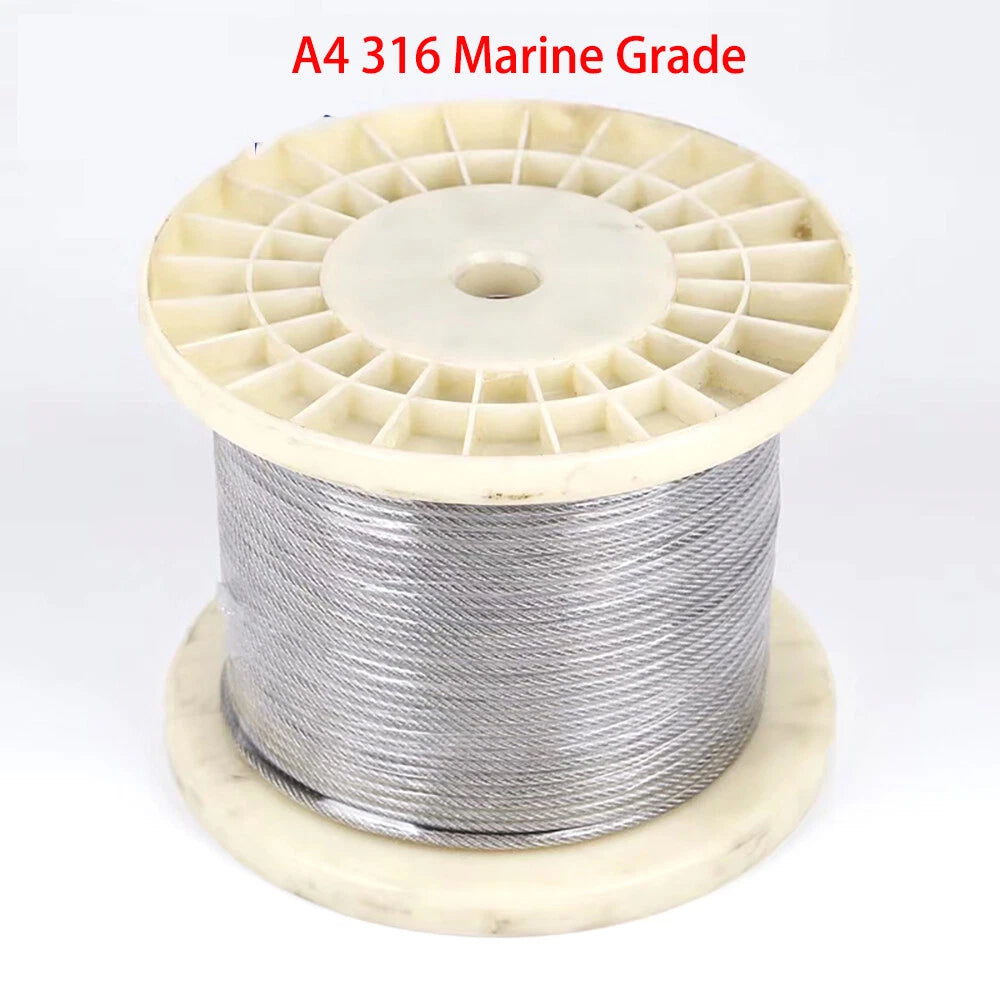
  • 🔩 Grade 316 stainless steel — contains molybdenum for enhanced resistance to chloride pitting, suitable for marine, coastal, and poolside environments where 304-grade wire corrodes prematurely.
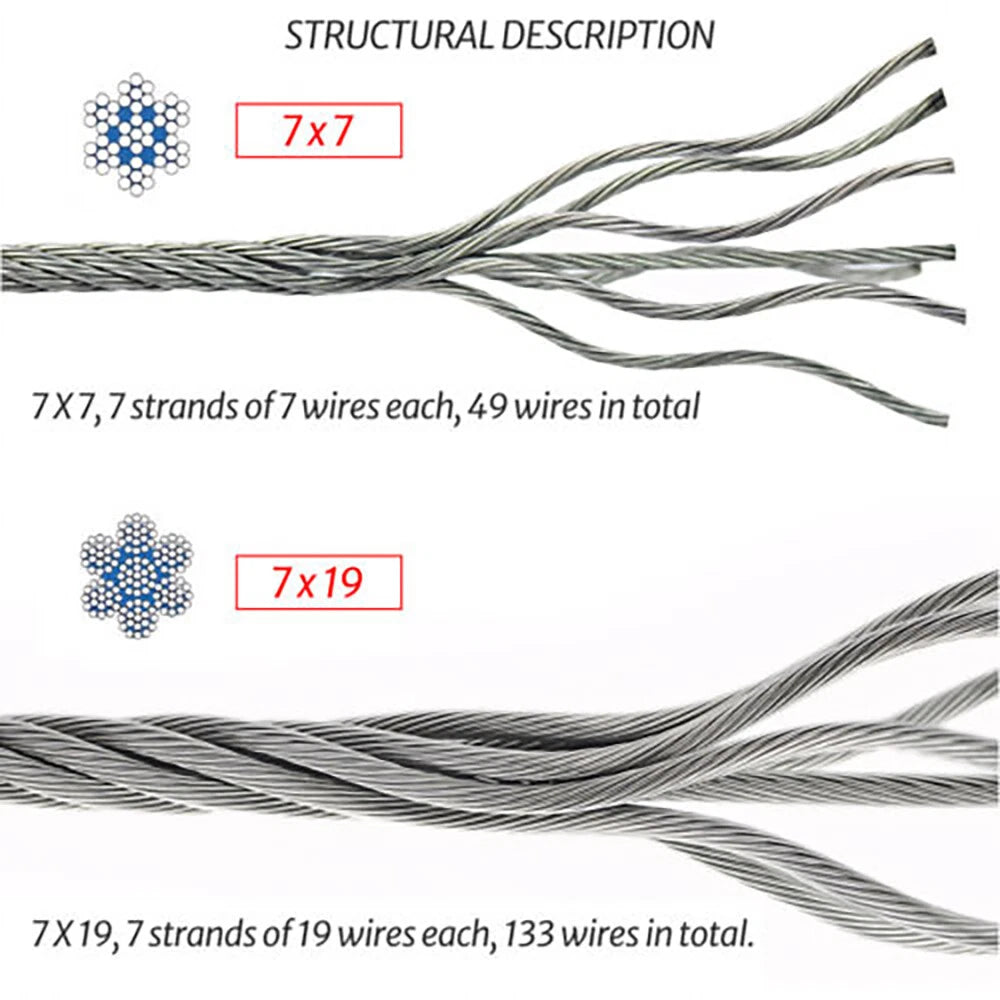
  • 🔀 Two strand constructions available — 7×7 (49 wires total) for stiffer, low-stretch static applications; 7×19 (133 wires total) for greater flexibility in dynamic or sheave-routed runs.
  • 📏 Wide diameter range: 0.8 mm – 12 mm — covers light-duty trellis tensioning at the fine end through structural balustrade and rigging cable at the heavy end, with intermediate sizes for workshop and architectural use.
  • 🎯 Cut-to-length ordering — available from 1 metre to 500 metres so you purchase only what the project requires, reducing offcut waste on both small repairs and large installations.
  • 🌊 Silvery bare-wire finish — uncoated surface allows direct inspection of wire condition, accepts swage fittings and ferrules without stripping a coating, and presents a clean architectural appearance in balustrade and tensioned-wire applications.
  • 🏗️ Broad application range — suited to balustrade infill, marine rigging, greenhouse tensioning, overhead cable trays, and light workshop lifting — select the diameter and construction that matches your load and flexibility requirements.

📐 Technical Specifications — 316 Stainless Steel Wire Rope

Material 316 Stainless Steel
Strand Construction 7×7 or 7×19 (see variant options)
Diameter Range 0.8 mm – 12 mm (approx. 1/32 in – 15/32 in)
Available Lengths 1 m, 2 m, 5 m, 10 m, 20 m, 30 m, 50 m, 100 m, 200 m, 500 m
Finish / Colour Bare wire, silvery
Flexibility 7×7: low-flex static; 7×19: high-flex dynamic
Corrosion Resistance Chloride-resistant (molybdenum-alloyed 316 grade)
Typical Applications Balustrade infill, marine rigging, trellis tensioning, workshop lifting
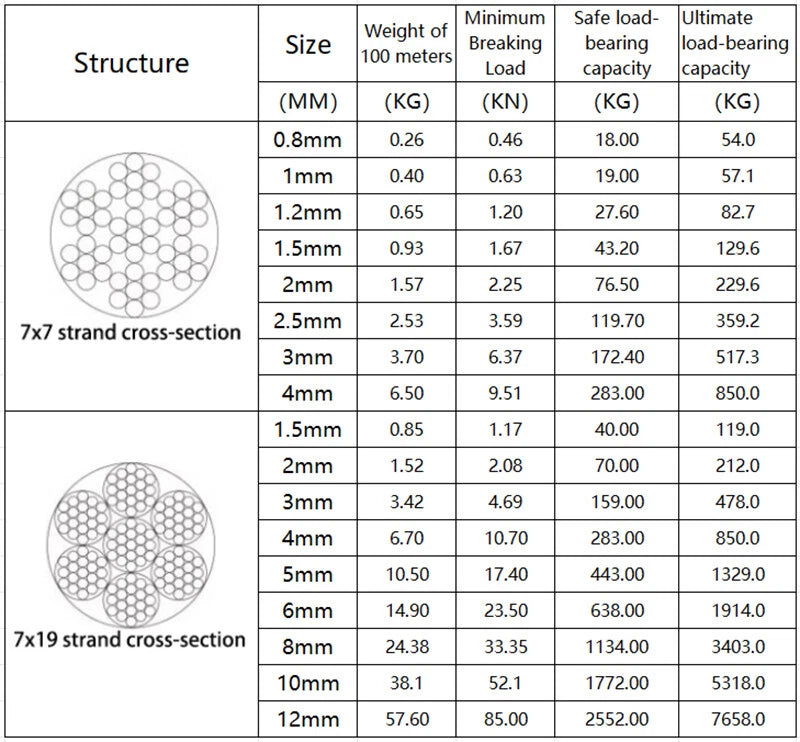
Breaking Load (approx.) See variant options — varies by diameter and construction
End Termination Compatibility Swage fittings, ferrules, thimbles — match to selected diameter

❓ Frequently Asked Questions

What is the difference between 7×7 and 7×19 wire rope construction?

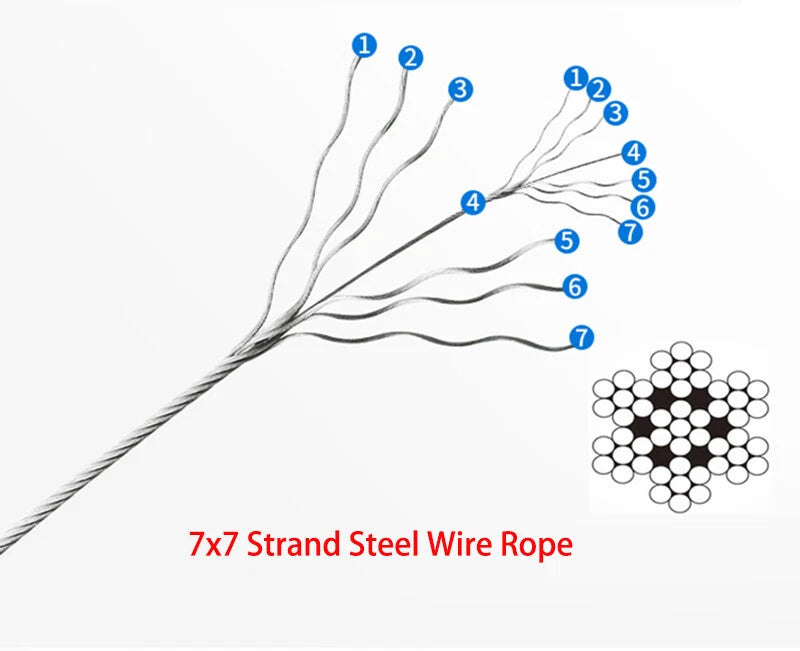
7×7 rope consists of 7 strands each containing 7 individual wires (49 wires total). It is stiffer and has lower stretch, making it well suited to static tensioned applications such as balustrade infill, trellis wires, and fixed rigging where the cable does not bend around a sheave. 7×19 rope consists of 7 strands each containing 19 wires (133 wires total). The greater number of finer wires makes it significantly more flexible, which is required when the cable must pass over a pulley, through a block, or be coiled repeatedly in running rigging and dynamic load applications.

Why choose 316 stainless steel over 304 stainless steel for wire rope?

316 stainless steel contains approximately 2–3% molybdenum, which 304 grade lacks. Molybdenum significantly improves resistance to chloride-induced pitting corrosion — the mechanism that causes rust spotting in coastal, marine, and poolside environments. For indoor or low-humidity applications away from salt exposure, 304 may be adequate. For any outdoor, marine, or poolside installation, 316 is the appropriate specification to ensure long service life without surface corrosion.

How do I select the correct wire rope diameter for my balustrade or deck project?

For residential timber or steel-framed balustrade infill, 3.0 mm or 4.0 mm diameter 7×7 wire rope is the most common specification, providing the required tensile strength while remaining visually unobtrusive. For heavier structural or commercial applications, 5.0 mm or 6.0 mm may be specified. Always consult your local building code or structural engineer for load-rated specifications, as requirements vary by jurisdiction and post spacing. For trellis and garden tensioning, 1.0 mm–2.0 mm is typically sufficient.

What end fittings are compatible with this wire rope?

This wire rope accepts standard swage fittings (jaw, eye, stud, and fork terminals), ferrule-and-stop systems, and thimbles for eye splices. The critical requirement is that the fitting bore matches the wire rope diameter you select — for example, a 3.0 mm swage terminal must be used with 3.0 mm wire. Do not mix diameters. For tensioned balustrade systems, threaded jaw-to-jaw or jaw-to-eye assemblies with a turnbuckle are the most common termination method.

Can this wire rope be used for lifting applications?

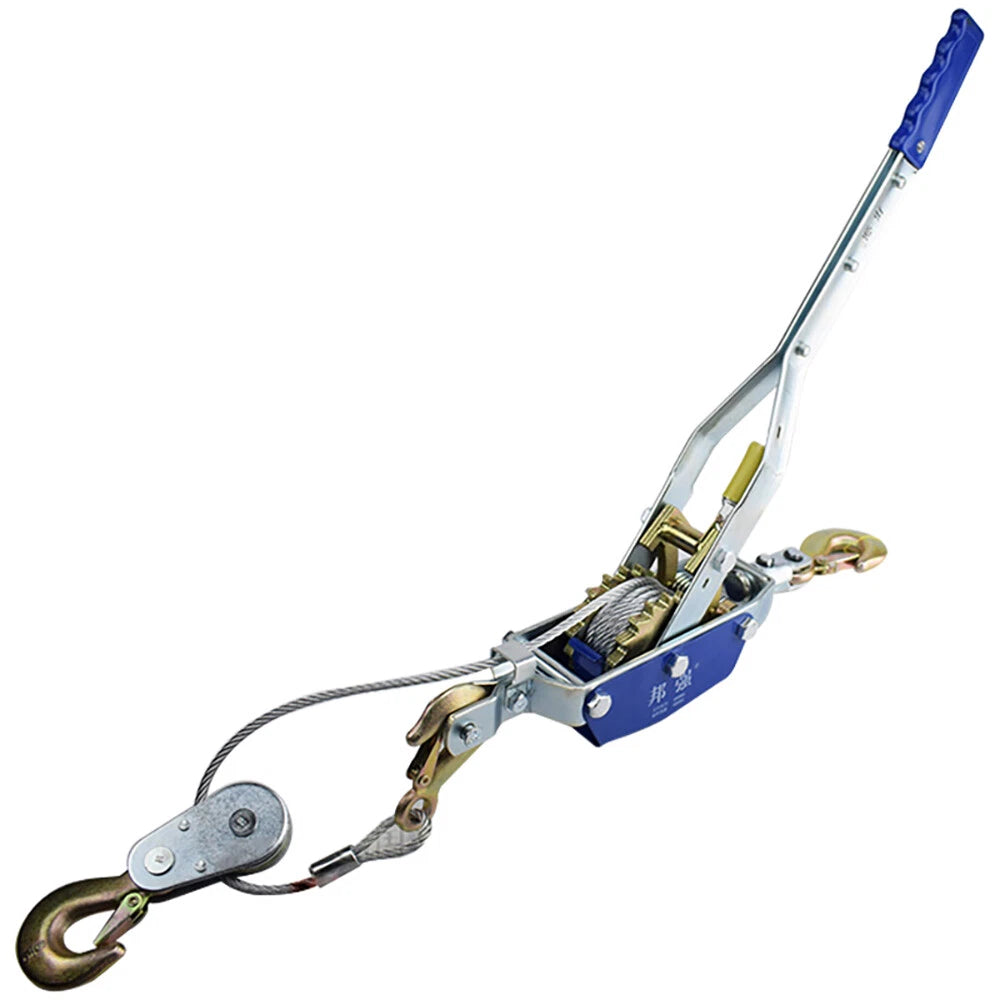
This wire rope is suitable for light-duty workshop lifting and rigging where the working load limit (WLL) is calculated from the wire's minimum breaking load with an appropriate safety factor (typically 5:1 or 6:1 for lifting). The breaking load varies by diameter and construction — refer to the variant specifications or contact us to confirm. For certified lifting slings or safety-critical overhead lifting in commercial or industrial environments, a certified and tested sling assembly with documented WLL is required by regulation. This product is sold as raw wire rope and is not a certified lifting sling.

How much wire rope do I need for a balustrade run, and which length should I order?

Measure the total horizontal run of each wire, then multiply by the number of wire lines required (typically 8–12 lines per panel at 100 mm spacing for a 1000 mm high balustrade). Add approximately 300–400 mm per wire for termination tails at each end. Order the next available length above your calculated total to avoid joins. For example, a 5-metre panel with 10 wire lines requires approximately 10 × (5 m + 0.6 m) = 56 m of wire — a 100 m coil would cover this run with margin for re-tensioning or replacement.

Does the wire rope require any maintenance after installation?

316 stainless steel wire rope requires minimal maintenance in most environments. In marine or coastal installations, periodic rinsing with fresh water to remove salt deposits is recommended to maintain appearance and prevent surface staining. Inspect termination points annually for signs of fraying, kinking, or corrosion at the fitting interface, as dissimilar metal contact (e.g., with mild steel fittings) can accelerate localised corrosion. Avoid contact with chlorine-rich pool chemicals in concentrated form. No lubrication is required for static balustrade or trellis applications.

🛒 Select your Structure, Size, and Length above, then add to cart.

You may also like

Recently viewed