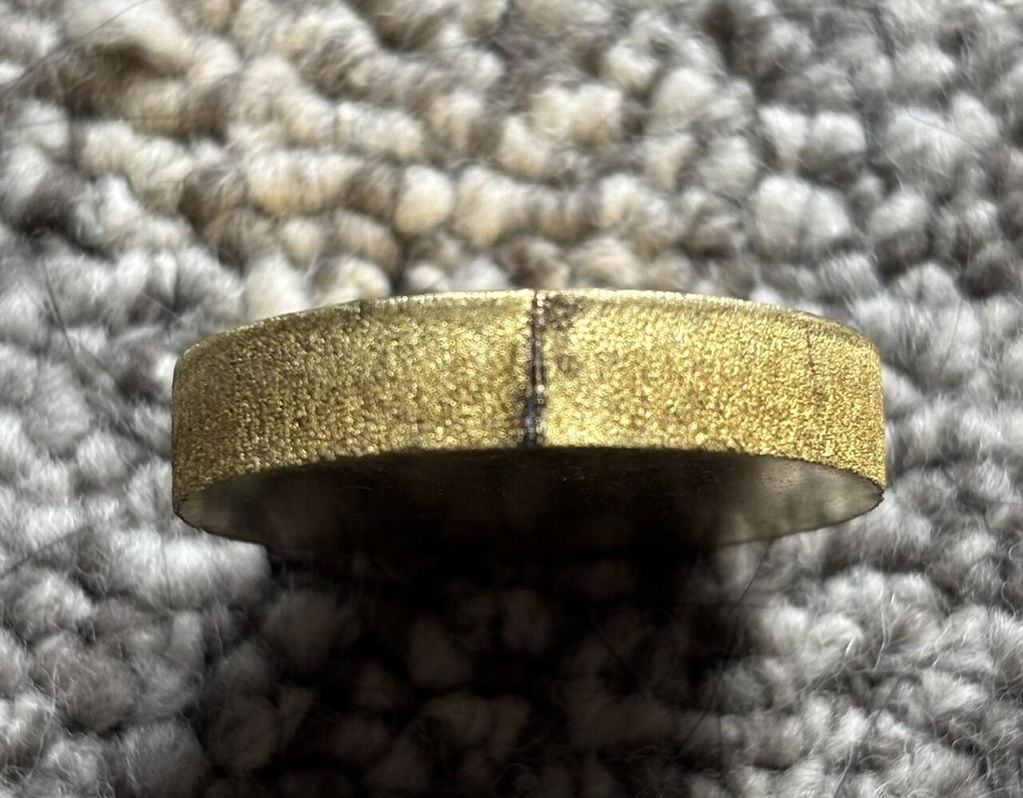
The chain is fine...but I ordered the wrong size. Nine links of the chain I ordered equals six of the size I wanted. My error...
How can I straighten out the springs? I can't use them coil uo as is.
Your payment information is processed securely. We do not store credit card details nor have access to your credit card information.
Get fitment advice & recommendations
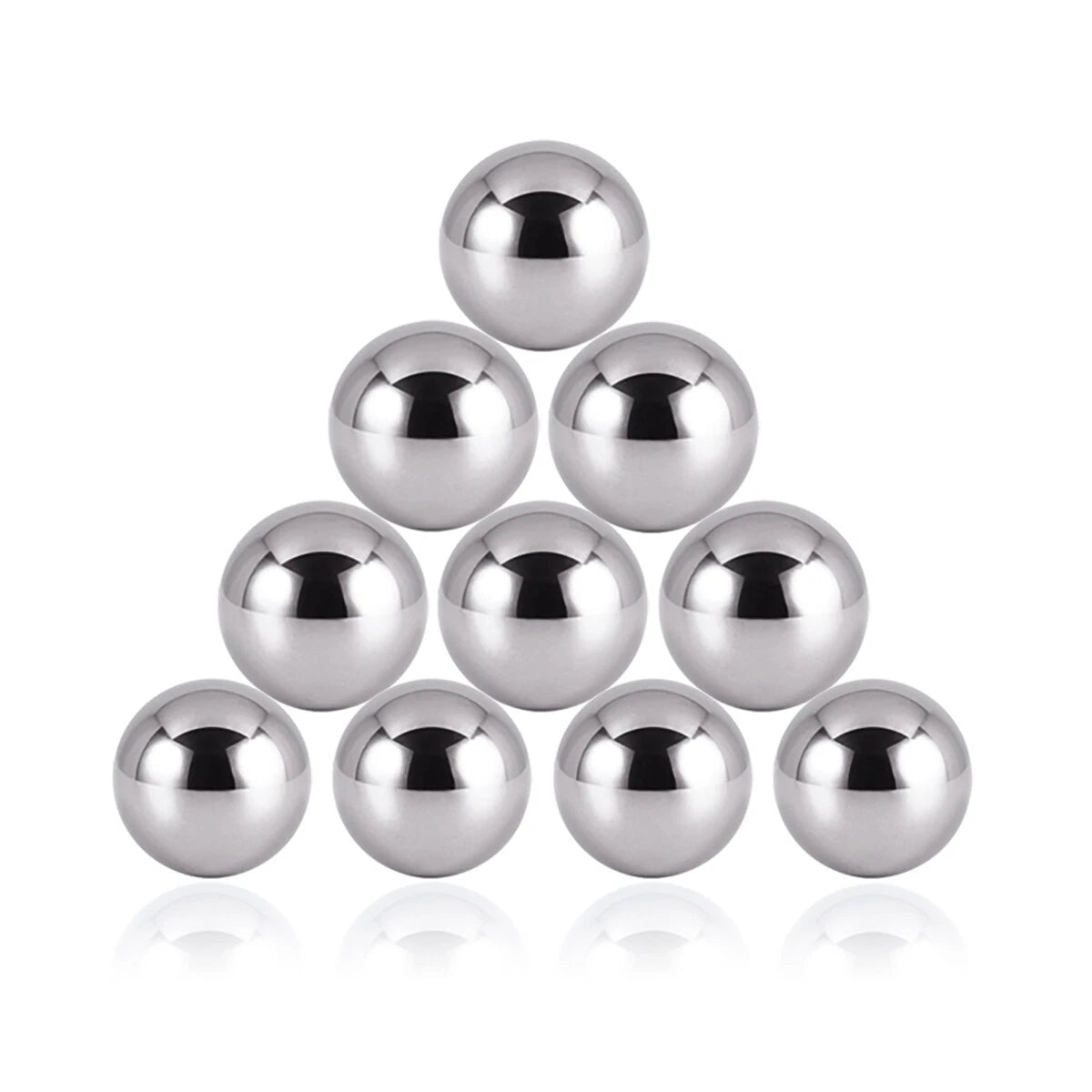
When a bearing failure means downtime, rework, or a compromised assembly, the grade of your rolling element matters. Engineers, machinists, and serious DIYers who need 440C stainless steel G10 ball bearings in exact diameters — without ordering a full factory run — often find themselves stuck between industrial minimums and hobby-grade substitutes. These bearings close that gap.
Each ball is manufactured from 440C martensitic stainless steel and finished to ABMA Grade 10 (G10) tolerances. Diameters span 1 mm (0.039 in) through 19.05 mm (0.750 in / 3/4"), covering 37 distinct sizes including both metric and fractional inch standards. Quantities range from single pieces up to 10,000 per order, making them equally suited to prototype builds and production replenishment.
Typical use cases include replacement rolling elements in miniature and standard radial bearings, load-distributing media in ball-screw and linear-rail assemblies, valve seats in fluid-control systems, and precision spacers in optical or instrument fixtures. The corrosion resistance of 440C also makes these a reliable choice for food-processing equipment, marine hardware, and medical device components where stainless is specified.
| Material | 440C Martensitic Stainless Steel |
|---|---|
| Precision Grade | ABMA G10 (Grade 10) |
| Diameter Range | 1 mm – 19.05 mm (0.039 in – 0.750 in) |
| Available Diameters | 37 sizes — metric and fractional inch (see variant options) |
| Diameter Tolerance | ±0.25 µm (±0.00001 in) |
| Sphericity | 0.25 µm max deviation |
| Surface Finish (Ra) | Typically 0.025 µm or better |
| Hardness | 58–62 HRC |
| Corrosion Resistance | Passive chromium-oxide layer; suitable for wet and mildly corrosive environments |
| Quantity Options | 1, 2, 5, 10, 20, 50, 100, 200, 500, 1,000, 2,000, 5,000, 10,000 pcs (availability varies by diameter) |
| Applicable Standards | ABMA Std 10 / ISO 3290 Grade 10 |
| Typical Applications | Radial bearings, ball screws, linear rails, valve seats, instrument fixtures, food-processing equipment |
The grade number refers to the maximum allowable deviation from a perfect sphere, measured in units of 0.000001 inch (25.4 nm). A G10 ball has a sphericity deviation of no more than 10 × 0.000001 in = 0.25 µm. G25 allows up to 0.625 µm and G100 up to 2.5 µm. Lower grade numbers mean tighter tolerances, quieter operation, and longer fatigue life in precision assemblies. G10 is the appropriate choice for instrument bearings, ball screws, and any application where dimensional consistency directly affects accuracy or load distribution.
Chrome steel (52100) offers slightly higher hardness and fatigue life in dry, clean environments, but corrodes readily when exposed to moisture, humidity, or mild chemicals. 440C stainless steel forms a passive chromium-oxide layer that resists rust without additional coatings. If your application involves water, condensation, food contact, salt air, or periodic cleaning with aqueous solutions, 440C is the more durable long-term choice. For purely dry, indoor, high-load applications, 52100 may be preferred; for everything else, 440C is the practical standard.
Measure the existing ball diameter with a micrometer or check the bearing manufacturer's datasheet — the ball diameter is typically listed in the bearing's internal geometry specifications. Match the measured diameter to the closest available size in this listing. For fractional-inch bearings (common in North American equipment), use the inch equivalents listed in parentheses (e.g., 6.35 mm = 1/4"). If you are replacing balls in a precision assembly, always match the grade as well as the diameter; substituting a lower-grade ball into a G10 assembly will reduce performance and service life.
440C stainless steel is widely used in food-processing machinery and medical devices because of its corrosion resistance and ability to withstand cleaning agents. However, suitability depends on your specific regulatory requirements. 440C is not inherently FDA-certified as a material — certification depends on the finished assembly and its intended use. For applications requiring documented material traceability or specific certifications (e.g., FDA, ISO 13485), contact us to confirm availability of material certifications before ordering.
Yes, provided you select the correct diameter and grade. G10 440C balls are dimensionally interchangeable with G10 chrome-steel balls of the same nominal diameter. The housing, retainer, and raceway do not need modification. When replacing worn balls in a bearing, it is best practice to replace the full complement of balls rather than individual pieces, as mixing worn and new balls creates uneven load distribution and accelerates wear on the new elements.
For a single bearing repair, count the number of balls in the bearing complement (typically 6–15 for small radial bearings) and order that quantity plus a few spares. For production use, calculate your monthly consumption per assembly, multiply by your desired safety stock (typically 1–3 months), and select the quantity tier that minimizes per-unit cost. Larger quantity tiers offer progressively lower per-piece pricing — the 1,000-piece tier typically reduces per-ball cost by 60–80% compared to the 10-piece tier for the same diameter.
Standard orders ship without a material certificate or inspection report. If your application requires documented material traceability (mill certificate, chemical composition report, or dimensional inspection data), please contact us before placing your order to confirm availability and any associated lead time or cost for documentation.