The chain is fine...but I ordered the wrong size. Nine links of the chain I ordered equals six of the size I wanted. My error...
How can I straighten out the springs? I can't use them coil uo as is.
Your payment information is processed securely. We do not store credit card details nor have access to your credit card information.
Get fitment advice & recommendations
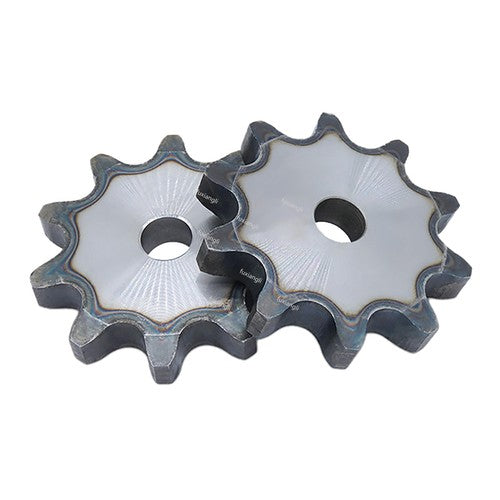
When a worn or mismatched sprocket is costing you downtime on a conveyor line, power transmission rig, or custom drivetrain build, finding the exact tooth count in a reliable ANSI #60 flat sprocket is rarely straightforward. This series is designed for engineers, fabricators, and serious DIYers who need a drop-in replacement or a purpose-built drive component without compromising on dimensional accuracy.
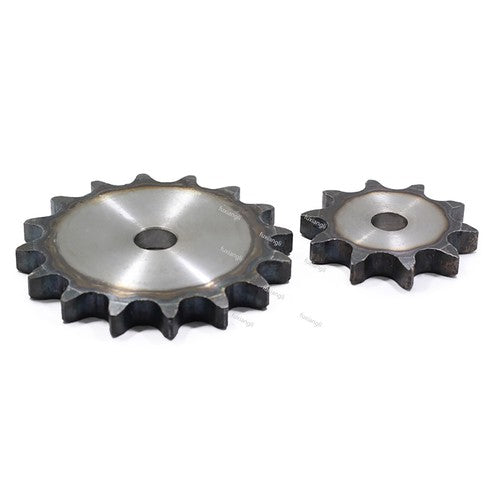
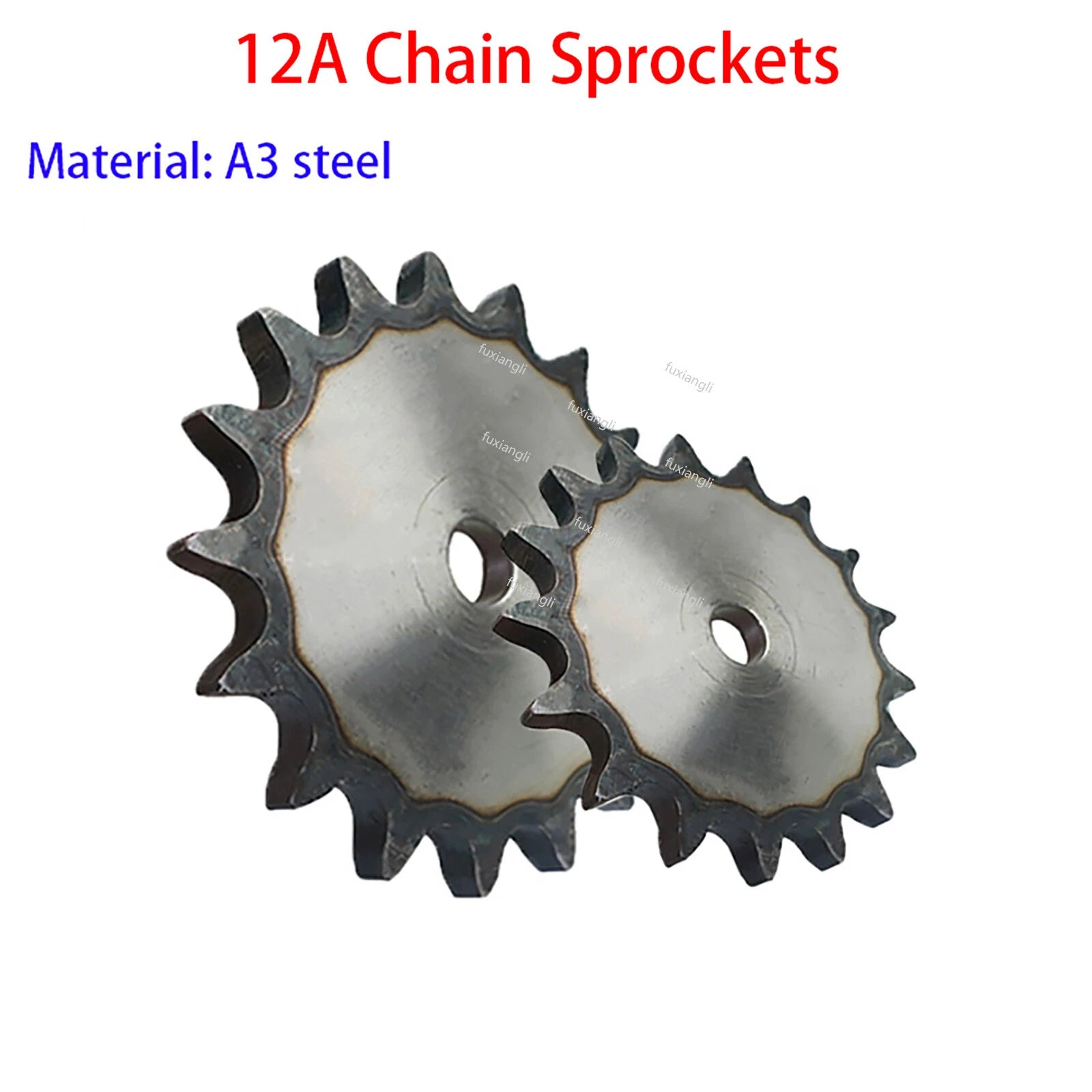
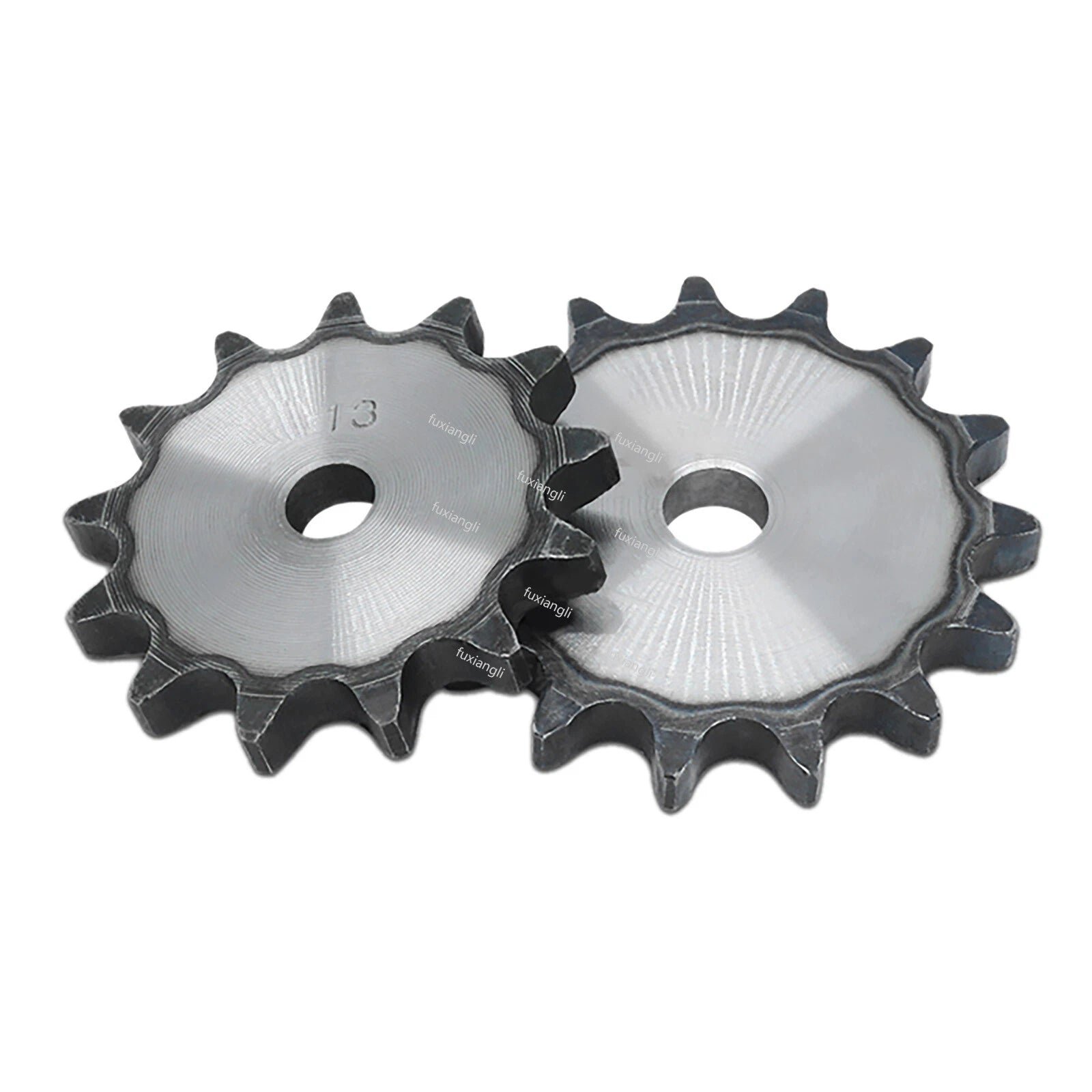
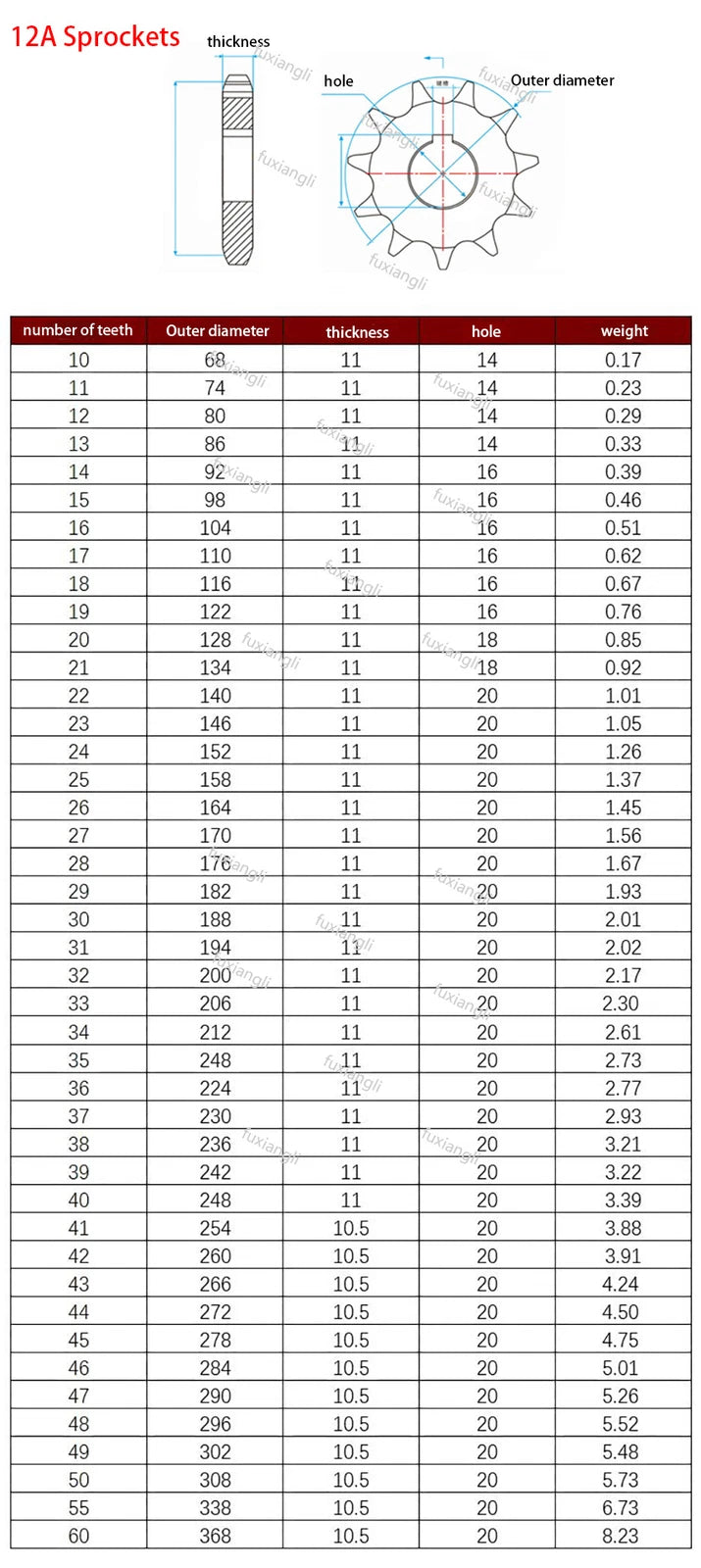
Each sprocket in this series is machined from medium-carbon steel and conforms to the ANSI #60 / ISO 12A standard with a pitch of 3/4" (19.05mm). The flat-hub (Type A) profile keeps the overall width compact. Bore diameter varies by tooth count — typically ranging from approximately 16mm (0.63") on the smallest sprockets up to 60mm (2.36") on the largest; confirm your required bore against the variant options before ordering. Tooth counts span 10T through 50T in single-tooth increments, giving you 41 discrete gear-ratio options from a single product listing.
Typical applications include industrial conveyor systems requiring precise chain engagement, agricultural and construction equipment drivetrain replacements, and custom CNC or maker-space power transmission projects where an ANSI #60 roller chain sprocket with a specific tooth count is specified. The wide tooth range also makes this series well-suited for gear-ratio tuning on go-karts, mini-bikes, and motorized DIY vehicles.
Tooth profile and pitch dimensions conform to ANSI B29.1 standards, ensuring reliable engagement with any standard #60 roller chain and interchangeability with OEM components.
41 tooth-count options in single-tooth increments let you dial in the exact gear ratio your application demands — from high-torque low-speed drives to faster output shafts.
The plate-style flat hub minimizes axial space, making these sprockets ideal for compact drivetrain assemblies where clearance between adjacent components is limited.
Machined from medium-carbon steel with a hardened tooth surface, these sprockets resist wear under sustained load and cyclic engagement typical of conveyor and power-transmission duty cycles.
Each sprocket is finish-bored and includes a standard keyway slot, allowing direct shaft mounting with a key and set-screw for positive torque transfer without slippage.
Dimensional conformance to ANSI #60 standards means these sprockets serve as direct replacements on conveyors, agricultural equipment, and industrial machinery without custom modification.
| Chain Standard | ANSI #60 / ISO 12A |
|---|---|
| Pitch | 3/4" (19.05 mm) |
| Roller Diameter | 7/16" (11.11 mm) |
| Inner Width (Chain) | 5/8" (15.88 mm) |
| Tooth Count Options | 10T – 50T (41 variants) |
| Hub Style | Flat Hub (Type A / Plate Sprocket) |
| Material | Medium-Carbon Steel |
| Surface Treatment | See variant options |
| Bore Diameter | See variant options |
| Keyway | Standard keyway + set-screw tapped hole |
| Outside Diameter | See variant options |
| Quantity per Order | 1 Pcs |
The tooth count determines your drive ratio. Divide the driven sprocket teeth by the driver sprocket teeth to get the ratio. For example, a 10T driver paired with a 30T driven sprocket gives a 3:1 reduction. Select a smaller tooth count on the driver for more torque, or a larger count for higher output speed. Use the 10T–50T range in this listing to fine-tune your ratio without sourcing from multiple suppliers.
Yes — provided your chain is ANSI #60 or ISO 12A with a 3/4" (19.05mm) pitch, 7/16" (11.11mm) roller diameter, and 5/8" (15.88mm) inner width. These are the most common #60 chain dimensions. If your chain is a double-strand (#60-2) or heavy series variant, this flat sprocket is not compatible — contact us to confirm before ordering.
Bore diameter varies by tooth count. Smaller sprockets (10T–15T) typically have bores in the 16–25mm range, while larger sprockets (40T–50T) can accommodate bores up to approximately 50–60mm. Please check the variant detail page or contact us with your required bore size before purchasing, as bore dimensions are not uniform across the tooth-count range.
Yes, medium-carbon steel sprockets can be re-bored by a machine shop to a larger diameter, provided sufficient hub wall thickness remains after machining. As a general rule, do not bore beyond 70% of the hub outer diameter. For flat-hub (Type A) sprockets, re-boring options are more limited than on B or C hub styles due to the thinner hub section — confirm with your machinist before proceeding.
Medium-carbon steel provides a good balance of tensile strength and machinability. For ANSI #60 chain, the rated breaking load is approximately 31.8 kN (7,150 lbf). The sprocket itself should not be the limiting factor in a properly designed drive — chain tension, lubrication, and alignment are typically the primary variables affecting service life. For shock-load or high-cycle applications, ensure adequate lubrication and periodic chain tension checks.
Standard carbon steel sprockets are not inherently corrosion-resistant. For outdoor, washdown, or humid environments, apply a chain lubricant rated for wet conditions and consider a periodic re-coating with a rust-inhibiting spray. If your application requires sustained exposure to moisture or chemicals, contact us to discuss stainless steel or zinc-plated options that may be available for select tooth counts.
The sprocket includes a machined keyway slot and a tapped set-screw hole. A standard parallel key and set screws are not included in the package — you will need to source these separately to match your shaft diameter and keyway dimensions. Standard metric or imperial keys are widely available at hardware and industrial supply stores.