The chain is fine...but I ordered the wrong size. Nine links of the chain I ordered equals six of the size I wanted. My error...
How can I straighten out the springs? I can't use them coil uo as is.
Your payment information is processed securely. We do not store credit card details nor have access to your credit card information.
Get fitment advice & recommendations
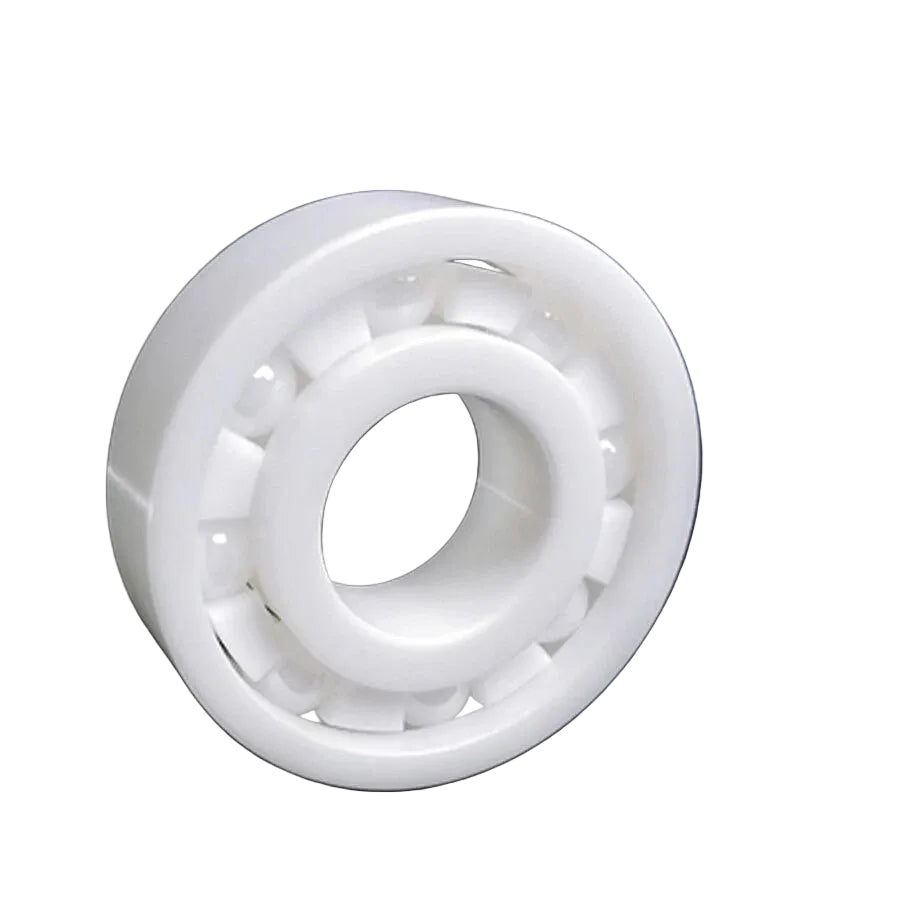
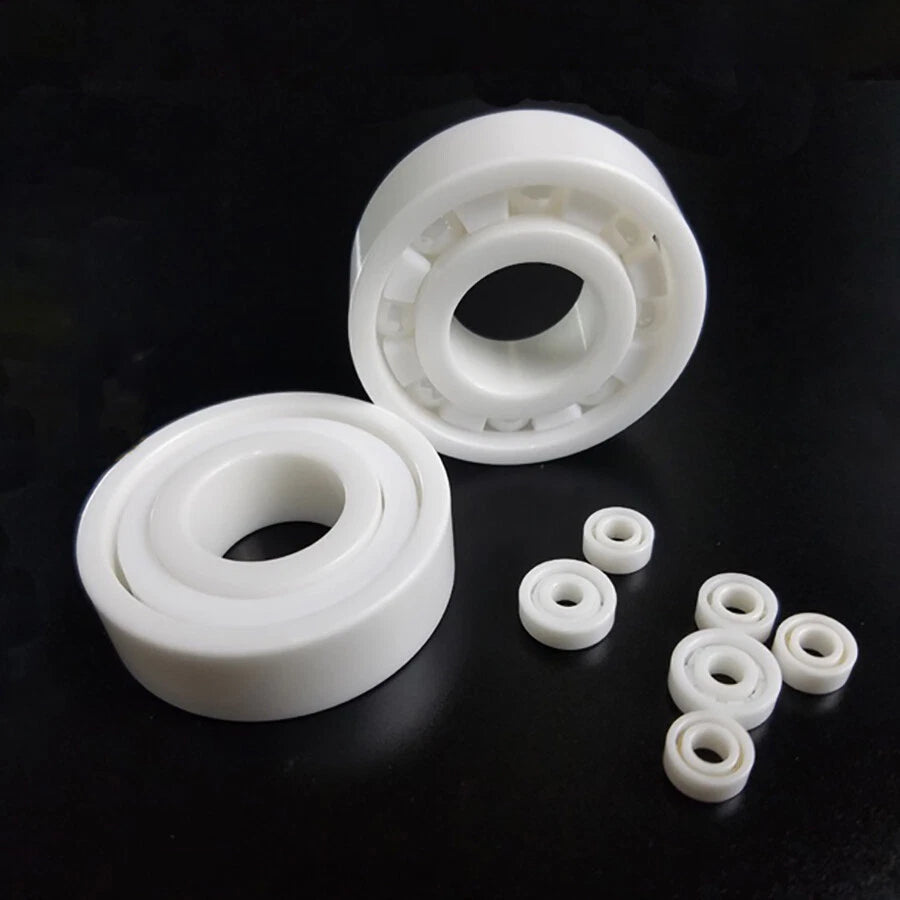
Engineers, hobbyists, and equipment builders who work in wet, chemically aggressive, or electrically sensitive environments know the frustration of steel bearings that corrode, seize, or conduct stray currents. These ZrO2 full ceramic thin wall ball bearings are engineered specifically for applications where standard steel simply fails — delivering reliable rotation in conditions that would degrade conventional bearings within weeks.
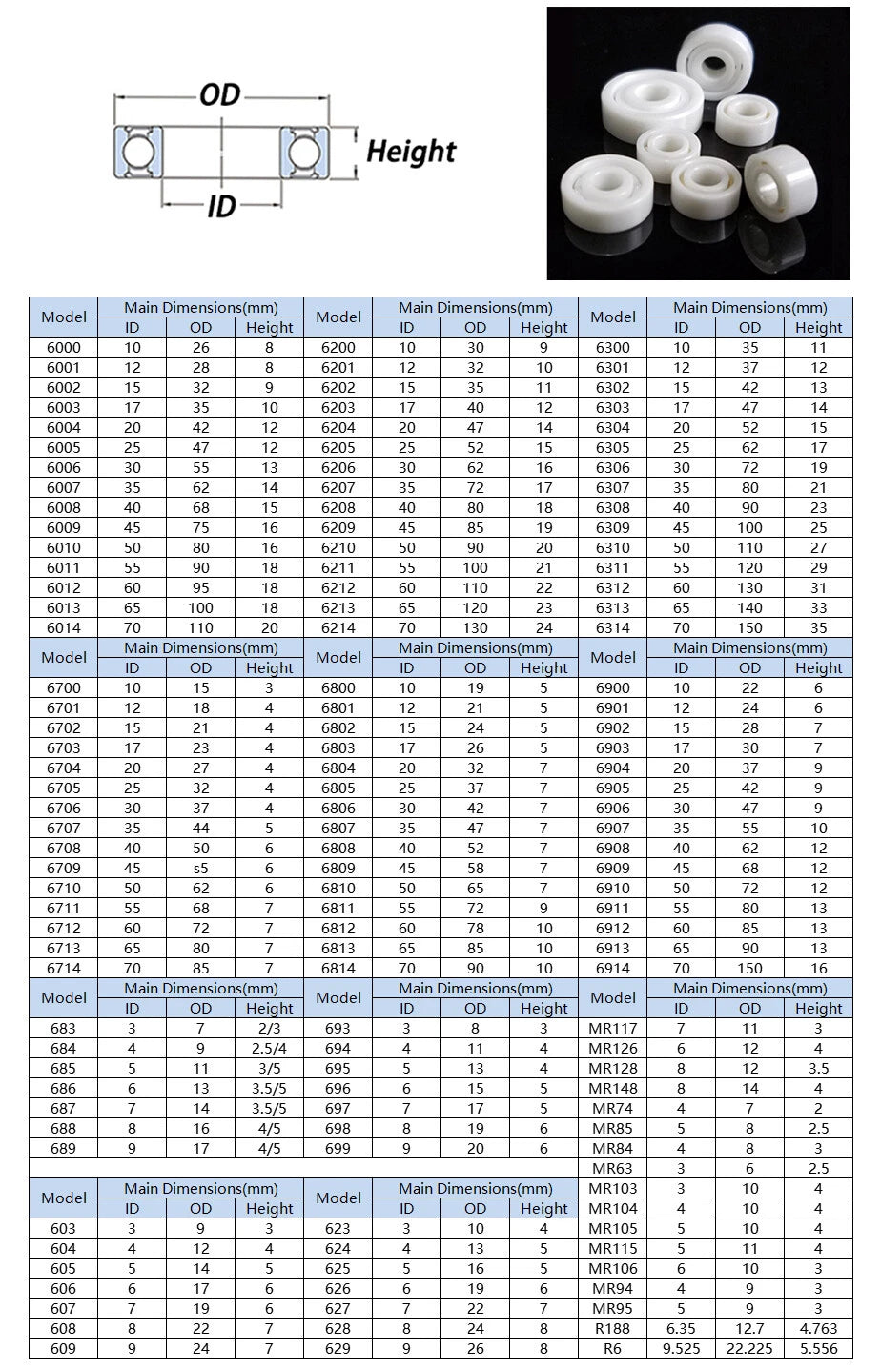
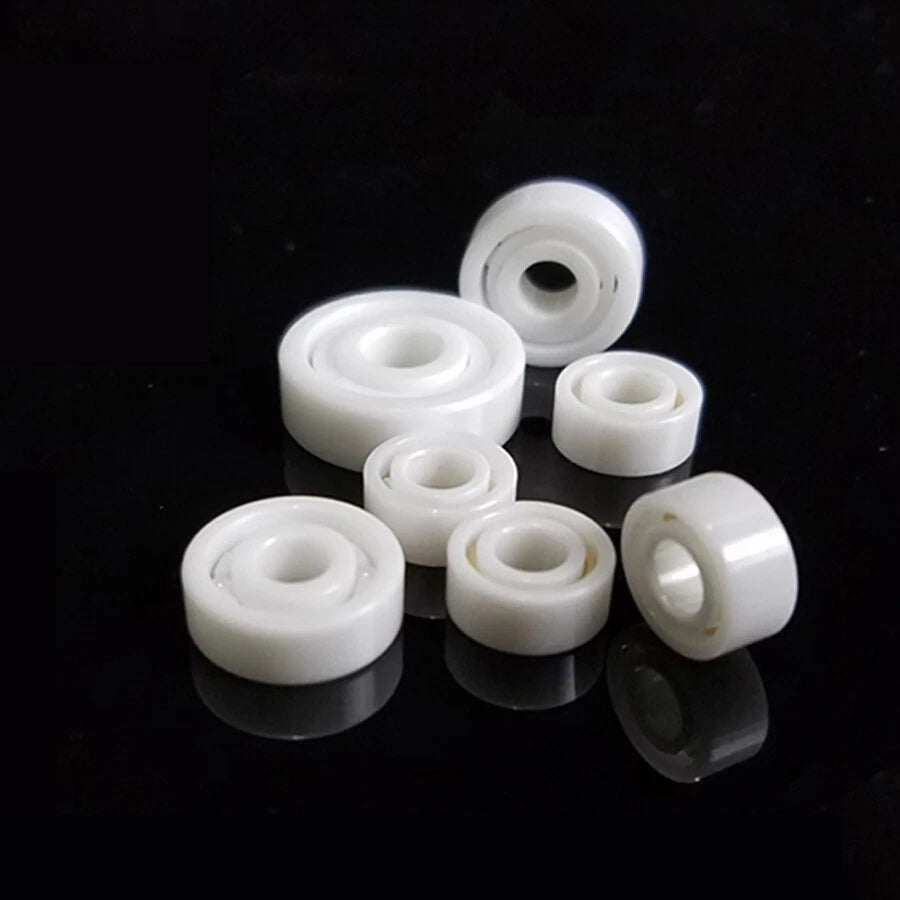
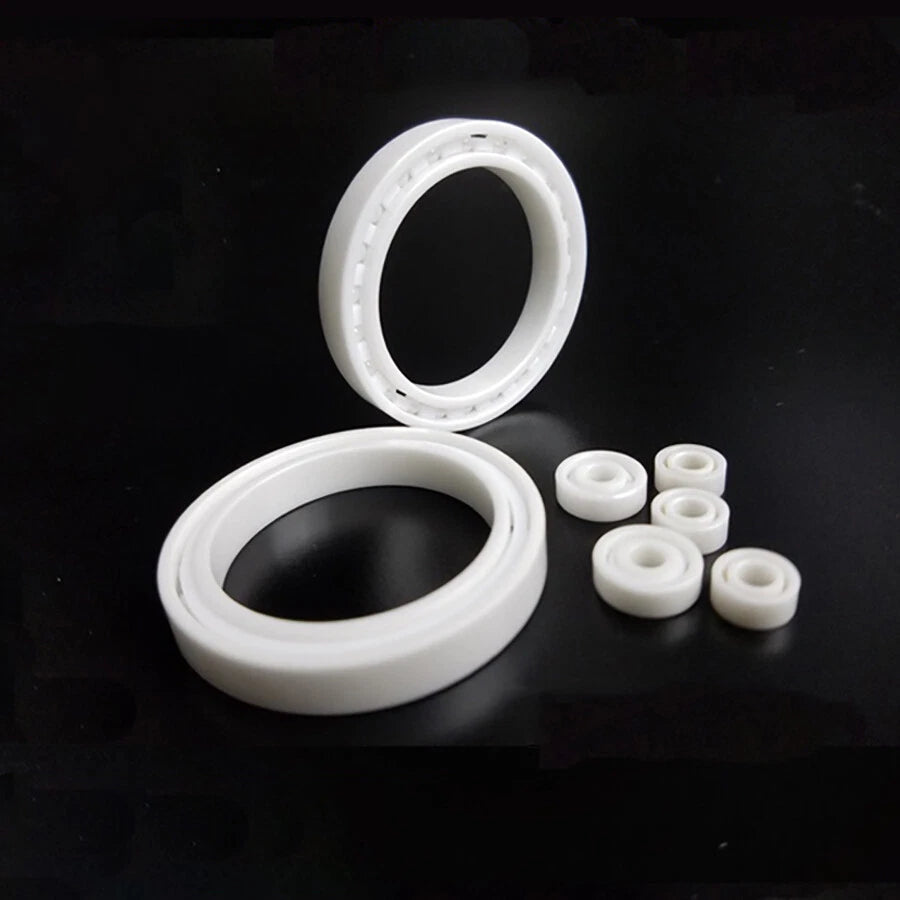
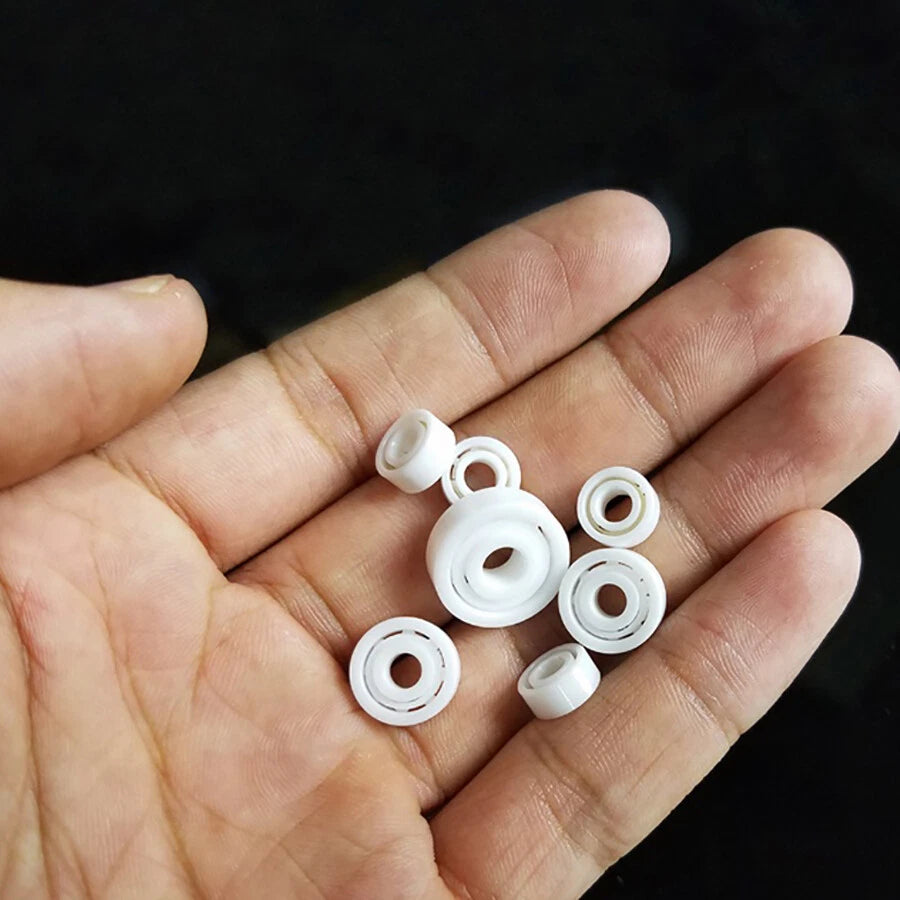
Each bearing is manufactured from zirconium dioxide (ZrO2) ceramic throughout — races, balls, and cage — with no steel components. The thin-wall series spans models 6700 through 6708, covering inner diameters from 10 mm (0.394 in) to 40 mm (1.575 in), outer diameters from 15 mm (0.591 in) to 50 mm (1.969 in), and heights from 3 mm (0.118 in) to 6 mm (0.236 in). Available in packs of 1, 2, 3, or 5 pieces to match your project scale.
Typical use cases include food-processing machinery requiring washdown resistance, medical and laboratory equipment demanding non-magnetic and non-conductive rotating elements, RC vehicles and drones where weight savings improve performance, and semiconductor or clean-room tooling where metallic contamination is unacceptable. The thin-wall geometry also makes these ZrO2 ceramic thin wall bearings ideal for compact spindle designs where radial space is constrained.
Races and rolling elements are both zirconium dioxide ceramic — no steel inserts. This eliminates galvanic corrosion and ensures consistent performance in acids, alkalis, and saltwater environments.
ZrO2 is an electrical insulator, making these bearings suitable for motors, generators, and instrumentation where stray currents or electrolytic corrosion must be prevented.
Completely free of ferrous materials, these bearings operate safely near MRI equipment, magnetic sensors, and precision measurement devices without interference.
The slim cross-section (wall thickness typically 2.5–5 mm depending on model) reduces rotating mass and allows installation in space-constrained housings where standard-width bearings will not fit.
ZrO2 ceramic retains dimensional stability across a broad temperature range (typically −40 °C to +300 °C / −40 °F to +572 °F), outperforming standard grease-lubricated steel bearings in both cold and elevated-heat applications.
Available in 1, 2, 3, or 5-piece packs per model, allowing you to order exactly what your build or maintenance schedule requires without overstocking.
| Series | 6700 / 6700(4mm) / 6701 / 6702 / 6703 / 6704 / 6705 / 6706 / 6707 / 6708 |
|---|---|
| Bearing Type | Deep-groove ball bearing, thin-wall series |
| Material | Full ZrO2 (Zirconium Dioxide) ceramic — races, balls, and cage |
| Inner Diameter (ID) | 10 mm – 40 mm (0.394 in – 1.575 in); see variant options |
| Outer Diameter (OD) | 15 mm – 50 mm (0.591 in – 1.969 in); see variant options |
| Height (Width) | 3 mm – 6 mm (0.118 in – 0.236 in); see variant options |
| Electrical Conductivity | Non-conductive (insulating ceramic) |
| Magnetic Properties | Non-magnetic |
| Corrosion Resistance | Resistant to acids, alkalis, and saltwater |
| Operating Temperature | Typically −40 °C to +300 °C (−40 °F to +572 °F) |
| Lubrication | See variant options / Contact us to confirm |
| Pack Quantity Options | 1 Pcs / 2 Pcs / 3 Pcs / 5 Pcs |
Select based on the bore (inner diameter) your shaft requires and the housing outer diameter your design allows. The model number directly encodes the dimensions: for example, 6702 fits a 15 mm shaft with a 21 mm OD housing bore and a 4 mm width. Cross-reference the ID×OD×Height listed in each variant option against your engineering drawings before ordering.
These are full ZrO2 ceramic bearings — both the inner and outer races as well as the rolling balls are zirconium dioxide ceramic. There are no steel components. This distinguishes them from hybrid ceramic bearings, which use ceramic balls in steel races.
Zirconium dioxide is chemically inert to most acids, alkalis, and salt solutions that would oxidize or pit steel races. Unlike hybrid bearings where steel races remain vulnerable to corrosion, full ceramic bearings maintain their surface finish and dimensional accuracy even after prolonged exposure to aggressive media — making them suitable for washdown, marine, and chemical-processing environments.
Yes. The thin-wall geometry reduces rotating mass, and ZrO2 ceramic has a lower density than steel (approximately 6.0 g/cm³ vs. 7.8 g/cm³), which lowers centrifugal loading on the balls at high RPM. These characteristics make the 6700–6708 series a common choice for RC motors, drone frames, and compact high-speed spindles. Confirm your specific speed rating requirement with us if operating near the upper RPM limit of your design.
ZrO2 ceramic has lower surface friction than steel and can operate with minimal or no lubrication in many dry or clean environments. However, for high-load or high-speed applications, a compatible ceramic-safe grease or oil is recommended to extend service life. Avoid petroleum-based greases that may degrade certain cage materials — contact us to confirm the lubrication specification for your specific variant.
Yes. The 6700–6708 ZrO2 ceramic bearings follow the same ID, OD, and width envelope as standard deep-groove ball bearings in the 6700 series, making them drop-in replacements in most housings. Always verify the exact bore, outer diameter, and width of your existing bearing against the variant dimensions listed before ordering, as some thin-wall variants (e.g., the 3 mm vs. 4 mm height options for 6700) differ from the most common catalog dimensions.
Both share the same 10 mm ID and 15 mm OD but differ in width: the 6700 (10×15×3mm) is the standard thin-wall profile, while the 6700 (10×15×4mm) offers a slightly wider raceway that can support marginally higher axial and radial loads. Choose the 3 mm version for the most compact axial footprint; choose the 4 mm version when your housing allows and load demands are higher.