
The chain is fine...but I ordered the wrong size. Nine links of the chain I ordered equals six of the size I wanted. My error...
How can I straighten out the springs? I can't use them coil uo as is.
Your payment information is processed securely. We do not store credit card details nor have access to your credit card information.
Get fitment advice & recommendations
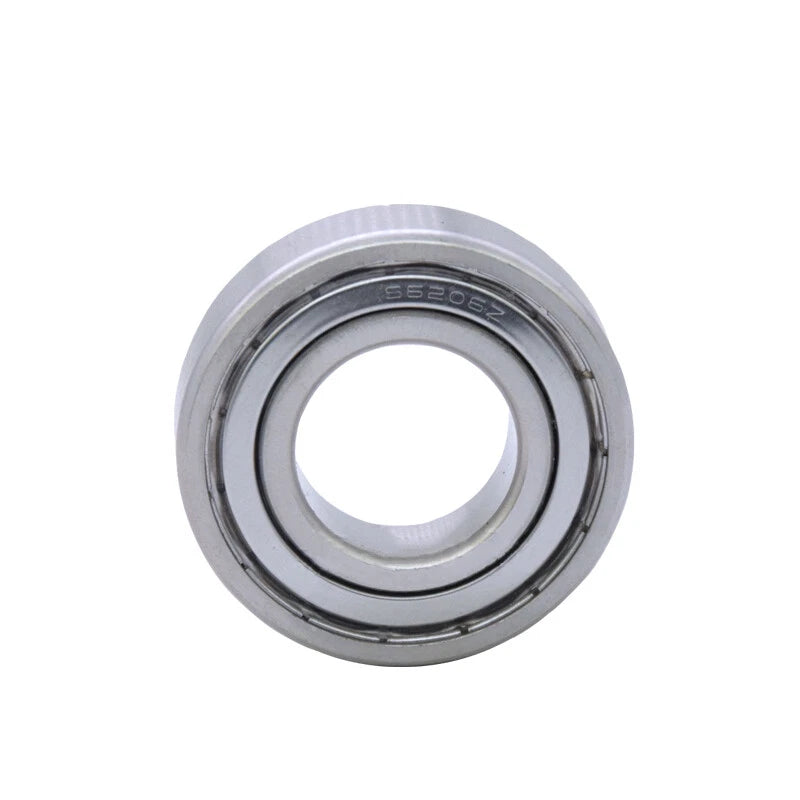
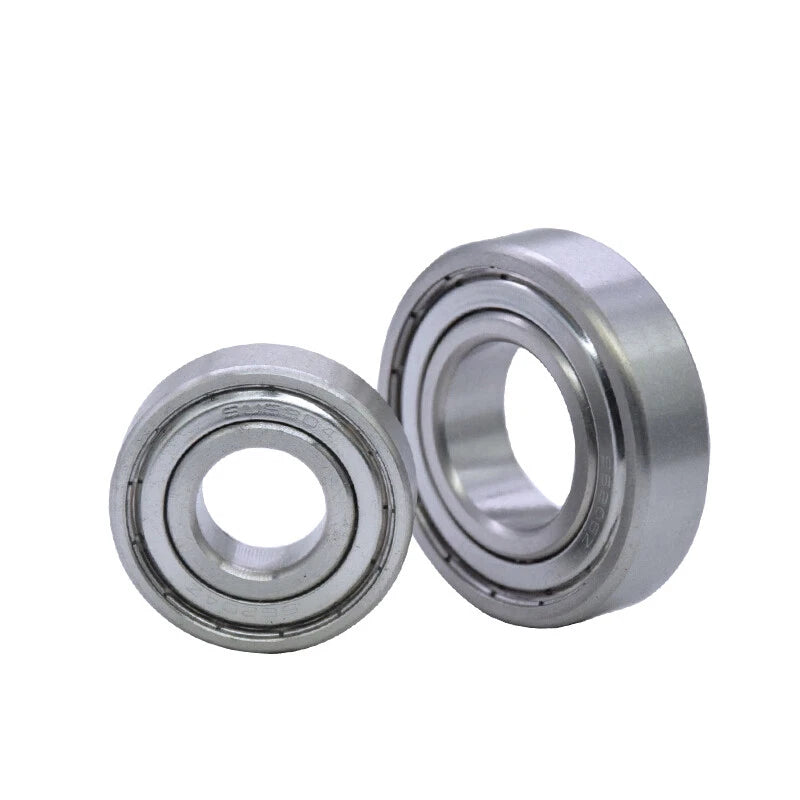
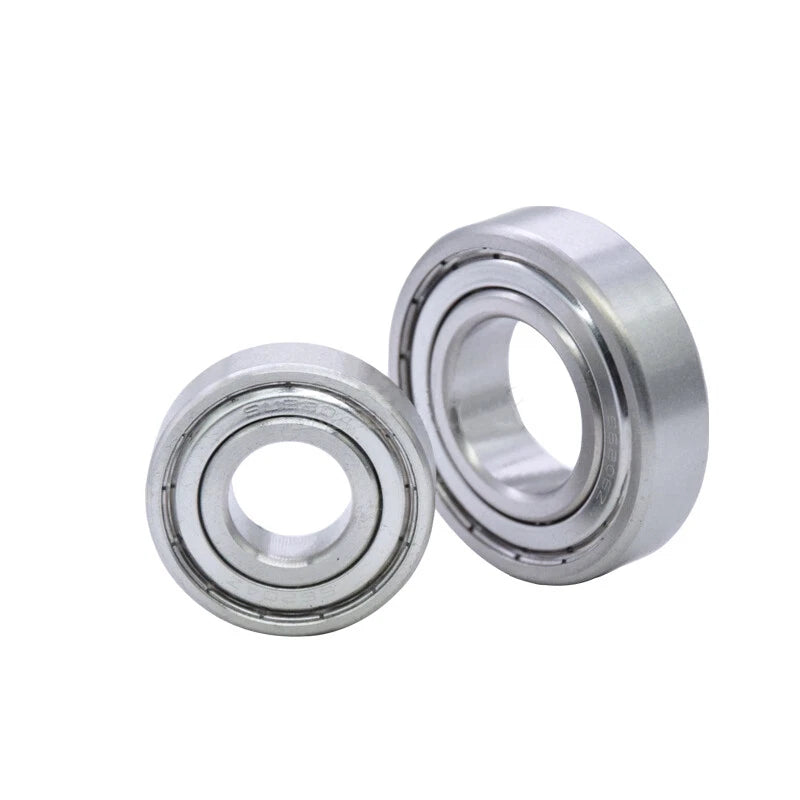
When standard carbon steel bearings corrode, seize, or fail in wet, chemical, or food-adjacent environments, engineers and DIYers reach for stainless steel deep groove ball bearings. Whether you're rebuilding a skateboard, maintaining marine equipment, or specifying components for a food-processing conveyor, the 6900–6905 series in 440C or 304 stainless steel delivers the dimensional accuracy and corrosion resistance your application demands.
These stainless steel deep groove ball bearings span the 6900 through 6905 size range, covering bore diameters from 10 mm (0.394 in) to 25 mm (0.984 in) and outer diameters from 22 mm (0.866 in) to 42 mm (1.654 in), with widths of 6–9 mm (0.236–0.354 in). Two alloy grades are available: 440C stainless steel for maximum hardness and load capacity, and 304 stainless steel for superior corrosion resistance in highly oxidizing or acidic conditions.
Typical use cases include inline skate and skateboard wheel axles requiring rust-free operation, marine winches and fishing-reel mechanisms exposed to saltwater spray, laboratory and food-processing equipment where hygiene standards prohibit carbon steel, and light-duty electric motor shafts in humid or washdown environments where stainless steel deep groove ball bearings outperform standard alternatives.
Choose 440C stainless steel for higher hardness (58–62 HRC) and load ratings, or 304 stainless steel for superior resistance to chlorides and oxidizing acids — both far outperform carbon steel in corrosive environments.
Bore 10–25 mm, OD 22–42 mm, width 6–9 mm across six sizes (6900–6905). Drop-in replacements for any bearing meeting the same ISO designation without custom machining.
The deep groove geometry supports radial loads as the primary load type while accommodating moderate axial (thrust) loads in both directions — suitable for combined-load applications without requiring a separate thrust bearing.
Stainless steel races and balls resist rust, oxidation, and mild chemical exposure. Suitable for washdown environments, marine applications, and food-adjacent machinery where carbon steel bearings would corrode rapidly.
Precision-ground raceways and matched ball sets minimize vibration and noise. Ideal for applications where smooth, consistent rotation matters — from instrument spindles to small appliance motors.
Order a single bearing for a repair job or a 5-pack for production runs and maintenance stock. Per-unit cost decreases with the 5-pack, making it practical to keep spares on hand.
| Bearing Series | 6900 / 6901 / 6902 / 6903 / 6904 / 6905 |
|---|---|
| Bore Diameter (d) | 10 mm / 12 mm / 15 mm / 17 mm / 20 mm / 25 mm |
| Outer Diameter (D) | 22 mm / 24 mm / 28 mm / 30 mm / 37 mm / 42 mm |
| Width (B) | 6 mm / 6 mm / 7 mm / 7 mm / 9 mm / 9 mm |
| Material Options | 440C Stainless Steel; 304 Stainless Steel |
| Bearing Type | Deep Groove Ball Bearing (Single Row) |
| Shield / Seal | See variant options |
| Cage Material | See variant options |
| Lubrication | See variant options |
| Dynamic Load Rating (C) | See variant options |
| Static Load Rating (C₀) | See variant options |
| Max Speed | Contact us to confirm |
| Available Quantities | 1 pc / 5 pcs |
440C stainless steel is a martensitic alloy that can be hardened to 58–62 HRC, giving it higher load capacity and wear resistance — making it the preferred choice for most mechanical applications. 304 stainless steel is an austenitic alloy with lower hardness but superior resistance to chlorides, acids, and oxidizing environments. Choose 304 SS when the bearing will be exposed to saltwater, bleach solutions, or aggressive chemicals where 440C may still corrode over time.
Match the bearing to your shaft diameter: 6900 fits a 10 mm shaft, 6901 fits 12 mm, 6902 fits 15 mm, 6903 fits 17 mm, 6904 fits 20 mm, and 6905 fits 25 mm. Also verify the housing bore matches the outer diameter (22–42 mm depending on size) and that the width (6–9 mm) fits your application's axial space. When in doubt, measure the existing bearing with calipers before ordering.
Yes, to a moderate degree. Deep groove ball bearings are primarily designed for radial loads, but their deep raceway geometry allows them to carry axial loads in both directions — typically up to 50% of the dynamic radial load rating in light-duty applications. For applications with heavy or dominant axial loads, a dedicated angular contact or thrust bearing is recommended instead.
Stainless steel bearings perform significantly better than carbon steel in marine environments. 304 SS offers the strongest resistance to saltwater corrosion among the two grades listed. However, no bearing is entirely immune to prolonged saltwater immersion — regular inspection, rinsing, and relubrication will extend service life. For fully submerged or continuous saltwater exposure, consider sealed variants and consult our team for specific recommendations.
Deep groove ball bearings in this size range are typically pre-lubricated with grease at the factory. For open (unshielded) bearings, apply a light machine oil or NLGI #2 grease appropriate for your operating temperature and speed. In food-processing or pharmaceutical environments, use an NSF H1-rated food-grade lubricant. Avoid over-greasing, which can increase operating temperature and reduce bearing life.
Common signs of bearing wear include unusual noise (grinding, clicking, or squealing during rotation), increased vibration, visible rust or pitting on the races or balls, rough or uneven rotation when spun by hand, and excessive radial or axial play. If any of these symptoms are present, replace the bearing promptly to avoid damage to the shaft, housing, or surrounding components.
Stainless steel bearings are widely used in food-processing machinery because they resist corrosion from washdown chemicals and do not introduce carbon steel contamination risk. For direct food-contact or pharmaceutical applications, confirm that the lubricant used is food-grade (NSF H1 certified) and that any seals or shields meet your facility's hygiene standards. Contact us to confirm specific compliance requirements for your application.





