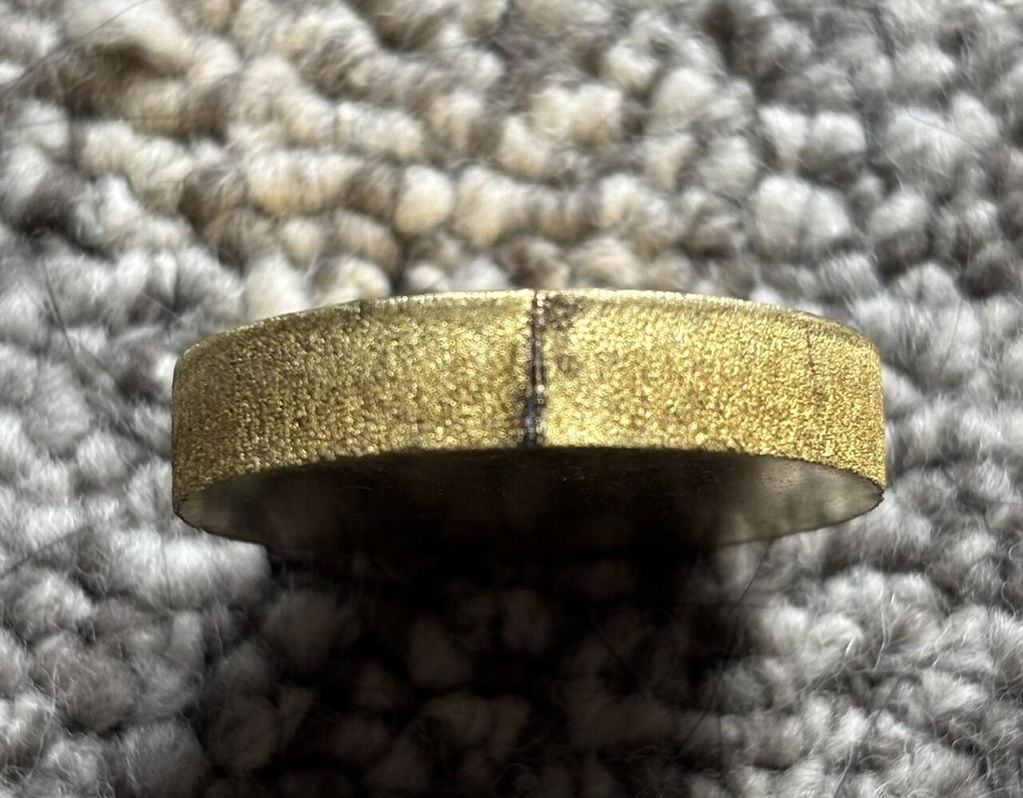
7075-T651 Aluminium Plate — Aerospace-Grade Strength for Demanding Workshop Applications
When standard aluminium simply isn't strong enough, engineers, machinists, and serious DIYers turn to 7075-T651 alloy plate. This zinc-based aluminium alloy delivers one of the highest strength-to-weight ratios available in any aluminium series, making it the go-to choice for structural components, tooling fixtures, and load-bearing brackets where every gram of weight matters.
Each plate is cut from 7075-T651 stock — T651 denoting a stress-relieved, artificially aged temper that minimises residual internal stress and ensures dimensional stability during machining. Available in lengths from 100mm to 300mm (approx. 3.9" to 11.8"), widths from 100mm to 300mm (approx. 3.9" to 11.8"), and thicknesses of 8mm, 10mm, 12mm, 15mm, 18mm, 20mm, and 25mm (approx. 0.31" to 0.98"). Select your exact size from the variant options above.
Typical use cases include CNC machining blanks for aerospace and automotive prototyping, structural gussets and mounting plates in robotics frames, and precision jig and fixture plates in professional machine shops. The 7075-T651 aluminium alloy sheet is also widely used in high-load drone frames and competitive motorsport components where fatigue resistance and machinability must coexist.
⚙️ Compatible with standard CNC mills, manual lathes, and waterjet cutting equipment. Suitable for anodising, chromate conversion coating, and most aerospace surface treatments.
✅ Key Features of These 7075-T651 Aluminium Alloy Plates
-
🔩Zinc-Alloyed 7075 Composition — The 7075 series uses zinc as its primary alloying element, producing tensile strength typically in the range of 500–570 MPa, far exceeding 6061 alloy in structural applications.
-
🛠️T651 Stress-Relieved Temper — Stretch-levelled after solution heat treatment and artificially aged, the T651 temper reduces residual stress and warping during machining, giving you flat, stable blanks right out of the box.
-
📐Wide Size Matrix — 42 size combinations spanning 100×100mm to 300×300mm in plan, with 7 thickness steps from 8mm to 25mm, so you can order the closest blank to your finished part and minimise waste.
-
⚖️High Strength-to-Weight Ratio — Density approximately 2.81 g/cm³ with yield strength typically 430–480 MPa, making these plates suitable for weight-critical structural parts that cannot use steel.
-
🔬Excellent Machinability — 7075-T651 machines cleanly with carbide or HSS tooling, producing tight tolerances and smooth surface finishes with standard workshop speeds and feeds.
-
🛡️Anodising and Coating Ready — The alloy accepts hard anodising, chromate conversion (Alodine/Iridite), and primer coatings, enabling corrosion protection for outdoor or marine-adjacent environments.
📐 Technical Specifications — 7075-T651 Aluminium Plate
| Alloy |
7075 (EN AW-7075) |
| Temper |
T651 (stress-relieved, artificially aged) |
| Primary Alloying Element |
Zinc (Zn) |
| Density |
Approx. 2.81 g/cm³ |
| Tensile Strength (typical) |
500–570 MPa |
| Yield Strength (typical) |
430–480 MPa |
| Elongation at Break (typical) |
8–11% |
| Hardness (Brinell, typical) |
150–175 HB |
| Length Options |
100mm / 200mm / 300mm |
| Width Options |
100mm / 200mm / 300mm |
| Thickness Options |
8mm / 10mm / 12mm / 15mm / 18mm / 20mm / 25mm |
| Surface Condition |
Mill finish (saw-cut edges) |
| Flatness |
See variant options |
| Machinability Rating |
Good (carbide or HSS tooling recommended) |
| Weldability |
Limited (friction stir welding preferred) |
| Anodising Suitability |
Yes — hard anodise and chromate conversion compatible |
| Quantity per Order |
1 plate (single piece) |
❓ Frequently Asked Questions
How do I choose the right thickness for my application?
Thickness selection depends on the load path and machining allowance you need. For light structural brackets and jig plates, 8–10mm is typically sufficient. For load-bearing gussets, motor mounts, or parts requiring deep pockets, 12–20mm gives you more material to work with. If your finished part wall is 15mm, order 18mm or 20mm to allow for facing and squaring cuts.
Is 7075-T651 stronger than 6061 aluminium?
Yes, significantly. 7075-T651 has a tensile strength typically 500–570 MPa versus 6061-T6 at approximately 310 MPa. However, 7075 is less corrosion-resistant in bare form and has limited weldability compared to 6061. For applications where strength is the primary driver and the part will be anodised or coated, 7075-T651 is the better choice.
Can I weld 7075-T651 aluminium plate?
Conventional MIG and TIG welding of 7075 is not recommended — the alloy is susceptible to hot cracking and the heat-affected zone loses a significant portion of its strength. Friction stir welding (FSW) is the preferred joining method for 7075 in aerospace and structural applications. For most workshop uses, mechanical fastening (bolts, rivets, press-fit inserts) is the practical alternative.
Will this plate corrode if left uncoated outdoors?
7075 aluminium has lower inherent corrosion resistance than 5052 or 6061 due to its high zinc content. For outdoor or humid environments, apply a chromate conversion coating (Alodine/Iridite) or hard anodise the finished part. A primer and topcoat system also provides adequate protection for most non-immersion outdoor applications.
What tools do I need to machine this plate?
7075-T651 machines well on standard CNC mills and manual lathes. Use sharp carbide end mills or HSS tooling with appropriate cutting speeds (typically 200–400 SFM for carbide). Flood coolant or cutting fluid is recommended to manage heat and extend tool life. The alloy produces short, manageable chips and holds tight tolerances well.
How do I select the right plan size — do I order larger than my finished part?
Yes. Always order a blank slightly larger than your finished part dimensions to allow for squaring, facing, and any datum cuts. A 5–10mm oversize in length and width is a common allowance for milled parts. For thickness, add at least 1–2mm above your finished dimension to account for surface facing on both sides.
🛒 Select your Length × Width × Thickness above, then add to cart.