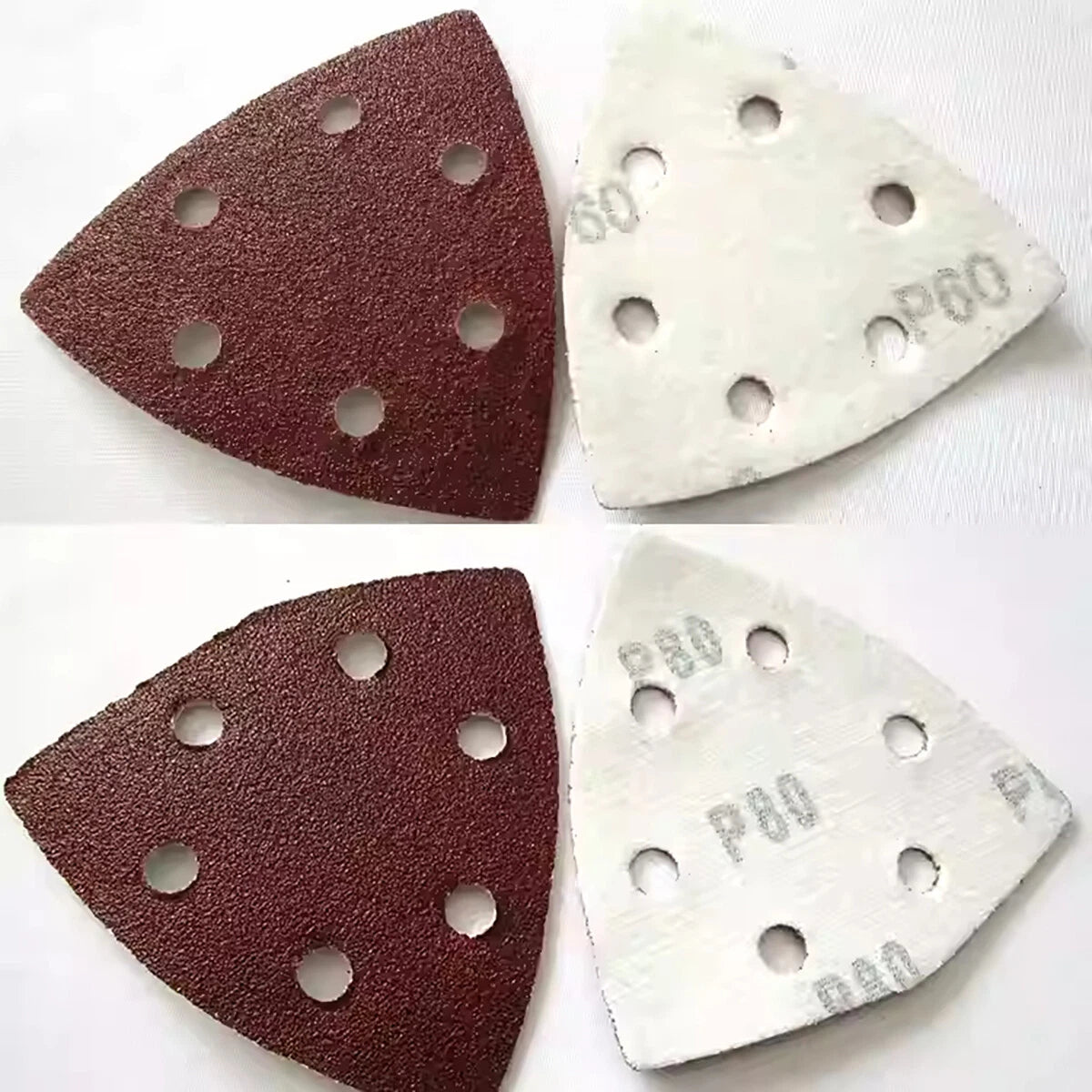
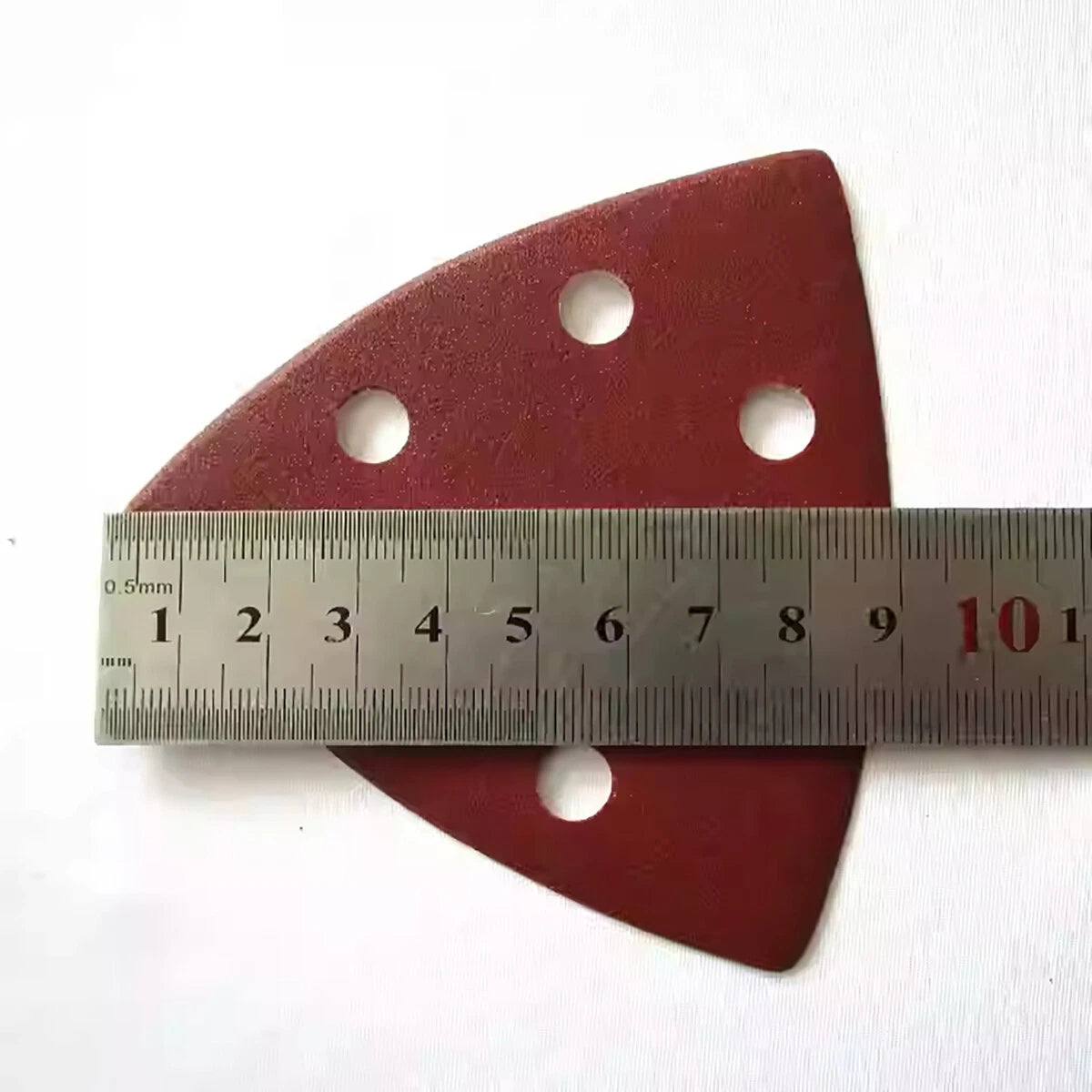
Tackle fine finishing and smooth rough surfaces with confidence using our 90mm mouse sanding sheets. Engineered for detailed work on wood, metal, and drywall, these triangular hook-and-loop sandpaper pads reach into tight corners and angled edges that standard square sanders struggle to touch. With a practical 6-hole dust extraction pattern and a comprehensive 40–2000 grit range, you'll have the right abrasive for every project stage — from aggressive material removal to a polished, glass-smooth final finish. Whether you're a weekend woodworker, a furniture upcycler, or a DIY auto body enthusiast, these sander sheets deliver consistent, reliable results without the premium price tag.
❓ Mouse Sander Sandpaper FAQ – Quick Answers
Q: Will these 90mm sanding sheets fit my mouse detail sander?
A: These sheets measure 90mm x 90mm x 90mm in a triangular shape and use a hook & loop (Velcro-style) backing with a 6-hole dust extraction pattern. They are compatible with the vast majority of popular mouse detail sanders on the market, including many Black & Decker, Skil, and generic models that accept 90mm triangle pads. We always recommend measuring your sander's platen dimensions and checking the hole pattern alignment before ordering. If your machine uses a slightly different hole layout, the hook-and-loop backing still allows you to attach and use the sheets effectively — simply align the holes as closely as possible for best dust collection.
Q: Which grit should I choose for my project?
A: Choosing the right grit depends on your task: Coarse (40–80 grit) is best for aggressive material removal, stripping old paint, or leveling uneven wood.
Medium (120–240 grit) handles general surface prep, light scratch removal, and smoothing after coarse sanding.
Fine (320–600 grit) is ideal for final smoothing before staining, painting, or between-coat sanding.
Ultra-Fine (800–2000 grit) delivers a polished, near-mirror finish on wood, metal, or automotive clear coats. For most home DIY projects, a combination pack covering 80, 120, 240, and 400 grit provides excellent versatility.
Q: Do the dust extraction holes really make a difference?
A: Yes — and it's one of the most underrated features of a quality sanding sheet. The 6-hole pattern is designed to align with your sander's built-in dust port or collection bag. When properly aligned, the holes channel sanding dust away from the work surface, which reduces clogging on the abrasive, keeps your cut line visible, and dramatically cuts down on airborne dust in your workspace. For maximum efficiency, give the backing a quick tap or brush between uses to clear any debris stuck in the holes. Even without a dust collection system connected, the perforations still help reduce heat buildup and loading.
Q: How does aluminum oxide compare to regular sandpaper, and how long do these sheets last?
A: Aluminum oxide is a synthetic abrasive that is significantly harder and more durable than natural garnet or basic emery sandpaper. Its friable nature means it self-sharpens during use — as the grains fracture under pressure, fresh sharp edges are continually exposed. This translates to faster cutting and longer life compared to cheap, non-branded sheets. The actual lifespan depends on your application (harder woods and metals will wear abrasive faster), but users typically find these sheets outlast standard sandpaper by 2–3x on medium-duty woodworking tasks. The Kraft paper backing also resists tearing better than thin film backings on coarse grits.
Q: Can I use these sanding sheets for wet sanding?
A: We do not recommend wet sanding with these particular sheets. The kraft paper backing is optimized for dry sanding applications and may soften or degrade if saturated with water for extended periods. For wet sanding projects (such as automotive clear coat leveling or lacquer finishing), we suggest looking for specifically labeled waterproof or wet/dry sandpaper with a polyester film or cloth backing. These mouse sander sheets excel in dry woodworking, painted surface preparation, drywall compound smoothing, and light metal deburring — all without the added complexity of water.