The chain is fine...but I ordered the wrong size. Nine links of the chain I ordered equals six of the size I wanted. My error...
How can I straighten out the springs? I can't use them coil uo as is.
Your payment information is processed securely. We do not store credit card details nor have access to your credit card information.
Get fitment advice & recommendations
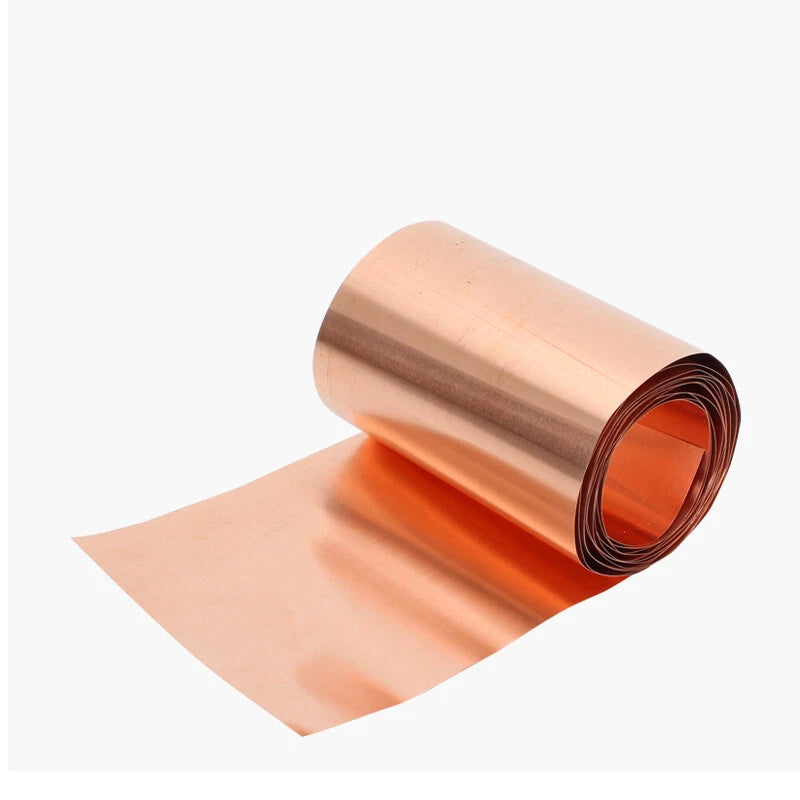
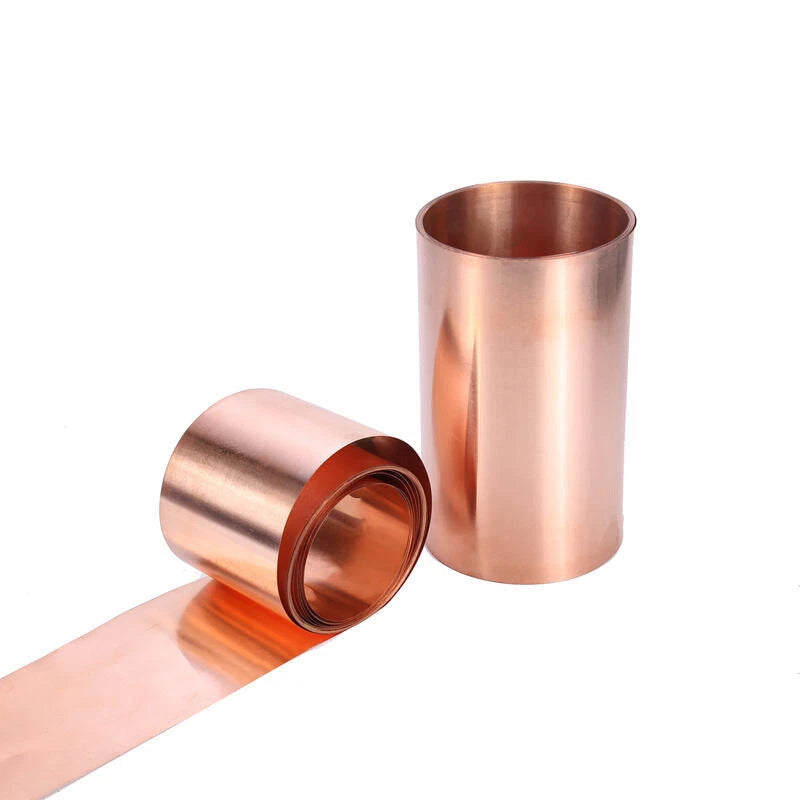
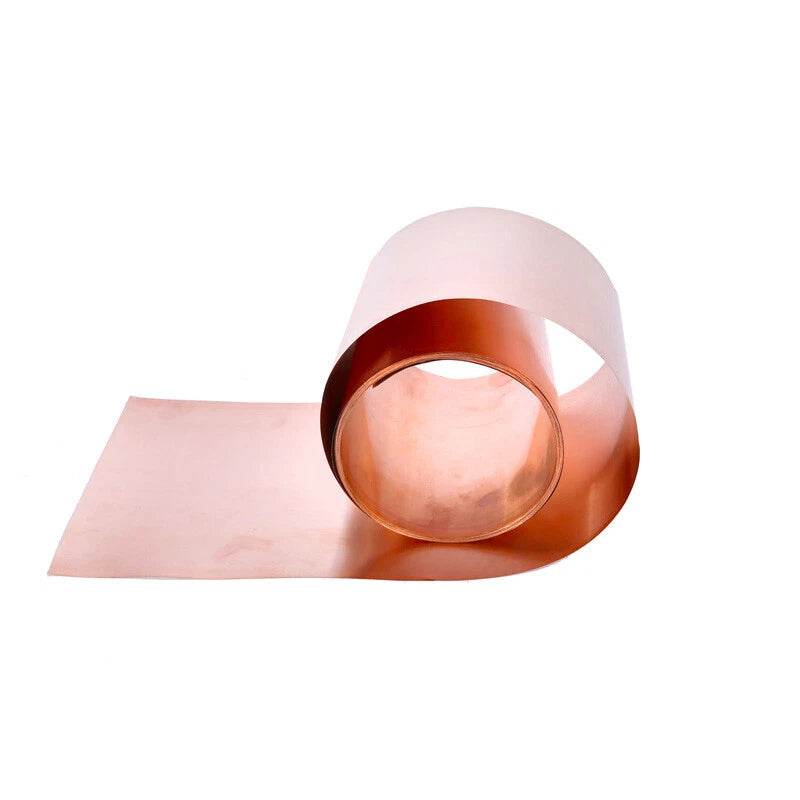
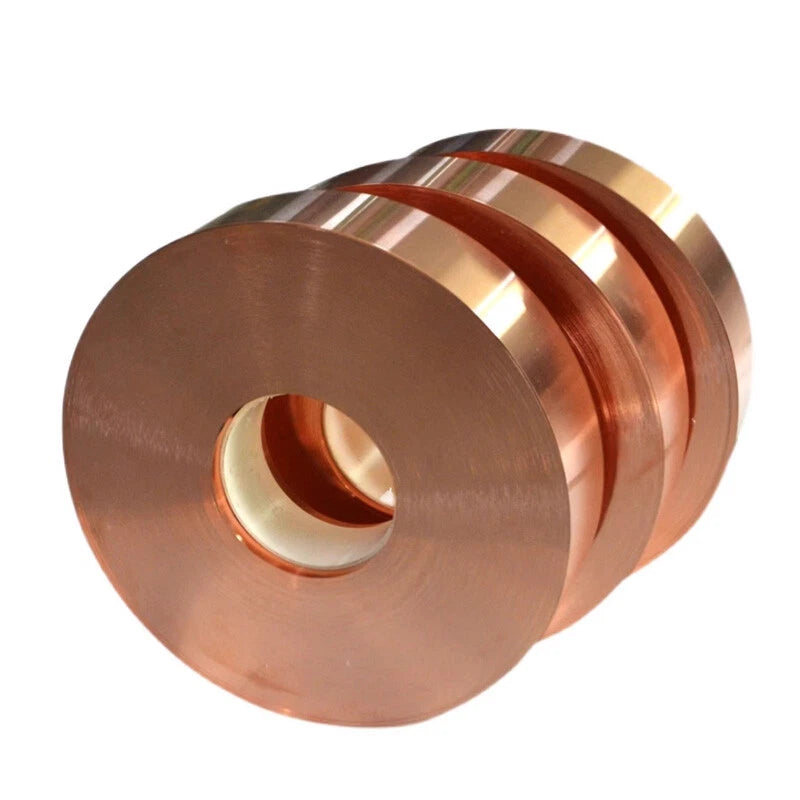
When your project demands a conductor that won't compromise — whether you're repairing a PCB ground plane, lining an EMI shielding enclosure, or crafting a hand-formed copper vessel — sourcing the wrong thickness or purity wastes time and money. This 99.9% pure copper metal sheet foil is stocked in an extensive matrix of thicknesses and widths so engineers, makers, and fabricators can order exactly what they need without cutting down oversized stock.
Each roll is produced from 99.9% electrolytic-grade copper (C11000 equivalent), available in thicknesses from 0.01 mm (0.0004 in) up to 1 mm (0.039 in) and widths from 10 mm (0.39 in) to 400 mm (15.75 in). Standard length is 1 meter (39.4 in); select variants are also available as 300 mm (11.8 in) cut pieces. The surface is smooth-rolled with a bright, untreated finish that accepts soldering, etching, and patination without pre-treatment.
Typical use cases include RF and EMI shielding gaskets for enclosures, flexible busbars and grounding straps in power electronics, decorative inlay work in woodworking and jewelry, heat-spreader shims in thermal management assemblies, and corrosion-resistant flashing in architectural metalwork. The combination of high conductivity (≥58 MS/m), thermal conductivity (~385 W/m·K), and excellent formability makes this copper foil a reliable choice for both prototype and production runs.
C11000-equivalent copper with electrical conductivity ≥58 MS/m — suitable for precision electrical and thermal applications where impurities would degrade performance.
Seventeen thickness options from ultra-thin 0.01 mm foil to structural 1 mm plate, covering shielding films, flexible conductors, and rigid shims in a single product line.
Nineteen width options let you match the foil to your channel, enclosure slot, or substrate without longitudinal waste cuts — from narrow 10 mm tape to broad 400 mm sheet.
Untreated surface is ready for soldering, chemical etching, liver-of-sulfur patination, or mechanical forming without additional surface preparation steps.
Thermal conductivity ~385 W/m·K and electrical resistivity ~1.72 µΩ·cm make this foil effective as a heat spreader, grounding strap, or busbar in compact assemblies.
Soft-annealed temper allows bending, rolling, and stamping at room temperature. Thin gauges (≤0.1 mm) can be folded repeatedly without fracture for gasket and shielding applications.
| Material | 99.9% Electrolytic Copper (C11000 equivalent) |
|---|---|
| Thickness Range | 0.01 mm – 1 mm (0.0004 in – 0.039 in) |
| Width Range | 10 mm – 400 mm (0.39 in – 15.75 in) |
| Standard Length | 1 Meter (39.4 in); 300 mm (11.8 in) also available |
| Surface Finish | Smooth-rolled, bright, untreated |
| Electrical Conductivity | ≥58 MS/m (≥100% IACS) |
| Electrical Resistivity | ~1.72 µΩ·cm |
| Thermal Conductivity | ~385 W/m·K |
| Temper | See variant options |
| Tolerance (Thickness) | See variant options |
| Coating / Plating | None (bare copper) |
| Variant Options | Thickness × Width × Length — select above |
For EMI/RF shielding films and flexible gaskets, thicknesses of 0.01 mm – 0.1 mm are typically sufficient. For grounding straps and flexible busbars carrying moderate current, 0.1 mm – 0.3 mm balances conductivity and flexibility. For rigid shims, heat spreaders, and structural inlays, 0.4 mm – 1 mm provides the mechanical stiffness needed. If you are unsure, contact us with your current density or shielding attenuation requirement and we can advise.
Yes. The bare, untreated bright finish accepts standard rosin-core and no-clean solder alloys (Sn63/Pb37, SAC305) without flux pre-treatment in most cases. For thinner gauges (≤0.05 mm), use a low-temperature iron setting (typically 280–320 °C) and work quickly to avoid warping. The foil does not require pre-tinning but can be tinned for easier assembly.
Copper naturally forms a thin oxide layer (cuprite) on exposure to air, which appears as a slight darkening or reddish-brown tint. This oxide layer is electrically resistive and should be removed before soldering or electrical contact by light abrasion or flux. For long-term corrosion resistance in humid or outdoor environments, consider applying a clear lacquer, tin plating, or a chemical patina stabilizer after forming. The foil is not pre-coated.
The foil is supplied in the lengths listed (1 Meter or 300 mm). You can cut it to any shape using sharp scissors (thin gauges ≤0.2 mm), a craft knife and steel rule, or a guillotine shear for thicker gauges. Laser cutting is also effective for precise shapes. The material does not require lubrication for cold cutting. For custom lengths beyond what is listed, contact us to discuss options.
Yes. The 99.9% purity and untreated surface make it well-suited for ferric chloride (FeCl₃) and ammonium persulfate etching used in PCB prototyping and decorative metalwork. Thinner gauges (0.05 mm – 0.2 mm) etch through quickly; thicker gauges (0.5 mm – 1 mm) are better suited for relief etching where partial depth removal is desired. Always follow standard chemical safety procedures when etching.
For shielding, the width should match or slightly exceed the slot or seam you are covering to ensure full overlap. For busbars, width determines current-carrying capacity alongside thickness — a wider, thinner strip can carry the same current as a narrower, thicker one with lower inductance. As a conservative rule, 1 mm² of cross-section (width × thickness) carries approximately 3–5 A in free air. Contact us with your amperage requirement for a specific recommendation.
Both series are 99.9% pure copper foil. The SKU prefix reflects internal batch and sourcing codes used for inventory management. There is no functional difference in material specification between the two series — both meet the same purity, conductivity, and finish standards. If you need to reorder a specific batch for traceability, note the full SKU from your order confirmation.