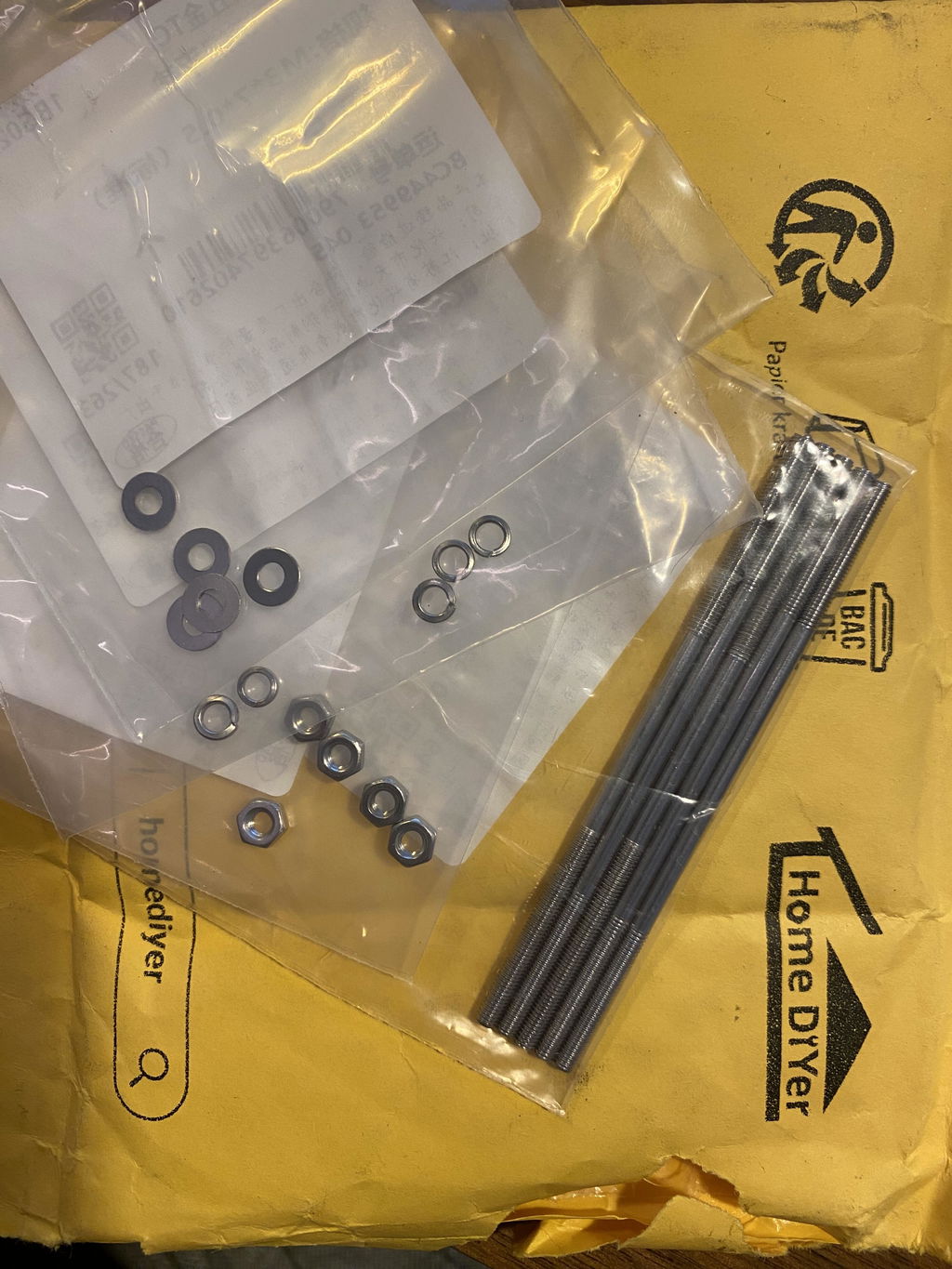
The chain is fine...but I ordered the wrong size. Nine links of the chain I ordered equals six of the size I wanted. My error...
How can I straighten out the springs? I can't use them coil uo as is.
Your payment information is processed securely. We do not store credit card details nor have access to your credit card information.
Get fitment advice & recommendations
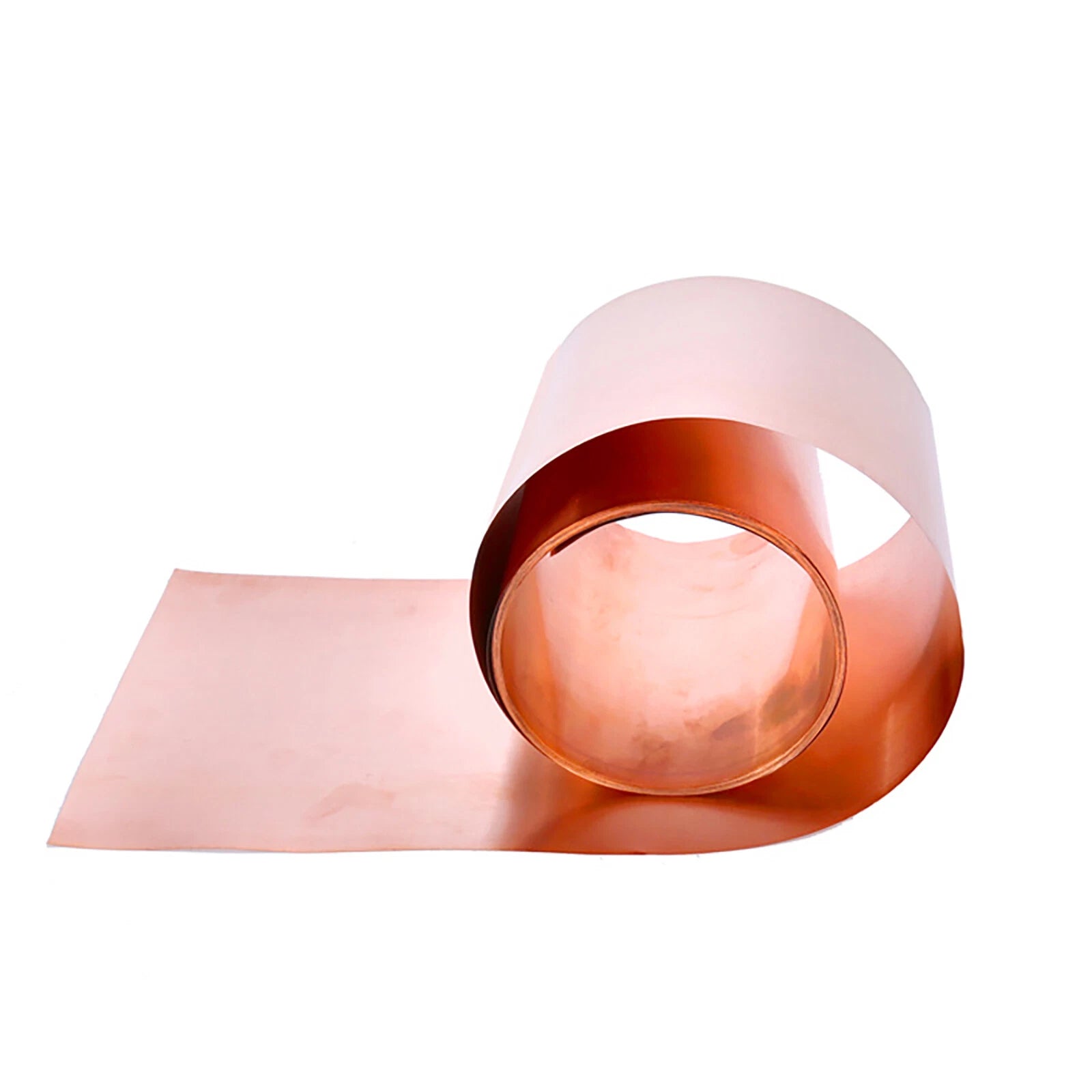
Whether you're rewinding a transformer, shielding a circuit, or crafting a decorative inlay, finding copper strip that's both dimensionally accurate and genuinely pure can be a frustrating search. This copper sheet roll is designed for makers, engineers, and tradespeople who need a reliable, consistent material they can cut to length and put straight to work.
Each roll is made from 99.9% pure copper — the same grade used in electrical conductors — and is available in widths from 10mm to 300mm (approx. 0.4" to 11.8") and thicknesses from 0.01mm to 1mm (approx. 0.0004" to 0.039"). Lengths are offered in 1, 3, 5, 10, and 20 metre options to suit both small-scale and larger project needs.
Typical applications include EMF/RF shielding tape for electronics enclosures, grounding straps in electrical panels, heat spreader strips in DIY thermal management builds, decorative banding in woodworking and furniture inlay, and thin shim stock for mechanical fitting and gap adjustment.
| Material | 99.9% Pure Copper (C11000 equivalent grade) |
|---|---|
| Item Type | Metal Sheet / Flat Stock Roll / Foil Strip |
| Width Range | 10mm – 300mm (approx. 0.4" – 11.8") |
| Thickness Range | 0.01mm – 1mm (approx. 0.0004" – 0.039") |
| Available Lengths | 1 Metre, 3 Metre, 5 Metre, 10 Metre, 20 Metre |
| Surface Finish | Mill finish (bright, uncoated) |
| Temper / Condition | Soft annealed (flexible, workable) |
| Electrical Conductivity | Approximately 100% IACS (International Annealed Copper Standard) |
| Thermal Conductivity | Approximately 385 W/m·K |
| Colour | Bright copper / reddish-orange |
| Size & Length | See variant options |
| Weight | See variant options |
Start with your functional requirement. For electrical grounding straps or bus bars, width determines current capacity — wider strips carry more current at a given thickness. For shielding applications, thinner foil (0.01–0.1mm) is typically sufficient. For structural or mechanical shim use, choose a thickness that provides the rigidity you need without being too stiff to form. If you're unsure, select a 1 metre sample of your target size before committing to a longer roll.
Yes. At 99.9% purity, this copper meets the conductivity standard used in electrical conductors. It is appropriate for grounding straps, bus bars, transformer windings, and similar low-voltage DC or AC applications. Always verify that the cross-sectional area (width × thickness) meets the current-carrying requirements specified by your local electrical code for the intended circuit.
Copper naturally oxidises when exposed to air and moisture, forming a patina that ranges from a dull brown to green verdigris over time. This oxide layer is actually protective and slows further corrosion. For applications where a bright finish must be maintained (e.g., decorative inlay), apply a clear lacquer or wax after installation. For electrical connections, ensure contact surfaces are clean and use appropriate anti-oxidant compound where required by code.
Yes. 99.9% pure copper solders and brazes readily. Use a rosin-core or water-soluble flux appropriate for copper, and a standard 60/40 or lead-free solder for electrical joints. For brazing, use a copper-phosphorus or silver-bearing brazing alloy with a propane or MAPP torch. Thinner gauges (under 0.2mm) heat very quickly, so use a lower-temperature iron or torch setting to avoid warping.
For thicknesses up to approximately 0.3mm, sharp scissors or aviation snips work well. For 0.3mm–0.8mm, use tin snips or a bench-mounted metal shear for a straight edge. For 1mm thickness, a metal cutting disc on an angle grinder or a cold chisel and hammer on a steel block will give a clean cut. Always deburr cut edges with a fine file or sandpaper before handling or installing.
Copper and aluminium form a galvanic couple that can cause accelerated corrosion at the contact point in the presence of moisture. If your assembly joins copper to aluminium, use a bi-metallic transition connector or apply an anti-oxidant jointing compound and seal the joint from moisture. Copper and stainless steel have a smaller galvanic potential difference and are generally more compatible in dry indoor environments, though isolation is still recommended in wet or outdoor settings.
The 0.01mm foil is extremely thin — comparable to heavy-duty aluminium foil — and is best suited for EMF/RF shielding tape, capacitor foil, or decorative leaf applications where flexibility and conformability are more important than structural strength. The 0.1mm strip is roughly 10× thicker, has noticeable rigidity, and is better suited for grounding straps, heat spreaders, or shim stock where the material needs to hold its shape under light mechanical load.