
The chain is fine...but I ordered the wrong size. Nine links of the chain I ordered equals six of the size I wanted. My error...
How can I straighten out the springs? I can't use them coil uo as is.
Your payment information is processed securely. We do not store credit card details nor have access to your credit card information.
Get fitment advice & recommendations
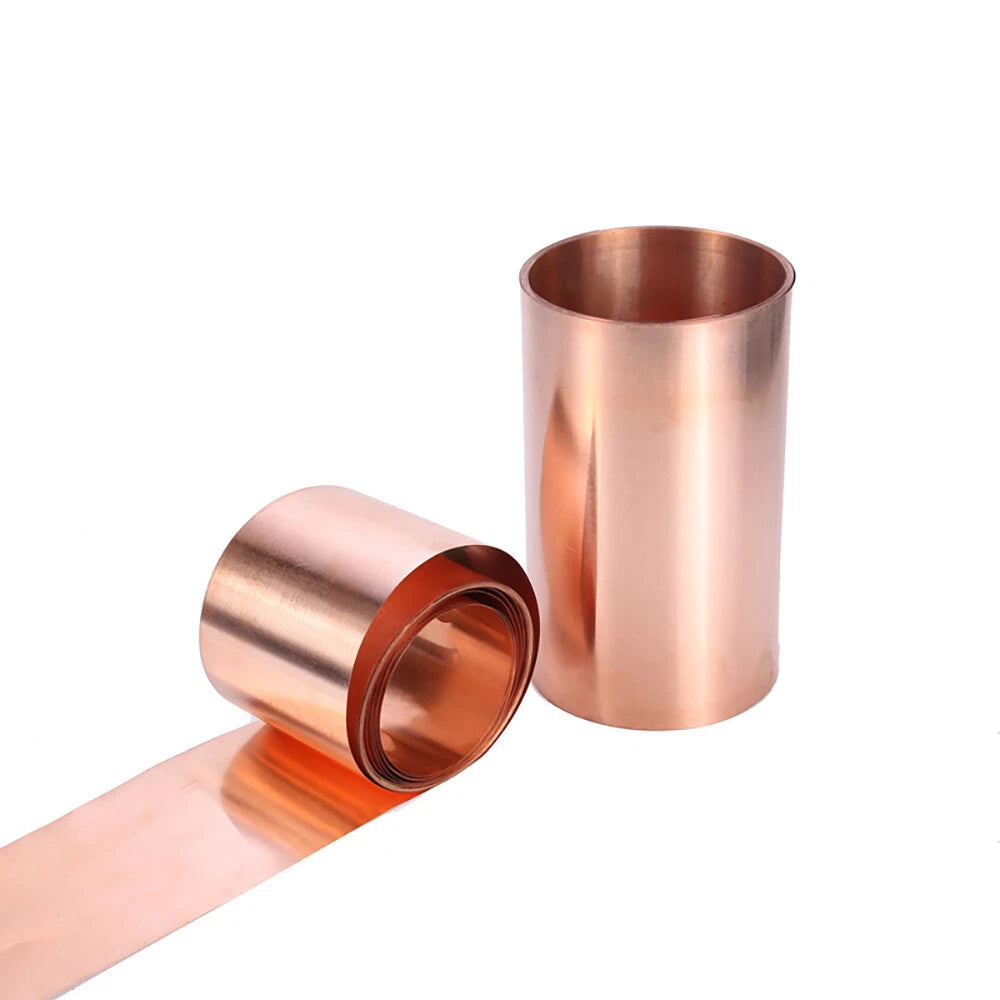
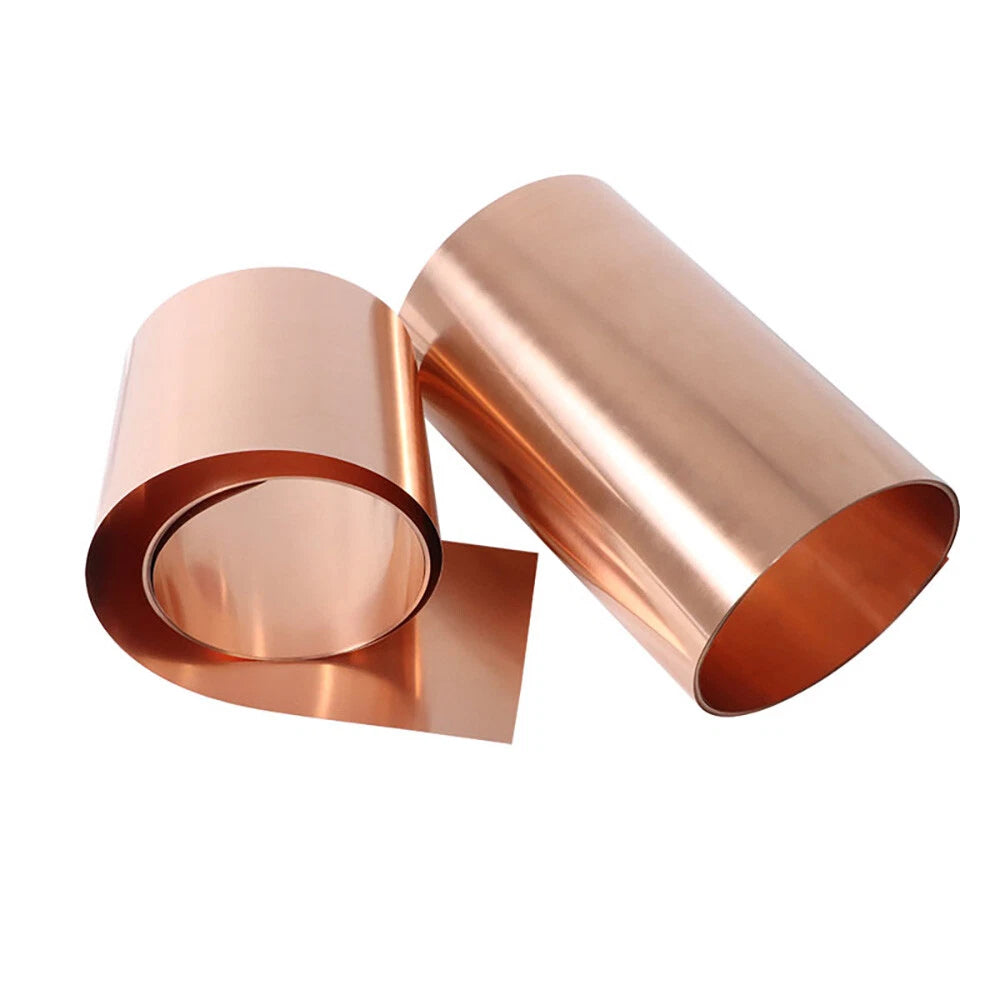
When your project demands reliable electrical conductivity, corrosion resistance, and exact dimensions, standard hardware store metal simply falls short. Whether you're a maker building custom PCB shielding, an HVAC technician needing thin flashing strips, or a craftsperson working on decorative metalwork, sourcing the right copper thickness in the right width is a constant frustration. These T2-grade pure copper sheet strips are stocked in a wide range of widths and thicknesses so you can order exactly what your build requires — no cutting waste, no guesswork.
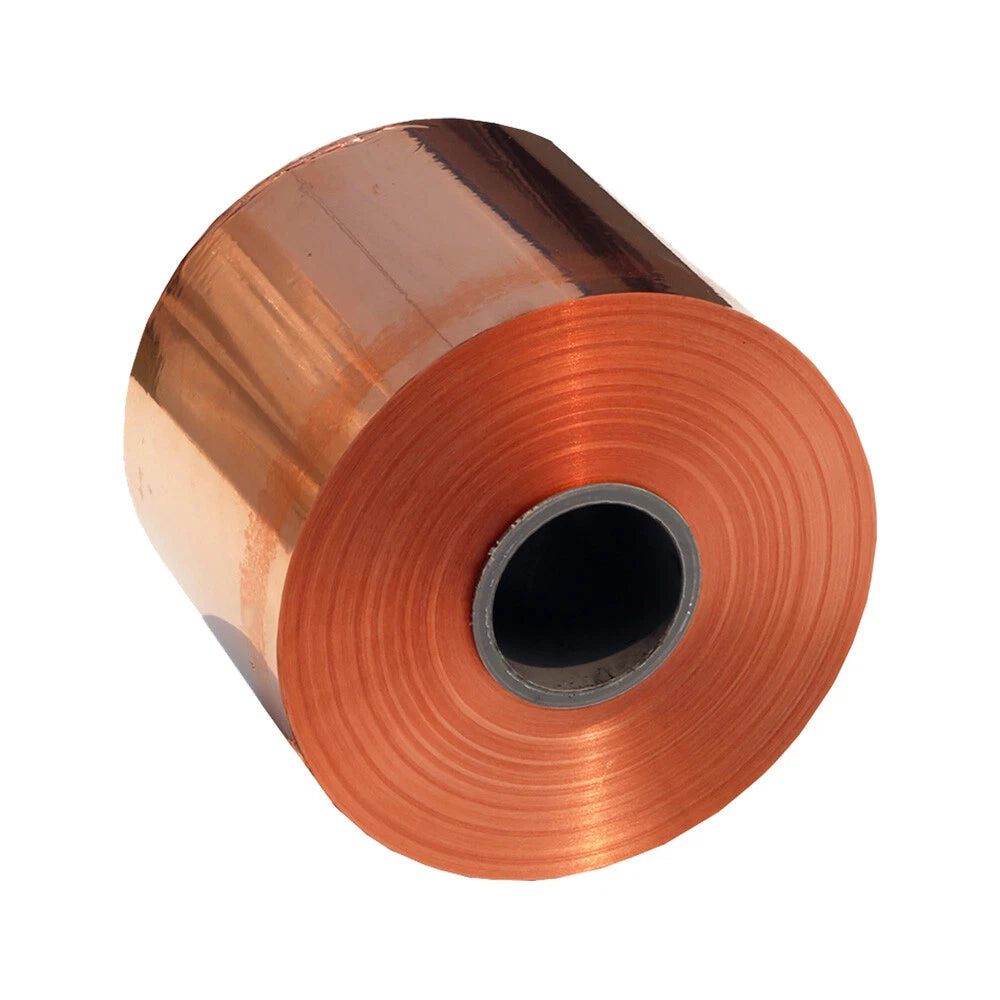
Each strip is made from 99.9% pure T2 copper, a commercially pure grade known for its excellent electrical and thermal conductivity. Available widths run from 10mm to 400mm (approx. 0.39 in to 15.75 in), with thickness options spanning 0.01mm to 1mm (approx. 0.0004 in to 0.039 in). Length options include 300mm, 1000mm, and 2000mm (approx. 11.8 in, 39.4 in, and 78.7 in). The surface finish is smooth-rolled with a characteristic copper-red tone.
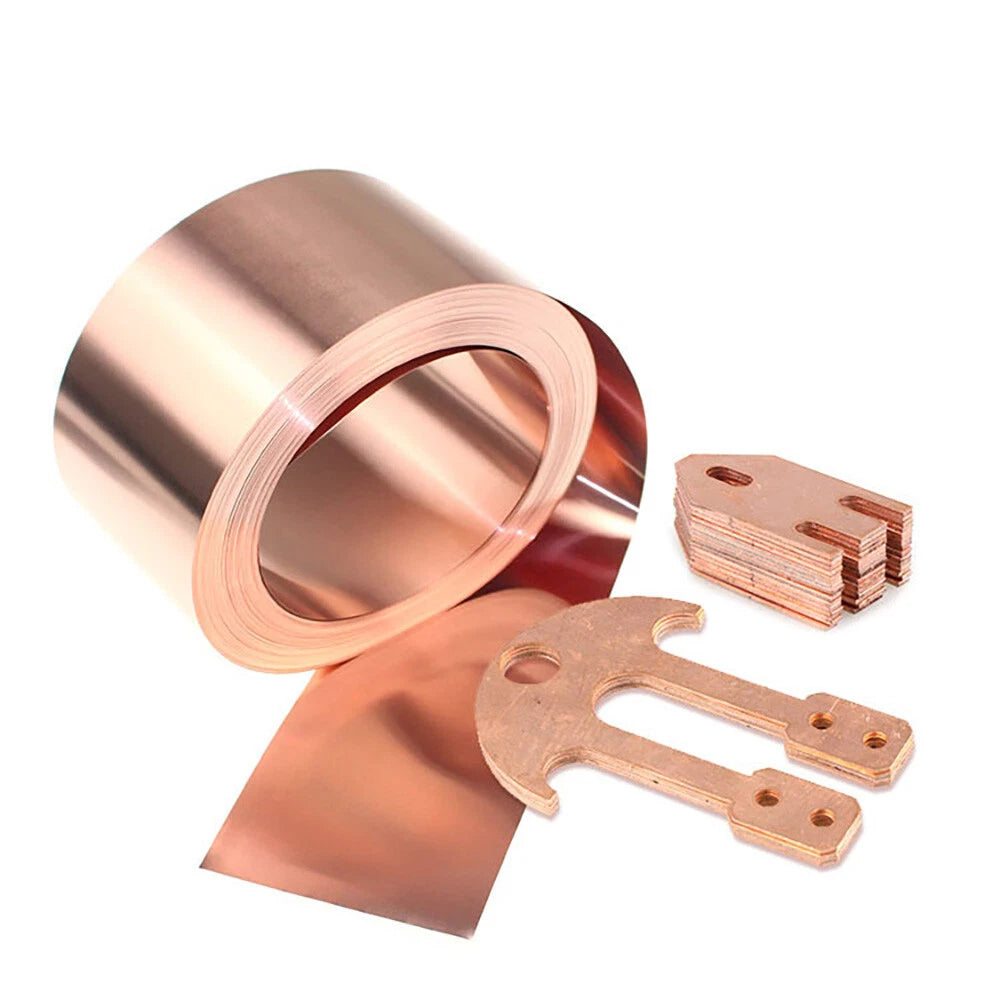
These copper sheet strips suit a broad range of applications: use thin foils (0.01–0.1mm) as EMI/RF shielding tape or grounding strips in electronics enclosures; mid-range thicknesses (0.2–0.5mm) work well for custom bus bars, heat spreaders, and decorative inlay work; thicker strips (0.6–1mm) are suited to roofing flashing, plumbing patch repairs, and structural craft projects. Long-tail use cases include copper foil for stained glass soldering, thin copper shim stock for precision gap-filling, and flat copper bar stock for DIY electrical panel work.
T2-grade copper delivers outstanding electrical conductivity (typically ≥58 MS/m) and thermal performance, making it the go-to choice for electrical and heat-transfer applications.
Width options from 10mm to 400mm, thickness from 0.01mm to 1mm, and lengths of 300mm, 1000mm, or 2000mm — choose the exact dimensions your project needs.
Copper forms a stable oxide patina over time that slows further corrosion, making these strips suitable for both indoor and sheltered outdoor applications.
Thin gauges (0.01–0.3mm) can be cut with scissors or a craft knife; thicker strips (0.4–1mm) are easily scored and snapped or cut with tin snips.
The smooth-rolled surface ensures consistent thickness across the strip and provides a clean base for soldering, adhesive bonding, or surface finishing.
From EMI shielding and grounding straps to roofing flashing, decorative inlay, and custom bus bars — one product family covers a wide range of DIY and trade needs.
| Material | T2 Copper (99.9% purity) |
|---|---|
| Item Type | Metal Sheet / Flat Strip |
| Width Range | 10mm – 400mm (0.39 in – 15.75 in) |
| Thickness Range | 0.01mm – 1mm (0.0004 in – 0.039 in) |
| Length Options | 300mm / 1000mm / 2000mm |
| Surface Finish | Smooth rolled, copper-red |
| Electrical Conductivity | Typically ≥58 MS/m (IACS ≥100%) |
| Hardness | See variant options |
| Temper | See variant options |
| Weight | See variant options |
For EMI/RF shielding, grounding tape, or stained glass foil work, choose 0.01mm–0.1mm. For heat spreaders, decorative inlay, or flexible bus bars, 0.2mm–0.5mm is a practical range. For roofing flashing, plumbing patches, or structural craft work, select 0.6mm–1mm. When in doubt, thinner strips are easier to cut and form by hand.
Match the width to your application: narrow strips (10mm–30mm) suit grounding straps, cable shielding, and decorative banding; medium widths (40mm–100mm) work for bus bars, heat spreaders, and flashing; wide strips (150mm–400mm) are suited to sheet metal patches, large shielding panels, and craft blanks. If you need a custom width, consider ordering a wider strip and cutting it down.
Yes. T2 pure copper solders readily with standard rosin-core or water-soluble flux and 60/40 or lead-free solder. Clean the surface with isopropyl alcohol before applying flux for best adhesion. The smooth rolled finish provides a consistent bonding surface.
Copper naturally oxidises to form a brownish or greenish patina (verdigris) when exposed to air and moisture. This patina is a stable oxide layer that actually slows further corrosion. For applications where appearance matters, apply a clear lacquer or wax coating to preserve the bright copper finish. For electrical contacts, keep surfaces clean and use appropriate contact grease.
Copper is widely used in outdoor applications including roofing, guttering, and flashing due to its natural corrosion resistance. Thicker strips (0.5mm–1mm) are better suited to structural outdoor use. Thin foils (under 0.1mm) are more appropriate for sheltered or indoor applications where mechanical stress is minimal.
Strips up to 0.2mm thick can be cut cleanly with sharp scissors or a craft knife and steel ruler. Strips from 0.3mm–0.6mm are best cut with aviation tin snips or a rotary cutter. For 0.8mm–1mm strips, use tin snips or a metal-cutting blade in a jigsaw or angle grinder. Always deburr cut edges with a fine file or sandpaper for safety.
No. These are bare copper metal strips with no adhesive backing. They are raw metal stock intended for fabrication, soldering, or mechanical installation. If you need self-adhesive copper tape for EMI shielding or craft use, that is a separate product category. These strips are ideal when you need structural copper or plan to solder, rivet, or mechanically fasten the material.





