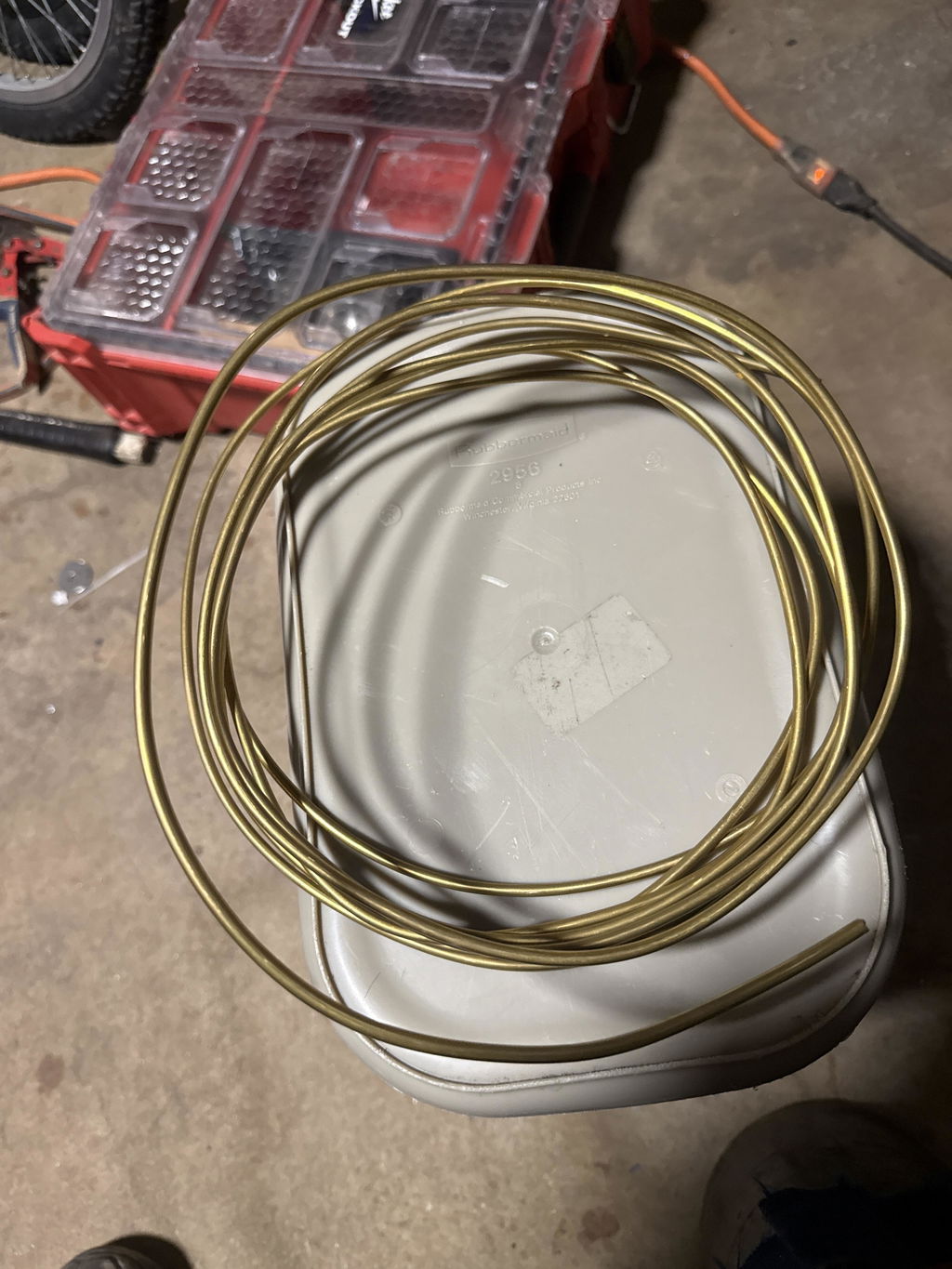
The chain is fine...but I ordered the wrong size. Nine links of the chain I ordered equals six of the size I wanted. My error...
How can I straighten out the springs? I can't use them coil uo as is.
Your payment information is processed securely. We do not store credit card details nor have access to your credit card information.
Get fitment advice & recommendations
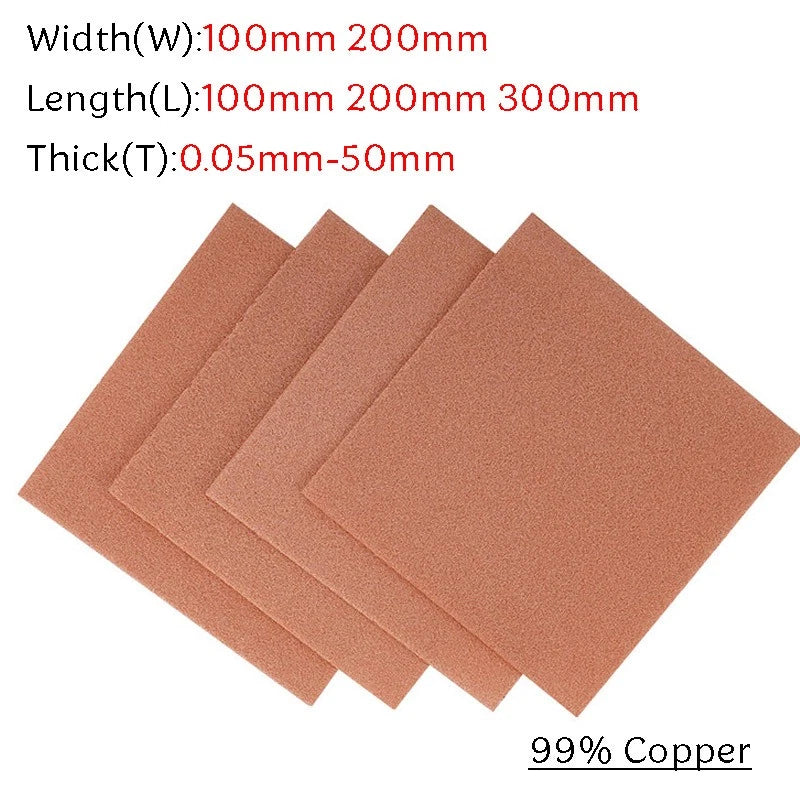
Researchers, electrochemists, and lab engineers often struggle to find a conductive porous substrate that delivers both consistent pore uniformity and reliable electrical performance. Whether you are building a fuel cell electrode, designing a filtration membrane, or prototyping a battery current collector, this 99% pure copper porous plate foam metal sheet gives you the dimensional and material precision your experiments demand.
Each sheet is fabricated from 99% pure copper using a sintered foam process, producing an open-cell three-dimensional network with controlled pore sizes ranging from 10 to 80 micrometres (µm). Sheet thickness spans 0.05 mm (approximately 0.002 in) up to 50 mm (approximately 1.97 in), with planar dimensions of 100 mm × 100 mm (3.94 in × 3.94 in) or 200 mm × 300 mm (7.87 in × 11.81 in) depending on the variant selected.
Typical applications include electrochemical cell electrodes for copper deposition studies, gas diffusion layers in hydrogen fuel cell research, liquid–metal filtration in metallurgical lab setups, and porous current collectors for supercapacitor and battery prototype testing. The open porosity also makes these sheets suitable for acoustic damping panels and heat exchanger inserts in small-scale thermal management experiments.
Available in 10 µm, 30 µm, 50 µm, and 80 µm pore grades, enabling precise selection for filtration cut-off or electrode surface area requirements.
Sintered from 99% pure copper powder, delivering low electrical resistivity (typically 1.7–1.8 µΩ·cm) and consistent electrochemical behaviour across the sheet surface.
Thickness options from 0.05 mm to 50 mm (0.002 in to 1.97 in) cover ultra-thin membrane applications through thick structural electrode blocks in a single product line.
Three-dimensional interconnected pore network maximises surface area contact and fluid or gas permeability, critical for diffusion-limited electrochemical reactions.
Copper foam sheets can be cut with scissors or shears (thin grades) or machined with standard tooling (thick grades), allowing custom shapes without specialist equipment.
Supplied as flat, ready-to-use sheets — no additional flattening or surface preparation required before integration into experimental assemblies or test fixtures.
| Material | 99% Pure Copper (sintered foam) |
|---|---|
| Pore Size Options | 10 µm, 30 µm, 50 µm, 80 µm (porous grades); solid thin-film grades also available |
| Thickness Range | 0.05 mm – 50 mm (0.002 in – 1.97 in) |
| Sheet Dimensions | 100 mm × 100 mm or 200 mm × 300 mm (see variant options) |
| Electrical Resistivity | Typically 1.7–1.8 µΩ·cm (bulk copper reference) |
| Porosity Structure | Open-cell, three-dimensional interconnected network |
| Surface Finish | See variant options |
| Condition | New, unused |
| Compatible Environments | Aqueous electrolytes, mild acids (pH ≥ 3), inert atmospheres |
Select a smaller pore size (10 µm) when you need finer filtration cut-off or higher surface area per unit volume for electrochemical reactions. Choose larger pore sizes (50–80 µm) when lower flow resistance and faster fluid or gas permeation are priorities, such as in gas diffusion layer applications.
For thin-film electrodes and current collectors in pouch or coin cell assemblies, thicknesses of 0.1–0.5 mm are typical. For structural electrodes in flow cells or larger electrochemical reactors, 1–10 mm variants provide the mechanical rigidity needed. Thicker blocks (15–50 mm) suit acoustic or thermal management inserts.
Copper is stable in neutral to mildly acidic aqueous electrolytes (pH 3–7) and performs well in many common lab electrolytes such as copper sulfate or sodium sulfate solutions. It is not recommended for use in strong oxidising acids (e.g., concentrated nitric acid) or strongly alkaline solutions (pH > 11) without additional protective coatings.
Yes. Thin grades (0.05–0.5 mm) can be cut cleanly with sharp scissors or metal shears. Thicker grades (1 mm and above) can be machined using standard carbide tooling, wire EDM, or waterjet cutting. Copper foam is relatively soft, so standard workshop practices apply.
Yes. The open-cell copper foam structure is widely used as a gas diffusion layer substrate, current collector, or electrode scaffold in hydrogen fuel cell research, lithium-ion battery prototyping, and supercapacitor development. The 99% copper purity ensures low contact resistance at electrode interfaces.
Variants labelled with a micrometre pore size (e.g., 10 µm Pore) are sintered copper foam sheets with a defined pore grade and a relatively thin overall thickness (0.2–1.6 mm). Variants listed only by thickness (e.g., 100 mm × 100 mm × 3 mm) are copper foam sheets where the pore structure is inherent to the foam but the pore grade is not individually specified — these are suited for applications where overall thickness and mechanical properties take priority over a precise filtration cut-off.
Store sheets in a sealed polyethylene bag with a desiccant packet, away from humidity and direct sunlight. For long-term storage, a light coating of isopropyl alcohol followed by drying before use can help remove surface oxides. Avoid contact with chloride-containing environments during storage.