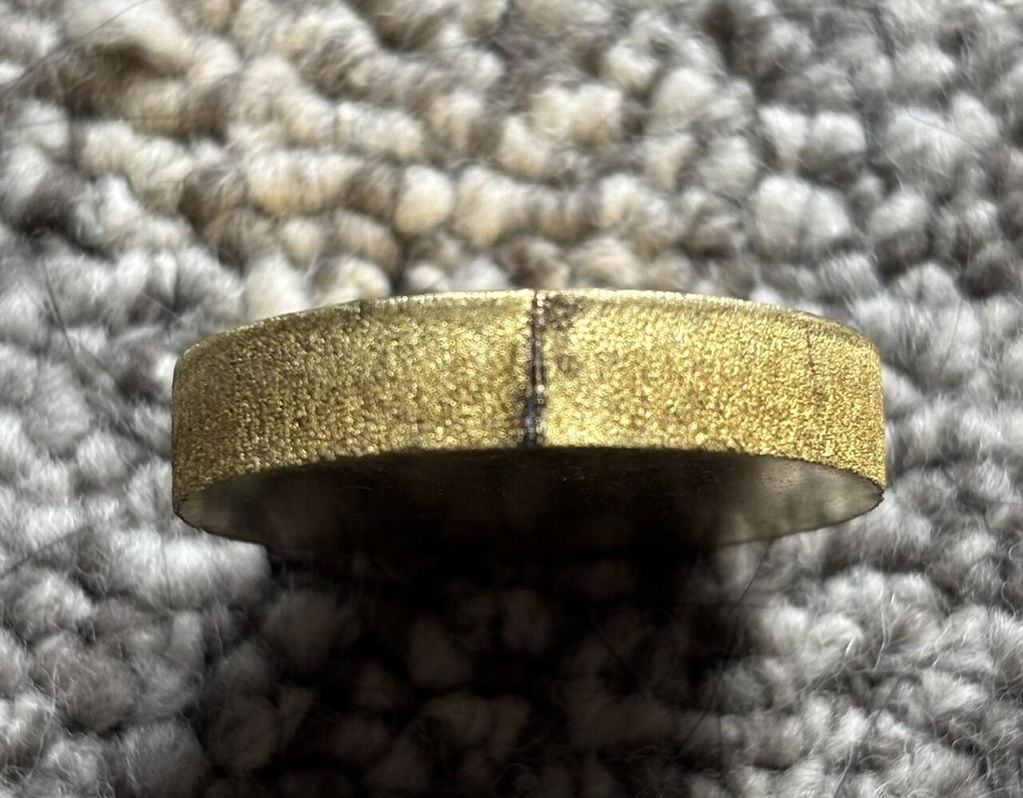
The chain is fine...but I ordered the wrong size. Nine links of the chain I ordered equals six of the size I wanted. My error...
How can I straighten out the springs? I can't use them coil uo as is.
Your payment information is processed securely. We do not store credit card details nor have access to your credit card information.
Get fitment advice & recommendations
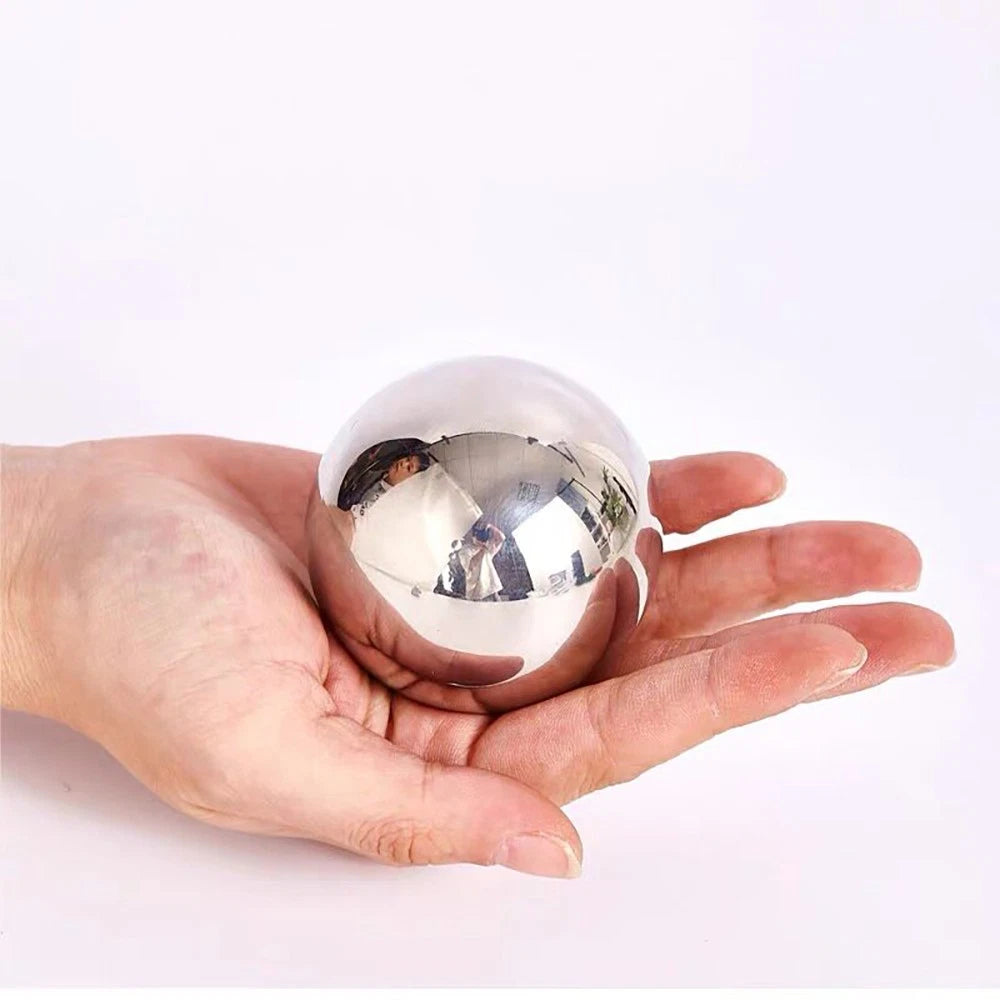
When a standard carbon steel ball fails in a wet, chemical, or food-adjacent environment, the entire assembly pays the price. Engineers, hobbyists, and maintenance technicians who need a reliable rolling element that holds up to moisture and mild corrosives turn to A2 stainless steel ball bearings — and for good reason. These balls are a direct upgrade for anyone tired of rust-stained housings and premature bearing failure.
Each ball is manufactured from A2 stainless steel (equivalent to AISI 304 / EN 1.4301), a chromium-nickel alloy that delivers solid corrosion resistance without sacrificing dimensional accuracy. The available diameter range spans 1mm (0.039 in) through 125mm (4.921 in), covering miniature instrument bearings at the small end and large industrial check-valve or load-transfer applications at the upper end. Balls are supplied individually or in quantity packs of 10, 20, 25, 50, or 100 units.
Typical use cases include replacement rolling elements in skateboard and inline-skate bearings, check valves in fluid-handling systems, cam followers in light automation, and precision spacers in jigs and fixtures. The broad size selection also makes these A2 stainless steel ball bearings a practical stock item for repair shops that service a wide variety of equipment.
Chromium-nickel alloy construction provides resistance to oxidation, mild acids, and atmospheric moisture — significantly extending service life compared to carbon steel alternatives.
From miniature 1mm balls for instrument mechanisms to 125mm (≈4.92 in) balls for heavy industrial applications, the full range is available in a single listing for convenient reordering.
Each ball is ground to a consistent spherical geometry, ensuring smooth rolling contact, low vibration, and predictable load distribution in bearing races and valve seats.
Order as few as 1 ball for a single repair or up to 100 per SKU for production runs and maintenance stock — quantity pricing scales accordingly to reduce per-unit cost.
A2 stainless is largely non-magnetic in the annealed state, making these balls suitable for applications near sensitive electronics or magnetic-field-sensitive instruments.
Used in bearing assemblies, check valves, ball screws, cam followers, jig spacers, and decorative or functional hardware across DIY, industrial, and food-processing environments.
| Material | A2 Stainless Steel (AISI 304 / EN 1.4301) |
|---|---|
| Diameter Range | 1mm – 125mm (0.039 in – 4.921 in) |
| Available Sizes | See variant options |
| Surface Finish | Precision-ground, bright |
| Hardness | Typically 60–67 HRB (annealed A2 stainless) |
| Magnetic Properties | Largely non-magnetic (annealed condition) |
| Corrosion Resistance | Resistant to atmospheric moisture, mild acids, and oxidation |
| Quantity Options | 1 / 10 / 20 / 25 / 50 / 100 per order |
| Application | Bearing assemblies, check valves, cam followers, jigs, fluid systems |
| Operating Temperature | Typically –20°C to +300°C (–4°F to +572°F) |
Measure the inner diameter of the bearing race or housing bore with a caliper. The ball diameter should match the original specification — even a 0.1mm deviation can affect load capacity and running clearance. If you are replacing worn balls, measure a known-good ball from the same assembly rather than the worn ones, as wear reduces the actual diameter.
A2 (AISI 304) contains 18% chromium and 8% nickel, offering good general corrosion resistance. A4 (AISI 316) adds 2–3% molybdenum, which significantly improves resistance to chlorides and marine environments. For freshwater, indoor, or mild-chemical applications, A2 is typically sufficient. For saltwater, coastal, or chlorinated environments, A4 is the better choice.
A2 / AISI 304 stainless steel is widely used in food-contact applications and meets the general requirements of many food-safety standards. However, suitability depends on the specific regulation in your region and the nature of the food product. Confirm compliance with your local food-safety authority before use in direct food-contact applications.
Yes. A2 stainless steel balls are commonly used as sealing elements in check valves and ball valves handling water, mild chemicals, and non-aggressive fluids. Verify that the ball diameter matches the valve seat bore and that A2 stainless is chemically compatible with the fluid being controlled. Contact us to confirm if you are unsure about compatibility.
A2 stainless resists dilute acids, alkalis, and most organic compounds at moderate temperatures. It is not recommended for prolonged exposure to hydrochloric acid, concentrated sulfuric acid, or high-chloride environments. Consult a chemical compatibility chart for AISI 304 stainless steel, or contact us to confirm suitability for your specific media.
Most small bearings (e.g., skateboard, bicycle, or instrument bearings) contain 7–12 balls per race. A quantity of 10 or 20 is usually sufficient for a single bearing replacement plus a few spares. For production runs or maintenance stock, the 50- or 100-ball packs offer a lower per-unit cost. Select your size and quantity from the variant options above.
Yes. Sizes from 50mm (≈1.97 in) up to 125mm (≈4.92 in) are listed as variant options. These larger balls are used in heavy-load check valves, industrial cam mechanisms, and large bearing assemblies. Due to their size and weight, per-unit pricing increases accordingly. Select the required diameter from the Size (mm) dropdown above.