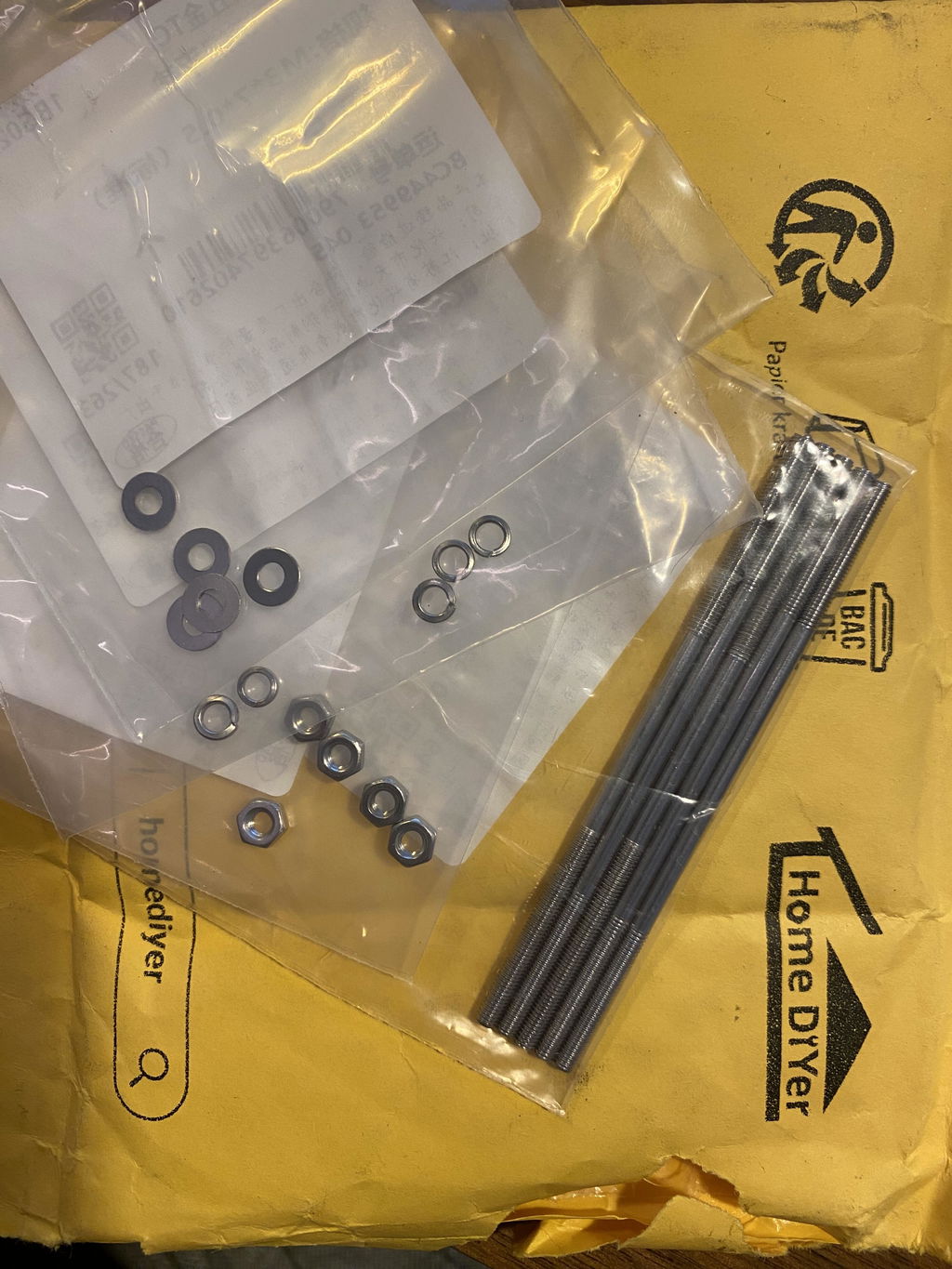

The chain is fine...but I ordered the wrong size. Nine links of the chain I ordered equals six of the size I wanted. My error...
How can I straighten out the springs? I can't use them coil uo as is.
Your payment information is processed securely. We do not store credit card details nor have access to your credit card information.
Get fitment advice & recommendations
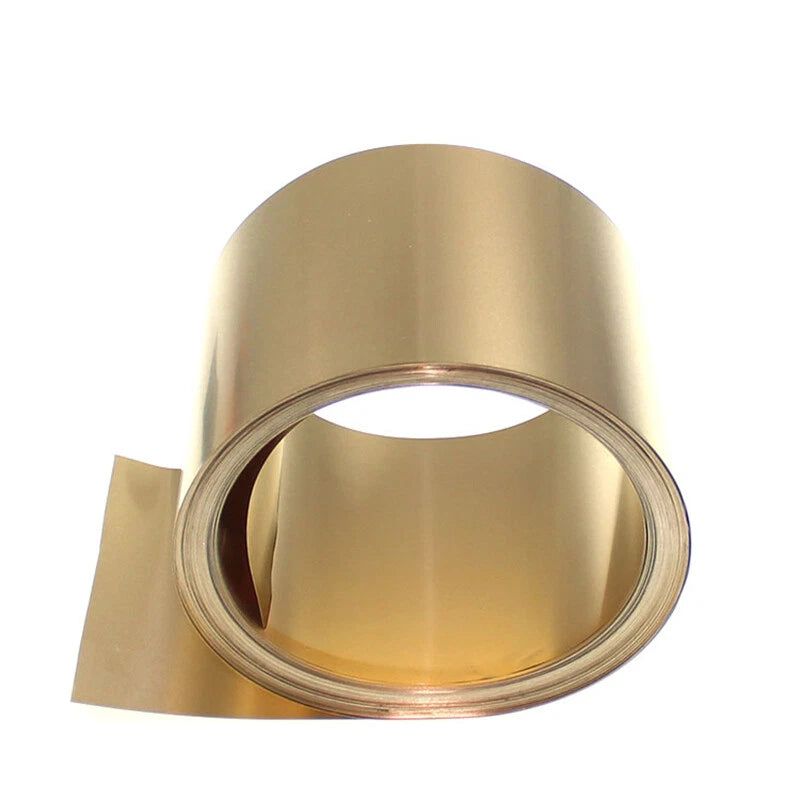
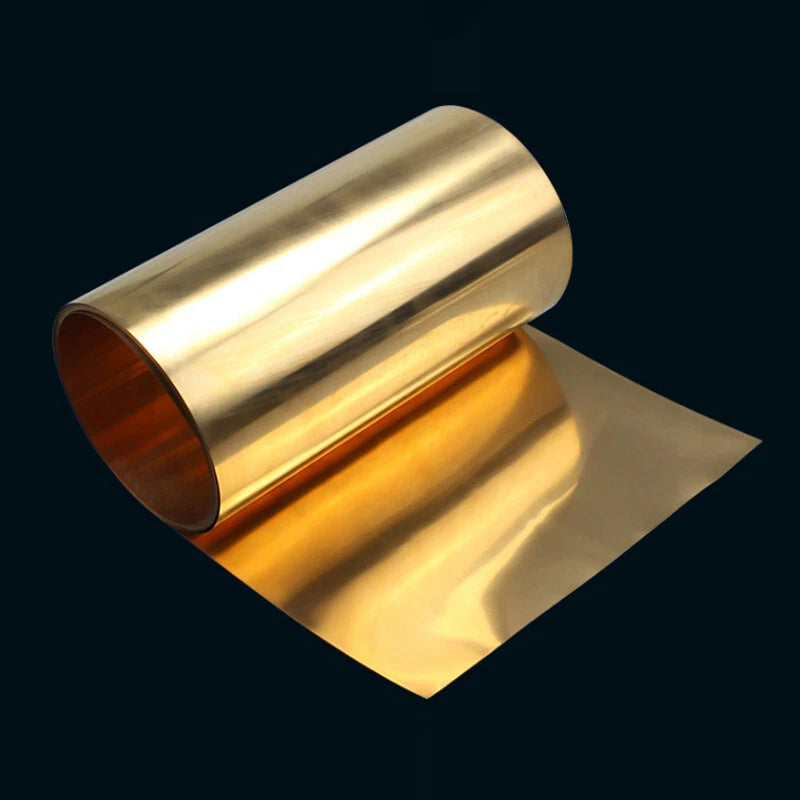
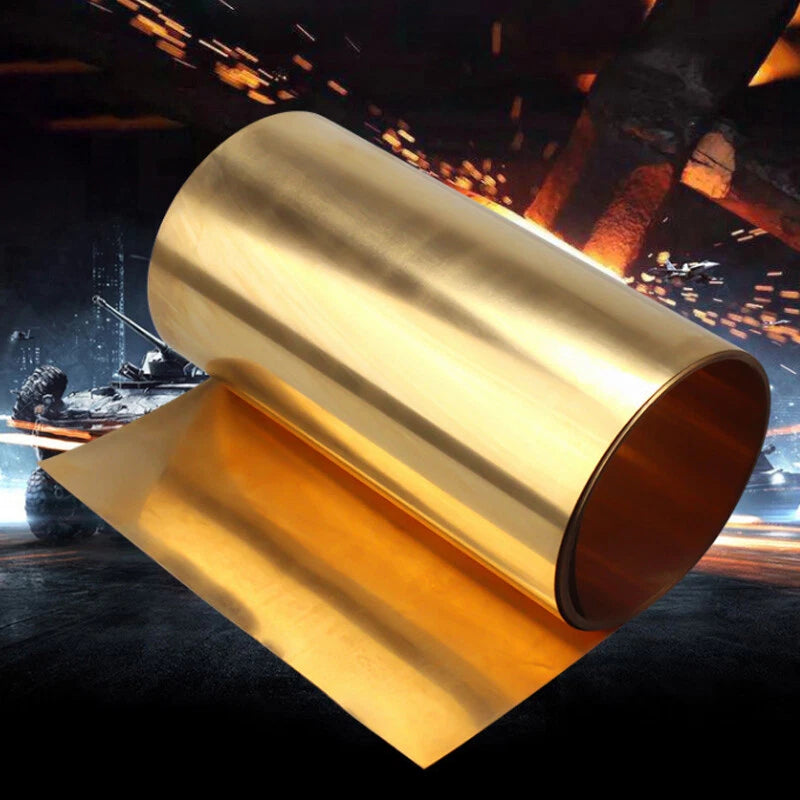
When your project demands a metal that combines the conductivity of copper with the spring-back strength of steel, standard sheet stock simply falls short. Engineers, makers, and precision fabricators working on electrical contacts, spring components, and tooling inserts need a material that holds its shape under repeated stress — that's exactly where beryllium copper alloy sheet delivers. Whether you're prototyping a flex connector or machining a custom die insert, BeCu sheet is the go-to choice for demanding applications.
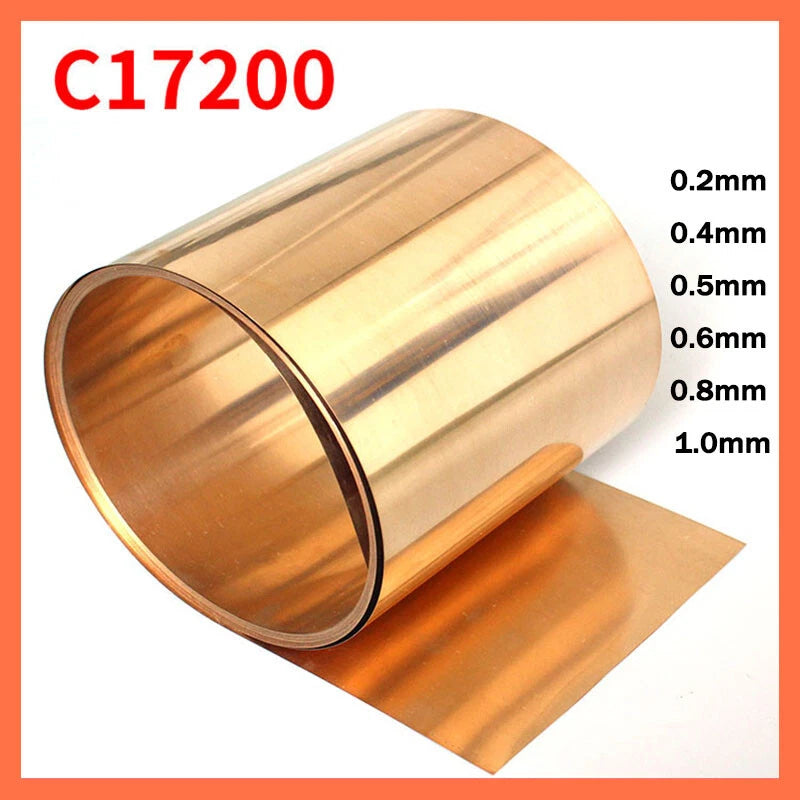
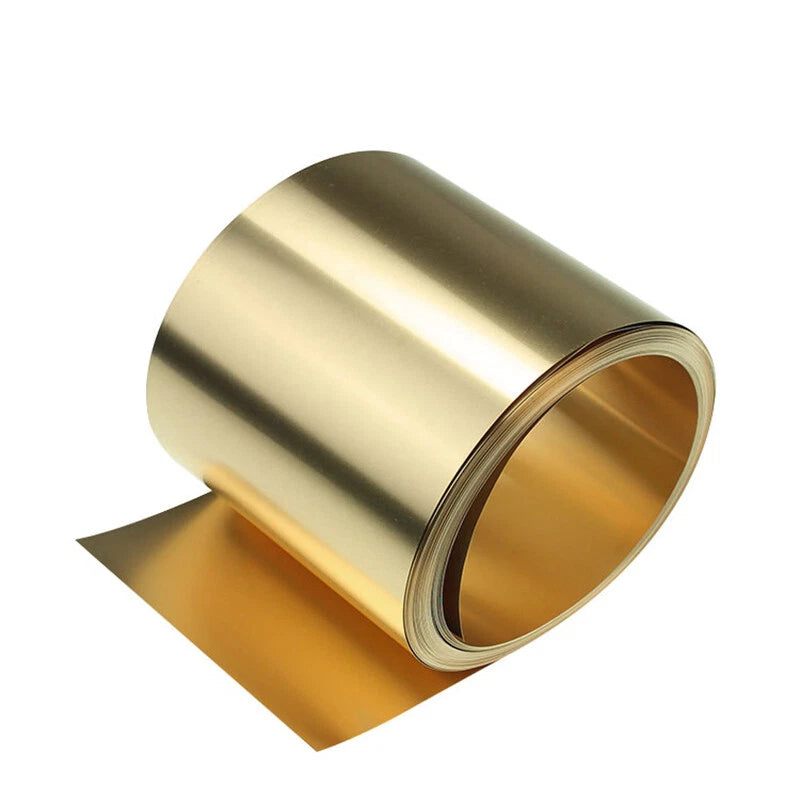
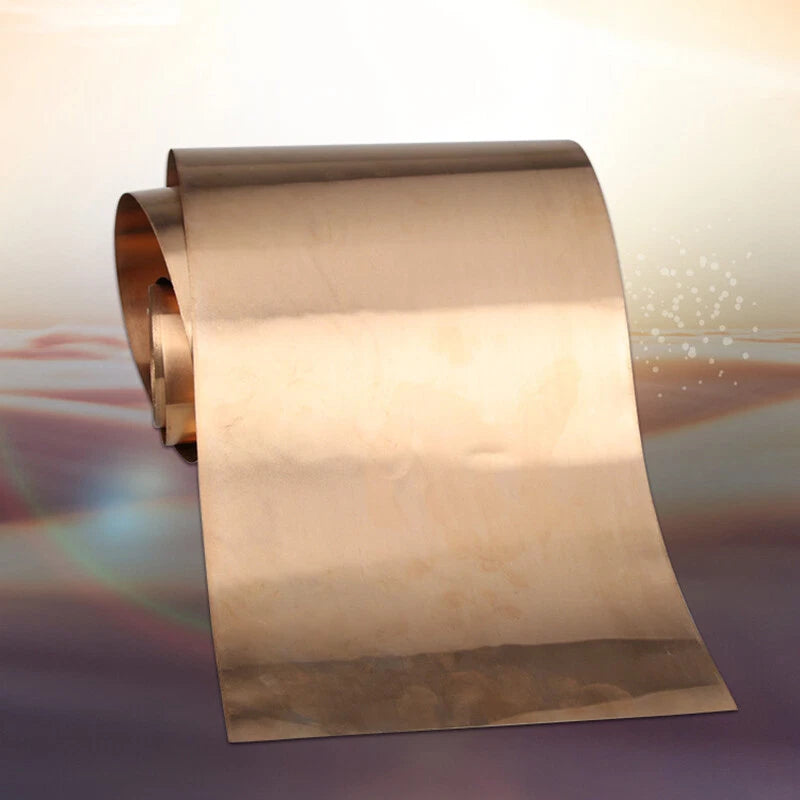
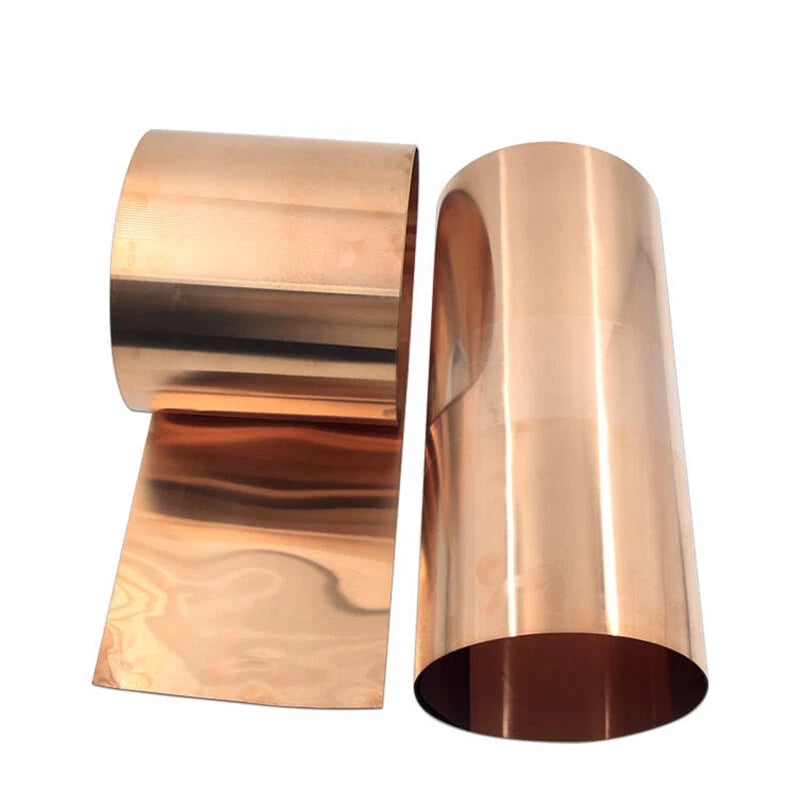
These beryllium copper alloy sheet plates are composed of a copper-beryllium (C17200-equivalent) alloy, offering a balance of electrical conductivity, thermal resistance, and mechanical strength. Sheets are available in three cut sizes — 100mm × 100mm (~3.94" × 3.94"), 100mm × 200mm (~3.94" × 7.87"), and 200mm × 200mm (~7.87" × 7.87") — with thickness options ranging from 0.2mm to 1.0mm (approximately 0.008" to 0.039"). Each panel is flat-cut and ready for further machining, forming, or direct use.
Typical use cases include fabricating electrical spring contacts and relay components, crafting precision shims and spacers for tight-tolerance assemblies, and producing non-sparking tooling inserts for use in hazardous environments. Long-tail applications such as "thin beryllium copper sheet for spring contacts," "BeCu shim stock for precision machining," and "non-sparking copper alloy panel for tooling" are all well served by this versatile stock material.
BeCu alloy maintains its shape under repeated flexing and loading cycles, making it ideal for spring contacts, clips, and snap-fit components that must return to their original position reliably.
Retains the inherent conductivity of copper while adding mechanical resilience — a critical combination for electrical contacts, connectors, and relay components where signal integrity matters.
Performs consistently across a wide temperature range, resisting softening or deformation under moderate heat — suitable for applications near heat-generating components or in elevated-temperature environments.
Copper-beryllium alloys exhibit good resistance to oxidation and corrosion in typical indoor and light industrial environments, reducing the need for additional surface coatings in many applications.
Choose from three sheet sizes (100×100mm, 100×200mm, 200×200mm) and seven thickness options (0.2mm to 1.0mm) to match your exact project requirements without unnecessary material waste.
Flat-cut panels are ready for CNC milling, wire EDM, stamping, or manual forming. The consistent thickness and flat surface finish support accurate downstream fabrication with minimal prep work.
| Material | Beryllium Copper Alloy (BeCu, C17200-equivalent) |
|---|---|
| Available Sheet Sizes | 100×100mm / 100×200mm / 200×200mm |
| Available Thickness | 0.2mm / 0.3mm / 0.4mm / 0.5mm / 0.6mm / 0.8mm / 1.0mm |
| Thickness Tolerance | See variant options |
| Surface Finish | Mill finish, flat-cut |
| Beryllium Content | Typically 1.8–2.0% Be (C17200-equivalent) |
| Electrical Conductivity | Typically 22–28% IACS (age-hardened condition) |
| Hardness | See variant options (varies by temper) |
| Temper / Condition | See variant options |
| Application | Springs, contacts, shims, tooling inserts, precision parts |
| Machinability | Compatible with CNC, EDM, stamping, bending |
Select the sheet size closest to your finished part dimensions to minimize waste. The 100×100mm panel suits small contacts and shims; the 100×200mm is ideal for elongated spring blanks or strips; the 200×200mm provides the most material for larger inserts or multiple smaller parts cut from a single sheet. If your part requires a larger blank, consider ordering multiple sheets.
For light-duty flex contacts and thin spring fingers, 0.2mm–0.3mm is typically used. Medium-duty spring contacts and clips generally fall in the 0.4mm–0.6mm range. For heavier-duty springs, structural shims, or tooling inserts requiring more rigidity, 0.8mm–1.0mm is recommended. Always verify the spring rate and deflection requirements against your design specs.
Solid BeCu sheet is safe to handle with normal precautions. However, machining, grinding, or sanding beryllium copper generates fine dust and particles that require proper respiratory protection and ventilation per applicable safety regulations (e.g., OSHA beryllium standards). Always follow your local workplace safety guidelines when cutting or machining this material.
Beryllium copper offers significantly higher yield strength and fatigue resistance than phosphor bronze, making it the preferred choice for high-cycle spring contacts and precision components. Phosphor bronze is more cost-effective for lower-stress applications. If your design requires tight dimensional stability under repeated deflection, BeCu is the stronger performer.
Beryllium copper alloys have good corrosion resistance in typical indoor and light industrial environments. Like all copper alloys, the surface may develop a natural patina over time when exposed to air and humidity. For applications requiring a bright finish or enhanced corrosion protection, consider applying a suitable plating or coating after fabrication.
Yes. Beryllium copper is widely used for non-sparking tools and tooling inserts in environments where flammable gases, vapors, or dust may be present. The alloy does not generate sparks when struck against hard surfaces, making it suitable for use in oil, gas, and chemical processing environments. Always verify compliance with your specific safety standards before use.
Yes. Beryllium copper's electrical conductivity makes it fully compatible with wire EDM and sinker EDM processes. It is commonly used for EDM electrodes and precision die inserts. Ensure your EDM parameters are set appropriately for copper-alloy workpieces to achieve the best surface finish and dimensional accuracy.