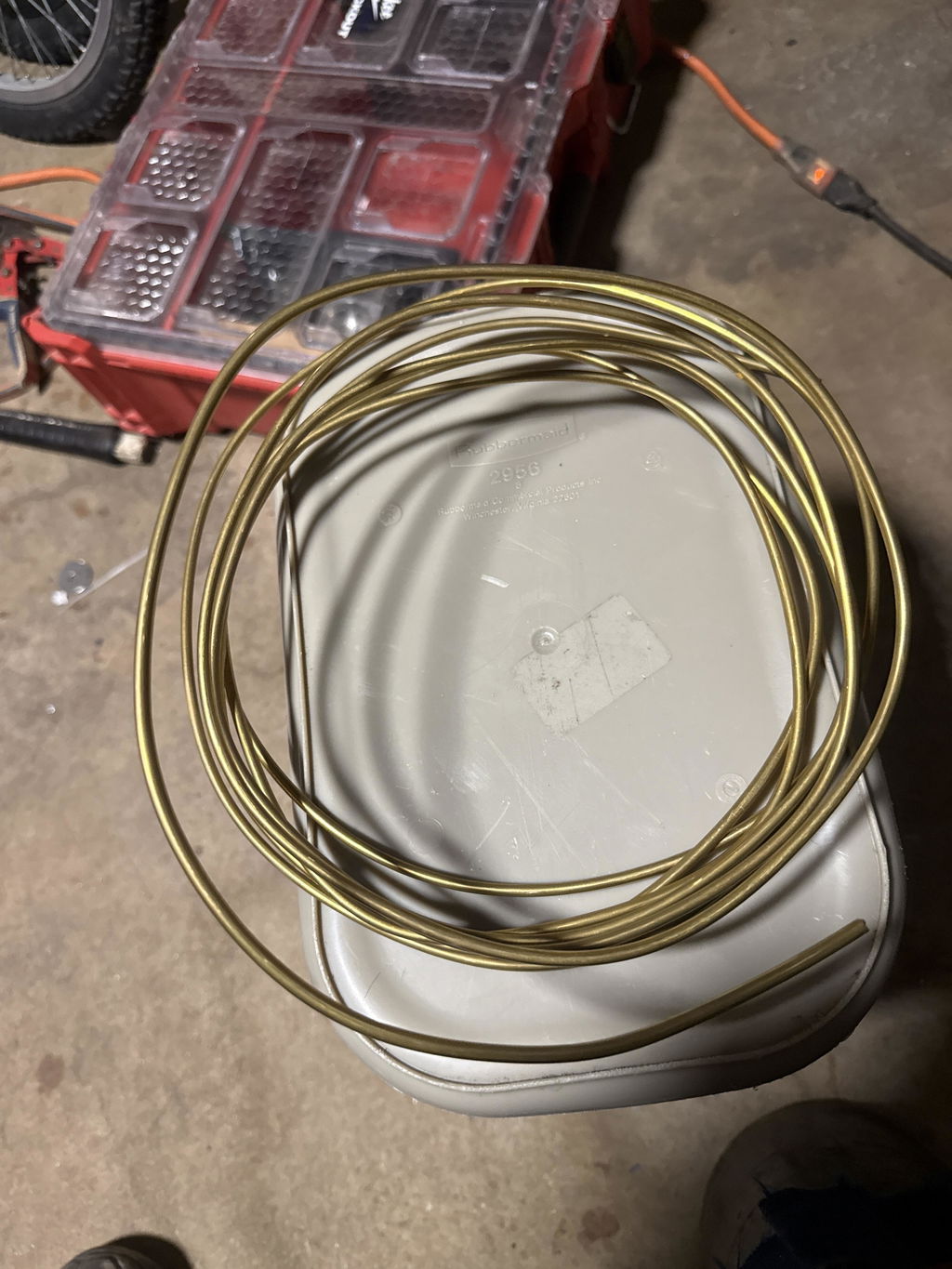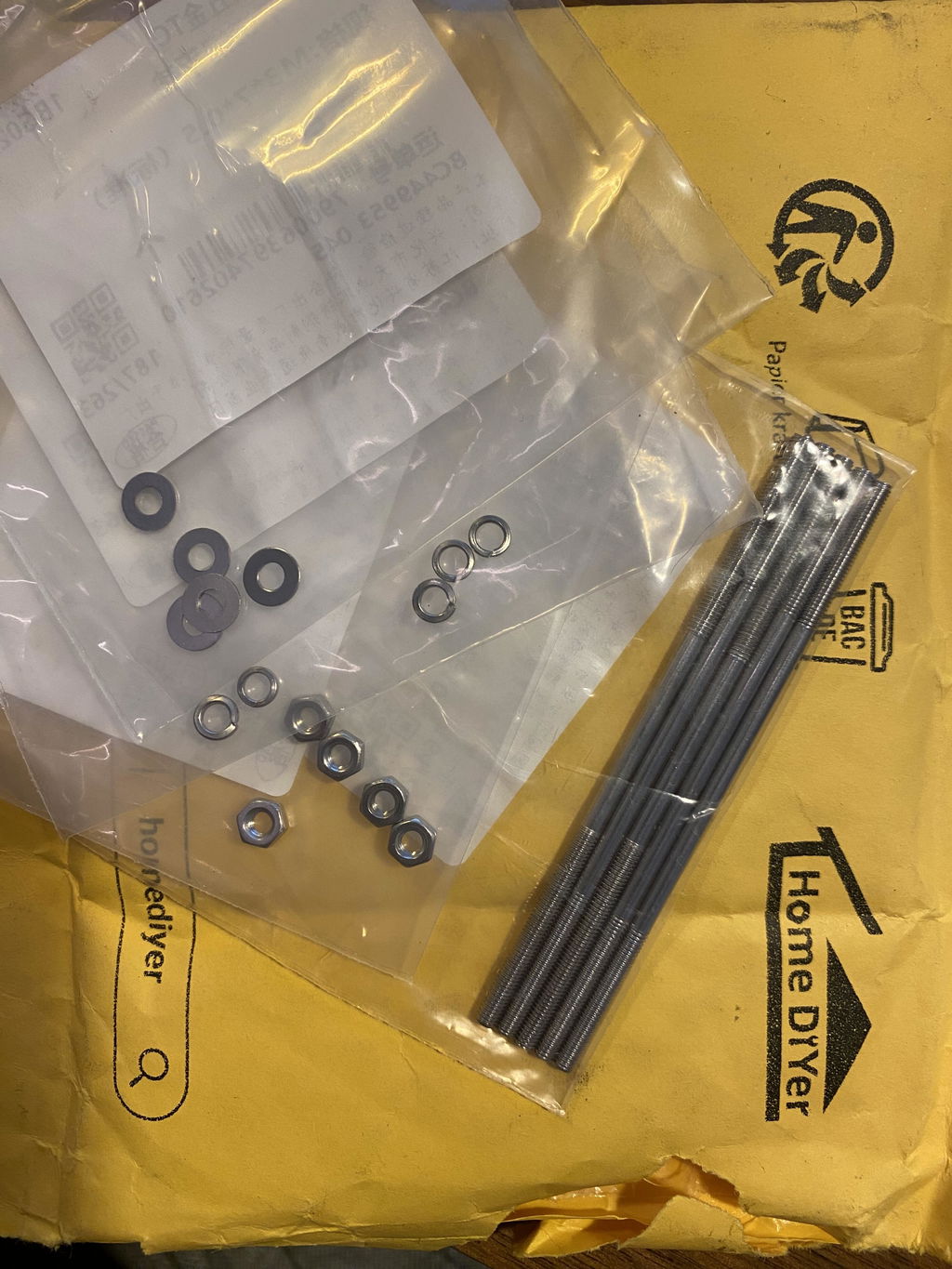
The chain is fine...but I ordered the wrong size. Nine links of the chain I ordered equals six of the size I wanted. My error...
How can I straighten out the springs? I can't use them coil uo as is.
Your payment information is processed securely. We do not store credit card details nor have access to your credit card information.
Get fitment advice & recommendations
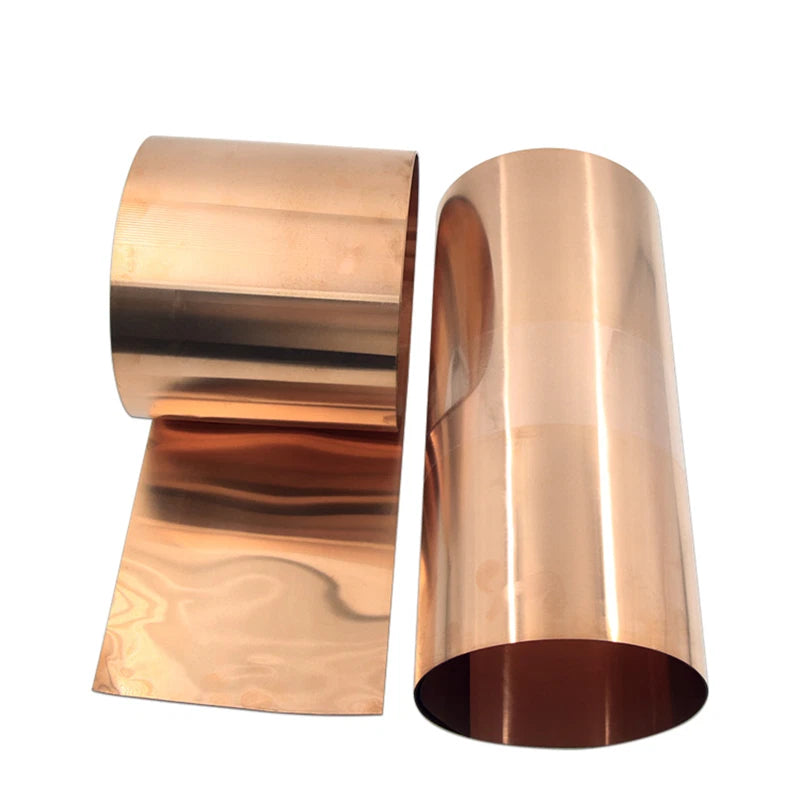
When standard copper just won't hold up under repeated stress, engineers, machinists, and precision fabricators turn to beryllium copper sheet. Whether you're replacing a worn spring contact, shimming a tight tolerance assembly, or cutting custom gaskets, the wrong material thickness or size wastes time and money. These BeCu foils and plates are stocked in a wide range of thicknesses and sheet sizes so you can order exactly what your project demands.
Each sheet is beryllium copper alloy (C17200 / CuBe2 equivalent), combining the electrical conductivity of copper with the spring-like resilience of a high-strength alloy. Thickness options span 0.08 mm (approx. 0.003 in) to 2.0 mm (approx. 0.079 in). Sheet sizes range from 200 mm × 200 mm (approx. 7.9 in × 7.9 in) up to 200 mm × 1000 mm (approx. 7.9 in × 39.4 in), with additional 200 mm × 215 mm and 200 mm × 500 mm cuts available.
Typical use cases include precision spring contacts and electrical connectors in electronics manufacturing, shim stock for machine tool alignment and bearing preload adjustment, and custom-cut gaskets or diaphragms for instrumentation and aerospace sub-assemblies requiring fatigue-resistant beryllium copper foil.
Available from 0.08 mm to 2.0 mm, covering ultra-thin foil for flex contacts through to structural plate for tooling inserts.
Four width × length options — 200×200 mm, 200×215 mm, 200×500 mm, and 200×1000 mm — reduce waste and fit common bench-top cutting setups.
BeCu alloy retains high copper conductivity, making these sheets ideal for spring contacts, relay blades, and connector strips.
Beryllium copper work-hardens to yield strengths typically exceeding 1,000 MPa, maintaining shape under repeated deflection cycles.
Naturally resistant to oxidation and stress-corrosion cracking, extending service life in humid or chemically active environments.
Can be sheared, punched, bent, and laser-cut in the annealed state, then age-hardened to final temper for precision spring and shim applications.
| Material | Beryllium Copper Alloy (C17200 / CuBe2 equivalent) |
|---|---|
| Thickness Range | 0.08 mm – 2.0 mm (approx. 0.003 in – 0.079 in) |
| Width | 200 mm (approx. 7.87 in) |
| Length Options | 200 mm / 215 mm / 500 mm / 1000 mm |
| Temper / Condition | See variant options |
| Tensile Strength | See variant options |
| Hardness | See variant options |
| Electrical Conductivity | Typically 22–28% IACS (varies by temper) |
| Finish | Mill finish |
| Weight per Sheet | See variant options |
For electrical spring contacts and relay blades, thicknesses of 0.08 mm–0.25 mm are typical. Shim stock for bearing preload or machine alignment usually falls in the 0.1 mm–0.5 mm range. Structural tooling inserts or wear plates generally use 0.8 mm–2.0 mm. If you're unsure, start with a mid-range thickness and test deflection or fit before committing to a larger quantity.
Yes, significantly. Standard copper (C110) has a tensile strength of roughly 220–250 MPa. Beryllium copper in the age-hardened condition typically reaches 1,000–1,400 MPa, making it one of the strongest copper alloys available. This spring-like strength is why BeCu is chosen for contacts and precision springs that must return to shape after repeated deflection.
Beryllium copper has good resistance to oxidation and stress-corrosion cracking compared to standard copper alloys. In most indoor and light industrial environments, surface tarnish is minimal. For highly corrosive or marine environments, consider applying a protective coating or plating after fabrication.
Yes. In the annealed (soft) state, BeCu sheet can be sheared with standard metal shears, punched, CNC laser-cut, waterjet-cut, and bent on a press brake. After forming, the part can be age-hardened in an oven to achieve full spring temper. Always follow appropriate safety precautions when machining beryllium-containing alloys — use wet cutting methods and proper ventilation to control fine particulate.
Yes. Beryllium copper can be soldered using standard tin-lead or lead-free solders with appropriate flux. Silver brazing is also compatible. Spot welding and resistance welding are possible with proper electrode selection. Avoid prolonged high-temperature exposure that could over-age the alloy and reduce hardness.
Choose the sheet size that is closest to — but larger than — your finished part dimensions to minimize waste. The 200×200 mm sheet suits small contacts and shims. The 200×500 mm and 200×1000 mm sheets are better for longer strips, spring blanks, or multiple smaller parts nested together. The 200×215 mm option is available in select thicknesses for near-square blanks.
If your gap measurement falls between the two, choose the thicker option and lap or grind to final dimension — BeCu machines cleanly. If you need the shim to flex slightly under load, the 1.0 mm sheet will deflect more readily. For rigid, non-deflecting shims, 1.2 mm or thicker provides a stiffer stack.