The chain is fine...but I ordered the wrong size. Nine links of the chain I ordered equals six of the size I wanted. My error...
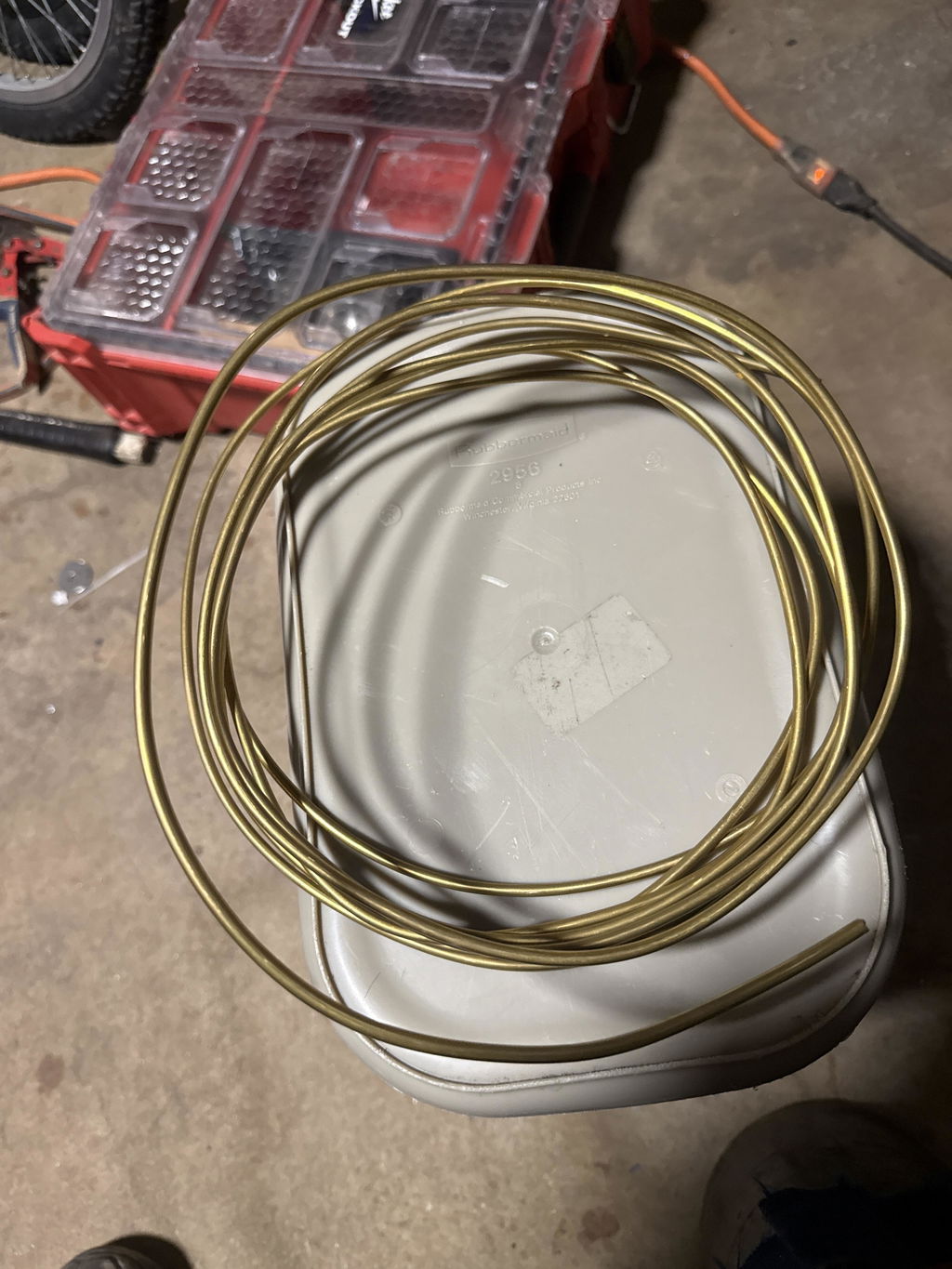
How can I straighten out the springs? I can't use them coil uo as is.
Your payment information is processed securely. We do not store credit card details nor have access to your credit card information.
Get fitment advice & recommendations
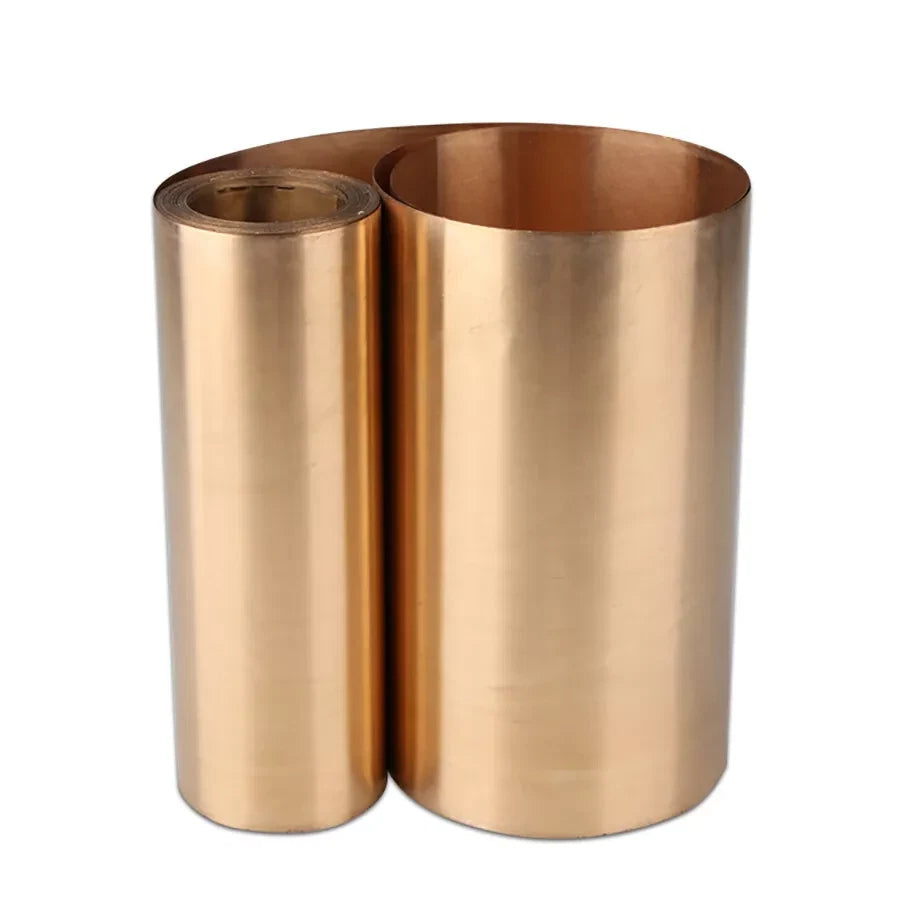
Engineers and makers who need a conductive, springy metal that holds its shape under repeated stress often struggle to find a reliable source for beryllium copper sheet in exact thicknesses. Whether you are fabricating electrical contacts, precision shims, or custom spring elements, dimensional accuracy matters — and a wrong thickness can mean a failed assembly. This beryllium copper sheet plate is stocked in a wide range of thicknesses and cut sizes specifically for DIY builders, electronics hobbyists, and light industrial users who need the right material without ordering in bulk.
Each sheet is made from BeCu alloy (commonly C17200 / CuBe2 grade), combining copper's electrical conductivity with beryllium's exceptional spring-back and fatigue resistance. Thickness options span 0.08 mm to 2.0 mm (approximately 0.003" to 0.079"), and width is consistently 200 mm (≈ 7.87"). Length options include 200 mm (≈ 7.87"), 500 mm (≈ 19.69"), and 1000 mm (≈ 39.37") panels, giving you flexibility to cut to your exact requirement with minimal waste.
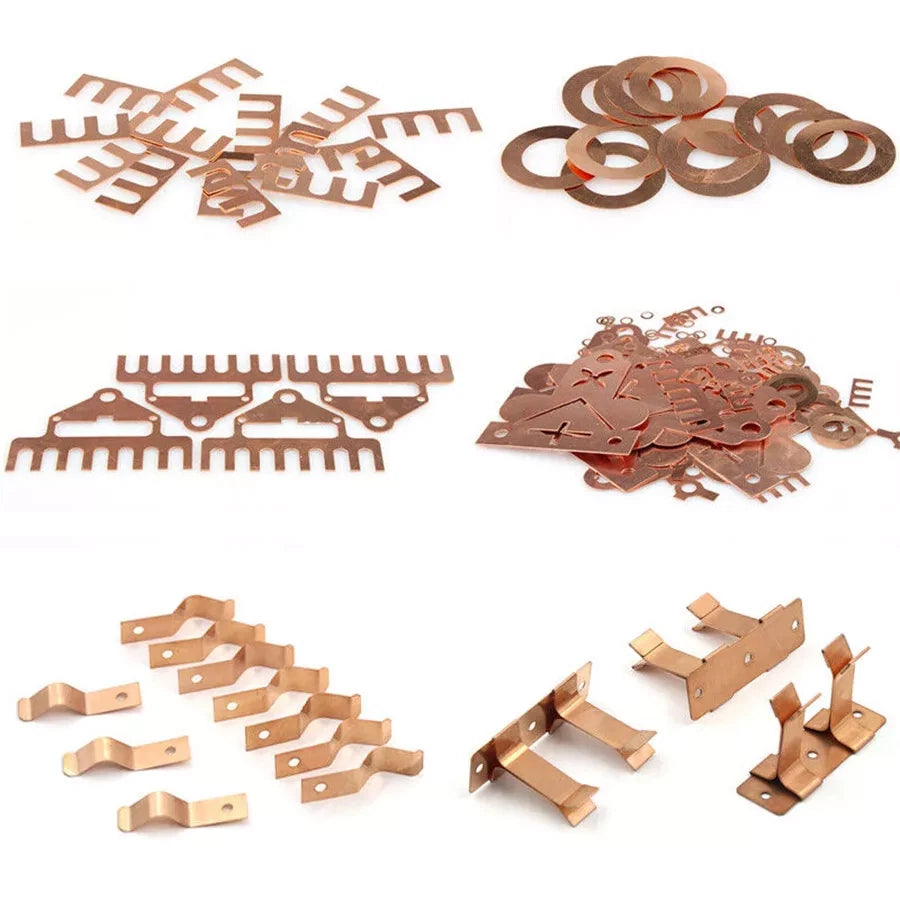
Typical use cases include DIY relay and switch contact fabrication, custom leaf-spring elements in mechanical assemblies, precision shim stock for bearing and housing fits, RF shielding gaskets in electronics enclosures, and thin conductive strips for battery contact plates. The combination of high conductivity and non-sparking properties also makes beryllium copper sheet a go-to material for intrinsically safe tooling applications.
| Material / Alloy | Beryllium Copper (BeCu), C17200 / CuBe2 equivalent |
|---|---|
| Thickness Range | 0.08 mm – 2.0 mm (0.003" – 0.079") |
| Width | 200 mm (≈ 7.87") |
| Length Options | 200 mm / 500 mm / 1000 mm |
| Temper / Condition | See variant options |
| Electrical Conductivity | Approx. 22–28% IACS (typical for C17200) |
| Tensile Strength | See variant options (varies by temper) |
| Surface Finish | Mill finish (bright rolled) |
| Pack Quantity | 1 piece per order (select quantity at checkout) |
| Weight per Piece | See variant options (varies by thickness & length) |
For electrical contact springs and snap-action elements, 0.1 mm–0.3 mm is the most common range. For shim stock and bearing fits, 0.2 mm–0.5 mm works well. For structural spring plates or heavier-duty leaf springs, 0.5 mm–2.0 mm is typical. If you are unsure, start with the mid-range thickness closest to your existing component and test deflection before committing to a final gauge.
Yes. In the age-hardened condition, beryllium copper achieves tensile strengths of 1,100–1,400 MPa — significantly higher than cartridge brass (~500 MPa) or phosphor bronze (~700 MPa). This makes BeCu the preferred choice when you need both high conductivity and high spring force in a thin cross-section.
Beryllium copper has good corrosion resistance in most environments. It forms a stable copper-oxide surface layer that protects against moisture and mild chemical exposure. It is not recommended for prolonged immersion in strong acids or ammonia-based environments without additional protective coating. For outdoor or marine use, a clear lacquer or tin plating is advisable.
Yes. BeCu solders readily with standard tin-lead or lead-free solders using a mild flux. Silver brazing is also possible. Note that heating above the age-hardening temperature (~315 °C / 600 °F) will soften the material, so keep heat application brief and localized if you need to preserve spring properties after joining.
Yes. Thinner gauges (0.08 mm–0.5 mm) can be laser cut with a fiber laser; thicker gauges (0.5 mm–2.0 mm) are well-suited to waterjet cutting. Score-and-snap or tin snips work for straight cuts on gauges up to about 0.3 mm. Always clamp the sheet firmly to prevent vibration during cutting.
The key advantage is electrical conductivity — stainless steel is a poor conductor (~2.5% IACS), while BeCu offers ~22–28% IACS. If your shim or spring also needs to carry current or provide a ground path, beryllium copper is the correct choice. For purely mechanical shims where conductivity is irrelevant, stainless steel may be more cost-effective.
Select the panel size that is closest to — but larger than — your finished blank dimensions. For example, if your part is 180 mm × 450 mm, order the 200×500 mm panel. This minimizes waste while ensuring you have enough material to account for saw kerf or laser offset. Multiple pieces can be ordered by adjusting the Pack Quantity option at checkout.