The chain is fine...but I ordered the wrong size. Nine links of the chain I ordered equals six of the size I wanted. My error...
How can I straighten out the springs? I can't use them coil uo as is.
Your payment information is processed securely. We do not store credit card details nor have access to your credit card information.
Get fitment advice & recommendations
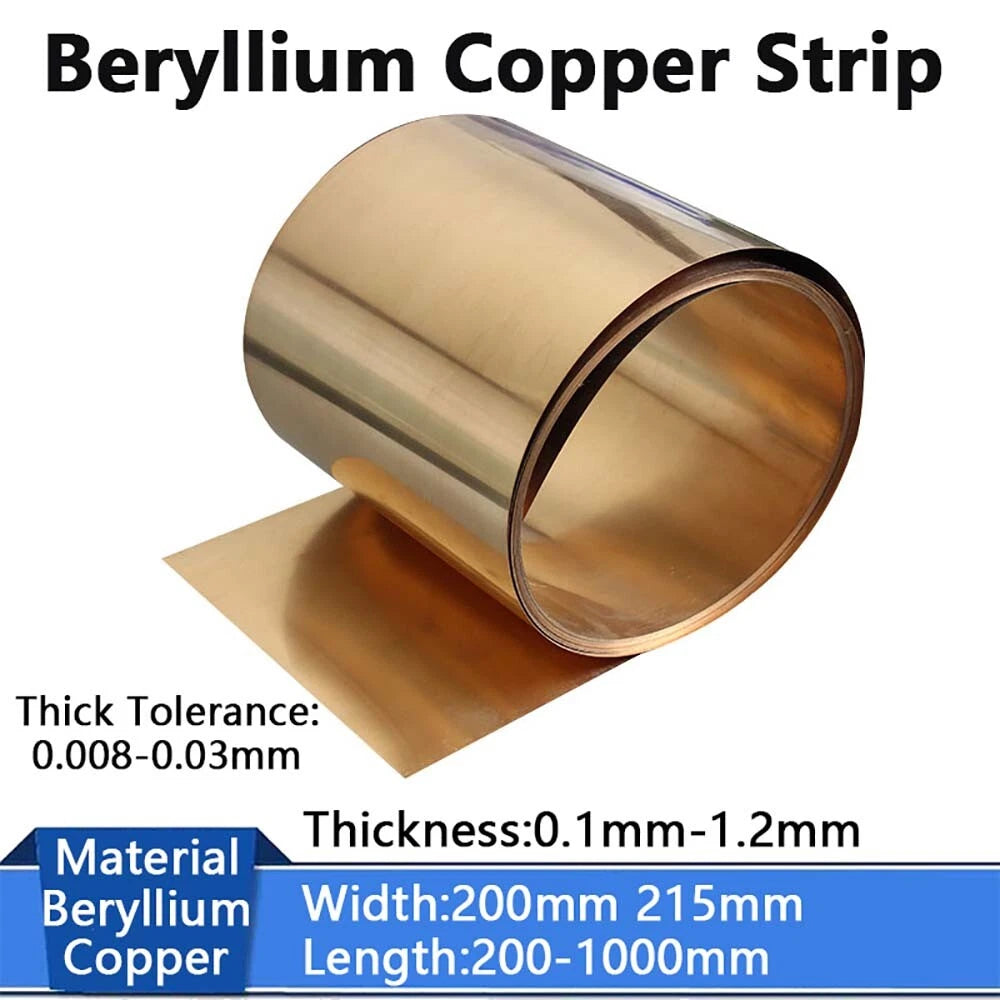
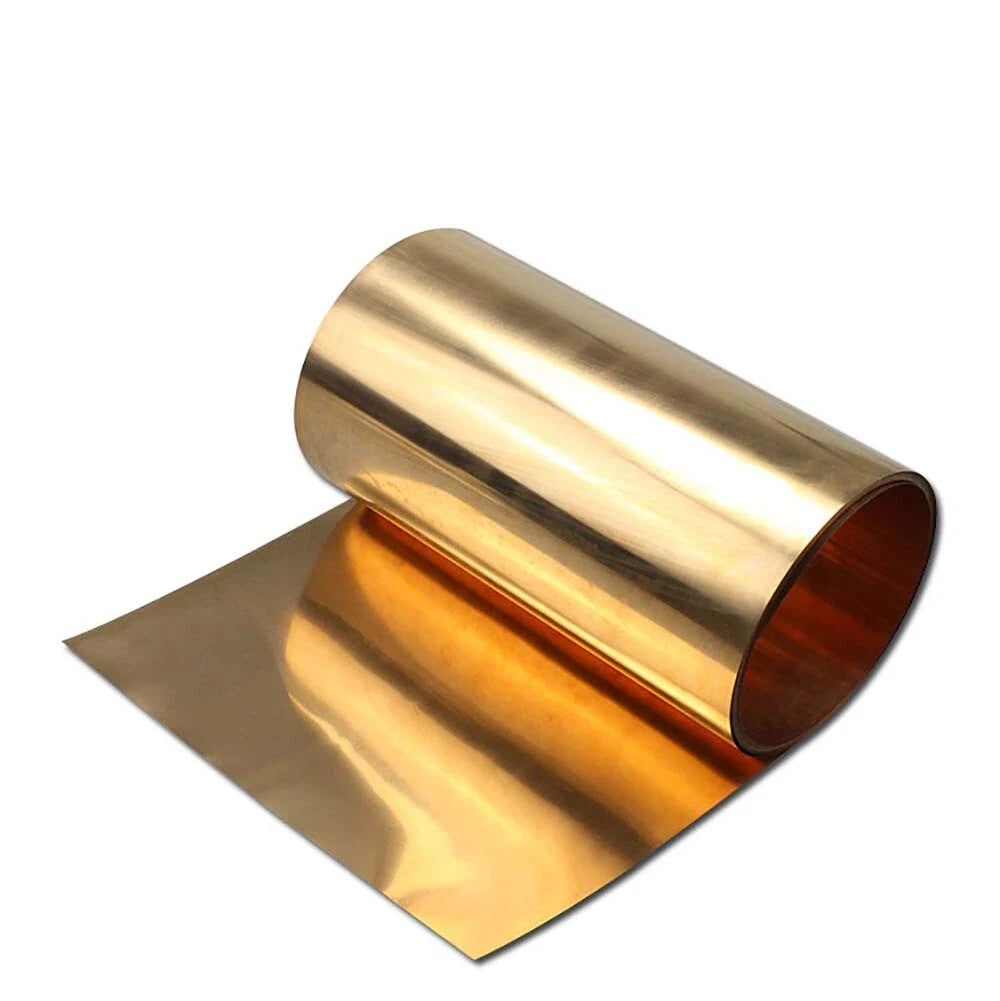
Engineers and makers who need a conductor that also springs back know the frustration of standard copper: it deforms under repeated flex and loses contact force over time. Beryllium copper sheet foil solves that problem by combining the electrical conductivity of copper with the elastic memory of a spring alloy — making it the go-to material for contact fingers, EMI shielding gaskets, and precision tooling inserts.
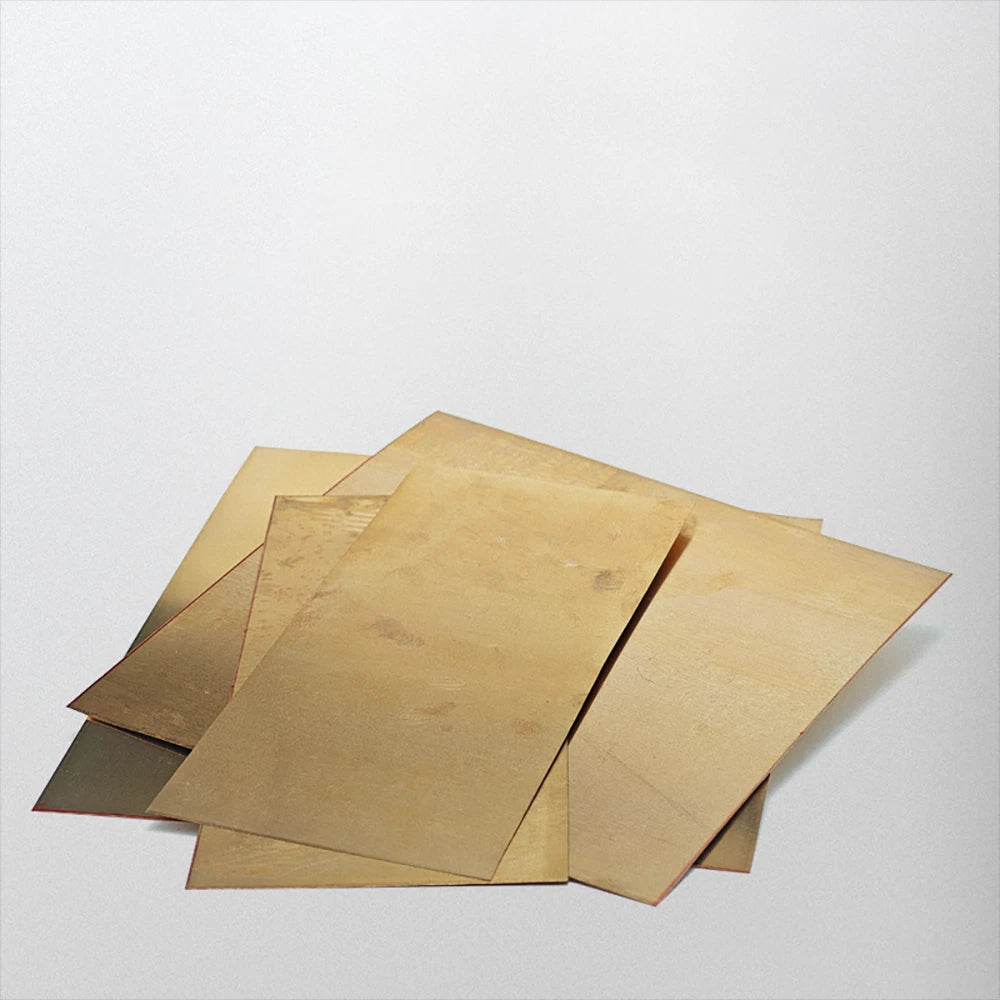
Each sheet is cut from spring-temper BeCu alloy (typically C17200 / CuBe2), available in thicknesses from 0.1 mm (≈ 0.004 in) to 1.2 mm (≈ 0.047 in). Sheet sizes range from 200 mm × 200 mm (≈ 7.9 in × 7.9 in) up to 200 mm × 1000 mm (≈ 7.9 in × 39.4 in), with a 200 mm × 500 mm mid-format also available. Select your exact thickness and sheet size from the variant options above.
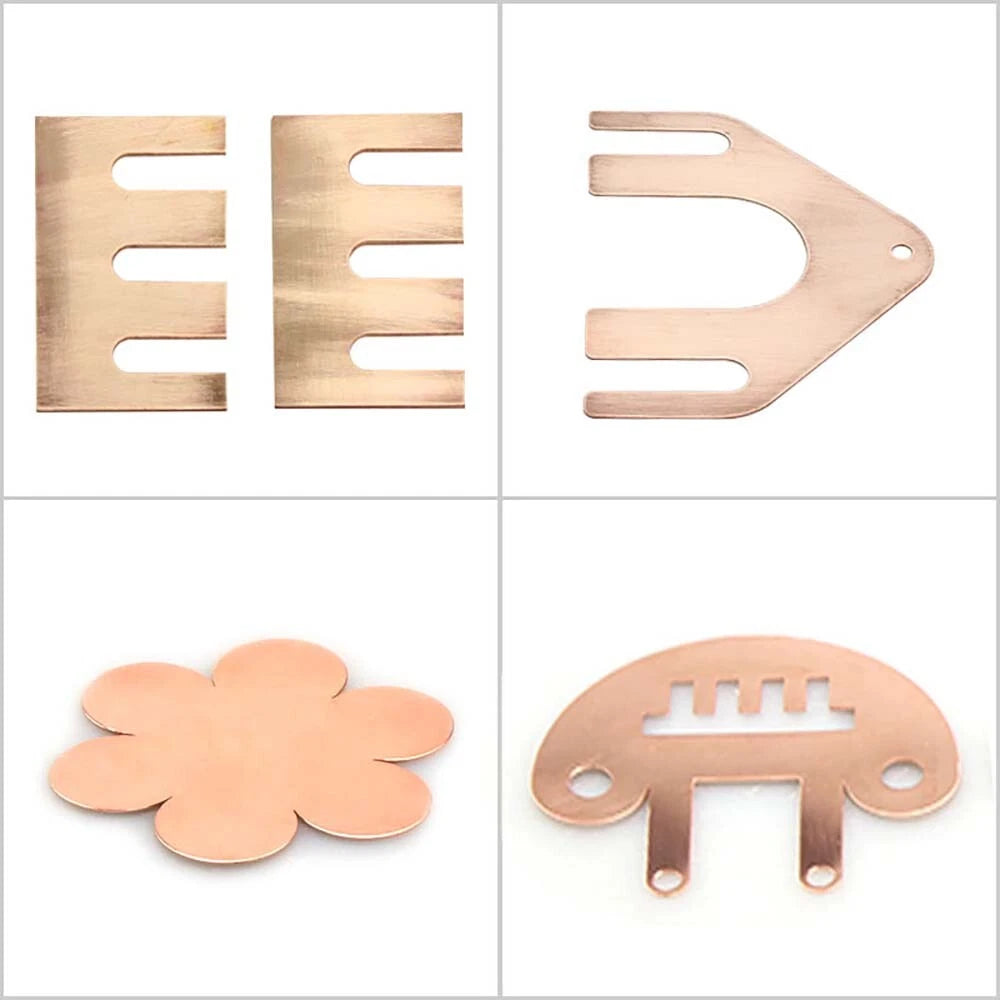
Typical use cases include connector spring contacts and relay blades in telecommunications equipment, beryllium copper EMI shielding strips in RF enclosures, precision shim stock and feeler-gauge blanks for machine tool setups, and flexible circuit substrates where repeated deflection cycles are required.
Maintains contact force after thousands of deflection cycles — unlike annealed copper, the BeCu alloy returns to its original geometry without permanent set.
Conductivity typically 15–25% IACS (alloy and temper dependent), far exceeding beryllium-free spring alloys like phosphor bronze, making it suitable for signal and power contact applications.
Natural oxide layer provides good atmospheric corrosion resistance; suitable for humid environments and light chemical exposure without additional plating in many applications.
Eleven thickness steps from 0.1 mm foil to 1.2 mm plate allow you to match the exact spring rate and current-carrying cross-section your design requires.
Choose from 200 × 200 mm, 215 × 200 mm, 200 × 500 mm, or 200 × 1000 mm sheets to minimise offcut waste for your specific blank size.
Compatible with CNC milling, laser cutting, wire EDM, and progressive die stamping — thinner foils (0.1–0.3 mm) are also hand-shearable with standard metal snips.
| Alloy | BeCu (C17200 / CuBe2, spring temper) |
|---|---|
| Thickness Range | 0.1 mm – 1.2 mm (0.004 in – 0.047 in) |
| Available Sheet Sizes | 200×200 mm / 215×200 mm / 200×500 mm / 200×1000 mm |
| Beryllium Content | Typically 1.8–2.0 wt% |
| Electrical Conductivity | Typically 15–25% IACS (temper dependent) |
| Tensile Strength | See variant options |
| Hardness | See variant options |
| Surface Finish | Mill finish (bright rolled) |
| Quantity per Order | 1 Pcs (per variant selected) |
| Thickness Tolerance | See variant options |
For EMI shielding gaskets and finger contacts, 0.1–0.3 mm foil provides the flexibility needed to conform to mating surfaces. For spring contacts requiring higher contact force, 0.3–0.6 mm is typical. Shim stock and structural inserts generally use 0.5–1.2 mm. If you have a specific spring-rate or deflection target, contact us with your load and travel requirements.
Solid BeCu sheet is safe to handle with bare hands under normal conditions. The health risk arises only when beryllium-containing dust or fumes are generated — during grinding, sanding, or high-temperature cutting. Always use appropriate respiratory protection and local exhaust ventilation when machining. Laser cutting and wire EDM are preferred low-dust methods for thin foil.
C17200 (CuBe2) is the most widely used spring-grade beryllium copper, offering the best combination of strength and conductivity after age hardening. C17500 and C17510 contain less beryllium and more cobalt or nickel, giving higher conductivity at the cost of some strength — they are used where conductivity is the primary driver. The sheet in this listing is C17200 / CuBe2 spring temper.
BeCu can be soldered using standard tin-lead or lead-free solders with a mildly activated flux — no special process is required for thin foil contacts. Resistance welding (spot welding) is also feasible. Fusion welding (TIG/MIG) is possible but requires fume extraction rated for beryllium. Brazing with silver alloys is common for structural joints.
Yes. BeCu foil is a standard material for EMI/RFI shielding finger strips and compression gaskets in RF enclosures and electronics chassis. Its spring-back ensures consistent contact pressure against mating surfaces over repeated open/close cycles. For shielding applications, 0.1–0.2 mm thickness is most common; thicker gauges are used where mechanical durability is also required.
BeCu offers roughly 3–4× higher yield strength than phosphor bronze at comparable conductivity levels, meaning a thinner BeCu contact can deliver the same contact force as a thicker phosphor bronze one. BeCu also has better fatigue life under cyclic deflection. The trade-off is cost — BeCu is significantly more expensive, so it is chosen when performance requirements cannot be met by lower-cost spring alloys.
Standard sizes listed are 200×200 mm, 215×200 mm, 200×500 mm, and 200×1000 mm. These cover most prototyping and small-batch production needs. For custom widths, lengths, or thickness tolerances not shown in the variant options, please contact us to confirm availability and lead time.