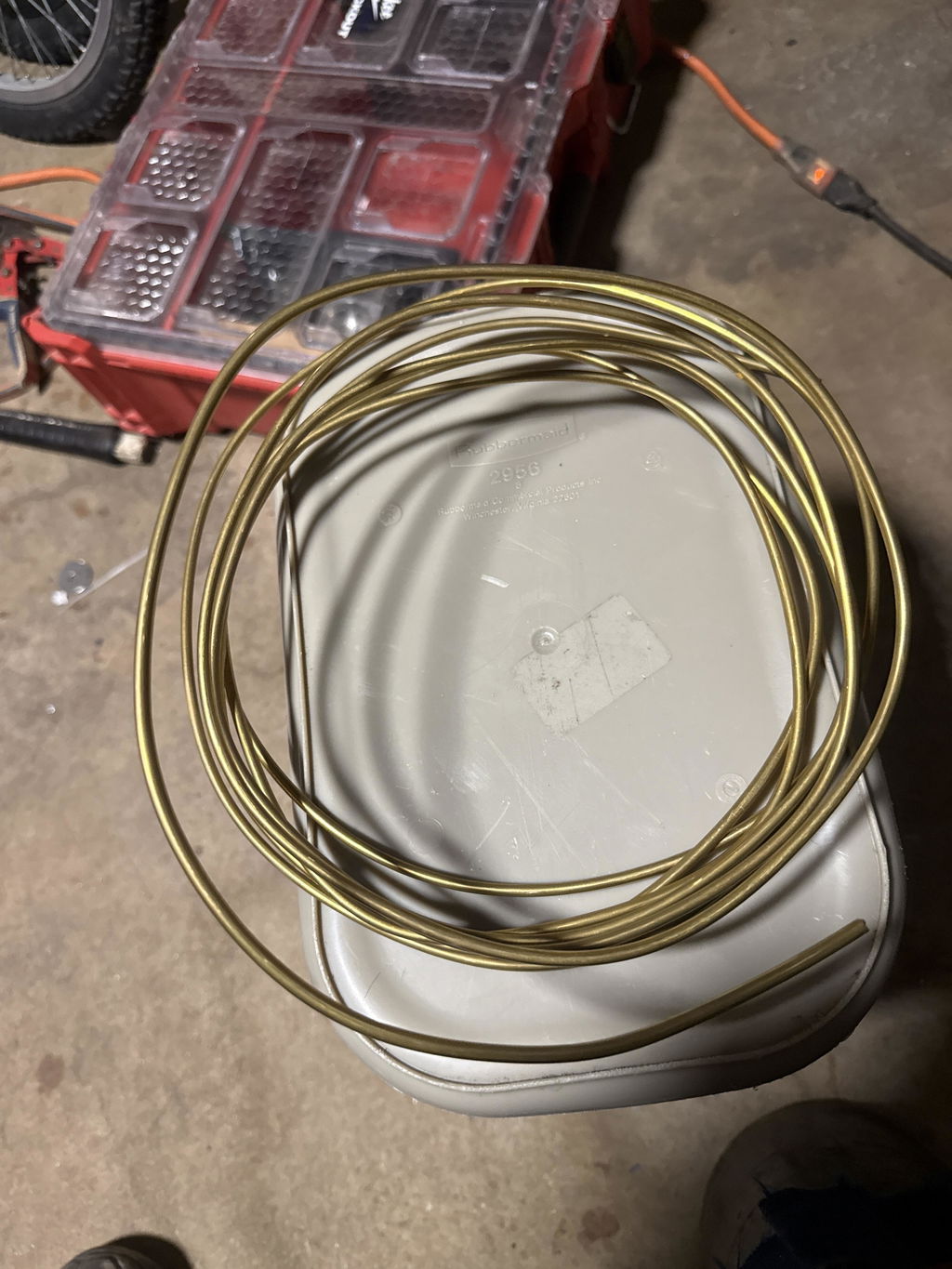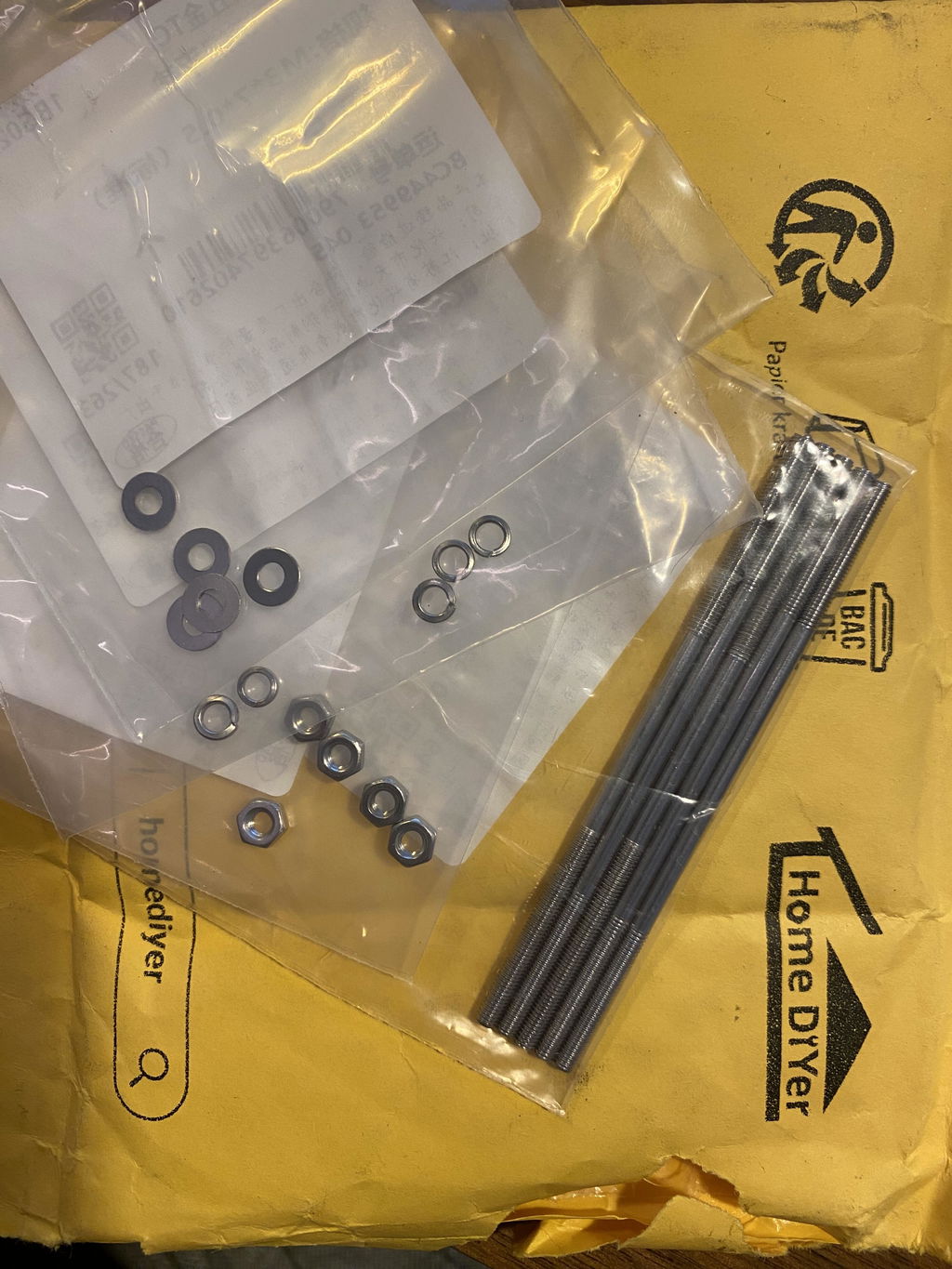
The chain is fine...but I ordered the wrong size. Nine links of the chain I ordered equals six of the size I wanted. My error...
How can I straighten out the springs? I can't use them coil uo as is.
Your payment information is processed securely. We do not store credit card details nor have access to your credit card information.
Get fitment advice & recommendations
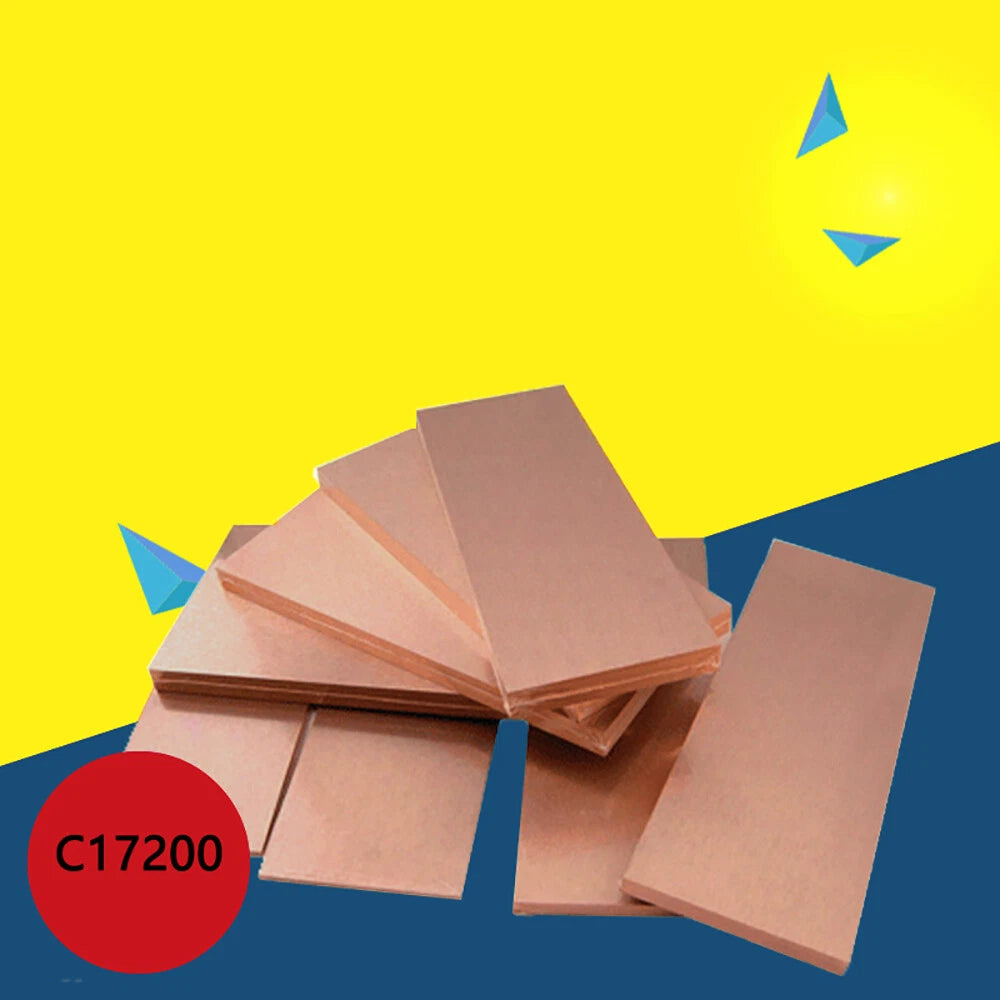
Engineers, machinists, and electronics fabricators who work with high-conductivity spring materials know the frustration of sourcing flat stock that holds tight dimensional tolerances without warping or work-hardening unpredictably. These beryllium copper sheet metal plates are cut for professionals who need reliable, repeatable material performance across electrical contacts, shielding, tooling fixtures, and precision spring components.
Each panel is made from C17200 beryllium copper alloy (nominally 1.8–2.0% Be), delivering a combination of electrical conductivity (~22% IACS), tensile strength (typically 1,100–1,400 MPa in aged condition), and non-sparking characteristics that standard brass or phosphor bronze cannot match. Panels are available in widths and lengths of 100×100 mm (3.94″×3.94″), 100×200 mm (3.94″×7.87″), and 200×200 mm (7.87″×7.87″), with thickness options spanning 0.5 mm to 5 mm (0.020″–0.197″).
Typical use cases include fabricating electrical contact springs and relay blades, machining non-sparking tooling inserts for hazardous environments, constructing EMI/RFI shielding enclosures, and prototyping precision mechanical components where fatigue resistance and dimensional stability are critical. The flat, shear-cut surface finish reduces secondary prep time before milling, EDM, or stamping operations.
| Alloy Designation | C17200 (CuBe2) |
|---|---|
| Beryllium Content | Nominally 1.8–2.0% |
| Temper / Condition | See variant options |
| Width Options | 100 mm (3.94″) / 200 mm (7.87″) |
| Length Options | 100 mm (3.94″) / 200 mm (7.87″) |
| Thickness Range | 0.5 mm – 5 mm (0.020″ – 0.197″) |
| Electrical Conductivity | ~22% IACS (aged condition) |
| Tensile Strength (aged) | Typically 1,100–1,400 MPa |
| Hardness (aged) | Typically 36–42 HRC |
| Density | ~8.25 g/cm³ |
| Non-Sparking | Yes |
| Non-Magnetic | Yes |
| Surface Finish | Shear-cut flat |
| Quantity per Order | 1 Pcs |
Thickness selection depends on the required spring force, current-carrying capacity, and machining allowance. For electrical contact springs and relay blades, 0.5–1 mm is typical. For structural shielding panels or tooling inserts, 1.5–3 mm provides better rigidity. For heavy-duty fixtures or wear pads, 3–5 mm stock is recommended. If you are unsure, contact us with your load and deflection requirements.
C17200 beryllium copper offers significantly higher tensile strength (up to 1,400 MPa aged vs. ~500 MPa for brass) and superior fatigue resistance, making it suitable for high-cycle spring applications. It also provides better electrical conductivity than phosphor bronze (~22% IACS vs. ~15% IACS) while maintaining comparable spring characteristics. The trade-off is higher material cost and the need for proper machining safety precautions due to beryllium content.
Solid beryllium copper panels are safe to handle with normal precautions. The health risk arises during machining, grinding, or sanding, which can generate beryllium-containing dust or fumes. Always machine in a well-ventilated area or with local exhaust ventilation, use appropriate respiratory protection (P100 respirator minimum), and follow your facility's beryllium safety program. Consult the material Safety Data Sheet (SDS) before beginning any machining operations.
Yes. C17200 beryllium copper is compatible with wire EDM, CNC milling, waterjet cutting, and laser cutting. Wire EDM is particularly well-suited for intricate profiles without generating airborne dust. Laser cutting requires fume extraction rated for beryllium compounds. Waterjet cutting is a preferred method for minimizing airborne particulate. Always verify your equipment's compatibility with copper alloys before processing.
Yes. Beryllium copper's combination of electrical conductivity (~22% IACS) and spring-back properties makes it a standard material for EMI/RFI shielding gaskets, finger stock, and enclosure panels. The spring temper variants maintain consistent contact pressure against mating surfaces, which is critical for effective shielding attenuation. Select a thickness appropriate for your enclosure's structural requirements — typically 0.5–1.5 mm for gasket-style applications.
Please refer to the variant options or contact us to confirm the temper/condition of the specific size you are ordering. C17200 is commonly supplied in either the solution-annealed (soft, formable) condition or the aged/precipitation-hardened condition. If your application requires a specific temper — for example, AT (aged) for maximum strength or A (annealed) for forming before aging — please confirm before ordering.
Select the next panel size up from your finished part dimensions to allow for saw kerf, fixturing, and any surface cleanup. For example, if your finished part is 90×90 mm, the 100×100 mm panel provides approximately 5 mm of allowance per edge — sufficient for most milling or EDM setups. For parts requiring multiple pieces from a single panel, calculate your nesting layout before selecting the panel size.