The chain is fine...but I ordered the wrong size. Nine links of the chain I ordered equals six of the size I wanted. My error...
How can I straighten out the springs? I can't use them coil uo as is.
Your payment information is processed securely. We do not store credit card details nor have access to your credit card information.
Get fitment advice & recommendations
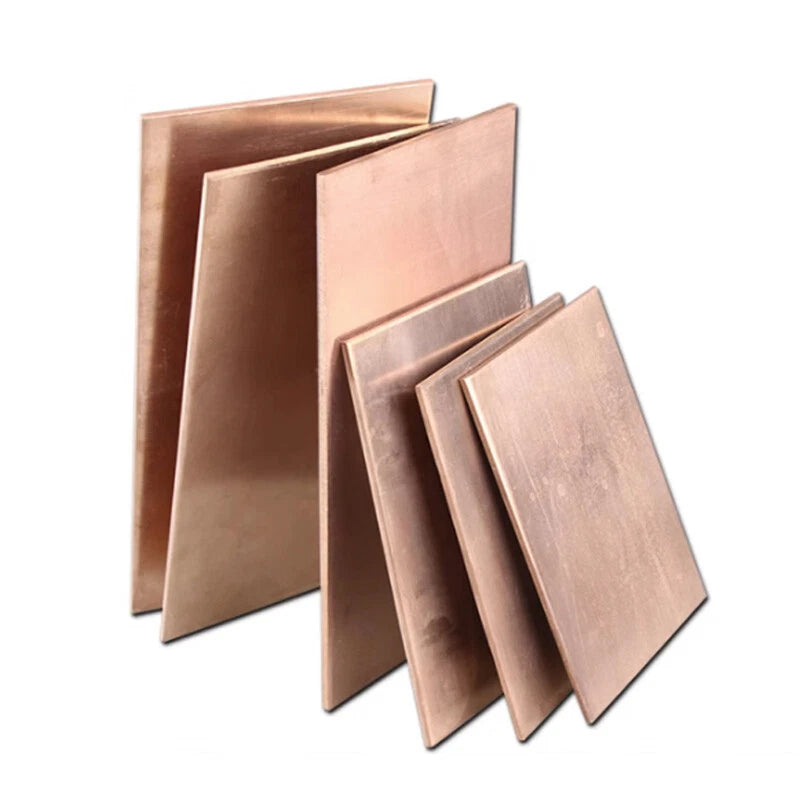
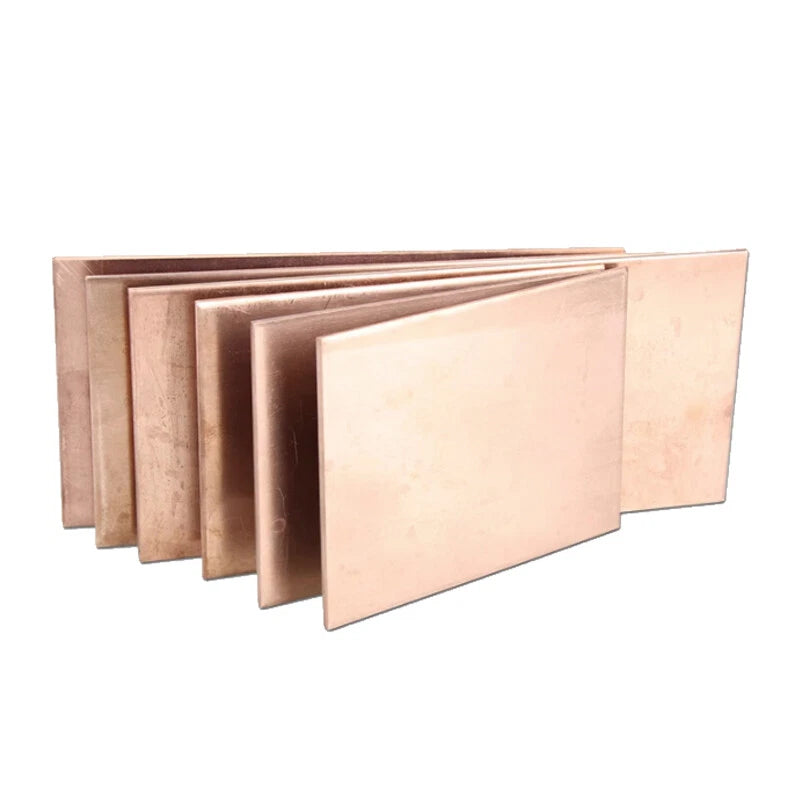
When your project demands a metal that holds its shape under repeated stress, resists corrosion in harsh environments, and conducts electricity reliably, standard copper or brass simply falls short. Engineers, machinists, and serious DIY makers who work on electrical contacts, precision springs, diaphragms, and non-sparking tooling turn to beryllium copper sheet for exactly these reasons.
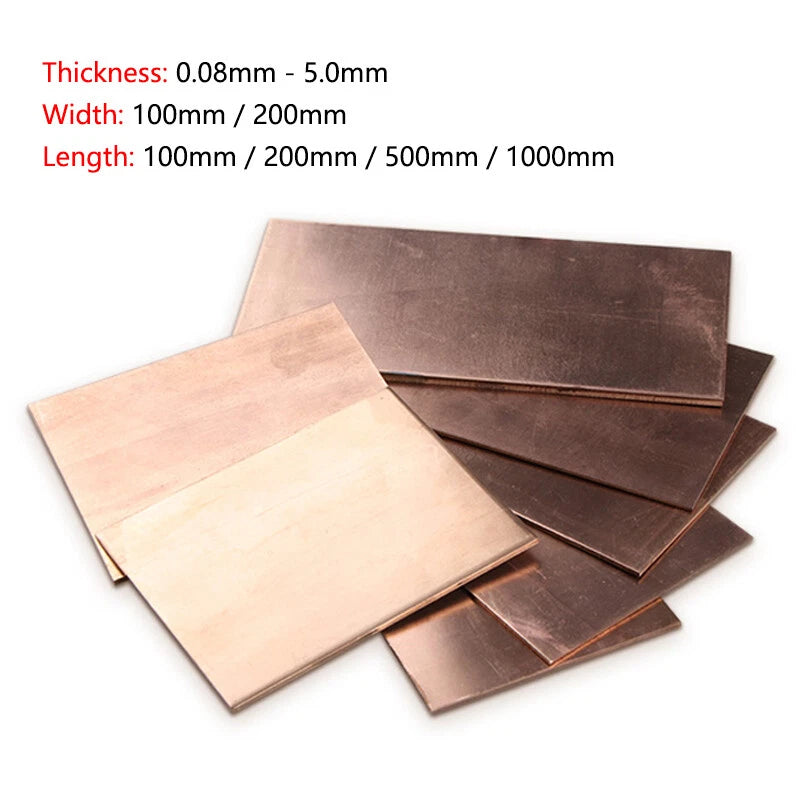
Each beryllium copper (BeCu / C17200 alloy) sheet is flat-rolled to tight thickness tolerances, available from an ultra-thin 0.08 mm (≈ 0.003 in) up to a robust 5.0 mm (≈ 0.197 in). Sheet widths and lengths span six standard footprints — 100 × 100 mm (≈ 3.94 × 3.94 in) up to 200 × 1000 mm (≈ 7.87 × 39.37 in) — giving you 52 distinct size-and-thickness combinations to choose from in a single listing.
Typical applications include fabricating electrical relay contacts and switch blades, machining non-sparking hand-tool blanks for use in flammable environments, cutting custom spring stock for precision instruments, and producing RF shielding or EMI gasket blanks for electronics enclosures.
| Alloy / Grade | Beryllium Copper C17200 (BeCu) |
|---|---|
| Temper (as-supplied) | See variant options |
| Thickness Range | 0.08 mm – 5.0 mm (≈ 0.003 in – 0.197 in) |
| Available Sheet Sizes | 100×100 mm / 100×200 mm / 200×200 mm / 215×200 mm / 200×500 mm / 200×1000 mm |
| Number of Variants | 52 size-and-thickness combinations |
| Beryllium Content (typical) | 1.8 – 2.0 wt% |
| Electrical Conductivity (aged) | Typically 22% IACS |
| Tensile Strength (aged, typical) | 1,100 – 1,400 MPa |
| Hardness (aged, typical) | 36 – 42 HRC |
| Density | Approx. 8.25 g/cm³ |
| Melting Point | Approx. 865 – 980 °C (1,590 – 1,796 °F) |
| Surface Finish | See variant options |
| Thickness Tolerance | See variant options |
| Weight per Sheet | See variant options (varies by size & thickness) |
For electrical contacts and thin spring blades, thicknesses of 0.08 mm – 0.5 mm are typical. For structural spring stock or diaphragms under moderate load, 0.5 mm – 1.5 mm is common. For non-sparking tooling blanks, fixtures, or heavier structural parts, 2.0 mm – 5.0 mm is the usual range. If you are unsure, contact us with your load, deflection, and conductivity requirements and we can advise.
Annealed (soft) BeCu is easier to cut, bend, and form. After forming, the part is age-hardened (precipitation hardened) by heating to approximately 315 °C (600 °F) for 2–3 hours, which raises tensile strength to 1,100–1,400 MPa and hardness to 36–42 HRC. The sheet supplied here is in the condition noted in the variant listing; check the variant description or contact us to confirm temper before ordering if your process requires a specific starting condition.
Solid BeCu sheet is safe to handle with normal precautions. The health risk arises from fine beryllium-containing dust or fumes generated during grinding, sanding, or welding. Always machine BeCu wet or with adequate dust extraction, wear an appropriate respirator (P100 minimum), and follow your local occupational health regulations for beryllium-containing materials. Do not dry-grind or flame-cut without proper controls.
Yes. BeCu's combination of electrical conductivity (~22% IACS), spring-back, and corrosion resistance makes it a widely used material for EMI/RFI shielding fingers, gaskets, and enclosure lids. Thinner gauges (0.08 mm – 0.3 mm) are typically used for finger-stock gaskets, while 0.5 mm – 1.0 mm is common for formed enclosure panels.
BeCu forms a thin, adherent oxide layer that provides good resistance to atmospheric corrosion, salt spray, and mild chemical environments. It performs significantly better than standard copper in humid or marine conditions. For highly aggressive chemical environments (strong acids, ammonia), additional surface treatment or plating may be advisable.
For thin gauges (under 1 mm), precision shearing or laser cutting (with fume extraction) gives clean edges. For thicker stock (1 mm – 5 mm), CNC milling, EDM wire-cutting, or waterjet cutting are preferred to minimize heat-affected zones and dust generation. Avoid dry grinding or abrasive cutting without proper respiratory protection.
The 215 × 200 mm sheet is a near-A4 footprint, convenient for prototyping parts that need to fit within standard document-size fixtures or enclosures. It is available in 1.0 mm and 1.2 mm thicknesses. If you need a custom size outside the 52 listed combinations, contact us to discuss cut-to-size options.