The chain is fine...but I ordered the wrong size. Nine links of the chain I ordered equals six of the size I wanted. My error...
How can I straighten out the springs? I can't use them coil uo as is.
Your payment information is processed securely. We do not store credit card details nor have access to your credit card information.
Get fitment advice & recommendations
When your project demands a conductive metal that holds its shape under repeated stress, standard copper sheet simply falls short. Makers, electronics hobbyists, and small-workshop engineers who need reliable spring-temper stock turn to beryllium copper sheet plate for its unique combination of electrical conductivity and mechanical resilience. Whether you are fabricating contact springs, shielding enclosures, or precision tooling inserts, this copper alloy sheet delivers consistent performance across a wide range of thicknesses.
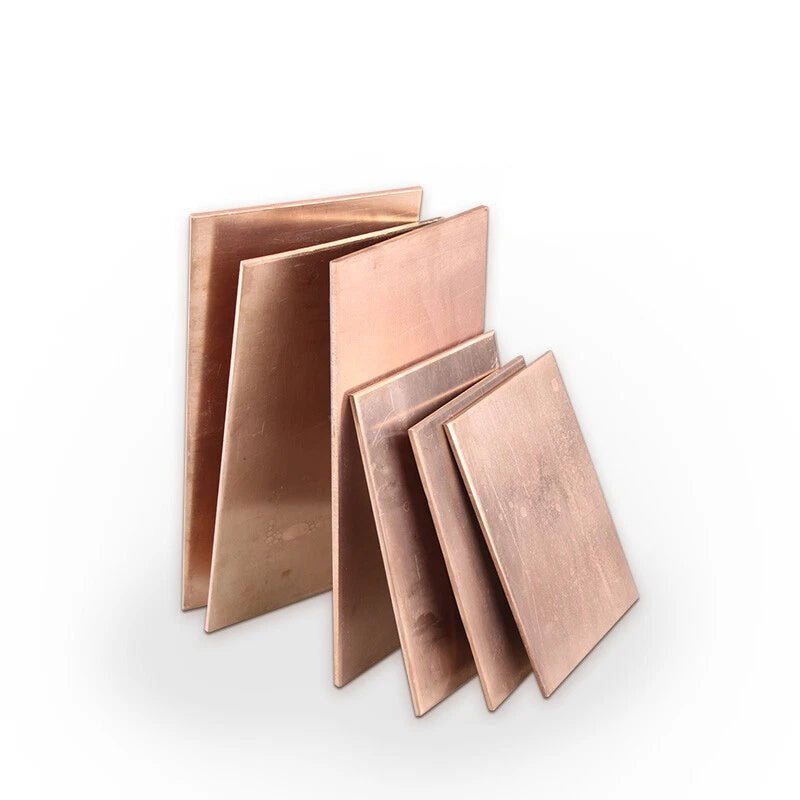
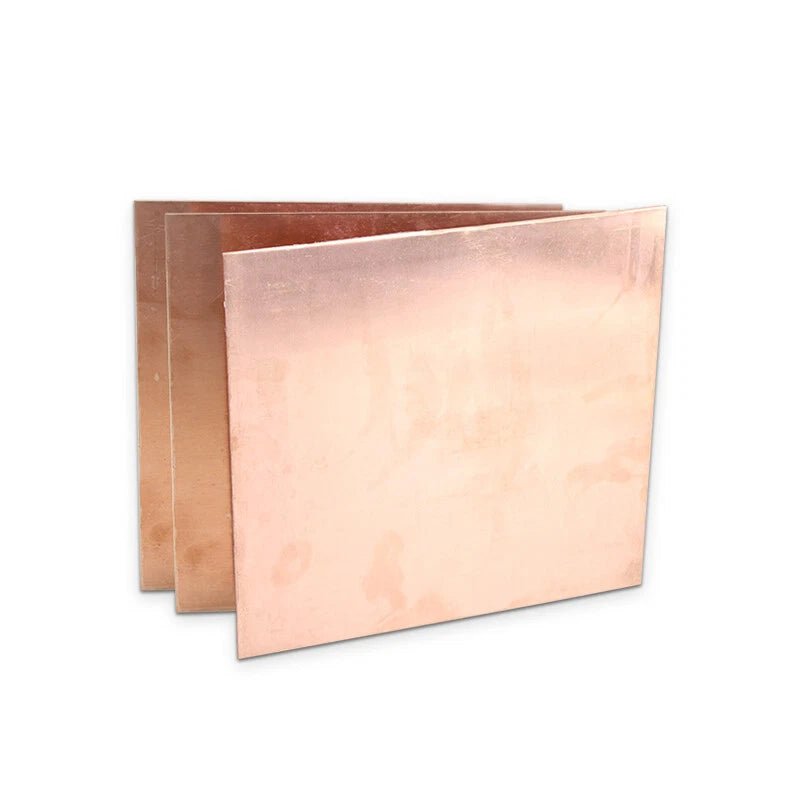
Each sheet is cut from beryllium copper alloy (C17200 / CuBe2 equivalent), a material recognized for its non-sparking, non-magnetic properties and excellent fatigue resistance. Sheets are available in three planar sizes — 100×100 mm (approx. 3.94×3.94 in), 100×200 mm (approx. 3.94×7.87 in), and 200×200 mm (approx. 7.87×7.87 in) — with thickness options spanning 0.5 mm, 0.8 mm, 1.0 mm, 1.5 mm, 2 mm, 3 mm, and 5 mm (approx. 0.020–0.197 in). Surface finish is typically mill-rolled with a smooth, consistent appearance.
Typical use cases include fabricating electrical contact springs for relay assemblies, cutting custom shim stock for precision mechanical fits, machining non-sparking tooling inserts for hazardous-environment workshops, and crafting RF shielding panels for DIY electronics enclosures. The multi-thickness range makes this listing a go-to source for beryllium copper sheet metal for electronics projects and copper alloy shim stock for precision machining.
| Material | Beryllium Copper Alloy (C17200 / CuBe2 equivalent) |
|---|---|
| Temper | See variant options |
| Available Widths | 100 mm, 200 mm |
| Available Lengths | 100 mm, 200 mm |
| Available Thicknesses | 0.5 mm / 0.8 mm / 1.0 mm / 1.5 mm / 2 mm / 3 mm / 5 mm |
| Thickness Tolerance | Typically ±0.05 mm (varies by thickness) |
| Surface Finish | Mill-rolled, smooth |
| Electrical Conductivity | Approx. 20–25% IACS |
| Tensile Strength (aged) | Typically 1,100–1,400 MPa |
| Hardness | See variant options |
| Magnetic Properties | Non-magnetic |
| Spark Characteristics | Non-sparking |
| Pack Quantity Options | 1 / 2 / 3 / 4 pieces |
| Product Type | Copper Sheet / Shim Stock |
For flexible contact springs and thin shims, 0.5–1.0 mm thicknesses work well. For structural brackets, tooling inserts, or parts requiring rigidity, 2–5 mm sheets are more appropriate. If you are unsure, 1.5 mm is a versatile mid-range option that balances formability with stiffness for most bench-fabrication tasks.
Yes. After age-hardening, beryllium copper alloy achieves tensile strengths typically between 1,100 and 1,400 MPa — comparable to many tool steels — while retaining excellent elastic recovery. This makes it one of the few copper alloys suitable for precision spring contacts, retaining clips, and snap-fit components.
Beryllium copper forms a stable, adherent oxide layer that provides better atmospheric and mild chemical corrosion resistance than pure copper. It performs well in humid environments, light salt-spray conditions, and most indoor industrial settings. For highly aggressive chemical environments, additional plating or coating may be advisable.
Yes. In the annealed or solution-treated state, beryllium copper can be sheared, punched, bent, and machined with standard tooling. After age-hardening it becomes significantly harder, so forming operations should be completed before the hardening step. CNC routing, laser cutting, and waterjet cutting are all compatible with these sheet sizes.
Yes. Beryllium copper solders and brazes readily using standard silver-bearing or tin-lead solders. Flux selection matters — use a mildly activated rosin flux for electronics work. Avoid aggressive acid fluxes that can attack the alloy surface. The material also accepts spot welding and TIG welding with appropriate parameters.
For single-prototype work, a 100×200 mm sheet in your target thickness typically provides enough material to cut multiple test pieces and iterate on your design. The 1-piece pack option keeps costs low during development. Once your design is validated, the 2–4 piece packs offer better per-piece value for small-batch production.
Beryllium copper is widely used in RF and EMI shielding applications due to its combination of electrical conductivity and spring-back properties, which allow finger-stock gaskets and shielding clips to maintain consistent contact pressure. The 0.5–1.0 mm thicknesses are most commonly used for shielding panels and gasket stock in DIY electronics enclosures.