The chain is fine...but I ordered the wrong size. Nine links of the chain I ordered equals six of the size I wanted. My error...
How can I straighten out the springs? I can't use them coil uo as is.
Your payment information is processed securely. We do not store credit card details nor have access to your credit card information.
Get fitment advice & recommendations
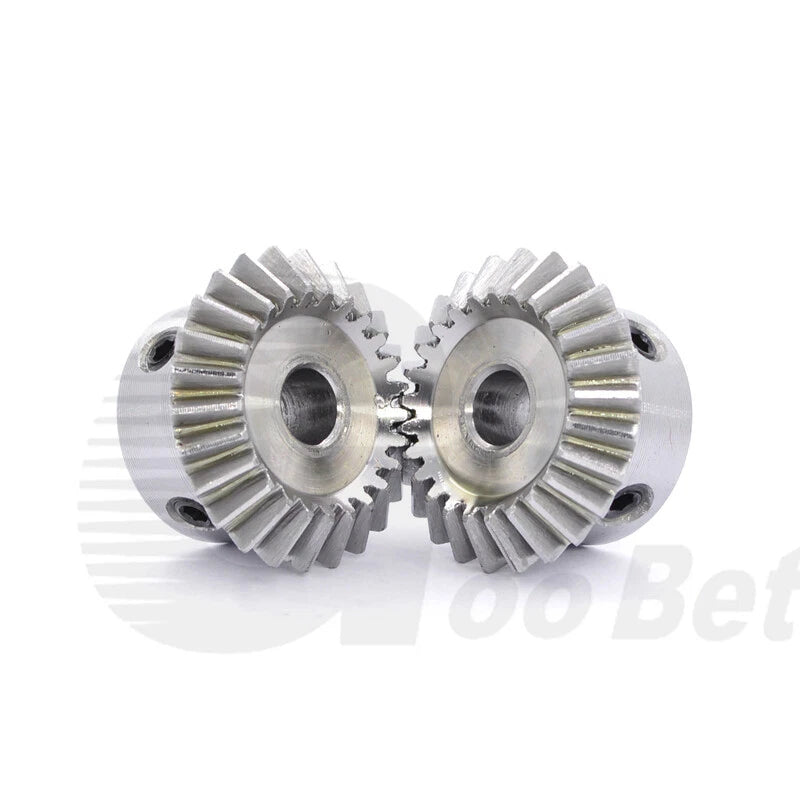
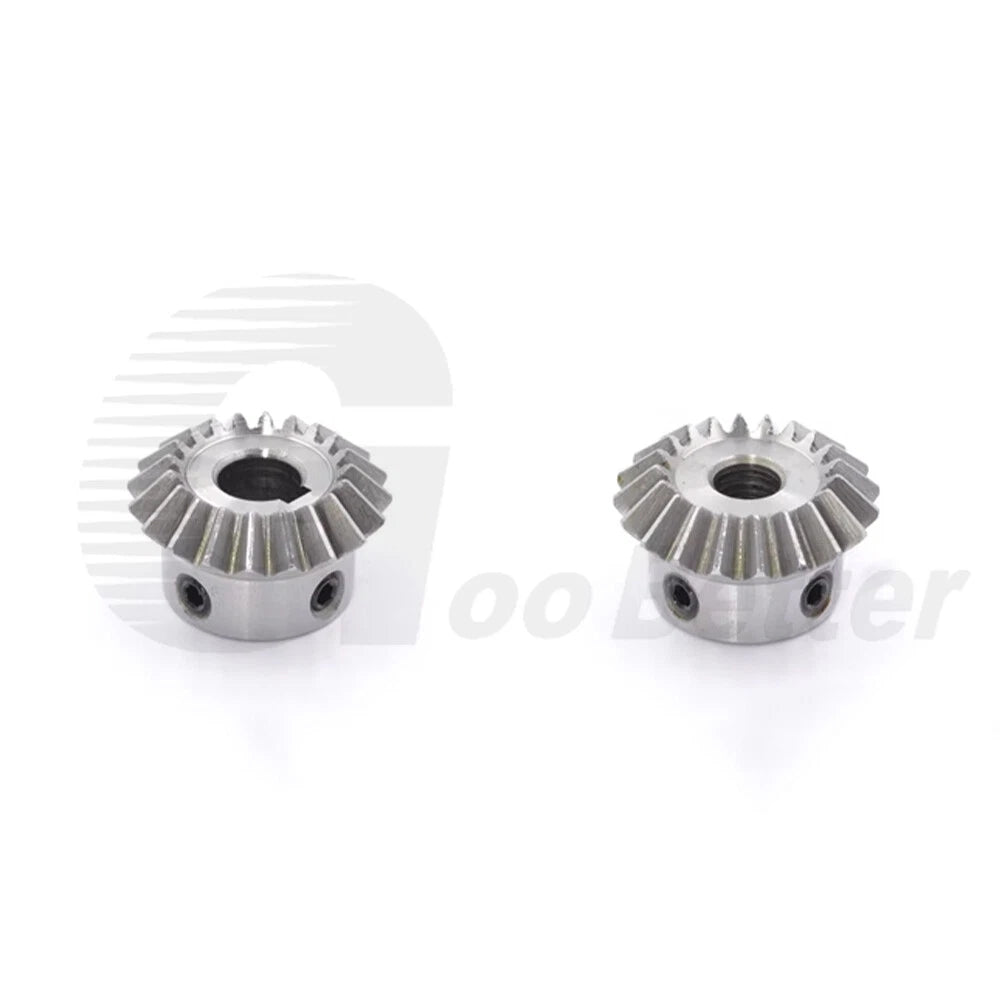
When your build demands a reliable right-angle power transfer without speed reduction, finding a matched bevel gear pair that holds tight tolerances under load is the real challenge. Makers, robotics builders, and mechanical engineers working on CNC machines, custom gearboxes, and motion-control rigs need gears that mesh cleanly at 90° without backlash creep or premature wear. This bevel gear set is engineered for exactly that use case.
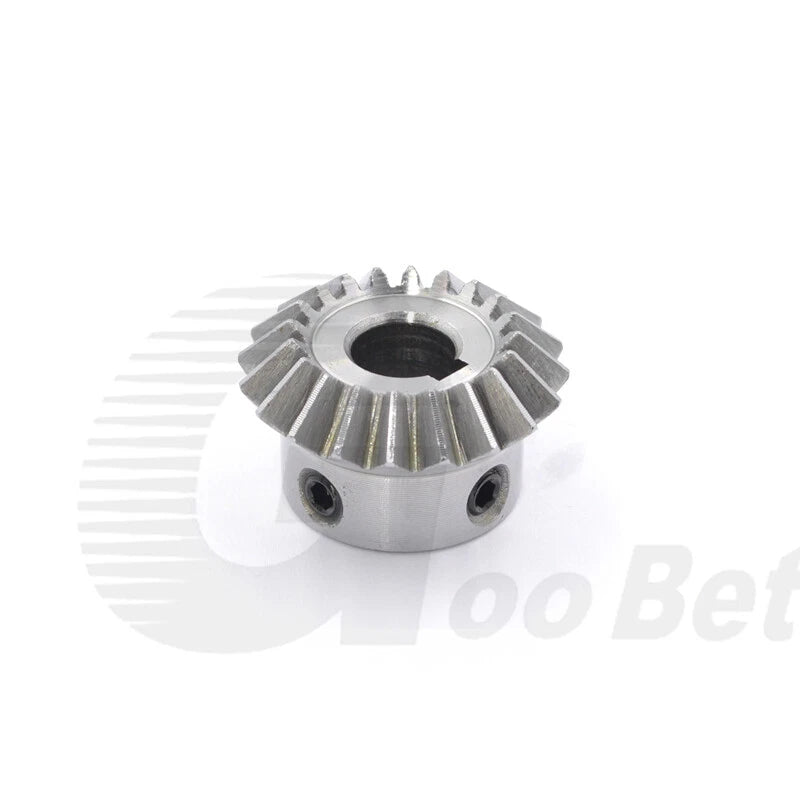
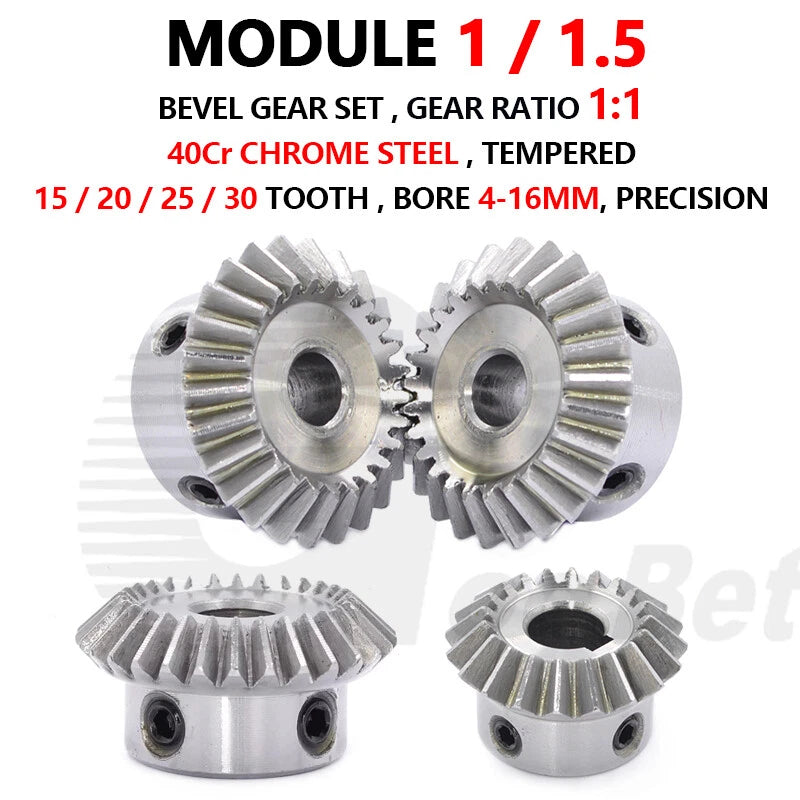
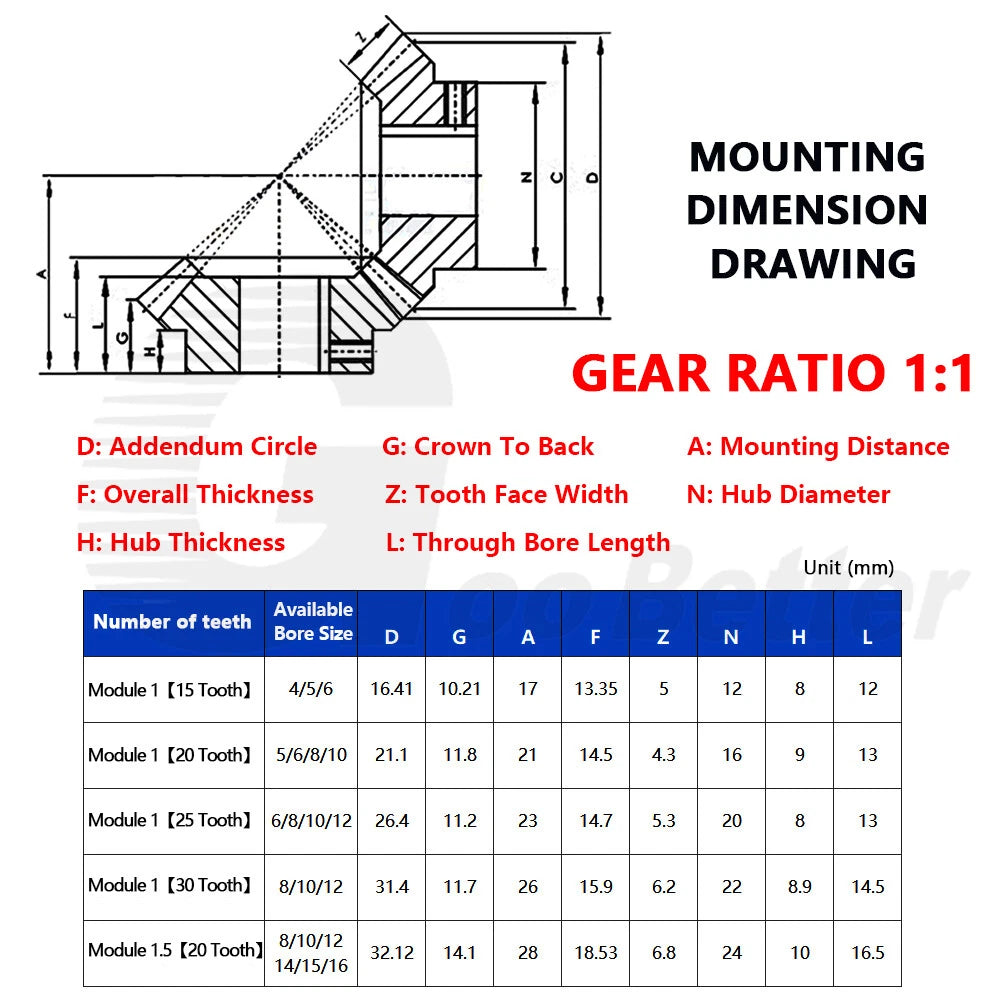
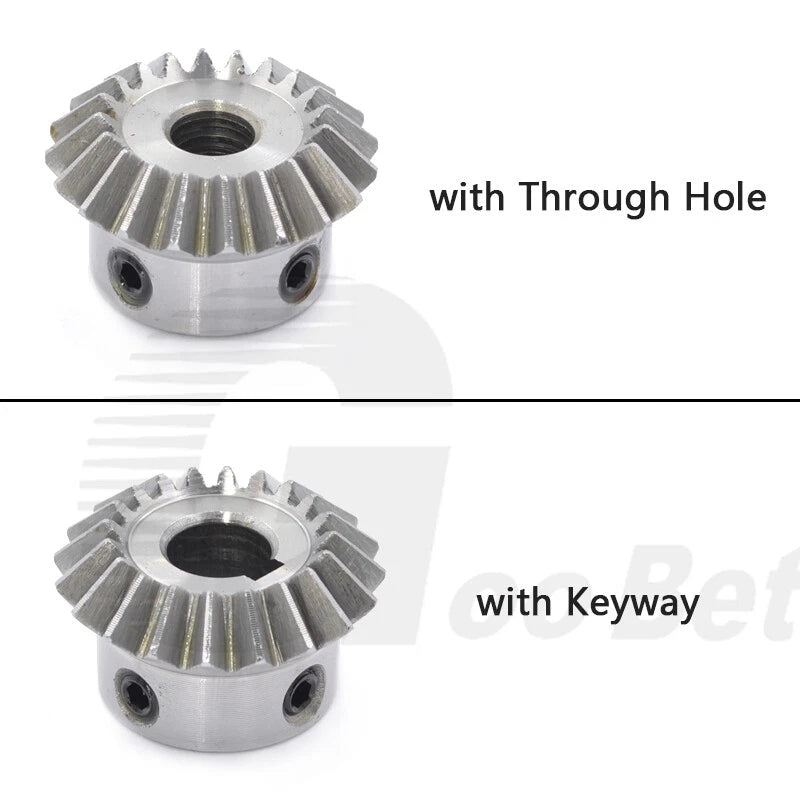
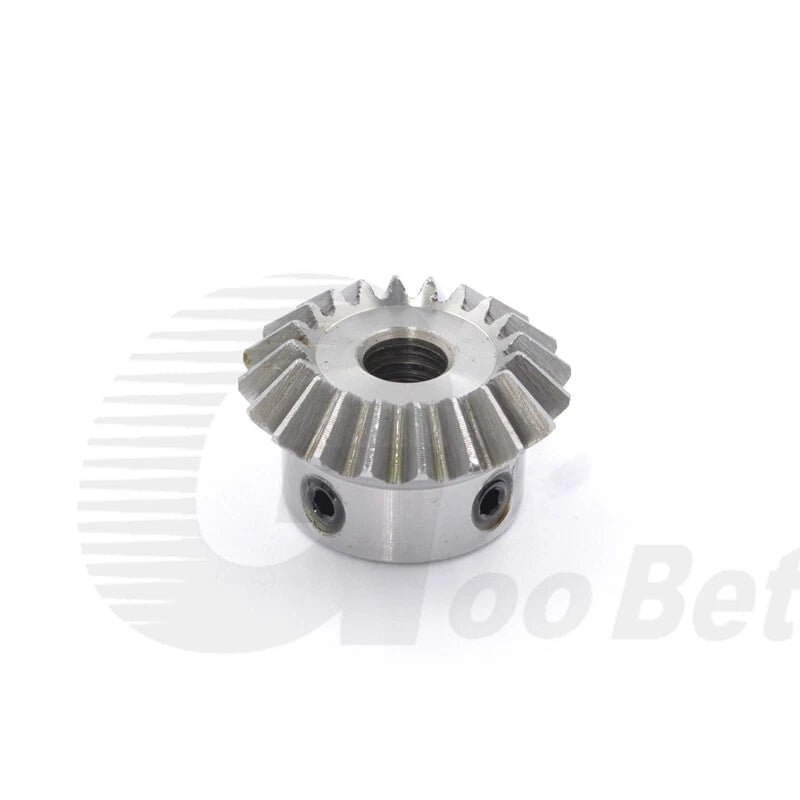
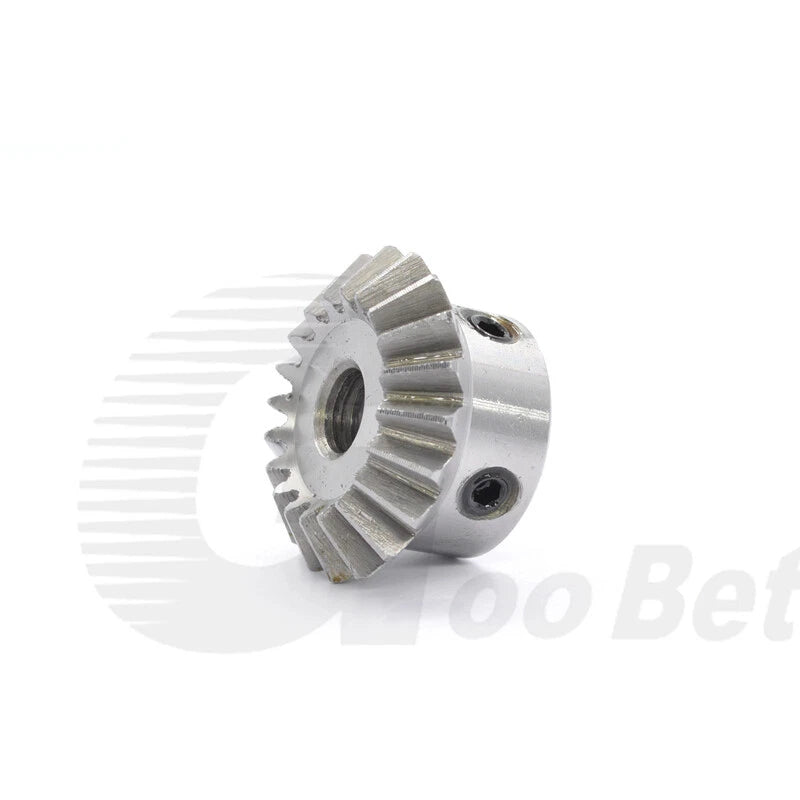
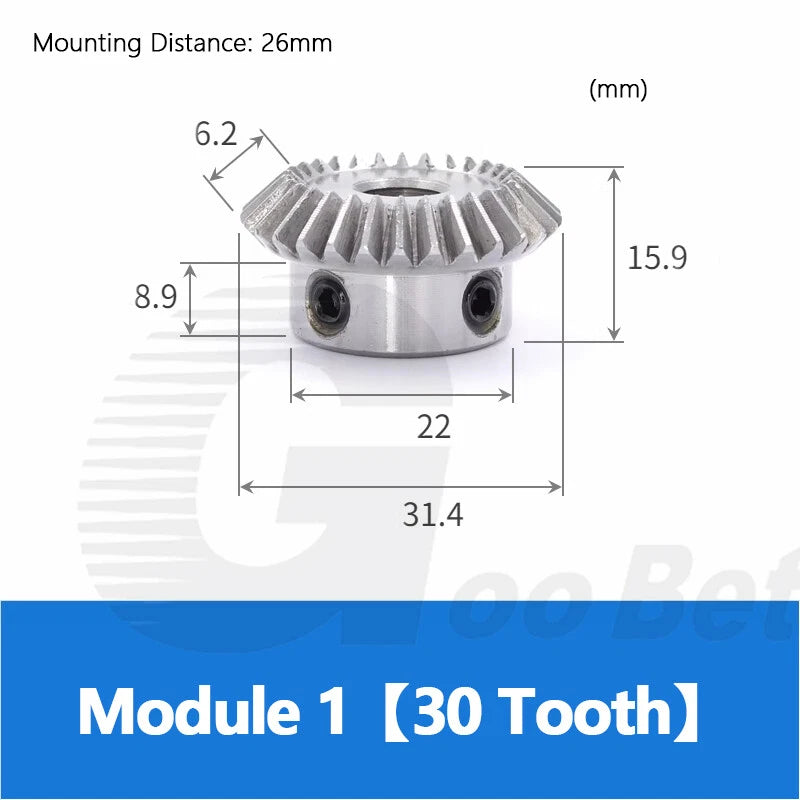
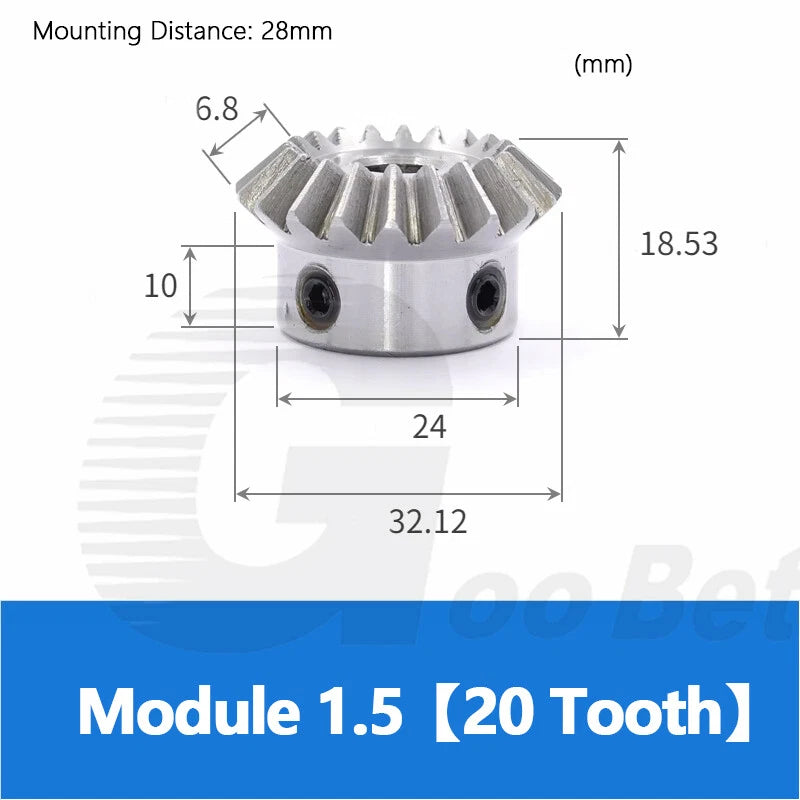
Each set consists of two mating bevel gears machined from 40Cr chrome alloy steel — a through-hardened material known for its tensile strength and wear resistance. Available in Module 1 and Module 1.5 standards, the gears span tooth counts of 15, 20, 25, and 30 (Module 1) and 20 teeth (Module 1.5), with bore sizes ranging from 4 mm (0.16 in) to 16 mm (0.63 in). Select bore options include a 3 mm or 4 mm keyway slot for positive shaft locking.
Typical applications include DIY differential drives for wheeled robots, right-angle transmission stages in custom CNC router builds, compact gearbox assemblies for automation prototypes, and educational mechanical engineering projects requiring a true 1:1 bevel mesh at 90°.
| Material | 40Cr Chrome Alloy Steel |
|---|---|
| Module | Module 1 / Module 1.5 (see variant options) |
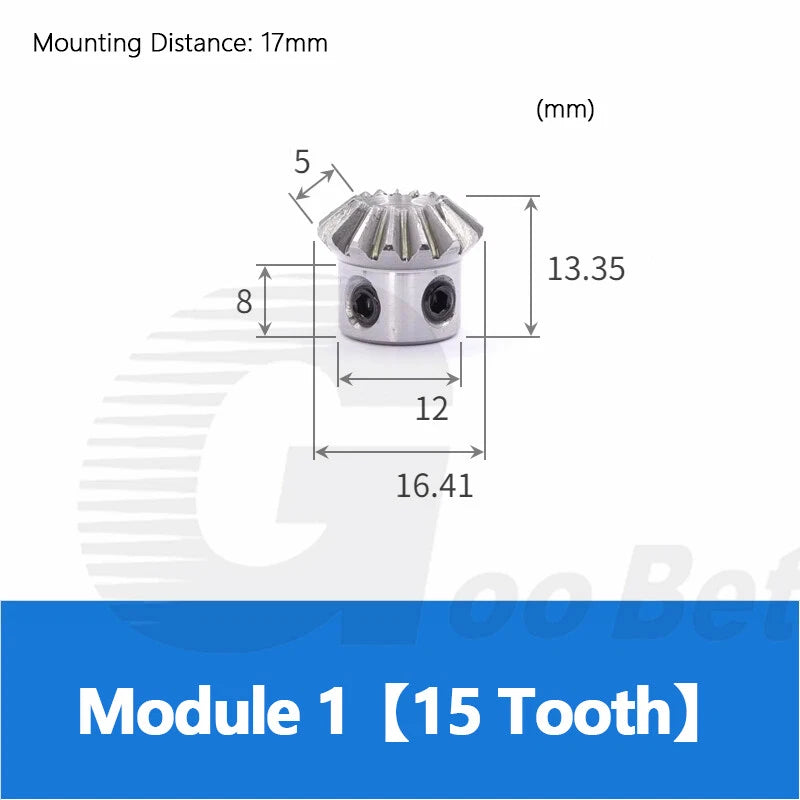
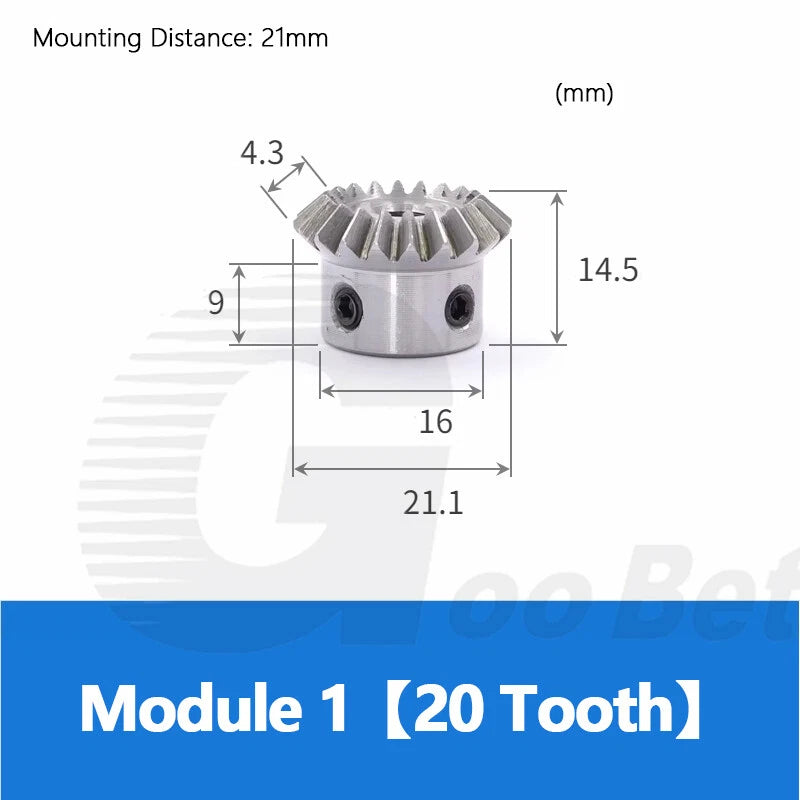
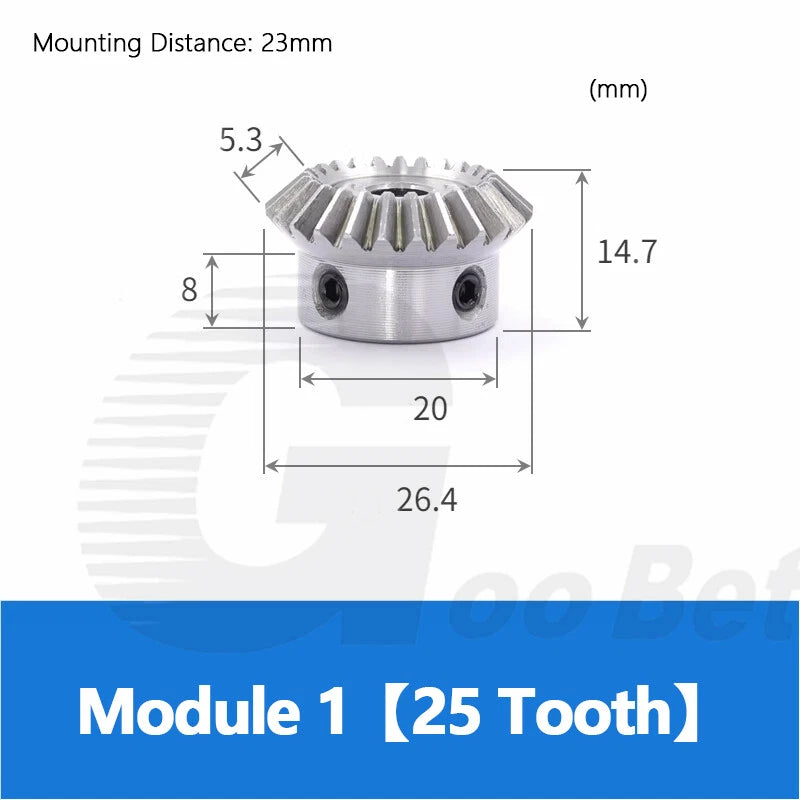
| Tooth Count (per gear) | 15 / 20 / 25 / 30 (Module 1); 20 (Module 1.5) |
| Mesh Angle | 90° |
| Gear Ratio | 1:1 |
| Bore Diameter | 4 mm – 16 mm (see variant options) |
| Keyway | 3 mm or 4 mm (available on select bore sizes) |
| Pitch Diameter (Module 1, 15T) | 15 mm (0.59 in) |
| Pitch Diameter (Module 1, 30T) | 30 mm (1.18 in) |
| Pitch Diameter (Module 1.5, 20T) | 30 mm (1.18 in) |
| Surface Finish | See variant options |
| Quantity per Set | 2 gears (matched pair) |
Module number defines the tooth size and pitch. Module 1.5 teeth are 50% larger than Module 1, which means they can transmit more torque for the same tooth count. Choose Module 1 for compact, light-duty builds where space is tight; choose Module 1.5 when your application involves higher loads or you need a more robust mesh. Both gears in a mating pair must be the same module — they are not interchangeable across modules.
Select the bore size that matches your shaft diameter exactly. Available options range from 4 mm to 16 mm. If your shaft uses a key for positive locking, choose a bore variant with the matching keyway (3 mm or 4 mm). For plain round shafts, a standard bore with a set screw or press fit is typically sufficient for light-to-medium loads.
A plain bore is adequate for low-torque, unidirectional applications where a set screw can secure the gear. For reversing loads, high torque, or applications where slippage would cause damage, a keyway provides a positive mechanical lock between the gear and shaft. If your shaft already has a keyway cut, match the keyway width (3 mm or 4 mm) to the bore variant you select.
In principle, metric module gears of the same module and pressure angle (typically 20°) should mesh with gears from other manufacturers. However, minor differences in tooth profile tolerances, face width, and cone angle between brands can affect mesh quality and backlash. For critical applications, we recommend using both gears from this matched set rather than mixing with other-brand gears.
40Cr chrome alloy steel has a significantly higher tensile strength than mild steel (typically 980–1180 MPa vs. ~400 MPa for mild steel) and far exceeds brass in load-bearing capacity. After heat treatment, 40Cr also achieves good surface hardness, which reduces tooth wear under repeated meshing. This makes it well-suited for power transmission applications that would quickly fatigue softer gear materials.
For metric module gears, pitch circle diameter (PCD) = Module × Tooth Count. For Module 1 gears: 15T = 15 mm PCD, 20T = 20 mm, 25T = 25 mm, 30T = 30 mm. For Module 1.5 gears: 20T = 30 mm PCD. A larger PCD means a larger gear body, which affects the center distance between shafts and the available space in your housing. Plan your shaft spacing accordingly.
While 40Cr steel can run briefly without lubrication, sustained dry operation will accelerate tooth wear and generate excess heat. For any continuous-duty application, apply a suitable gear grease or oil to the mesh contact zone. Light machine oil or lithium-based grease works well for most DIY and robotics applications. Reapply lubrication periodically based on your duty cycle and operating environment.