The chain is fine...but I ordered the wrong size. Nine links of the chain I ordered equals six of the size I wanted. My error...
How can I straighten out the springs? I can't use them coil uo as is.
Your payment information is processed securely. We do not store credit card details nor have access to your credit card information.
Get fitment advice & recommendations
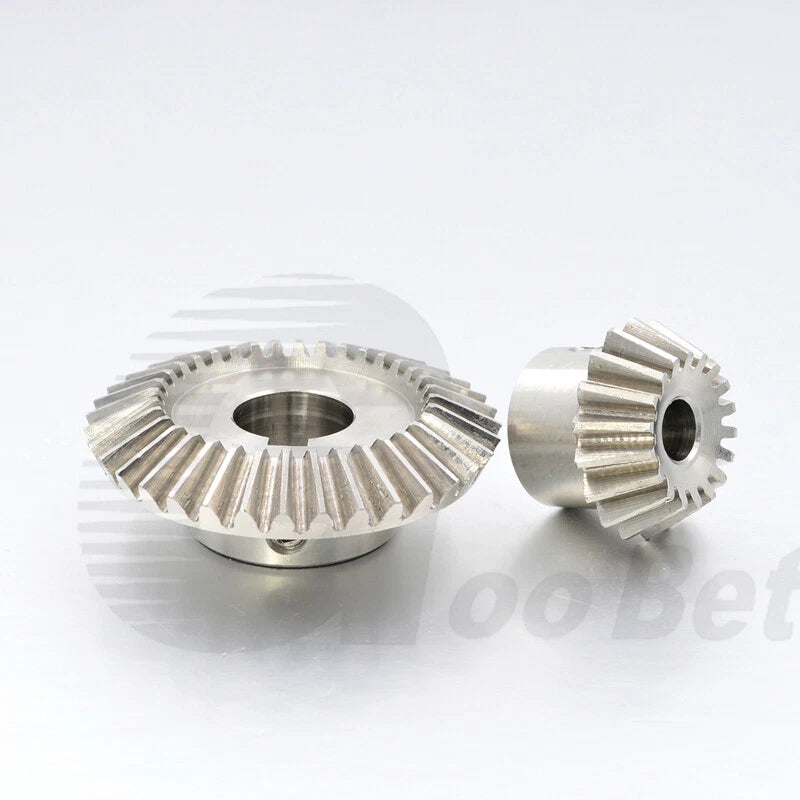
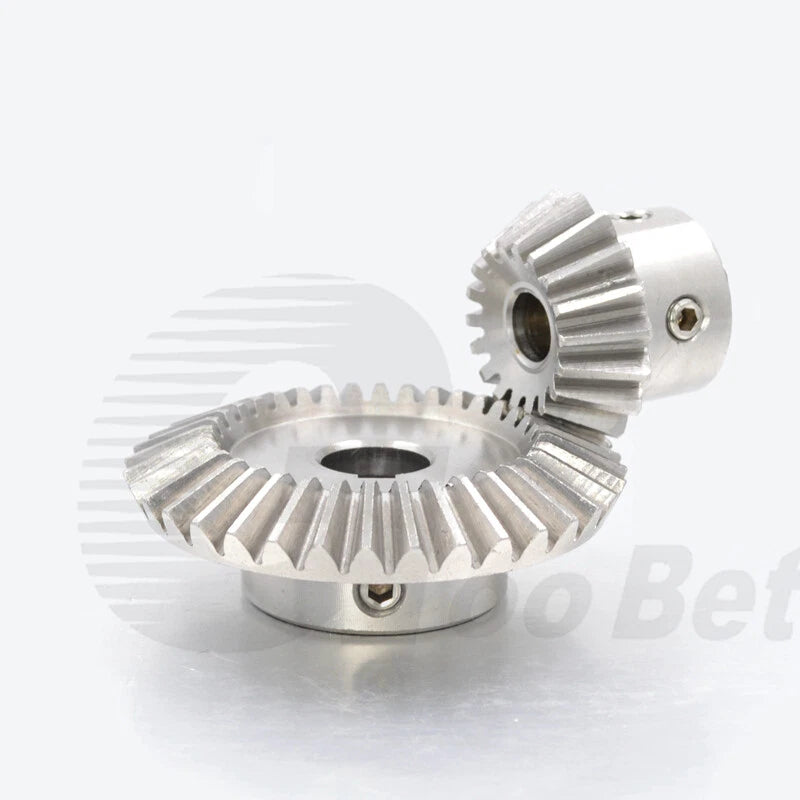
When your build demands a reliable 90° power transmission without backlash headaches, finding a stainless steel bevel gear set that actually fits your shaft is a real challenge. Whether you're a robotics engineer, CNC hobbyist, or mechanical DIYer, these Module 1 and Module 1.5 miter gears are engineered to deliver consistent torque transfer across a 1:2 tooth ratio pairing — right out of the box.
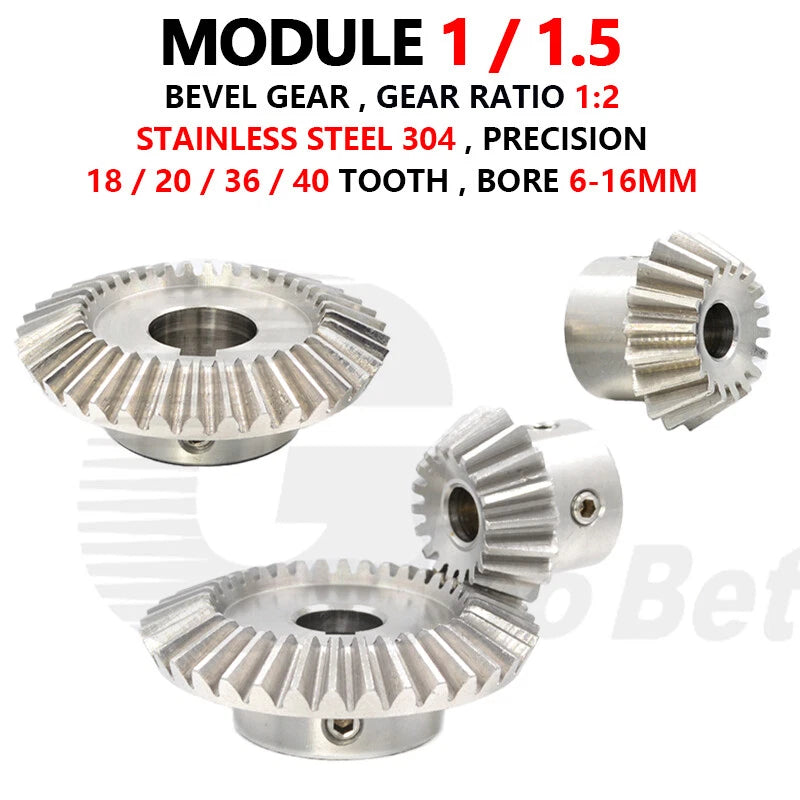
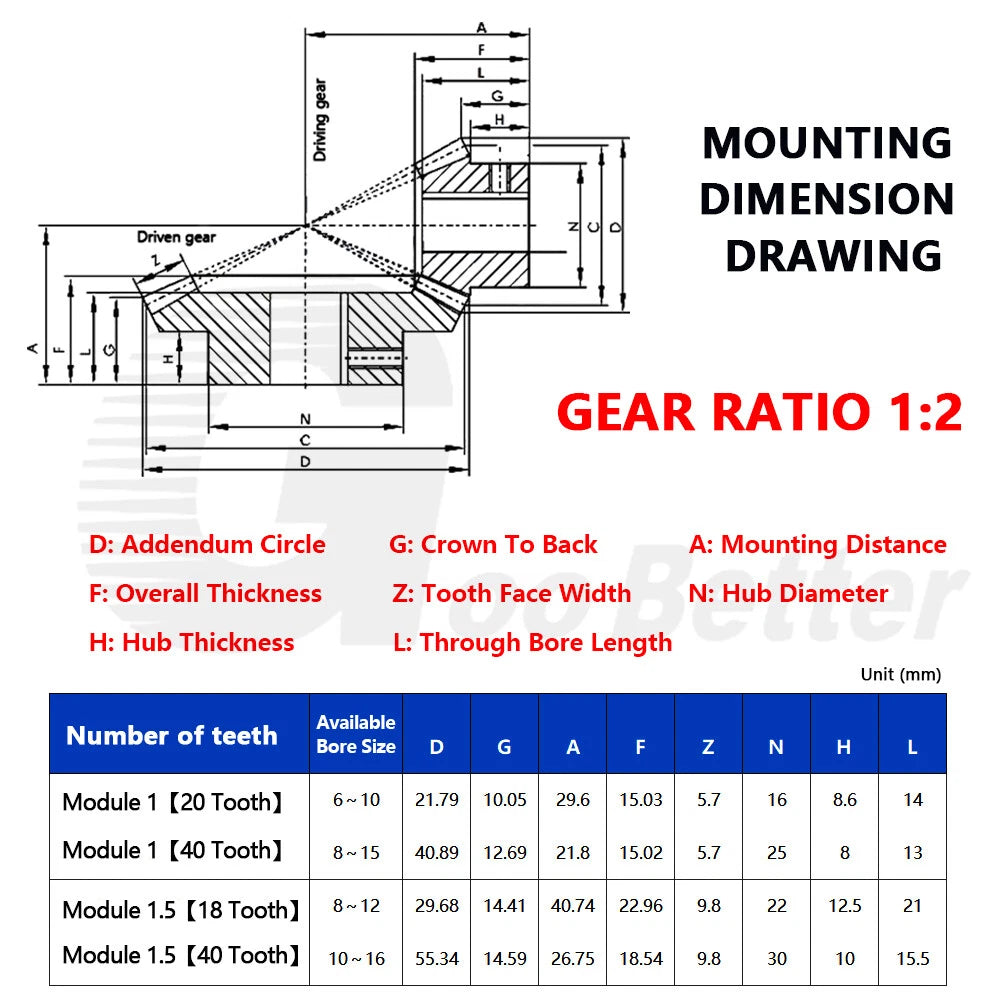
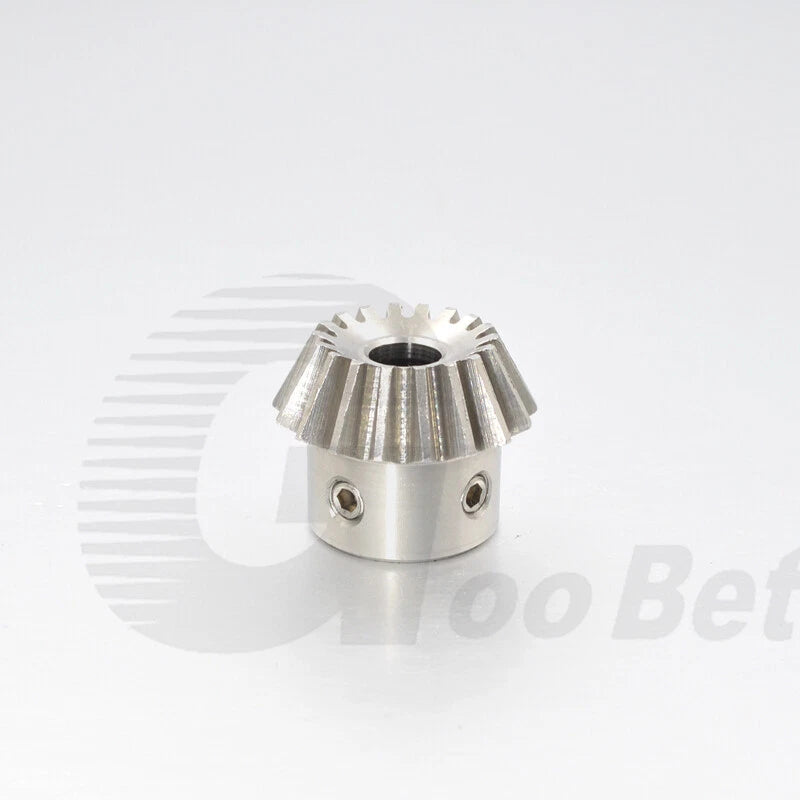
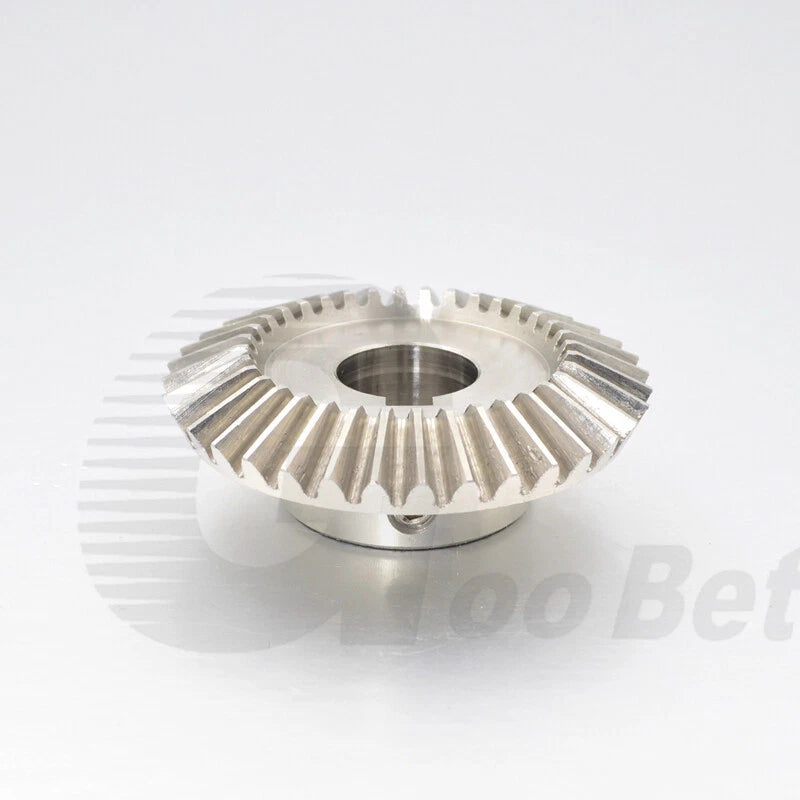
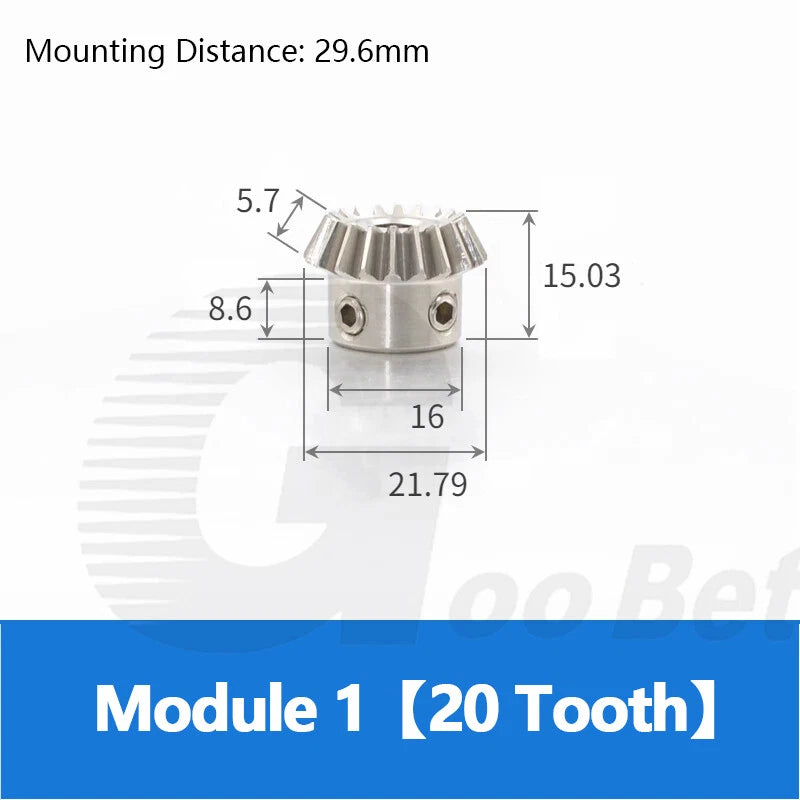
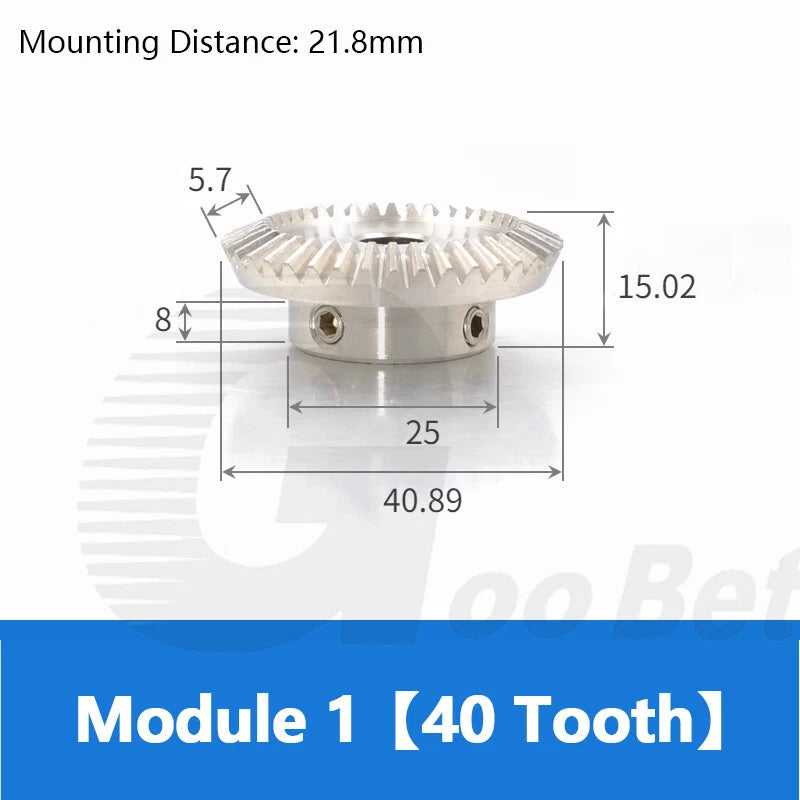
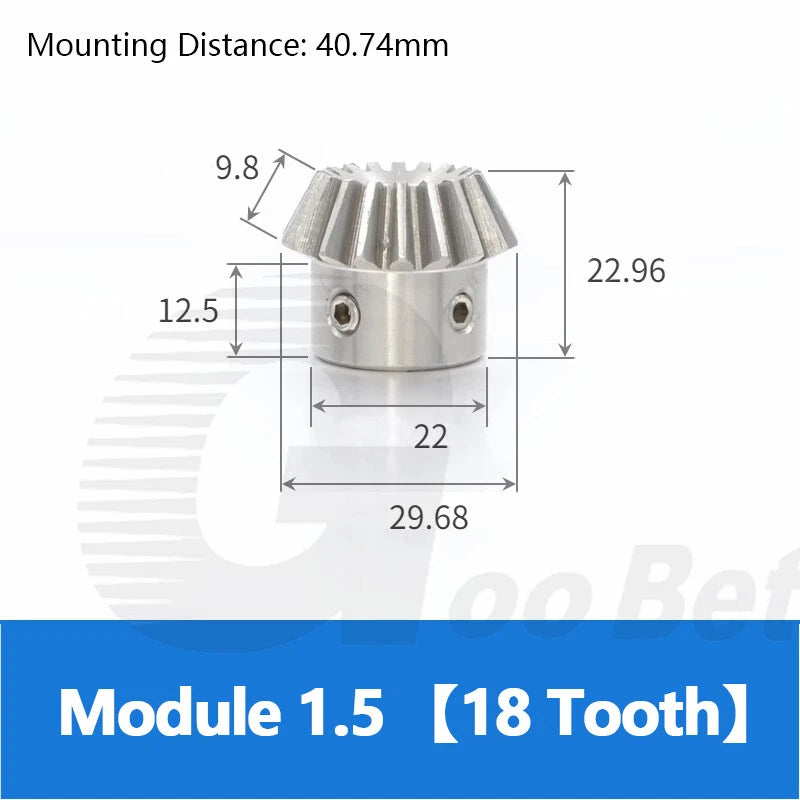
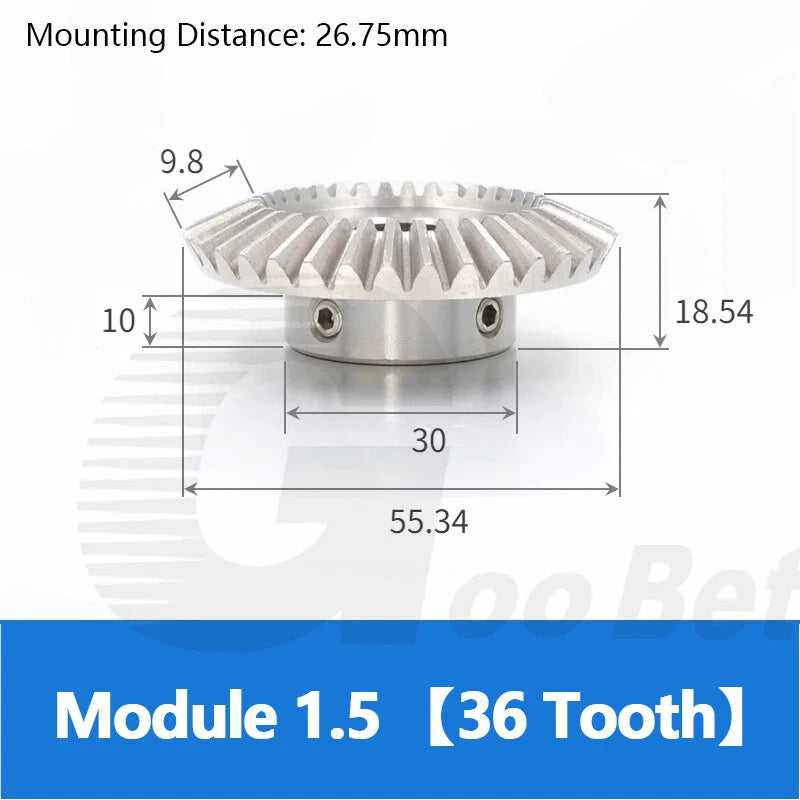
Each gear is machined from stainless steel, offering corrosion resistance and structural rigidity in a compact form factor. Module 1 gears are available in 20-tooth and 40-tooth configurations; Module 1.5 gears come in 18-tooth and 36-tooth options. Bore sizes range from 6 mm (0.24 in) to 16 mm (0.63 in), with keyway variants (4 mm and 5 mm) available for positive shaft locking on higher-torque applications.
Typical use cases include right-angle gearbox assemblies for DIY CNC routers, servo-driven robotic joints requiring a 1:2 speed reduction, and custom mechanical linkages in automation rigs where a compact miter gear pair replaces bulky worm drives.
Machined from stainless steel for corrosion resistance and long service life in humid, oily, or outdoor environments — no surface coating required.
Each listing pairs a pinion (18T or 20T) with a wheel (36T or 40T) at an exact 1:2 tooth ratio, delivering predictable 2:1 speed reduction or torque multiplication at 90°.
Choose Module 1 for compact, lightweight assemblies or Module 1.5 for higher load capacity — both modules follow standard DIN/ISO tooth profiles for interoperability.
Bore sizes from 6 mm to 16 mm accommodate common shaft diameters. Keyway variants (4 mm and 5 mm) prevent rotational slip under load without additional set screws.
Bevel tooth geometry enables smooth, low-noise right-angle power transfer — ideal for applications where inline shafts are not feasible.
Order a single gear to replace a worn component or select a matched pair to build a complete 1:2 bevel gearbox from scratch.
| Material | Stainless Steel |
|---|---|
| Module | Module 1 / Module 1.5 |
| Tooth Count (Pinion) | 20T (M1) / 18T (M1.5) |
| Tooth Count (Wheel) | 40T (M1) / 36T (M1.5) |
| Gear Ratio | 1:2 |
| Pressure Angle | 20° (standard) |
| Bore Size Options | 6 mm, 8 mm, 10 mm, 12 mm, 12 mm + 4 mm Keyway, 14 mm + 5 mm Keyway, 15 mm + 5 mm Keyway, 16 mm + 5 mm Keyway |
| Shaft Fit | See variant options |
| Tooth Profile | Straight bevel (miter) |
| Outer Diameter | See variant options |
| Face Width | See variant options |
| Weight (per piece) | See variant options |
Module determines the size of each tooth — Module 1 produces smaller, lighter gears suited for low-to-medium torque, while Module 1.5 produces larger teeth capable of handling higher loads. For a 1:2 ratio, pair the 20T pinion with the 40T wheel (M1), or the 18T pinion with the 36T wheel (M1.5). Both gears in a pair must share the same module number.
No. Gears of different modules have different tooth sizes and pitch diameters and will not mesh correctly. Always use two gears of the same module in a mating pair. Mixing modules will result in improper engagement, noise, and accelerated wear.
Select the bore size that matches your shaft diameter exactly. For example, if your motor shaft is 8 mm, choose the 8 mm bore variant. If you need a positive, slip-free connection under high torque, choose a keyway variant (e.g., 12 mm + 4 mm Keyway) and machine a matching keyway into your shaft.
Stainless steel bevel gears offer good tensile strength and fatigue resistance for light-to-medium duty robotics, CNC axis drives, and automation linkages. For continuous heavy-load industrial applications, verify the gear's rated torque against your system's peak torque requirements before installation.
A light application of gear grease or oil at the tooth contact zone is recommended for continuous-duty use to reduce friction and extend service life. For intermittent or low-speed applications, dry running is generally acceptable, but lubrication will always improve longevity.
A plain bore relies on a set screw or press fit to secure the gear to the shaft. A keyway bore includes a rectangular slot that accepts a matching key inserted into the shaft, creating a positive mechanical lock that prevents rotational slipping under torque. Keyway variants are recommended for higher-torque or reversing-load applications.
Stainless steel provides inherent corrosion resistance, making these gears suitable for humid, damp, or lightly wet environments without additional coating. For prolonged submersion or exposure to aggressive chemicals, verify the specific stainless steel grade's compatibility with your environment.