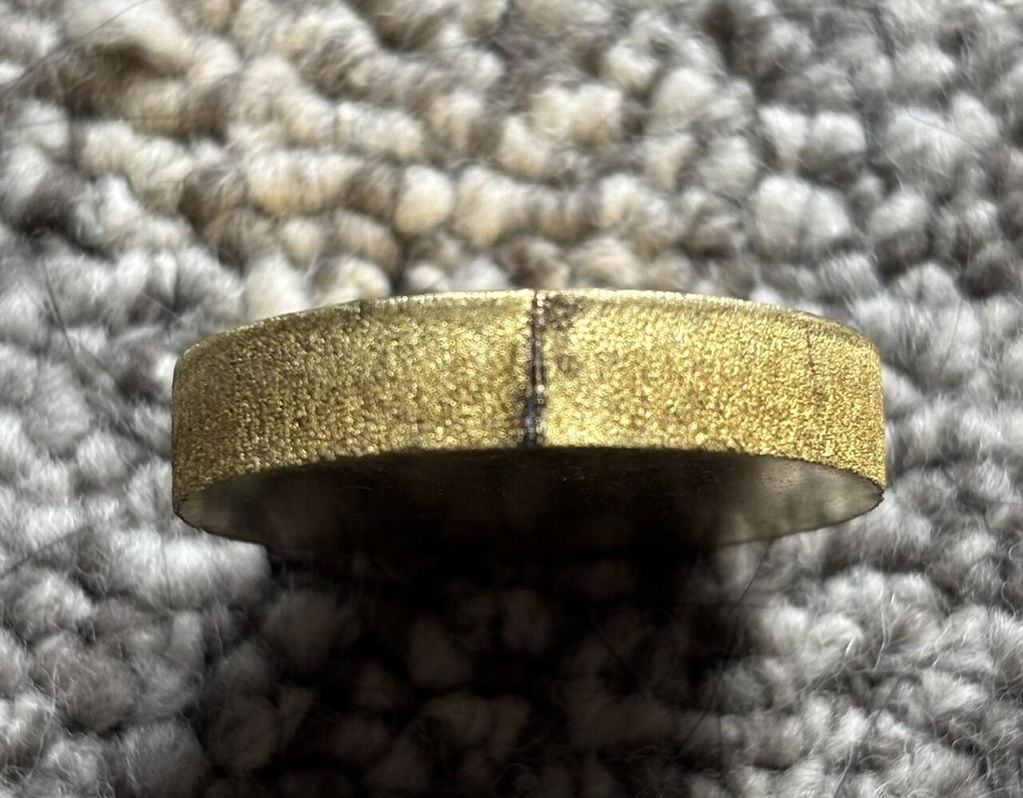
The chain is fine...but I ordered the wrong size. Nine links of the chain I ordered equals six of the size I wanted. My error...
How can I straighten out the springs? I can't use them coil uo as is.
Your payment information is processed securely. We do not store credit card details nor have access to your credit card information.
Get fitment advice & recommendations
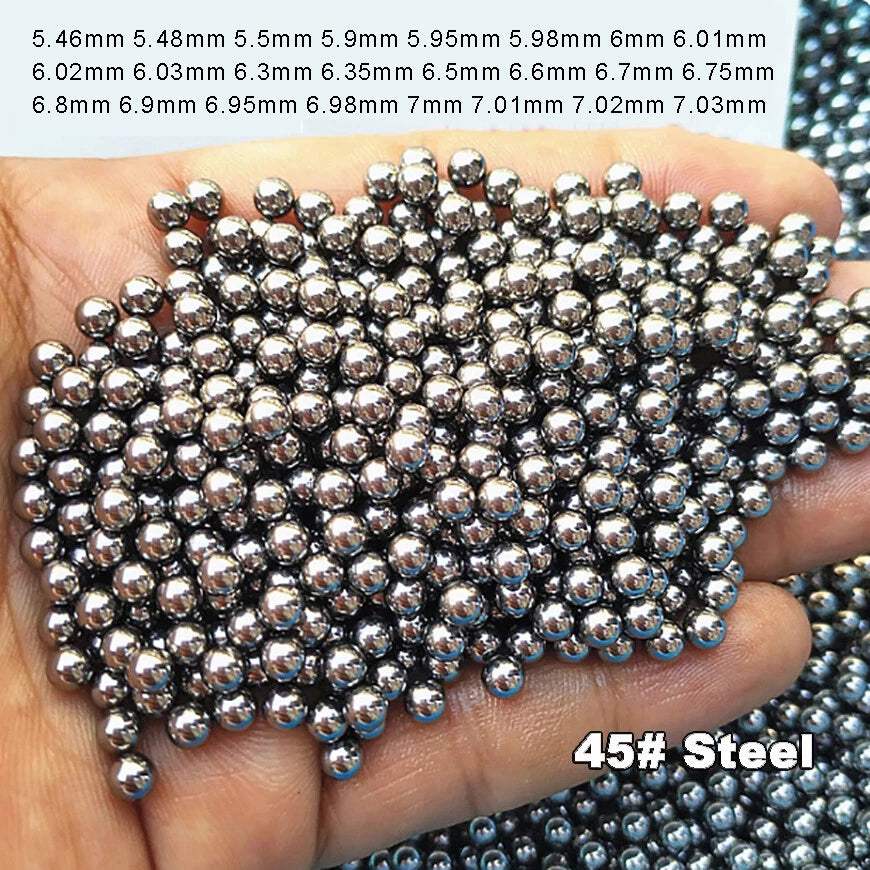
When a worn or pitted ball bearing causes your wheel hub, headset, or bottom bracket to feel rough and imprecise, finding the exact replacement diameter is the difference between a smooth rebuild and a wasted afternoon. Cyclists, bike mechanics, and workshop technicians who need reliable, dimensionally accurate rolling elements will find this range covers the most common bicycle bearing diameters in a single product listing.
Each pack contains 100 solid steel balls manufactured from 45# carbon steel — a medium-high carbon alloy known for its balance of hardness and toughness. Diameters span 5.46 mm to 7.03 mm (~0.215" to ~0.277") across 24 selectable sizes, allowing precise matching to OEM bearing races without guesswork. Surface finish is smooth and consistent to minimize rolling resistance within the race.
Typical applications include loose-ball cup-and-cone wheel hubs on road and mountain bikes, threaded headset assemblies requiring 5.5–7 mm balls, vintage bottom bracket overhaul kits, and general small-diameter bearing replacement in BMX, folding bikes, and cargo cycles. The 100-piece pack quantity suits both single-bike rebuilds and workshop stock replenishment.
| Material | 45# Carbon Steel |
|---|---|
| Diameter Range | 5.46 mm – 7.03 mm (approx. 0.215" – 0.277") |
| Available Sizes | See variant options |
| Pack Quantity | 100 pcs per pack |
| Ball Type | Loose (retainer-free) |
| Surface Finish | Ground, smooth |
| Typical Application | Cup-and-cone wheel hubs, headsets, bottom brackets |
| Compatible Bike Types | Road, mountain, BMX, folding, cargo |
| Weight (per pack) | See variant options |
Remove the existing balls from your bearing race and measure one with a digital micrometer or caliper. Match that measurement to the closest available diameter in the variant selector. If your measurement falls between two sizes, select the smaller diameter — a slightly undersized ball will roll more freely, while an oversized ball may bind in the race.
No. These loose balls are designed exclusively for open cup-and-cone bearing assemblies. Sealed cartridge bearings (such as those found in many modern hubs and bottom brackets) are factory-assembled units and cannot be repacked with individual loose balls.
45# steel is a medium-high carbon steel (approximately 0.42–0.50% carbon) that offers a practical balance of hardness and toughness for general bearing applications. Chrome steel (52100) is a bearing-grade alloy with higher hardness and fatigue resistance, typically used in precision industrial bearings. For standard bicycle cup-and-cone applications — where balls are replaced periodically as part of routine maintenance — 45# steel provides adequate service life at a lower cost per pack.
The number of balls per race varies by component and diameter. A typical front hub uses 9–10 balls per side; a rear hub uses 9 balls per side; a threaded headset uses 18–22 balls per race. Consult your component's service manual or count the existing balls before ordering. A 100-piece pack is generally sufficient for a full bike overhaul with spare balls remaining.
Standard bicycle bearing grease (such as a lithium-based or waterproof grease rated for cup-and-cone use) is appropriate. Apply a generous layer to the race before seating the balls. Avoid thin oils as the sole lubricant — they do not provide adequate film thickness under radial load and will wash out quickly in wet conditions.
No. All balls in a single bearing race must be the same diameter. Mixing sizes causes uneven load distribution, accelerated race wear, and rough rolling feel. Always replace all balls in a race at the same time with balls of identical diameter.
Store unused balls in a sealed container away from moisture and contaminants. A small zip-lock bag or parts container with a lid works well. Exposure to humidity over extended periods can cause surface oxidation, which may affect rolling smoothness. Lightly coating stored balls with a thin film of grease or oil before sealing the container will extend shelf life.