The chain is fine...but I ordered the wrong size. Nine links of the chain I ordered equals six of the size I wanted. My error...
How can I straighten out the springs? I can't use them coil uo as is.
Your payment information is processed securely. We do not store credit card details nor have access to your credit card information.
Get fitment advice & recommendations
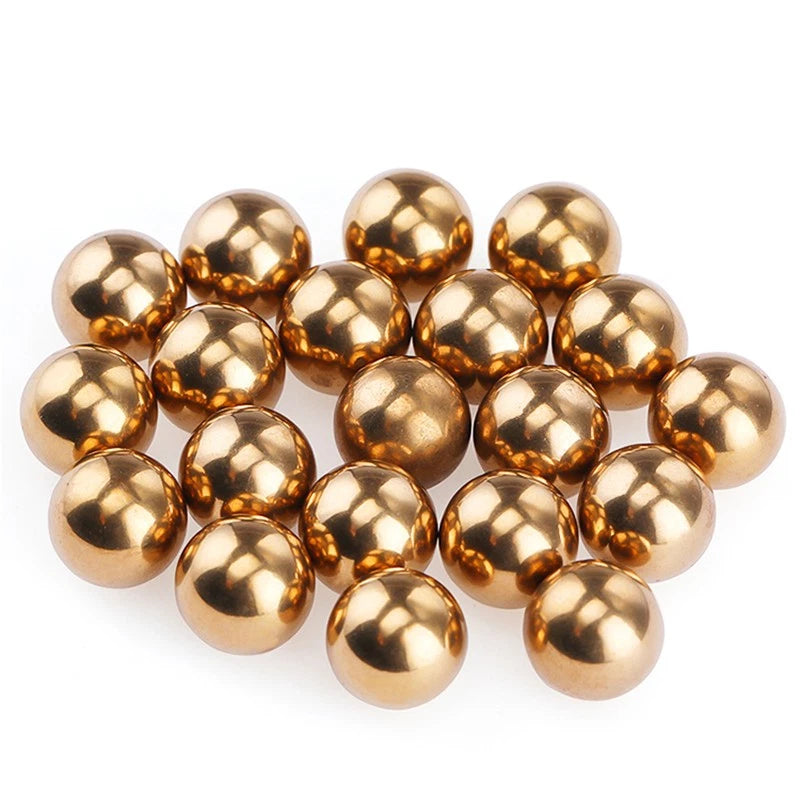
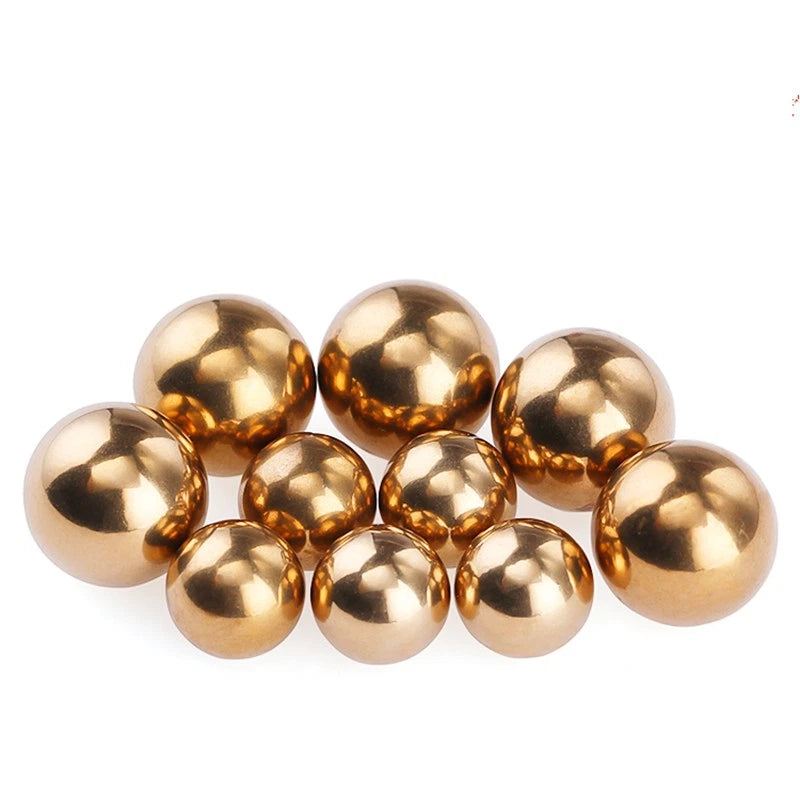
Whether you're a maker struggling to source consistent small-diameter spheres for jewellery, a model engineer needing precise rolling elements, or a DIY enthusiast building custom mechanisms, finding brass balls in the exact size you need — without ordering industrial minimums — is a real pain point. These solid brass ball bearings are stocked across a wide diameter range specifically for hobbyists, craftspeople, and small-batch fabricators who need flexibility.
Each ball is turned from solid brass stock, delivering a smooth, uniform surface finish. Diameters span 0.9 mm (approx. 0.035 in) through to 80 mm (approx. 3.15 in), with both metric and imperial-friendly sizes included (e.g. 2.381 mm ≈ 3/32 in, 3.175 mm ≈ 1/8 in, 4.763 mm ≈ 3/16 in, 6.35 mm ≈ 1/4 in, 9.525 mm ≈ 3/8 in, 12.7 mm ≈ 1/2 in, 15.875 mm ≈ 5/8 in, 25.4 mm ≈ 1 in). Quantity options range from single pieces up to 2,000-piece bulk packs.
Typical use cases include: decorative inlay and mosaic art where brass spheres add metallic accent; load-bearing ball transfers and furniture levelling feet in woodworking and cabinetry; and prototype mechanical assemblies, valve seats, and check-ball applications in small-scale engineering and 3D-printed mechanisms.
Machined from solid brass for consistent density, weight, and a naturally corrosion-resistant surface — no hollow cores or plating that can chip.
41 diameter options from 0.9 mm to 80 mm cover micro craft work through to large decorative spheres, all in one listing.
Order from 1 piece to 2,000-piece bulk packs — ideal for sampling a size before committing to volume, or stocking up for production runs.
Includes both standard metric steps and common imperial fractional equivalents (1/8 in, 1/4 in, 1/2 in, 1 in) for cross-system compatibility.
Consistent roundness and surface finish support reliable seating in ball-transfer units, valve seats, and decorative inlay channels.
Used in jewellery making, model engineering, furniture hardware, kinetic sculpture, mosaic art, and DIY mechanical prototyping.
| Material | Solid brass |
|---|---|
| Diameter Range | 0.9 mm – 80 mm (approx. 0.035 in – 3.15 in) |
| Surface Finish | Smooth turned, natural brass |
| Hardness | See variant options |
| Tolerance | See variant options |
| Available Diameters | 0.9, 1, 1.2, 1.8, 2, 2.381, 2.5, 2.8, 3, 3.175, 3.5, 4, 4.45, 4.5, 4.763, 5, 5.5, 6, 6.35, 6.75, 7, 8, 9.525, 10, 12, 12.7, 15, 15.875, 16, 20, 25, 25.4, 30, 40, 45, 50, 55, 60, 65, 70, 80 mm |
| Pack Sizes | 1, 2, 3, 4, 5, 10, 20, 50, 100, 200, 500, 1000, 2000 Pcs |
| Weight per Unit | See variant options |
| Application | Art, craft, jewellery, model engineering, furniture hardware, mechanical prototyping |
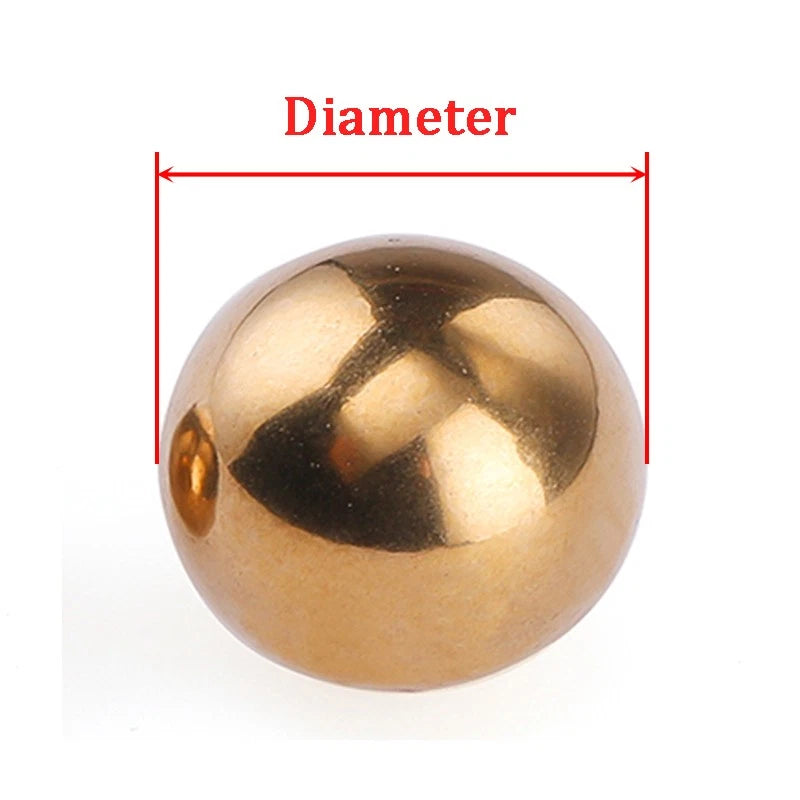
Match the ball diameter to your seat or socket bore. For ball-transfer units and valve seats, the ball should be 0.01–0.05 mm smaller than the seat bore for a snug rolling fit. For decorative inlay, measure your channel width and select the closest diameter. Use the imperial-equivalent sizes (e.g. 6.35 mm = 1/4 in) if your design is dimensioned in inches.
Brass is a moderate-strength alloy suitable for light-duty rolling and sliding applications such as furniture levelling feet, ball transfers, and low-speed mechanisms. For heavy industrial load-bearing applications requiring hardened steel or ceramic balls, brass may not be appropriate. These are rated for decorative, craft, and light mechanical use.
Brass naturally develops a patina (tarnish) when exposed to air and moisture over time. This is a surface oxidation process and does not affect structural integrity. For applications requiring a bright finish, apply a clear lacquer or metal polish. For outdoor or high-humidity environments, consider sealing the surface.
Yes — the metric sizes align with standard metric ball retainers and transfer units. The imperial-equivalent sizes (2.381 mm, 3.175 mm, 4.763 mm, 6.35 mm, 9.525 mm, 12.7 mm, 15.875 mm, 25.4 mm) are designed to match common imperial ball seats. Always verify the seat bore diameter against your specific hardware specification before ordering.
Absolutely. The smaller diameters (0.9 mm – 6 mm) are popular for bead work, wire wrapping, and decorative inlay. Brass has a warm gold tone that complements copper, wood, and resin. The smooth surface finish allows for polishing, patination, or coating with jewellery lacquer.
If you are trialling a new size or need just a few for a one-off project, start with a 1–10 piece pack. For recurring production use — such as batch jewellery making or furniture hardware assembly — the 200, 500, 1000, or 2000-piece packs offer a significantly lower per-unit cost. Check the price-per-piece across pack sizes to find the most economical option for your volume.
The balls have a smooth turned natural brass finish. They can be polished to a mirror shine using metal polishing compound, chemically patinated to an antique brown or black, lacquered to preserve the bright finish, or plated (gold, nickel, chrome) by a plating service. The solid brass construction means the surface can be worked without risk of exposing a different base metal.
🛒 Select your diameter and quantity above, then add to cart.