The chain is fine...but I ordered the wrong size. Nine links of the chain I ordered equals six of the size I wanted. My error...
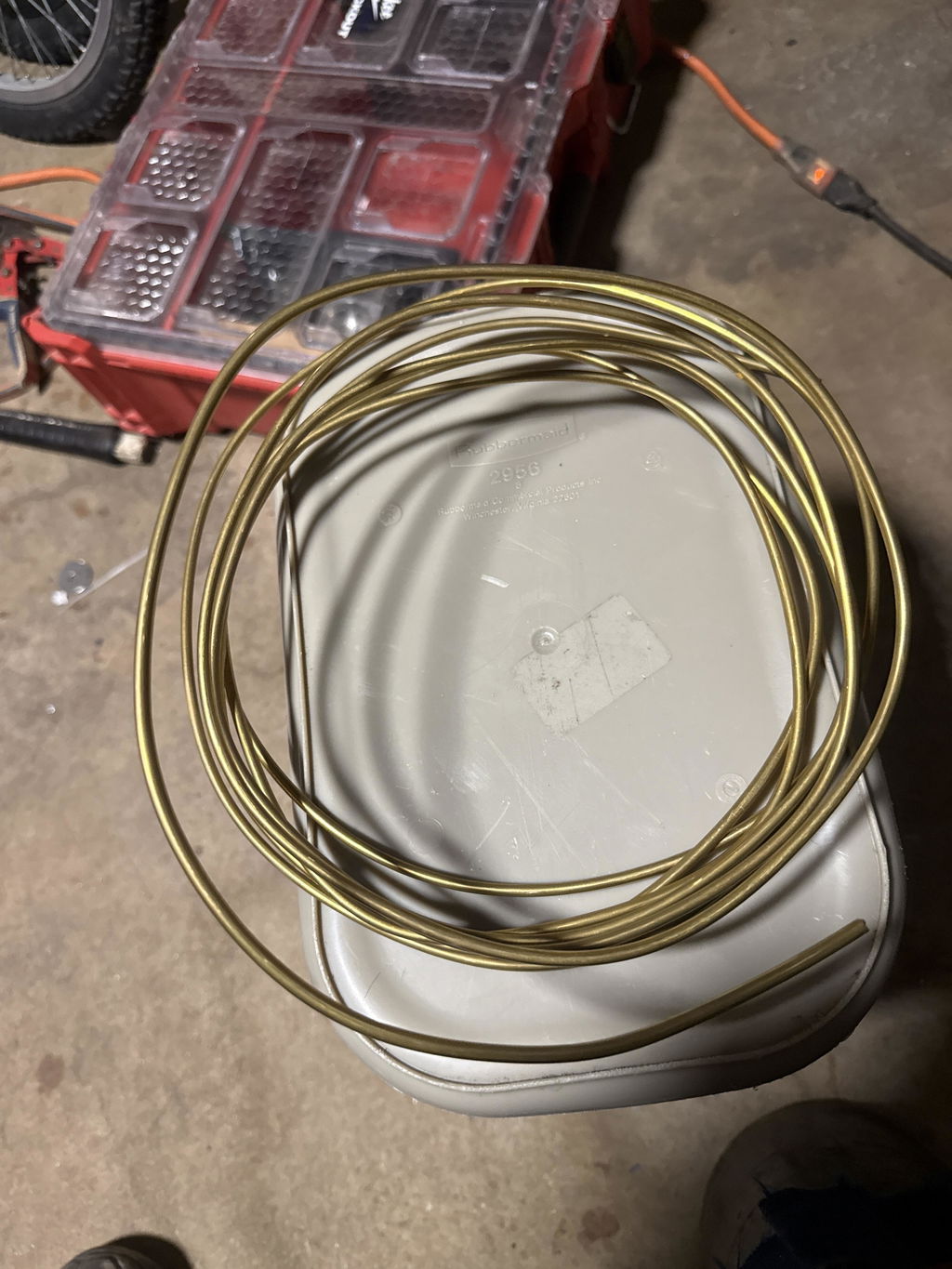
How can I straighten out the springs? I can't use them coil uo as is.
Your payment information is processed securely. We do not store credit card details nor have access to your credit card information.
Get fitment advice & recommendations
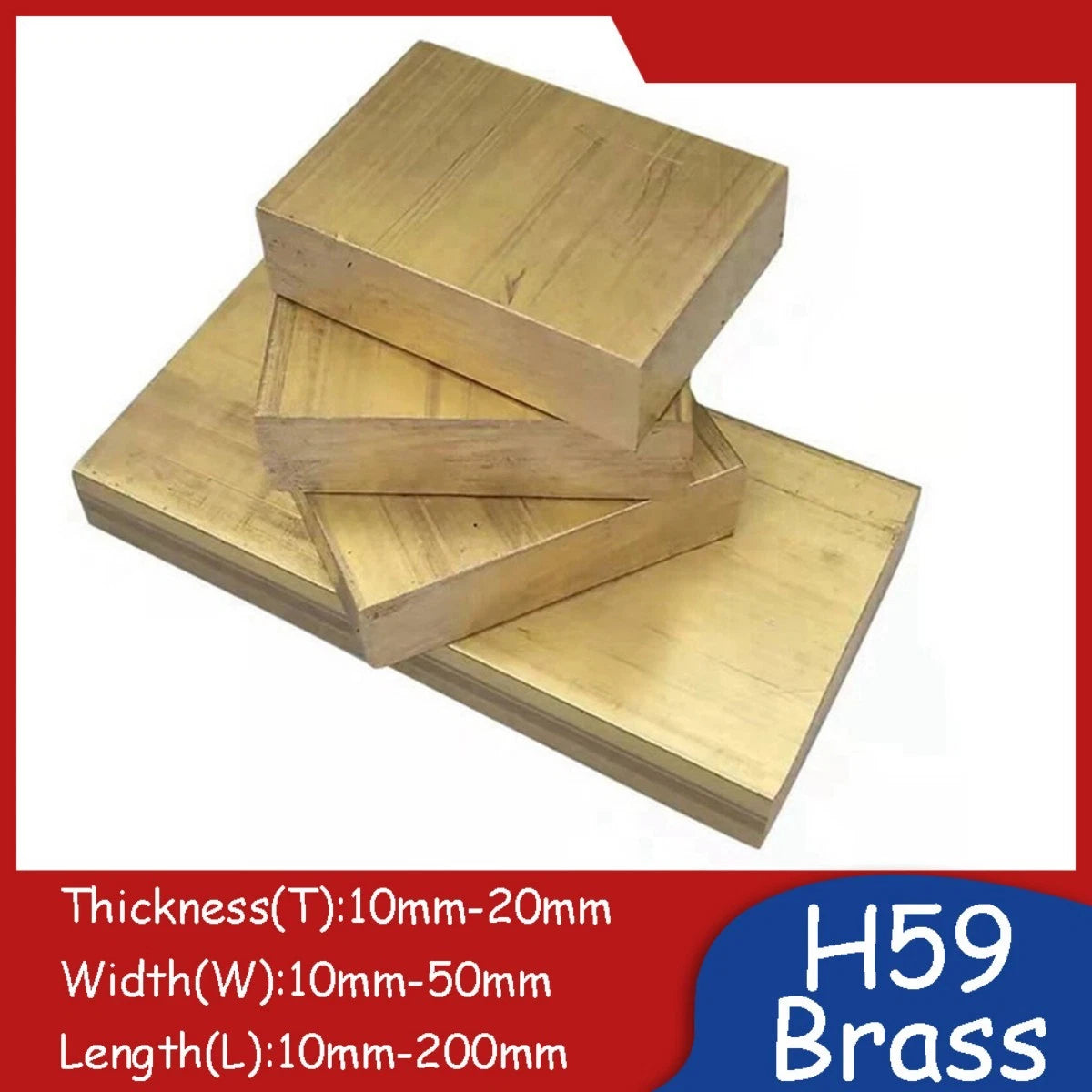
When your project demands a metal stock that machines cleanly, holds tight tolerances, and resists corrosion without constant maintenance, finding the right brass block in the exact size you need can be a real challenge. Whether you are a hobbyist machinist, a small workshop fabricator, or a maker building custom hardware, these solid H59 brass rectangular blocks give you a reliable starting point in over 130 size combinations.
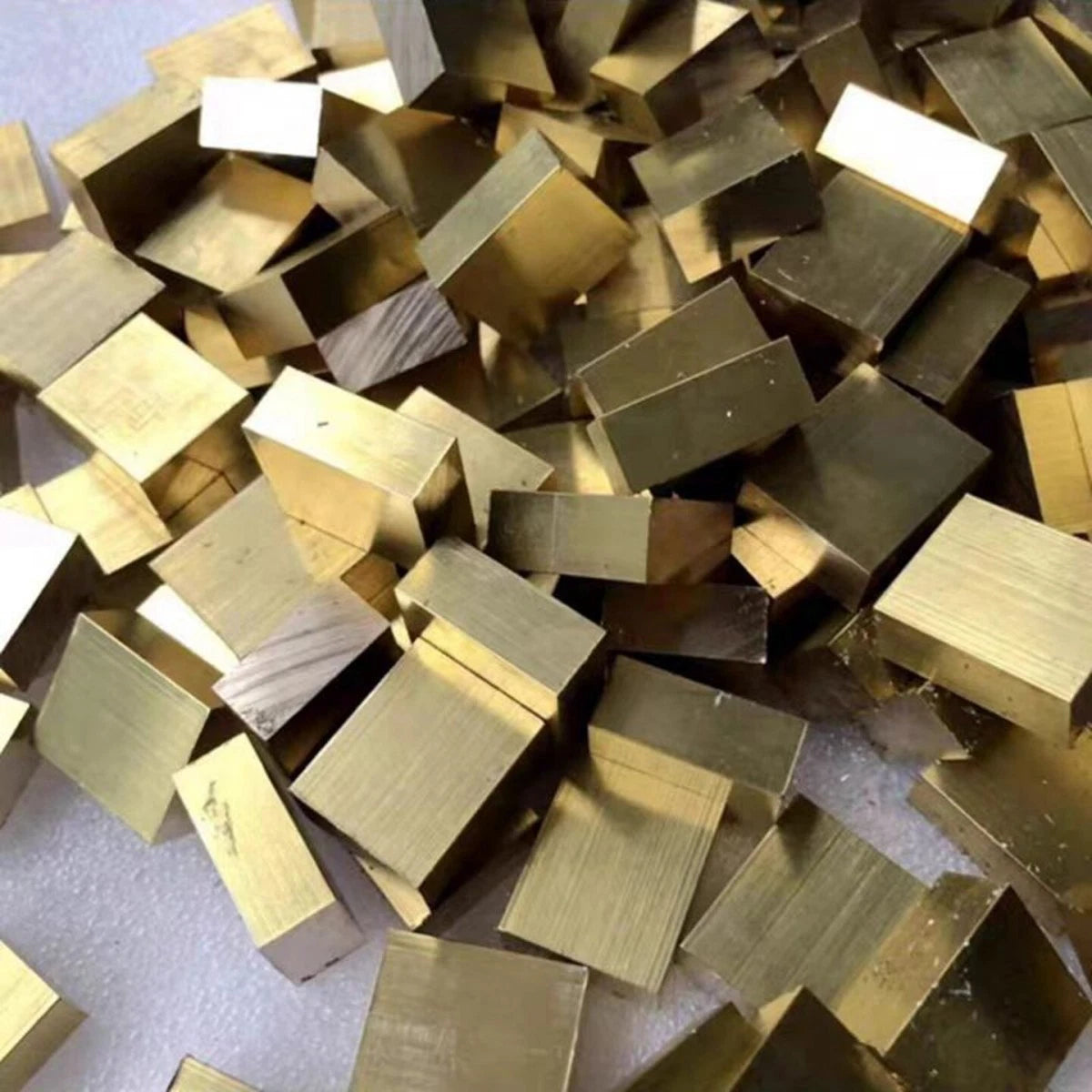
Each piece is cut from solid H59 brass alloy — a copper-zinc alloy known for its balance of machinability, thermal conductivity, and corrosion resistance. Cross-sections range from 10 × 10 mm (approx. 0.39 × 0.39 in) up to 20 × 50 mm (approx. 0.79 × 1.97 in), with lengths from 10 mm to 200 mm (approx. 0.39 in to 7.87 in). The rectangular prism profile makes it straightforward to clamp, mill, drill, or turn on a lathe without additional prep work.
Typical applications include custom standoffs and spacers for electronics enclosures, bearing housings and bushings for small mechanical assemblies, decorative hardware accents for furniture and cabinetry, heat-sink blocks for low-power thermal management, and raw stock for engraving or CNC milling projects requiring a warm gold-toned metal finish.
| Material | H59 Brass (Copper-Zinc Alloy) |
|---|---|
| Shape | Rectangular Prism (Block / Bar) |
| Width Range | 10 mm – 20 mm (approx. 0.39 in – 0.79 in) |
| Height Range | 10 mm – 50 mm (approx. 0.39 in – 1.97 in) |
| Length Range | 10 mm – 200 mm (approx. 0.39 in – 7.87 in) |
| Surface Finish | Saw-cut / milled (as-cut) |
| Hardness | See variant options |
| Tensile Strength | See variant options |
| Thermal Conductivity | Approx. 100–120 W/(m·K) (typical for H59 brass) |
| System of Measurement | Metric |
| Quantity per Order | 1 Pcs (except 10×10×10mm: 2 Pcs) |
Start with your finished part dimensions and add machining allowance — typically 1–3 mm per face for milling or turning. Select the smallest stock size that still gives you enough material to clean up all surfaces. For example, if your finished part is 18 × 28 × 90 mm, a 20 × 30 × 100 mm block is a practical choice. Use the Size selector above to find the combination closest to your needs.
H59 brass has moderate tensile strength suitable for light-duty mechanical components such as spacers, standoffs, bushings, and small brackets. It is not recommended for high-stress structural applications where steel or bronze alloys would be more appropriate. For decorative hardware, enclosure components, and low-load mechanical parts, H59 brass performs reliably.
Brass does not rust (rust is specific to iron-based metals). H59 brass is resistant to moisture and mild atmospheric corrosion, making it suitable for indoor use and sheltered environments without additional coating. In humid or marine environments, brass may develop a patina (greenish oxidation) over time, which can be removed with brass polish or left as a natural finish depending on your preference.
Yes. H59 brass is compatible with soft soldering (using rosin-core or acid-core solder), silver soldering, and brazing. Ensure the surface is clean and free of oils before joining. Use an appropriate flux for brass to prevent oxidation during heating. Avoid overheating, as excessive heat can cause zinc fuming from the alloy.
Brass is one of the more forgiving metals for hobby machining. A benchtop mini-lathe or small milling machine handles H59 brass well with standard HSS (high-speed steel) or carbide tooling. For drilling, standard twist drills work without special coatings. Use cutting fluid or light oil to extend tool life and improve surface finish. A hacksaw or angle grinder with a metal-cutting disc can be used for rough cutting if a bandsaw is not available.
Yes. H59 brass machines cleanly on CNC routers and milling machines equipped with appropriate end mills for non-ferrous metals. Recommended spindle speeds and feed rates vary by machine and tool diameter — consult your tooling manufacturer's guidelines for brass. The flat, parallel faces of these rectangular blocks make fixturing straightforward on a CNC table.
H59 brass contains approximately 57–60% copper and is a general-purpose alloy with good machinability and moderate corrosion resistance. H62 brass has a slightly higher copper content (around 60–63%), offering marginally better corrosion resistance and a slightly warmer color. C360 (free-machining brass) is a leaded brass grade optimized for high-speed machining with excellent chip-breaking characteristics. For most DIY and light-engineering applications, H59 is a cost-effective and practical choice.