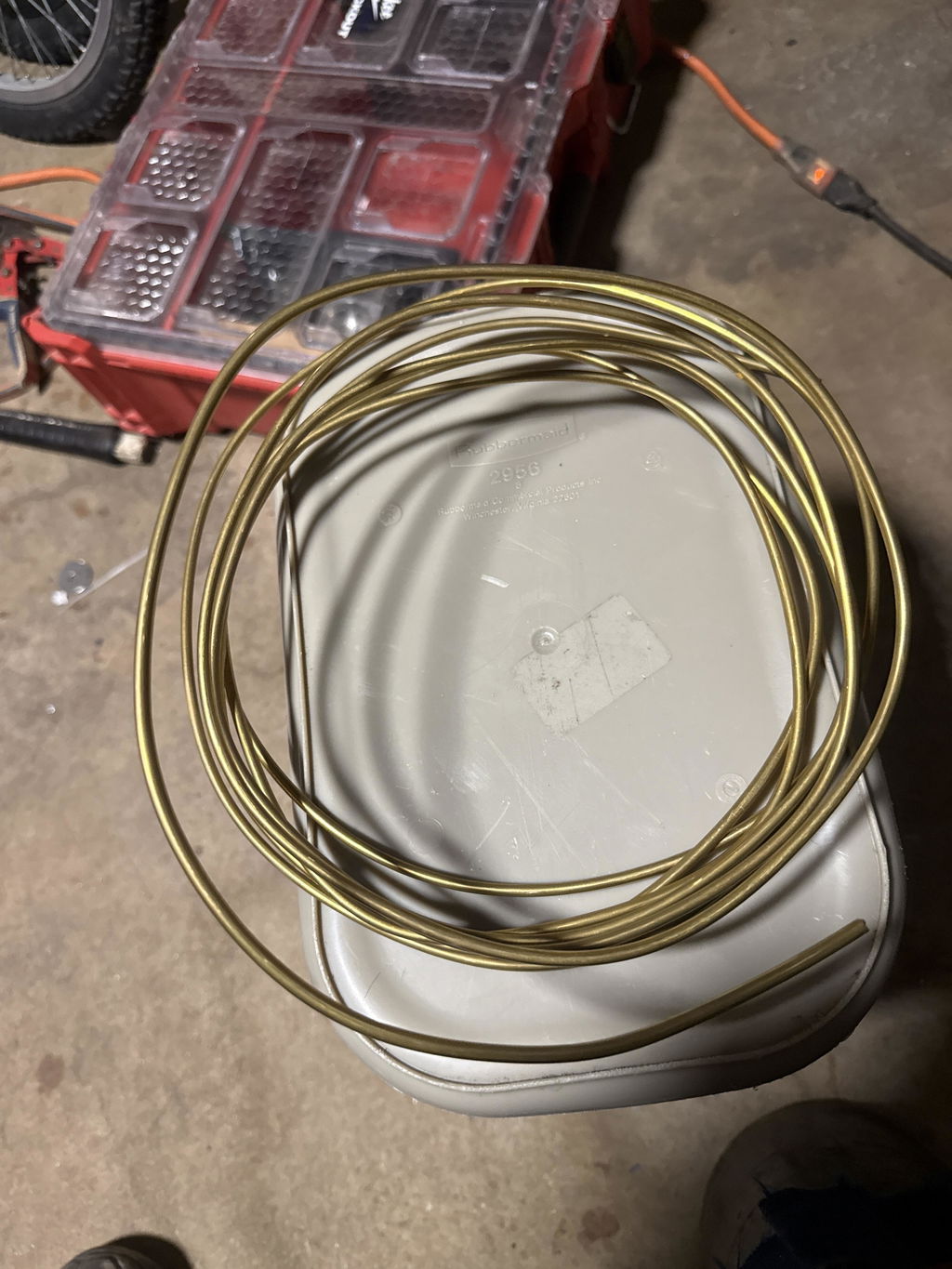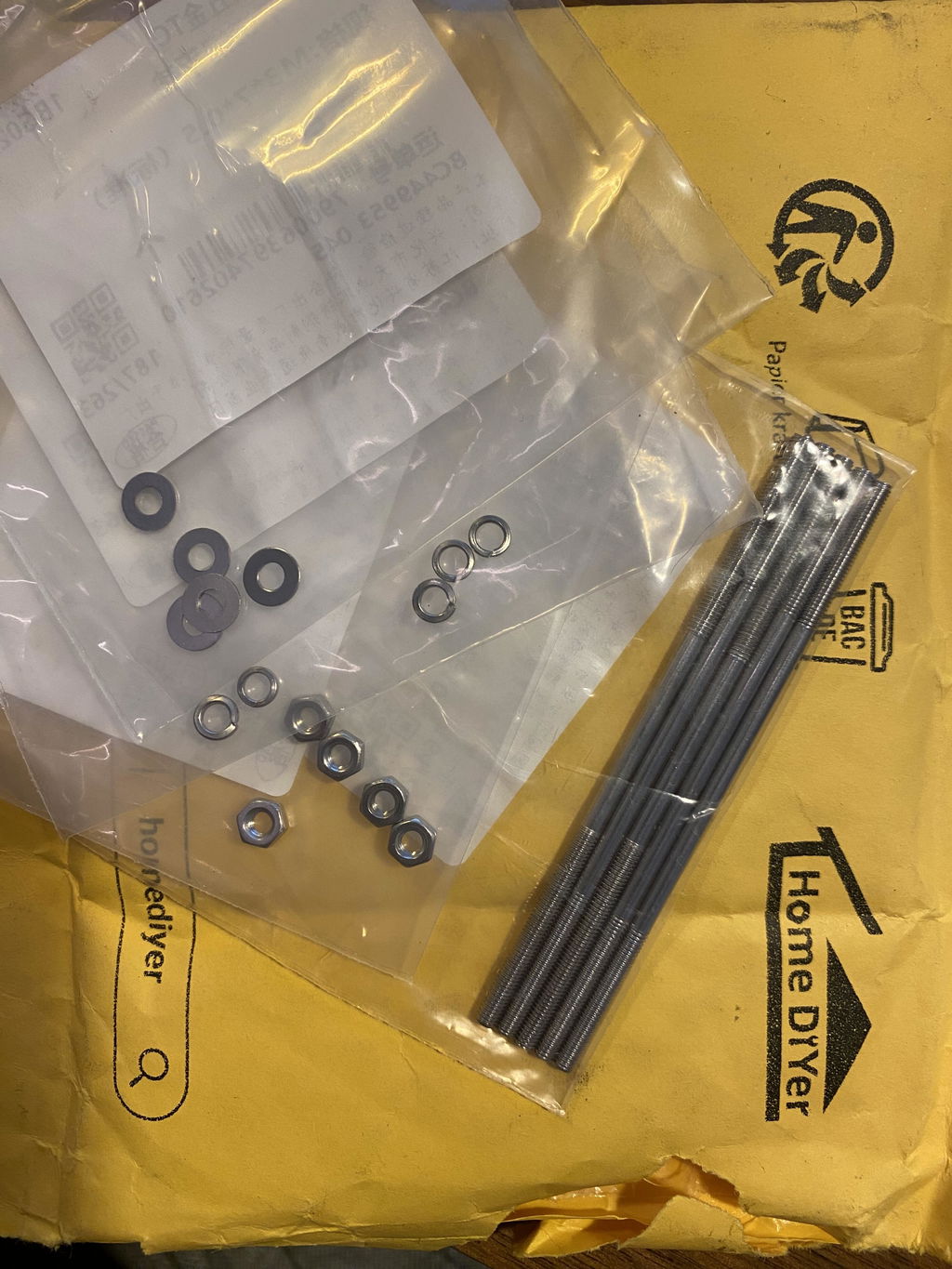
The chain is fine...but I ordered the wrong size. Nine links of the chain I ordered equals six of the size I wanted. My error...
How can I straighten out the springs? I can't use them coil uo as is.
Your payment information is processed securely. We do not store credit card details nor have access to your credit card information.
Get fitment advice & recommendations
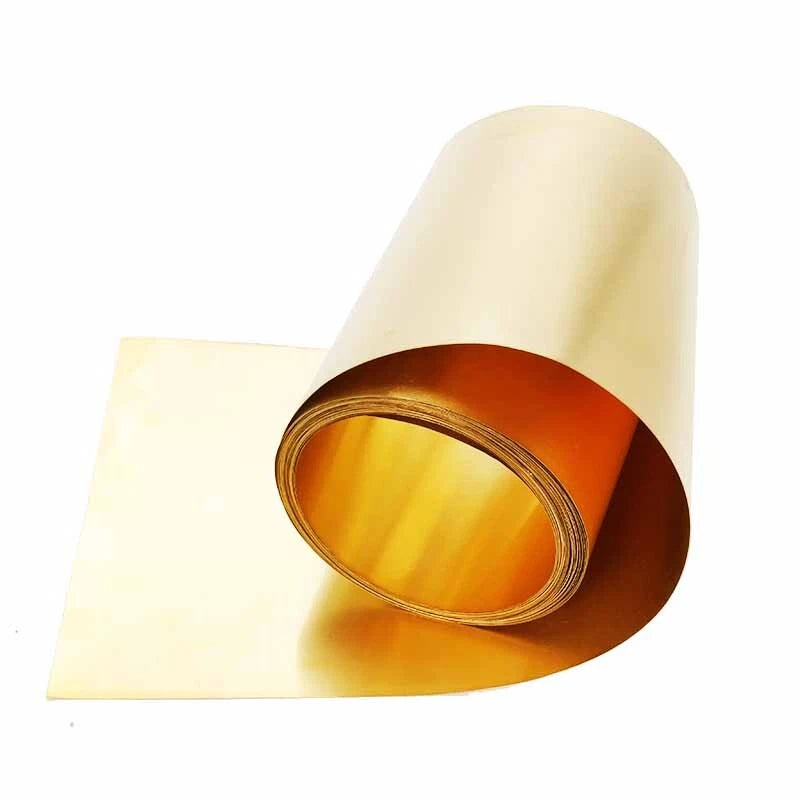
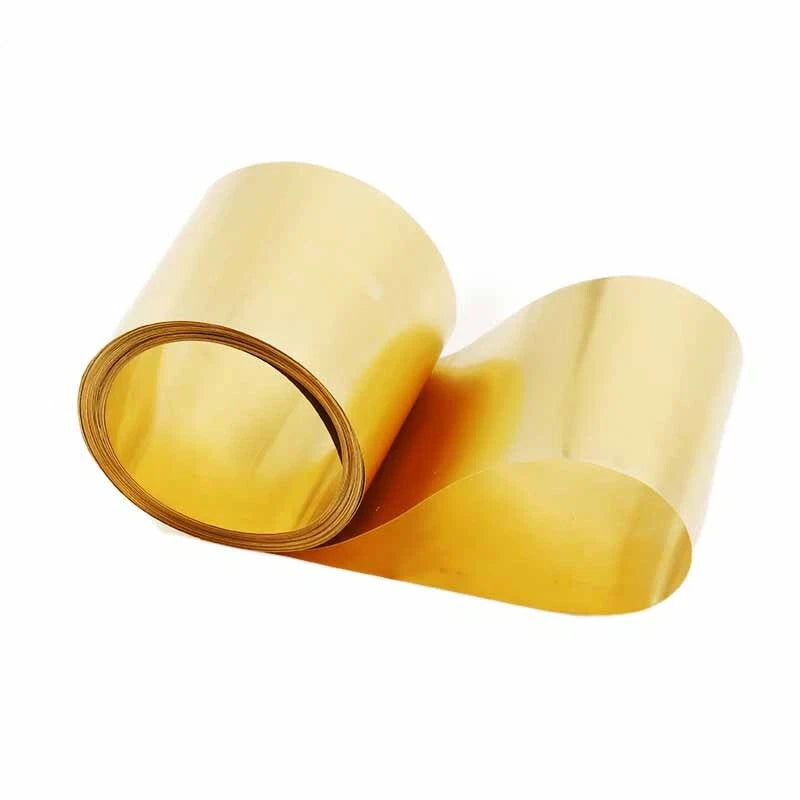
When your project demands exact tolerances and a material that won't let you down, finding a reliable ultra-thin brass foil strip is often the hardest part. Whether you're a machinist shimming a bearing housing, a hobbyist crafting intricate metalwork, or a maker building custom electronics enclosures, inconsistent thickness and poor flatness can ruin hours of careful work. This brass foil band is engineered for builders and makers who need precision they can count on.
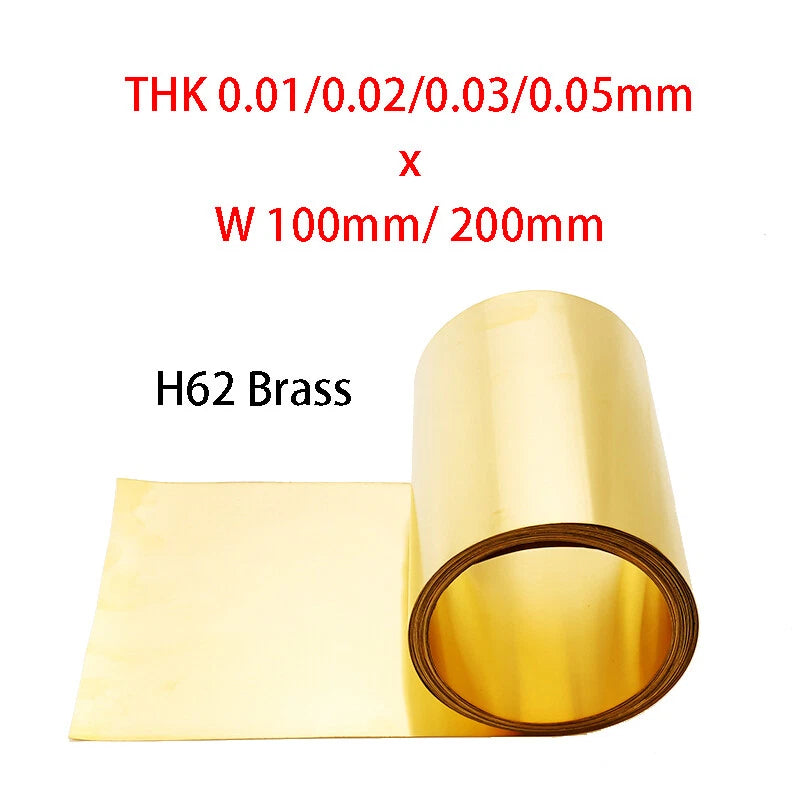
Each strip is made from copper-zinc brass alloy, offering a balance of flexibility and structural integrity. Thickness options range from 0.01 mm to 0.05 mm (approximately 0.0004" to 0.002"), with widths of 100 mm (~3.94") or 200 mm (~7.87"). Length options of 1 m, 5 m, and 10 m let you buy exactly what your project requires — no waste, no shortage.
Typical applications include precision shimming and gap-filling in mechanical assemblies, thin-layer heat shielding in electronics and automotive DIY, decorative inlay and metalwork crafting, and flexible conductor strips in low-voltage electrical projects. Search terms like "thin brass shim stock roll," "copper foil strip for crafts," and "brass feeler gauge material" all describe exactly what this product delivers.
| Material | Brass (Copper-Zinc Alloy) |
|---|---|
| Thickness Range | 0.01 mm – 0.05 mm (0.0004" – 0.002") |
| Width Options | 100 mm (~3.94") / 200 mm (~7.87") |
| Length Options | 1 m / 5 m / 10 m |
| Finish | See variant options |
| Hardness | See variant options |
| Tensile Strength | Typically 300–500 MPa (varies by temper) |
| Corrosion Resistance | Good — suitable for indoor and light outdoor use |
| Workability | Cuts with scissors or craft knife; bendable without cracking |
| Weight | See variant options |
| Form | Flat strip / roll |
Start by measuring the gap or tolerance you need to fill. For very fine shimming (bearing housings, precision machinery), 0.01 mm or 0.02 mm is typically appropriate. For slightly larger gaps or decorative layering, 0.03 mm or 0.05 mm offers more body while remaining flexible. If you're unsure, ordering a 1 m sample of two thicknesses lets you test before committing to a longer roll.
Yes. Brass shim stock is a standard material in mechanical engineering for filling gaps in bearing housings, aligning machine components, and adjusting clearances. The copper-zinc alloy provides sufficient compressive strength for most light-to-medium load shimming applications. For heavy industrial loads or high-temperature environments, consult a materials engineer for your specific use case.
Brass naturally develops a patina over time when exposed to air and moisture, which is a surface oxidation process rather than structural corrosion. For indoor applications, this is typically not a concern. For outdoor or high-humidity environments, applying a clear lacquer or protective coating will preserve the appearance and extend service life. Brass is significantly more corrosion-resistant than plain steel shim stock.
Yes. Brass solders well with standard rosin-core or acid-core solder, making it suitable for electronics and plumbing-adjacent DIY work. It also bonds effectively with metal-compatible epoxy adhesives and cyanoacrylate (super glue) for craft and hobby applications. Lightly scuff the surface with fine-grit sandpaper before bonding for best adhesion.
Choose 100 mm (~3.94") for narrow channel work, shimming, or projects where you'll be cutting strips to a specific width anyway. The 200 mm (~7.87") option is better suited for broader surface coverage — such as heat shielding panels, decorative inlay on wider surfaces, or when you want to minimize the number of seams in your finished piece.
For straight cuts, use a metal ruler and a sharp craft knife or box cutter on a cutting mat — score and snap works well for the thinner gauges. Standard household scissors also cut cleanly for most thicknesses. Avoid using dull blades, which can drag and distort the thin material. For curved cuts, tin snips or sharp craft scissors give the most control. Deburr any cut edges with a fine file or sandpaper if the application requires smooth edges.
Not exactly. Copper foil tape is pure copper with an adhesive backing, primarily used for EMI shielding and stained glass work. This product is brass (a copper-zinc alloy) without adhesive, supplied as a plain metal strip. Brass has slightly lower electrical conductivity than pure copper but offers better spring-back and hardness, making it more suitable for mechanical shimming, structural inlay, and applications where the strip needs to hold its shape under load.