


The chain is fine...but I ordered the wrong size. Nine links of the chain I ordered equals six of the size I wanted. My error...
How can I straighten out the springs? I can't use them coil uo as is.
Your payment information is processed securely. We do not store credit card details nor have access to your credit card information.
Get fitment advice & recommendations
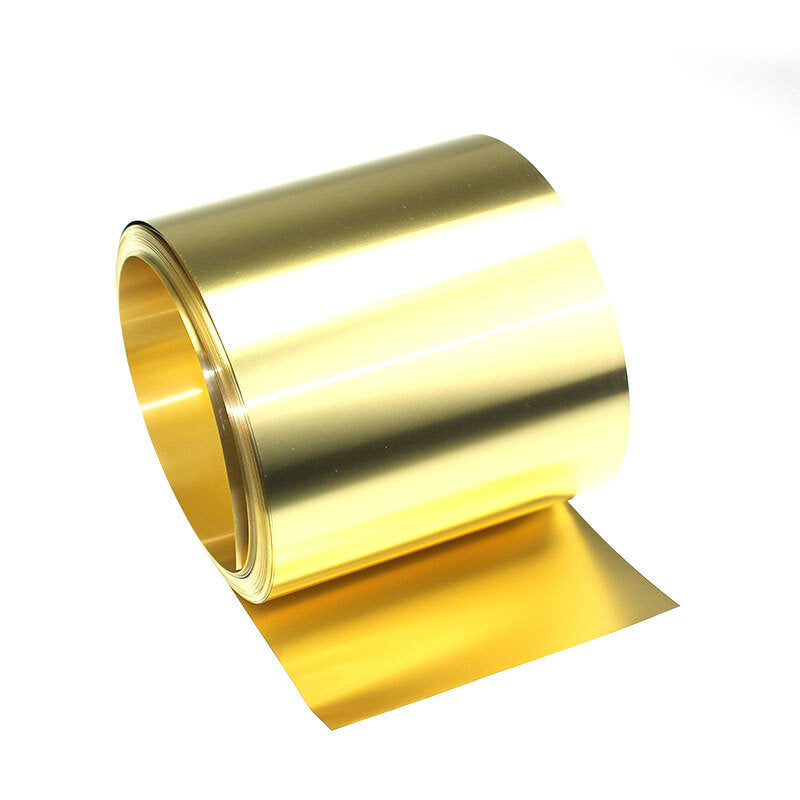
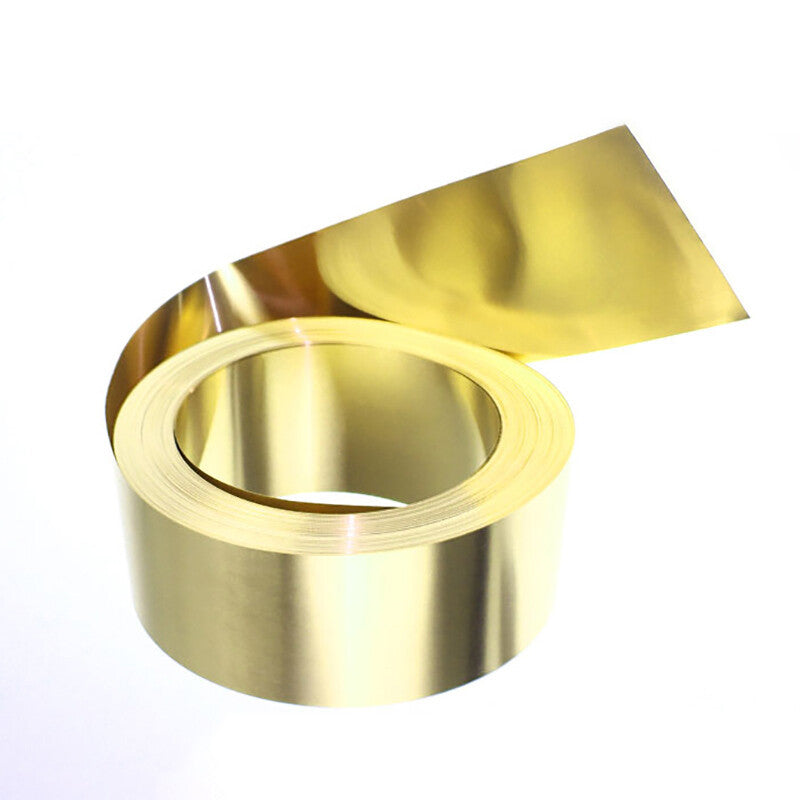
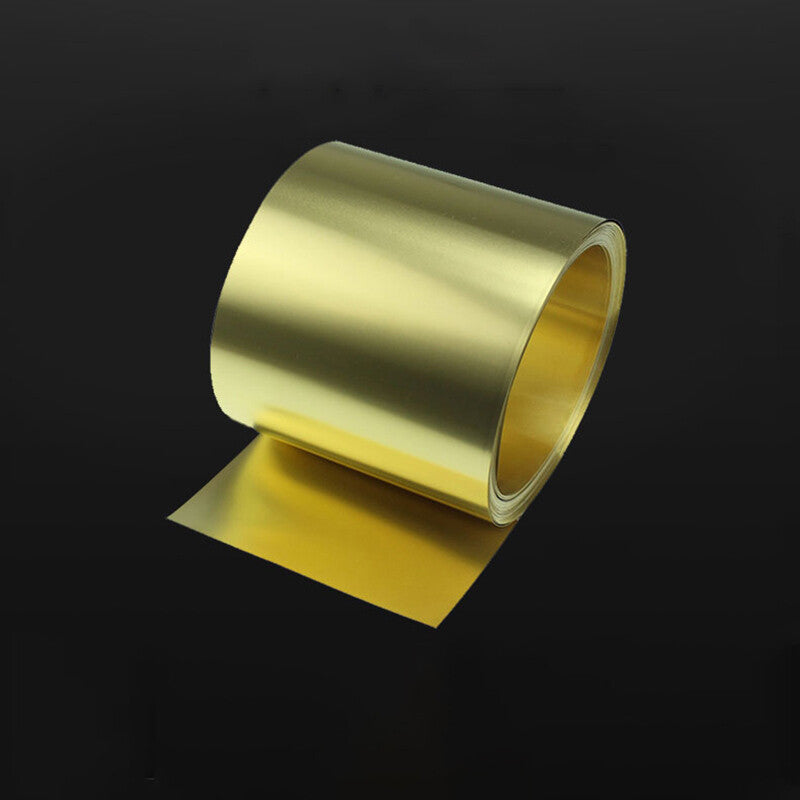
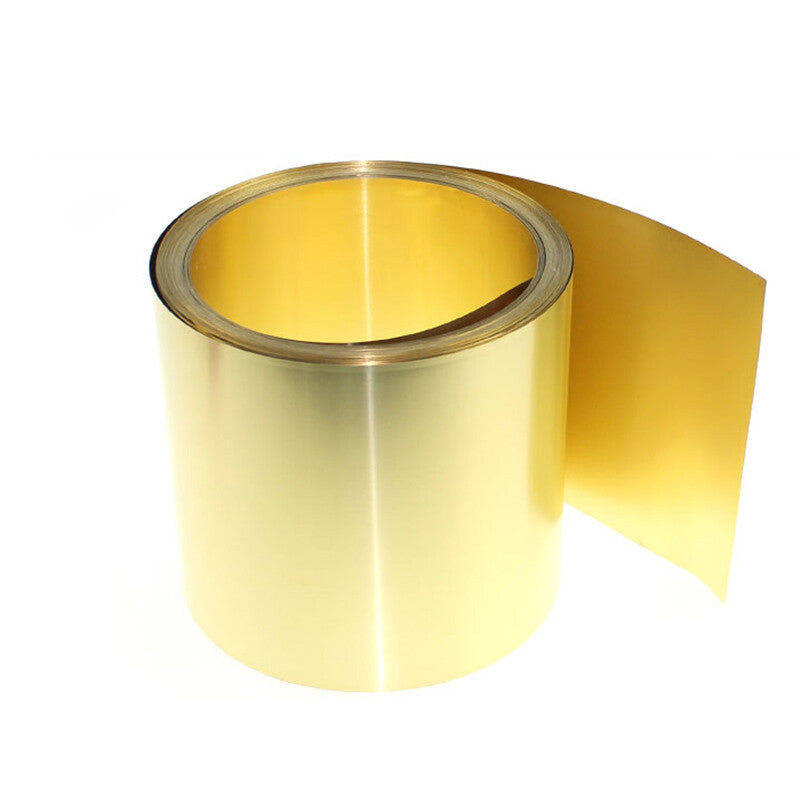
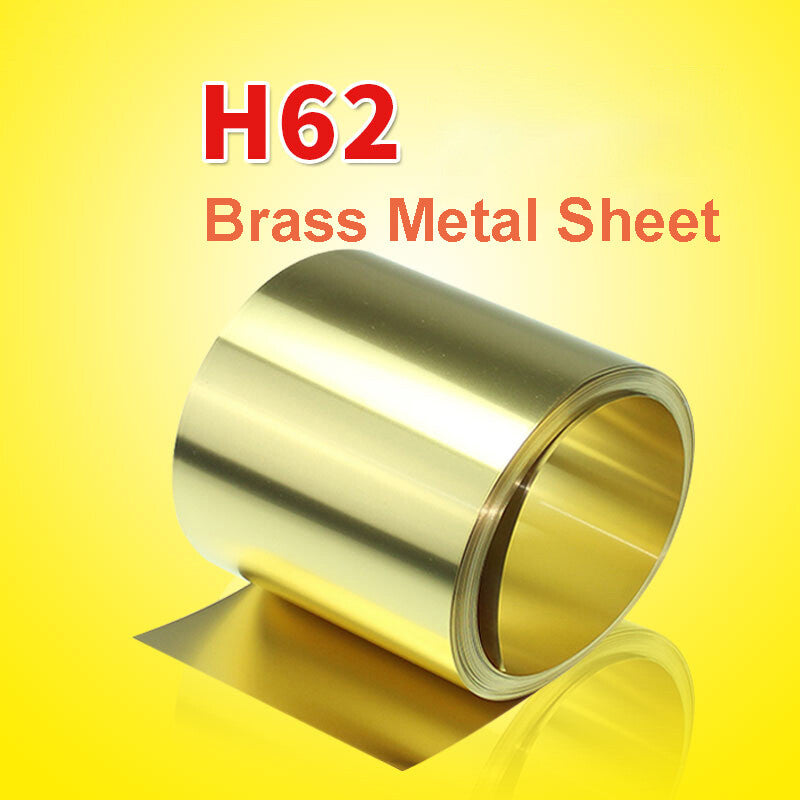
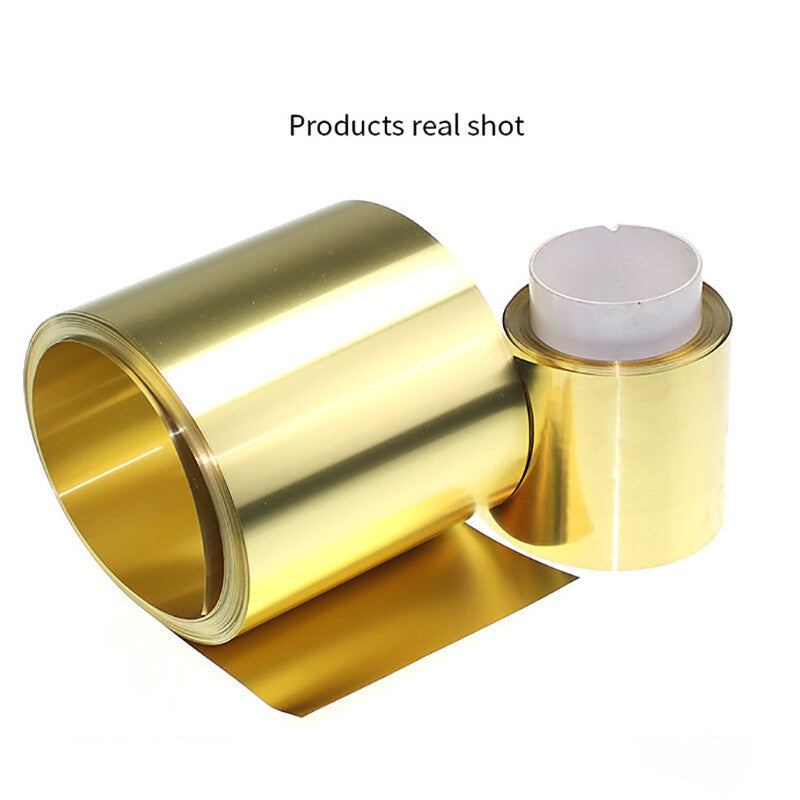
Finding the right thickness of brass sheet for shimming, crafting, or mechanical repairs can be frustrating when standard hardware store stock is limited to a handful of gauges. Whether you're a hobbyist machinist, model maker, jeweler, or home repair enthusiast, this brass metal sheet foil plate strip gives you the exact thickness you need — from ultra-thin 0.02mm foil to a solid 1mm plate — without having to order custom cuts from a metal supplier.
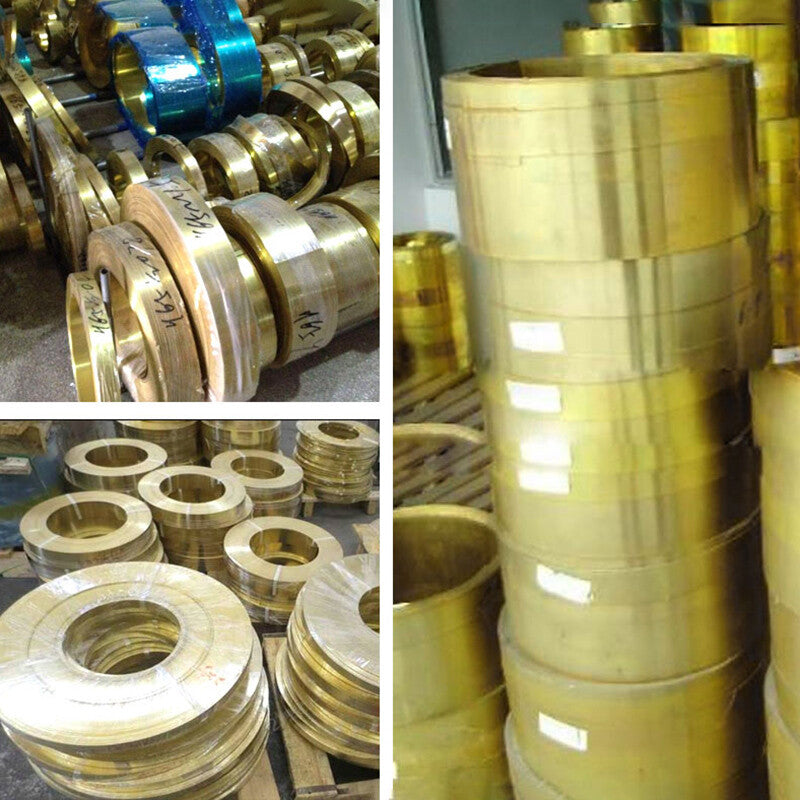
Each piece is made from H62/H65-grade brass alloy, combining copper and zinc for a balance of workability and corrosion resistance. Available in thicknesses of 0.02mm, 0.03mm, 0.05mm, 0.1mm, 0.2mm, 0.3mm, 0.4mm, 0.5mm, and 1mm, with widths spanning 48mm (~1.9 in), 100mm (~3.9 in), 150mm (~5.9 in), 200mm (~7.9 in), and 300mm (~11.8 in). Lengths range from 300mm (~11.8 in) up to 5M (~196.9 in), giving you flexibility for both small-scale and extended-run projects.
Typical use cases include precision shim stock for machinery alignment, brass foil for jewelry making and decorative inlay work, thin brass plate for gasket fabrication and electrical grounding strips, and brass strip for model engineering and architectural scale models. Long-tail applications such as "thin brass shim for bearing clearance adjustment" and "brass foil for resin craft embedding" are well served by the thinner gauges, while the 0.5mm–1mm options suit structural DIY metalwork and bracket fabrication.
Nine thickness options from 0.02mm ultra-thin foil to 1mm solid plate, covering shim stock, foil craft, and structural DIY needs in a single product listing.
Choose from 48mm, 100mm, 150mm, 200mm, or 300mm widths paired with lengths of 300mm, 1000mm, 1M, or 5M — mix and match to minimize waste for your project.
Copper-zinc alloy delivers good machinability, solderability, and moderate corrosion resistance, making it suitable for both indoor mechanical and decorative applications.
Brass is softer than steel and responds well to shearing, bending, and filing. Thin gauges can be scored and snapped; thicker gauges hold shape after bending without springback issues common in steel.
Mill-rolled to maintain uniform thickness tolerance across the sheet length, with a smooth, clean surface ready for soldering, plating, painting, or use as-is.
Suited for shim stock, gasket blanks, jewelry blanks, electrical contacts, model engineering, architectural models, and decorative metalwork across home and workshop settings.
| Material | H62/H65 Brass Alloy (Copper-Zinc) |
|---|---|
| Thickness Options | 0.02mm, 0.03mm, 0.05mm, 0.1mm, 0.2mm, 0.3mm, 0.4mm, 0.5mm, 1mm |
| Width Options | 48mm, 100mm, 150mm, 200mm, 300mm |
| Length Options | 300mm, 1000mm, 1M, 5M |
| Thickness Tolerance | ±10% (typical for mill-rolled brass foil/sheet) |
| Surface Finish | Mill-rolled, smooth, uncoated |
| Hardness | See variant options |
| Tensile Strength | See variant options |
| Weight | See variant options |
| Color | Golden yellow (natural brass) |
| Corrosion Resistance | Moderate — suitable for dry indoor and low-humidity environments; not recommended for prolonged saltwater exposure without coating |
| Machinability | Good — compatible with shearing, laser cutting, CNC routing, filing, and soldering |
| Quantity | 1 piece per order |
For shimming and precision gap-filling (e.g., bearing clearance, machinery alignment), choose 0.05mm–0.3mm. For gasket blanks or structural brackets, 0.5mm–1mm is more appropriate. For decorative inlay, jewelry, or foil craft embedding, 0.02mm–0.1mm works best. If you're unsure, start with 0.1mm or 0.2mm — these are the most versatile gauges for general DIY metalwork.
Yes — gauges of 0.1mm and thinner can be cut cleanly with heavy-duty scissors or a sharp craft knife on a cutting mat. For 0.2mm–0.5mm, tin snips or aviation shears give cleaner edges. The 1mm thickness requires metal shears, an angle grinder, or a CNC/laser cutter for precise cuts.
Brass has moderate natural corrosion resistance and performs well in dry indoor environments. For outdoor or high-humidity use, the surface will develop a patina over time. For prolonged outdoor exposure or marine environments, we recommend applying a clear lacquer or protective coating after cutting and forming. It is not recommended for direct saltwater immersion without additional protection.
The largest available combination is 300mm wide × 5M long, which gives you a continuous strip of approximately 11.8 inches wide by 196.9 inches long. If you need a broader flat sheet, consider ordering multiple strips and joining them. For compact projects, the 200mm × 300mm option is a convenient flat piece roughly 7.9 × 11.8 inches.
Yes. H62/H65 brass solders easily with standard lead-free or silver solder using a flux paste. It can also be brazed. Welding is possible with TIG or MIG processes, though soldering is more common for thin gauges. Avoid overheating thin foil (≤0.1mm) as it can warp or burn through quickly.
No — this is brass, which is an alloy of copper and zinc. Compared to pure copper sheet, brass is harder, stronger, and more resistant to wear, but slightly less electrically conductive. Brass has a golden-yellow color, while pure copper is reddish-orange. If you need maximum electrical conductivity or a copper aesthetic, choose a pure copper sheet instead. For structural, decorative, or mechanical applications, brass is often preferred for its workability and appearance.
Each order includes 1 piece of the selected thickness × width × length combination. If you need multiple pieces or bulk quantities, please contact us — we can accommodate larger orders and may be able to offer volume pricing.





