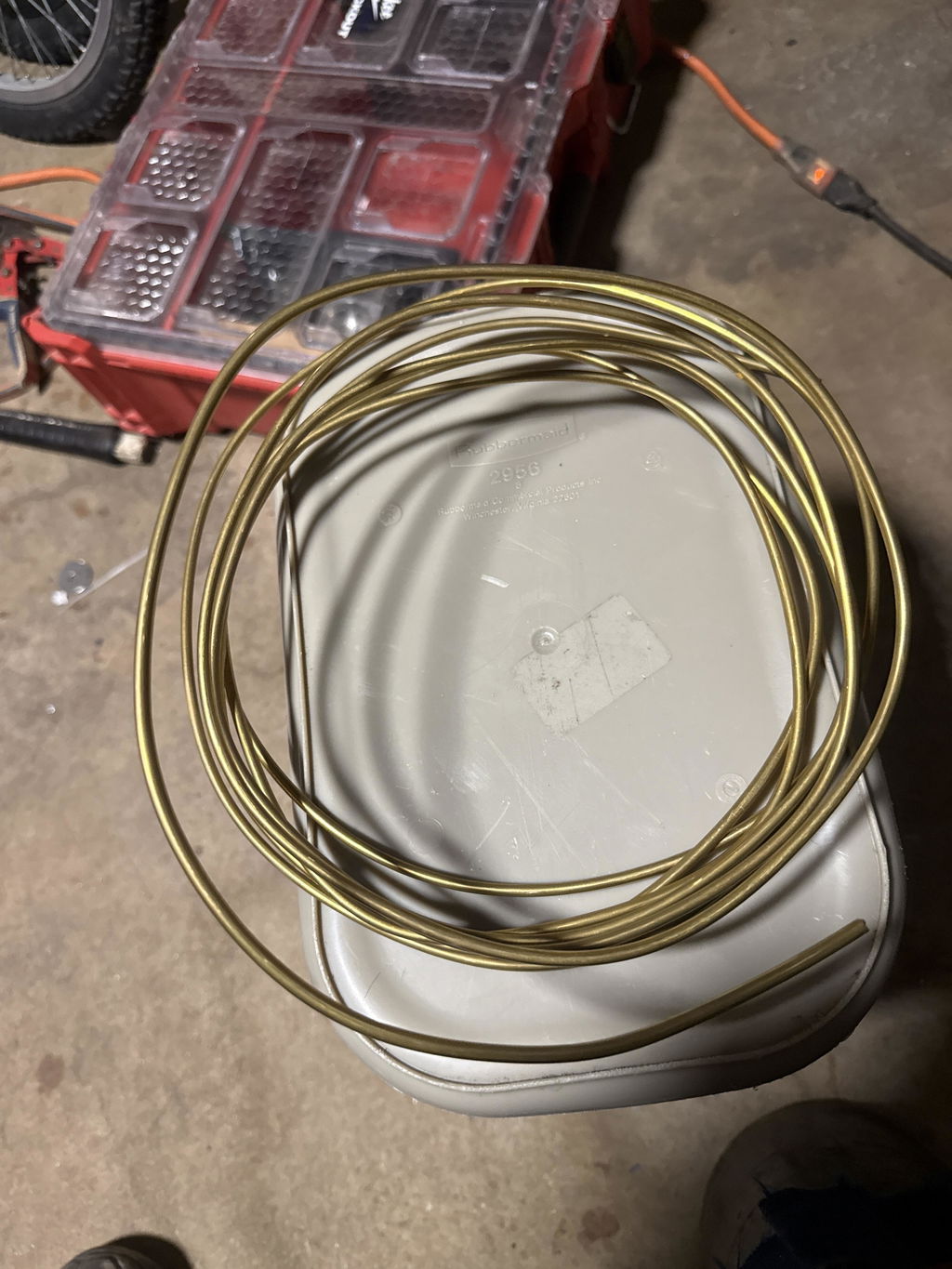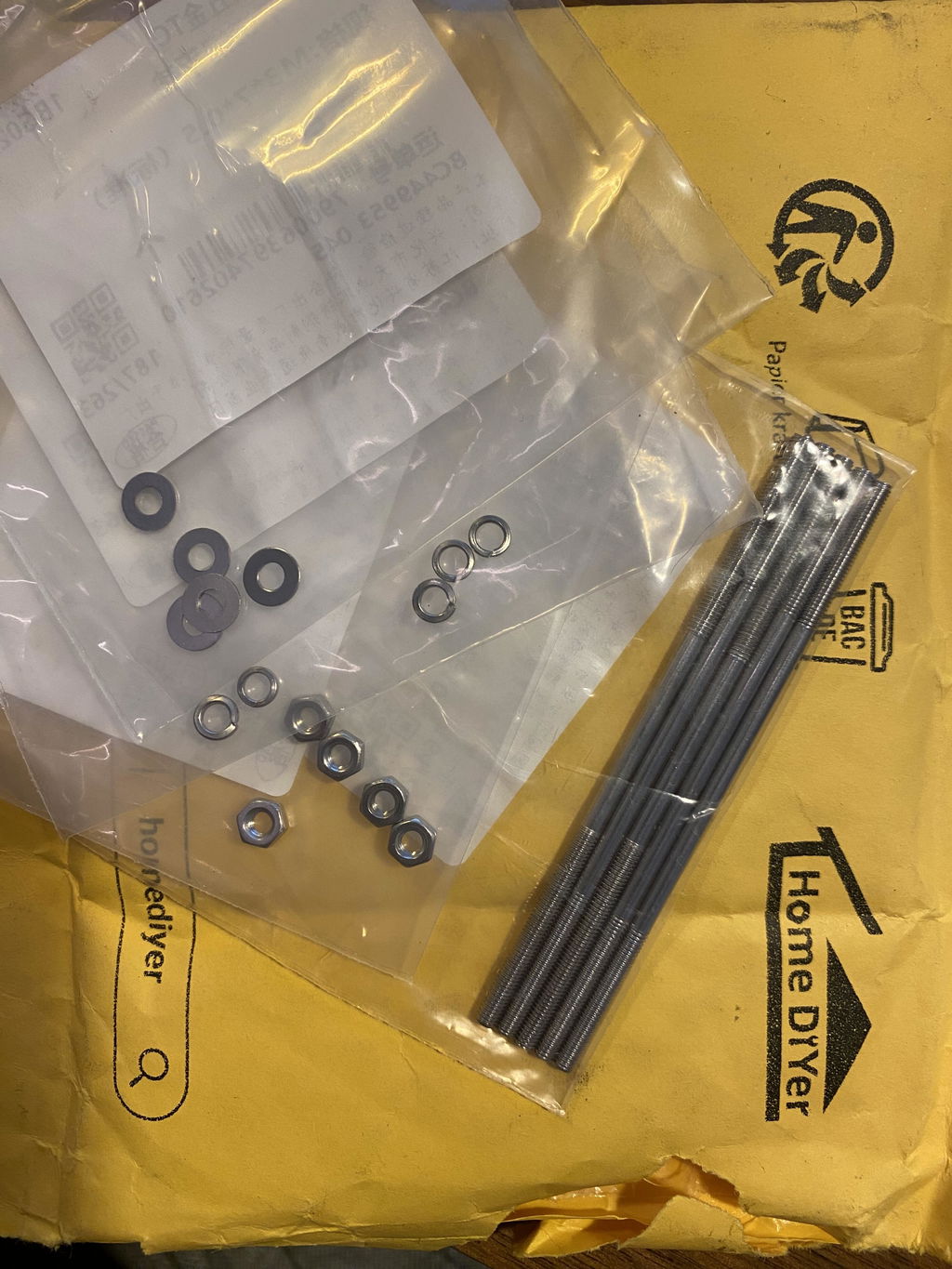

The chain is fine...but I ordered the wrong size. Nine links of the chain I ordered equals six of the size I wanted. My error...
How can I straighten out the springs? I can't use them coil uo as is.
Your payment information is processed securely. We do not store credit card details nor have access to your credit card information.
Get fitment advice & recommendations
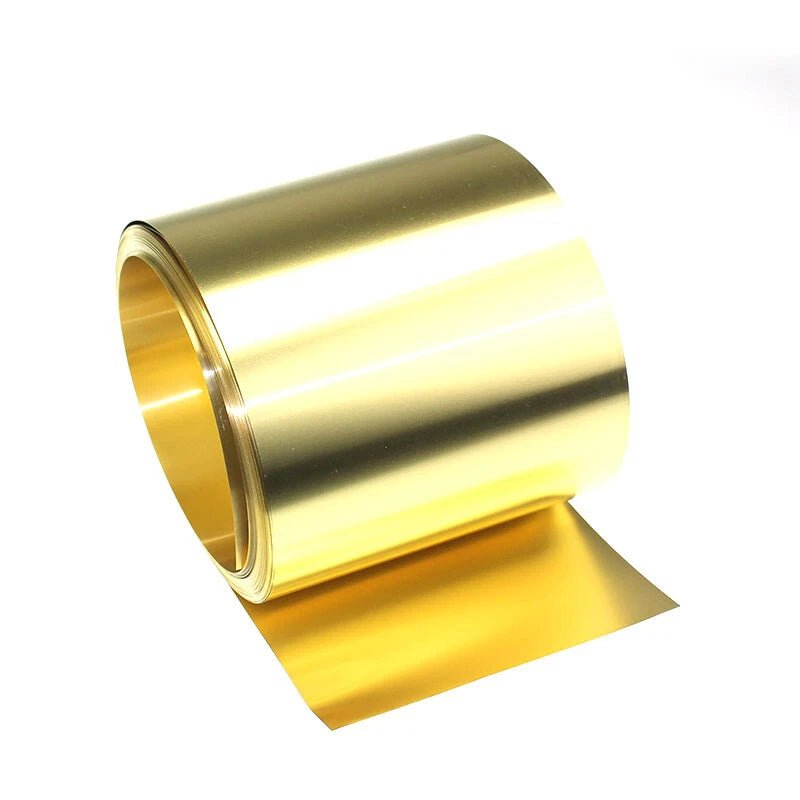
When your project demands exact material thickness and consistent quality, finding the right brass foil strip can be frustrating. Whether you're a hobbyist, model maker, jeweler, or workshop professional, imprecise shim stock or inconsistent foil width wastes time and materials. These brass thin sheet foil belts are engineered to deliver repeatable precision across every order, giving makers and metalworkers a reliable raw material they can count on.
Each strip is made from T2-grade brass alloy, offering a warm golden finish with excellent workability. Available in thicknesses from 0.01mm to 1mm (approximately 0.0004" to 0.039") and widths of 100mm, 200mm, 300mm, or 305mm (roughly 3.9" to 12"), with a standard length of 1000mm (39.4"). The foil is supplied flat-rolled for consistent flatness and surface finish.
Typical applications include precision shimming and gap-filling in mechanical assemblies, decorative inlay work in woodworking and jewelry, electrical shielding strips in DIY electronics projects, and thin-gauge forming for scale models and craft metalworking. Long-tail use cases include heat-sink backing foil, battery tab material, and flexible circuit substrate for hobbyist builds.
Thickness range from 0.01mm to 1mm covers foil-grade to light sheet, giving you flexibility across a wide range of precision applications.
Made from brass with good corrosion resistance, excellent machinability, and a consistent golden surface finish suitable for both functional and decorative use.
Choose from 100mm, 200mm, 300mm, or 305mm widths to match your project footprint without unnecessary trimming or waste.
Each strip is flat-rolled for consistent thickness and flatness, reducing prep time and ensuring reliable fit in tight-tolerance assemblies.
Brass at these gauges cuts cleanly with scissors, shears, or a craft knife, and can be bent, rolled, or formed without cracking at room temperature.
Available in 1, 2, 3, 4, 5, 8, 10, or 20-piece quantities so you can stock up for ongoing projects or order a single piece to test fit.
| Material | Brass alloy (golden finish) |
|---|---|
| Thickness Range | 0.01mm – 1mm (approx. 0.0004" – 0.039") |
| Width Options | 100mm, 200mm, 300mm, 305mm |
| Length | 1000mm (approx. 39.4") |
| Surface Finish | Flat-rolled, smooth |
| Quantity per Order | See variant options (1–20 pcs) |
| Tolerance (Thickness) | See variant options |
| Hardness | See variant options |
| Temper | See variant options |
For shimming and gap-filling, match the foil thickness to your measured gap. For decorative inlay or craft work, thicknesses between 0.1mm and 0.3mm are the most workable by hand. For structural or load-bearing shims, 0.5mm–1mm is recommended. If you are unsure, order a thinner gauge first — it is easier to stack thin foils than to thin down a thicker sheet.
Yes. Brass has good compressive strength and does not deform easily under moderate clamping loads. For thicknesses of 0.5mm and above, these strips are well-suited to precision shimming in machinery, fixtures, and tooling. Thinner gauges (0.01mm–0.1mm) are better suited to light-duty shimming or decorative applications.
Brass naturally develops a patina over time when exposed to air and moisture. For indoor or protected applications this is typically not an issue. If you need to maintain the bright golden finish, apply a clear lacquer or metal sealant after cutting. For outdoor or high-humidity environments, consider whether a coated or plated alternative may be more appropriate.
Yes. Brass is highly solderable with standard rosin-core or acid-core solder and can be brazed using silver brazing alloys. Ensure the surface is clean and free of oils before soldering. Thinner foils (under 0.1mm) heat up very quickly, so use a low-wattage iron and work quickly to avoid warping.
For thicknesses up to 0.3mm, standard scissors or a craft knife on a cutting mat work well. For 0.3mm–1mm, metal shears or tin snips give cleaner edges. A steel ruler and scribe are recommended for marking cut lines. Laser cutters and CNC routers can also be used for precision shapes.
Choose the width closest to your finished part size to minimize waste. If your part is under 100mm wide, the 100mm strip is the most economical. For wider parts or when you need to cut multiple pieces side by side, the 200mm or 300mm options reduce the number of joins. The 305mm width (approximately 12") aligns with common imperial sheet sizes used in some workshop setups.
Absolutely. Brass foil in the 0.1mm–0.3mm range is popular for jewelry components, metal embossing, decorative inlay, and mixed-media art. It can be stamped, etched, cut into shapes, and formed around mandrels. The warm golden color of brass complements wood, leather, and resin projects.