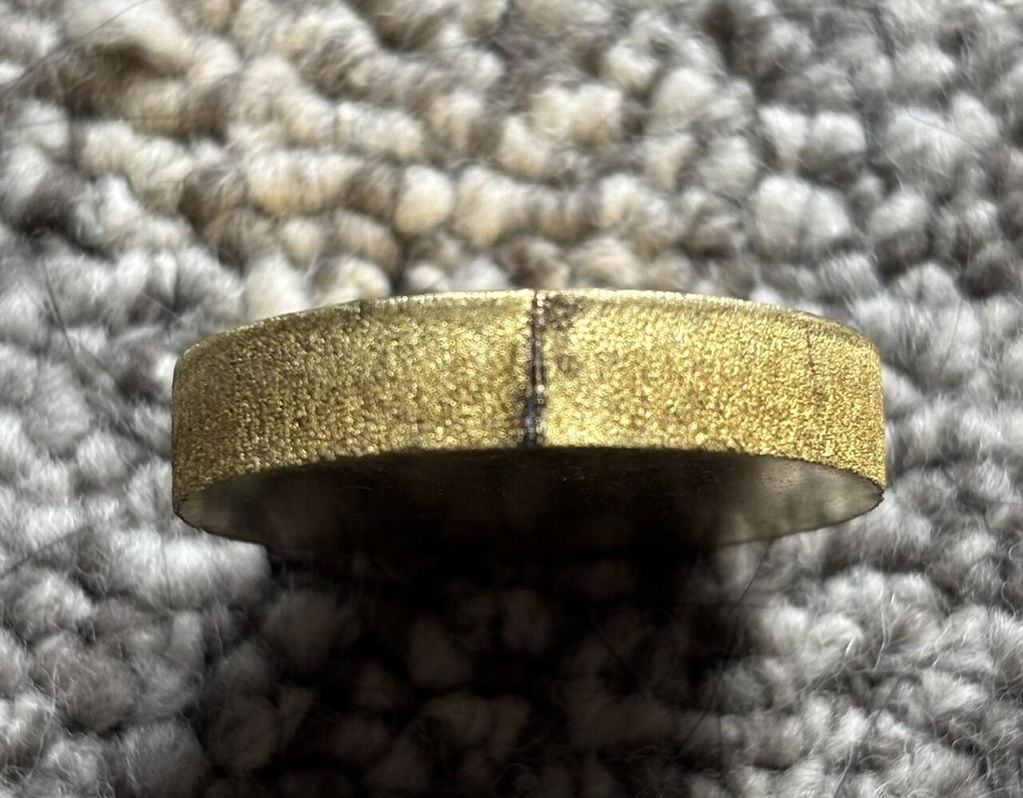
The chain is fine...but I ordered the wrong size. Nine links of the chain I ordered equals six of the size I wanted. My error...
How can I straighten out the springs? I can't use them coil uo as is.
Your payment information is processed securely. We do not store credit card details nor have access to your credit card information.
Get fitment advice & recommendations
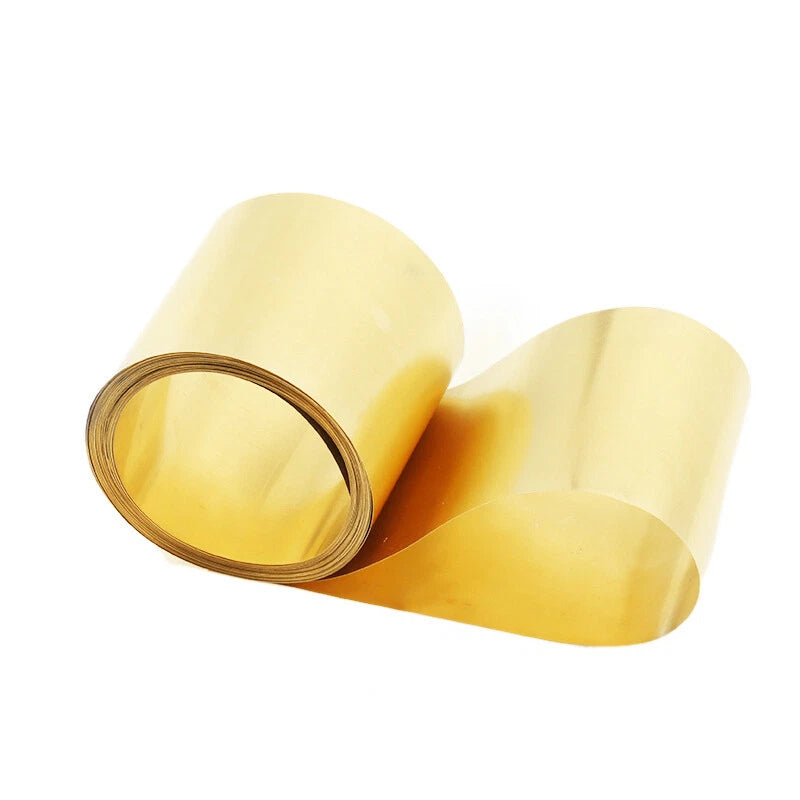
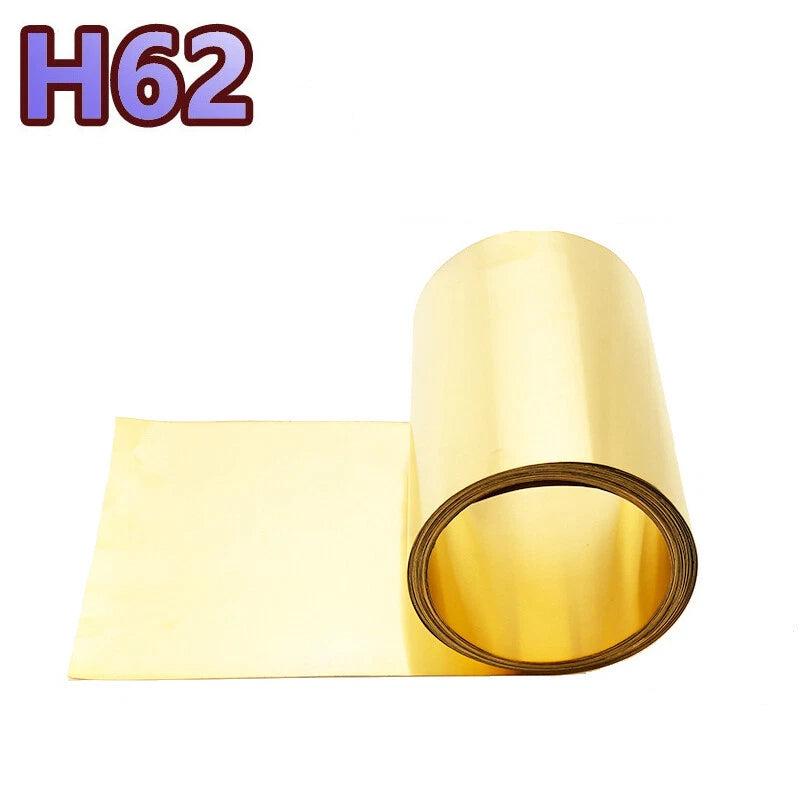
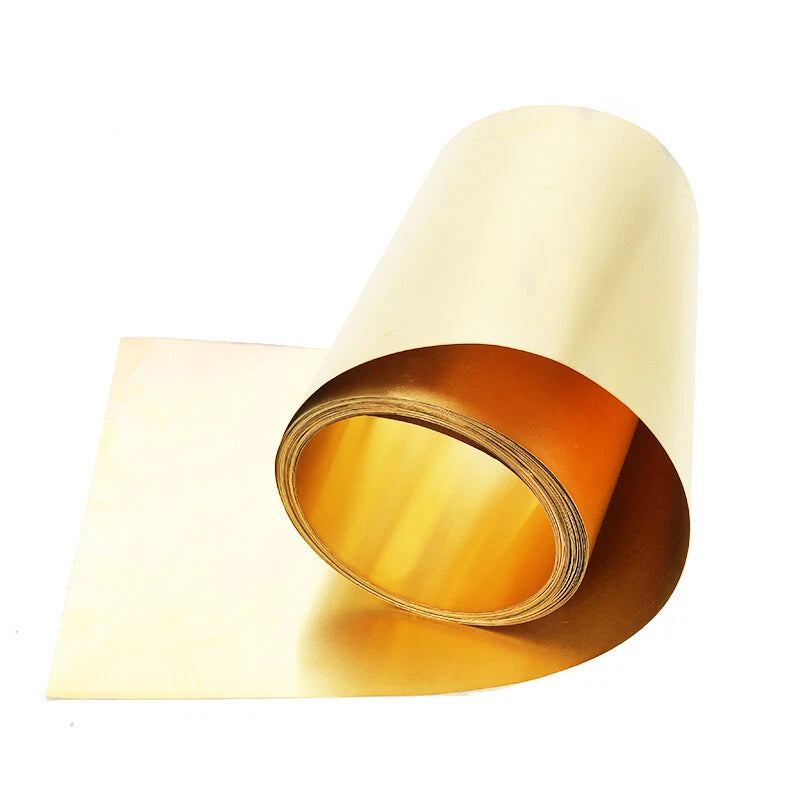
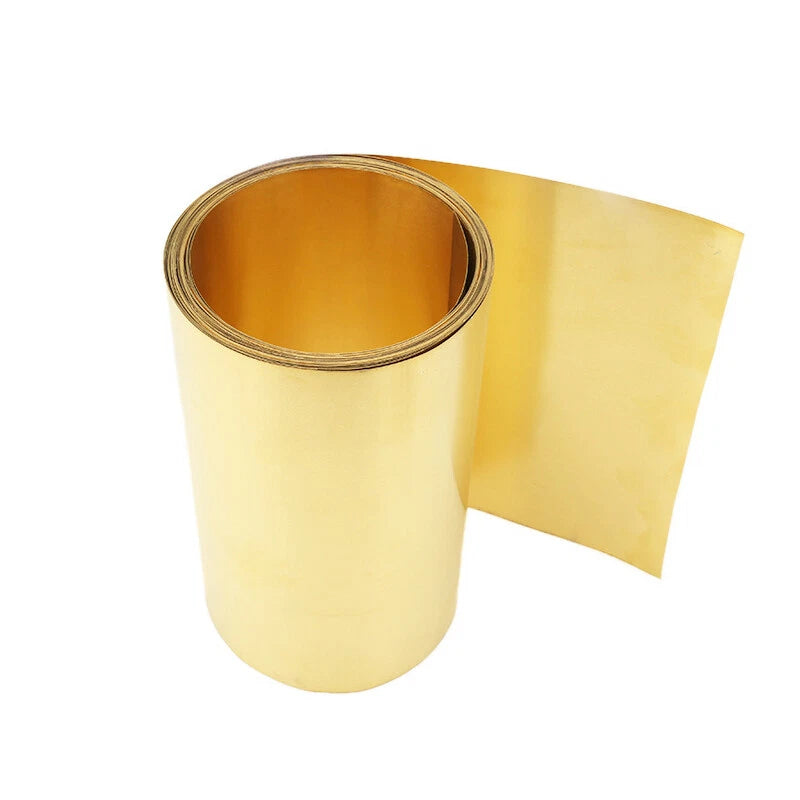
When your project demands exact thickness tolerances and a material that holds its shape under load, standard sheet metal often falls short. Makers, repair technicians, model builders, and electronics hobbyists who need a reliable, workable metal strip will find this brass foil coil an indispensable bench staple.
Each coil is made from C26000 cartridge brass (approximately 70% copper, 30% zinc), offering a warm golden finish with good formability and solderability. Thickness ranges from 0.1 mm to 0.5 mm (0.004"–0.020") and width options span 10 mm to 50 mm (0.39"–1.97"), with length per coil varying by size to maintain a consistent material weight per order.
Typical applications include precision shim stock for bearing and shaft alignment, decorative inlay strips for woodworking and leathercraft, RF shielding and grounding tabs in electronics enclosures, and replacement wear strips in small mechanical assemblies requiring a non-ferrous, corrosion-resistant metal strip.
17 size combinations across 4 thickness steps (0.1 / 0.2 / 0.3 / 0.5 mm) and 4 width steps (10 / 20 / 30 / 50 mm), letting you match the exact cross-section your project requires.
Rolled to tight thickness tolerances (typically ±0.01 mm), ensuring reliable fit when used as shim stock or precision spacers in mechanical assemblies.
C26000 cartridge brass bends cleanly without cracking at these gauges, making it easy to shape into clips, tabs, springs, or decorative profiles without annealing.
Brass forms a stable oxide layer that resists atmospheric corrosion, making these strips suitable for both indoor and sheltered outdoor applications without additional coating.
Readily accepts standard 60/40 or lead-free solder, and its electrical conductivity makes it a practical choice for grounding straps, RF shielding, and electrical contact strips.
Supplied as a continuous coil (length varies by variant from 2 m to 10 m) for easy storage and cutting to exact lengths on the bench without waste.
| Material | Brass (C26000 / CuZn30, approx. 70% Cu / 30% Zn) |
|---|---|
| Finish | Mill finish, natural golden brass |
| Thickness Range | 0.1 mm – 0.5 mm (0.004" – 0.020") |
| Width Range | 10 mm – 50 mm (0.39" – 1.97") |
| Length per Coil | See variant options (2 m – 10 m depending on size) |
| Thickness Tolerance | Typically ±0.01 mm |
| Temper | Half-hard (H02), suitable for bending and forming |
| Tensile Strength | Typically 370–450 MPa (varies by thickness) |
| Hardness | Typically 60–80 HRB |
| Electrical Conductivity | Approx. 28% IACS |
| Melting Point | Approx. 900–940 °C (1650–1720 °F) |
| Weight per Coil | See variant options |
| Packaging | Coil, wound flat for storage |
For shim stock and precision gap-filling, 0.1–0.2 mm is ideal. For structural tabs, spring contacts, or wear strips that need to hold shape under load, 0.3–0.5 mm provides better rigidity. If you are unsure, 0.2 mm is the most versatile starting point for general maker and repair work.
Yes. At 0.1–0.2 mm thickness, heavy-duty scissors or tin snips cut cleanly. At 0.3–0.5 mm, tin snips or a sharp utility knife scored against a steel rule work well. A fine-tooth hacksaw or rotary tool with a cut-off disc is recommended for straight, burr-free edges on thicker gauges.
Yes. C26000 brass solders readily with standard rosin-flux 60/40 tin-lead or lead-free SAC305 solder. Clean the surface with fine abrasive or flux before soldering for best adhesion. It is widely used for electrical grounding tabs, RF shielding seams, and decorative joinery in metalwork.
Brass does not rust (it contains no iron), and it forms a stable patina that slows further oxidation. For sheltered outdoor use it performs well without coating. In marine or high-humidity environments, a clear lacquer or wax coating will preserve the bright finish longer. Over time, uncoated brass develops a natural antique patina that many makers find desirable.
10 mm width at 0.1–0.2 mm thickness is the most common choice for grounding straps and RF shielding tabs inside enclosures, as it is easy to fold and fasten with screws or solder. For broader shielding panels or heat spreaders, 30–50 mm widths provide more coverage per strip.
Each variant is supplied as a coil with a length calculated to deliver a consistent material volume (and therefore weight) per order. Wider and thicker strips are shorter in length, while narrow thin strips are longer. The exact length for each size combination is shown in the variant selector above.
Yes. At half-hard (H02) temper, C26000 brass has good ductility at these thin gauges and can be bent to a minimum bend radius of approximately 1–2× the material thickness without cracking. For tighter bends or repeated flexing, annealing (heating to ~450 °C and air-cooling) will soften the strip further.