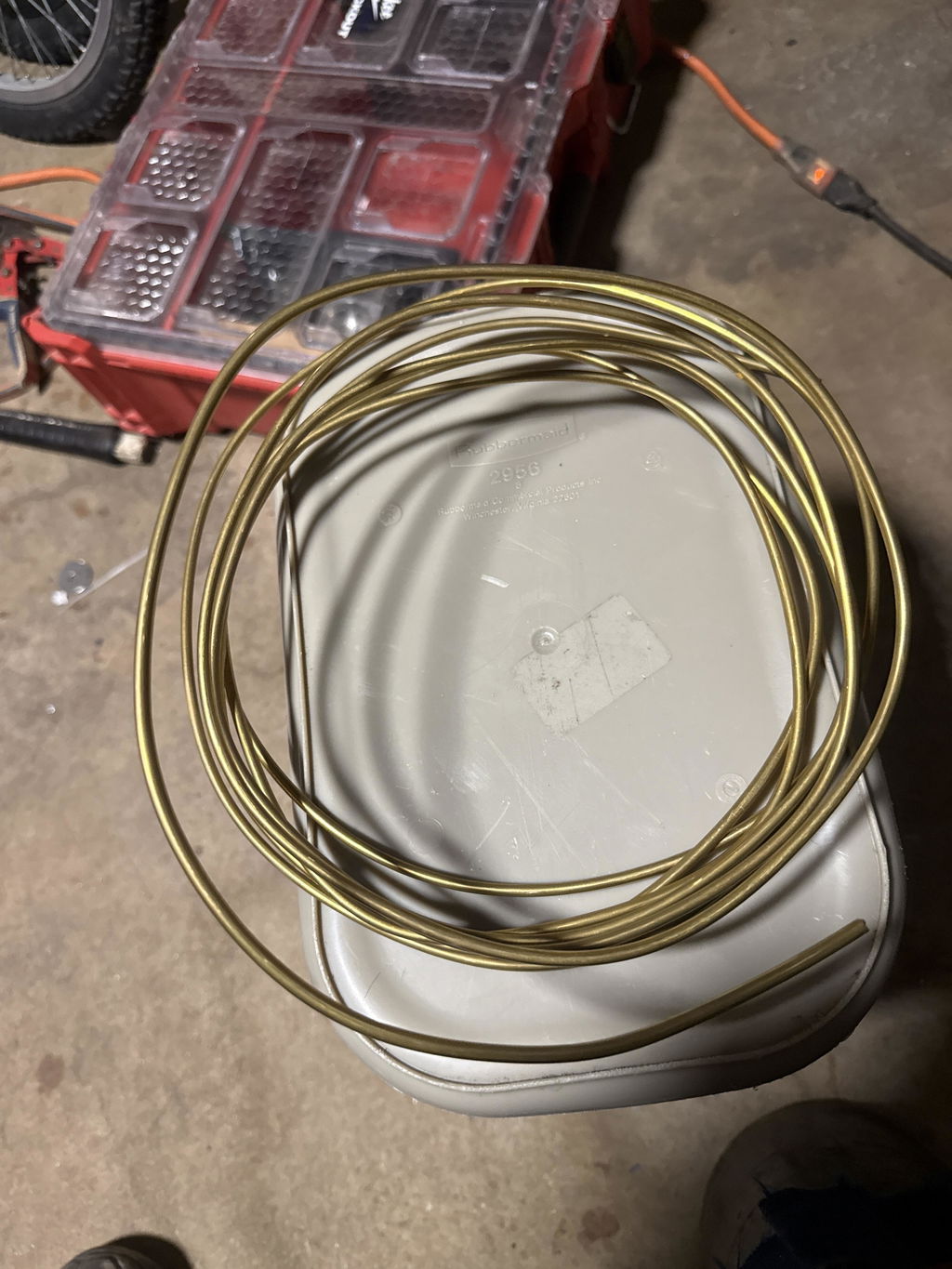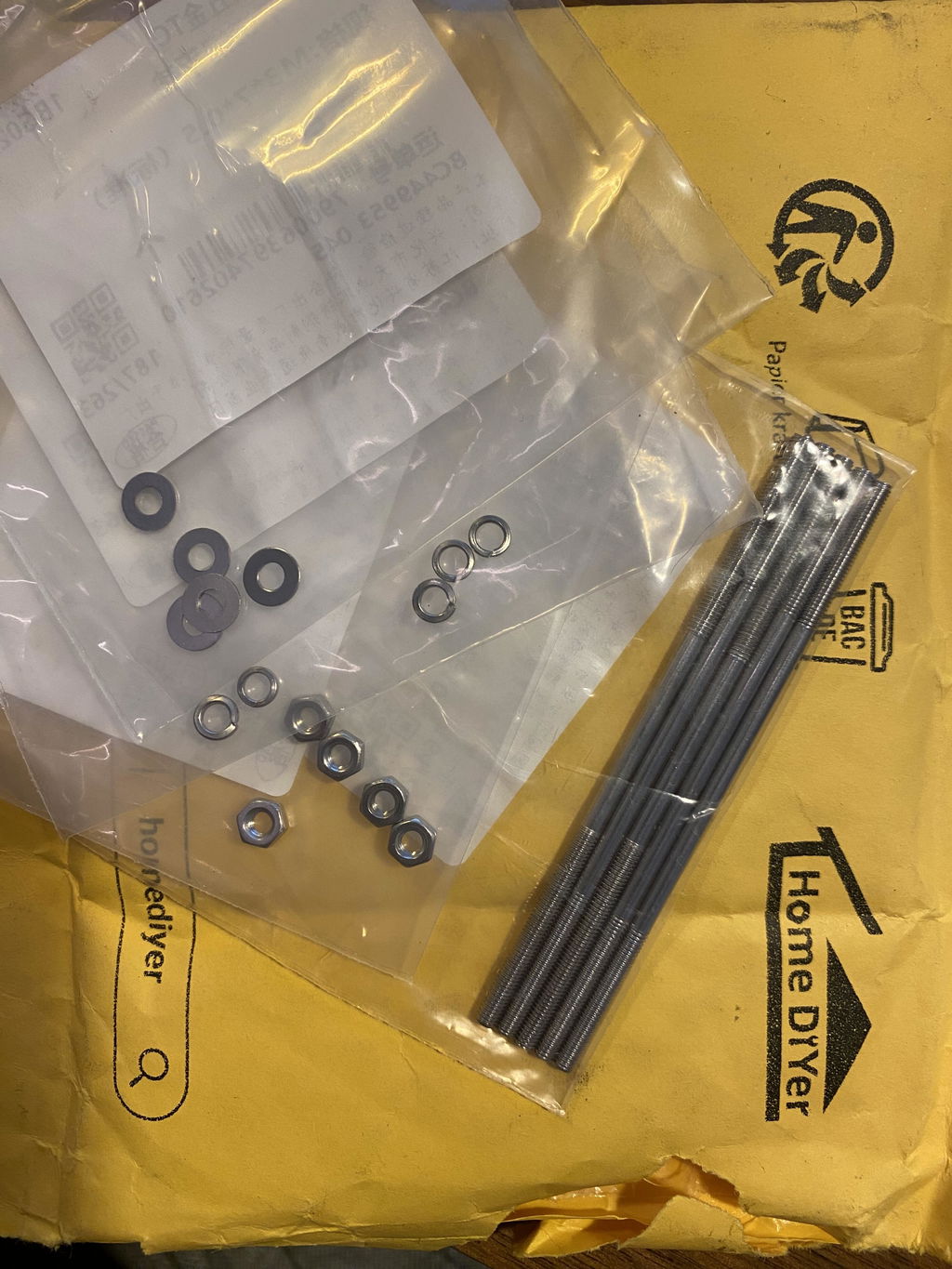
The chain is fine...but I ordered the wrong size. Nine links of the chain I ordered equals six of the size I wanted. My error...
How can I straighten out the springs? I can't use them coil uo as is.
Your payment information is processed securely. We do not store credit card details nor have access to your credit card information.
Get fitment advice & recommendations
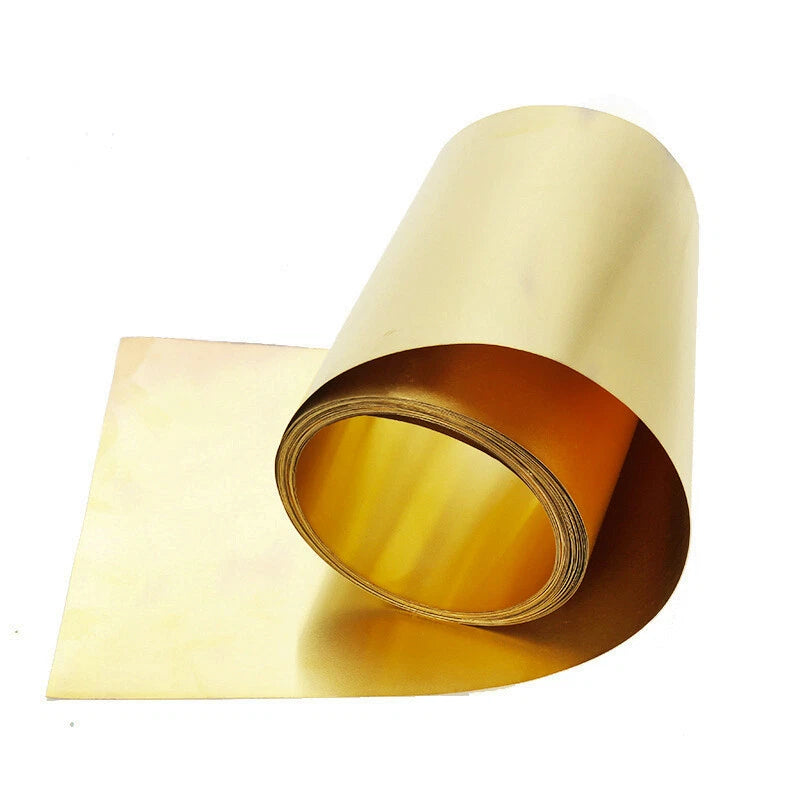
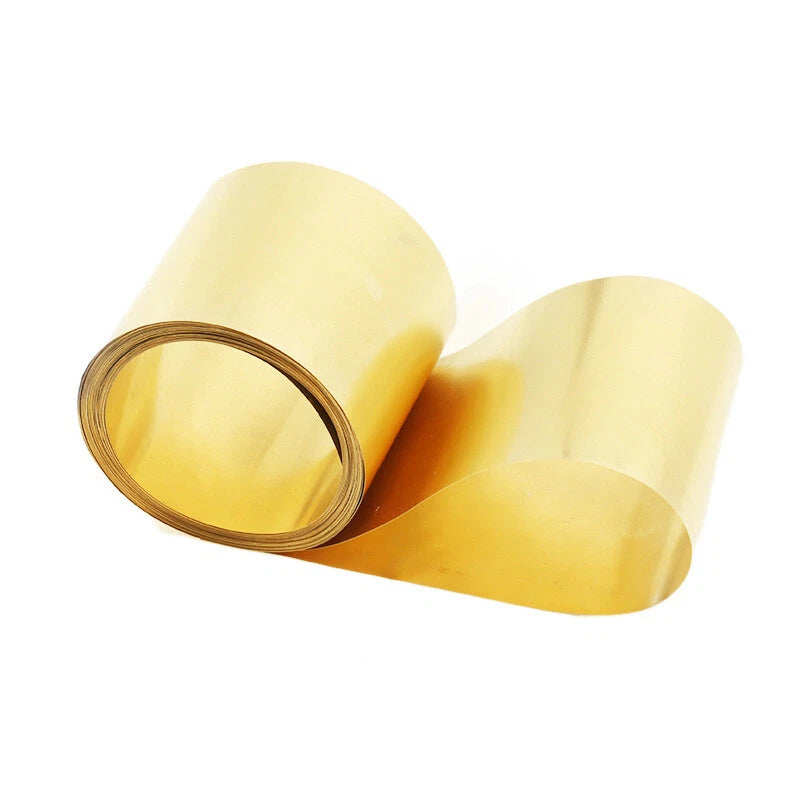
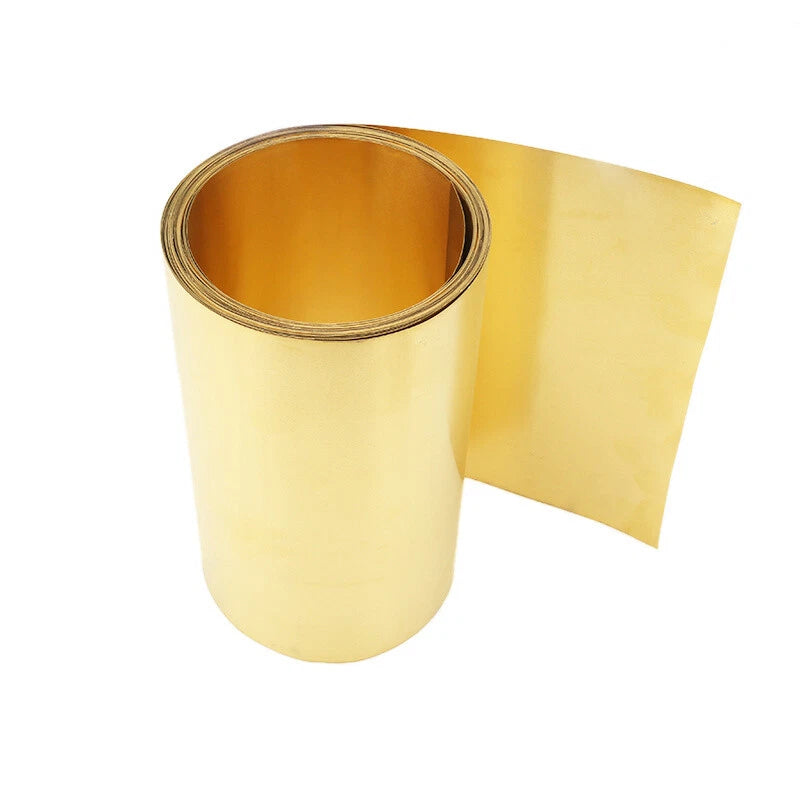
When your project demands a thin, workable metal that holds its shape without adding bulk, finding the right gauge and width in one place can be a real challenge. Whether you are a maker shimming a loose joint, a hobbyist crafting decorative inlays, or a small workshop cutting custom gaskets, these brass foil strip rolls give you the exact thickness and width you need without ordering oversized sheet stock and wasting material.
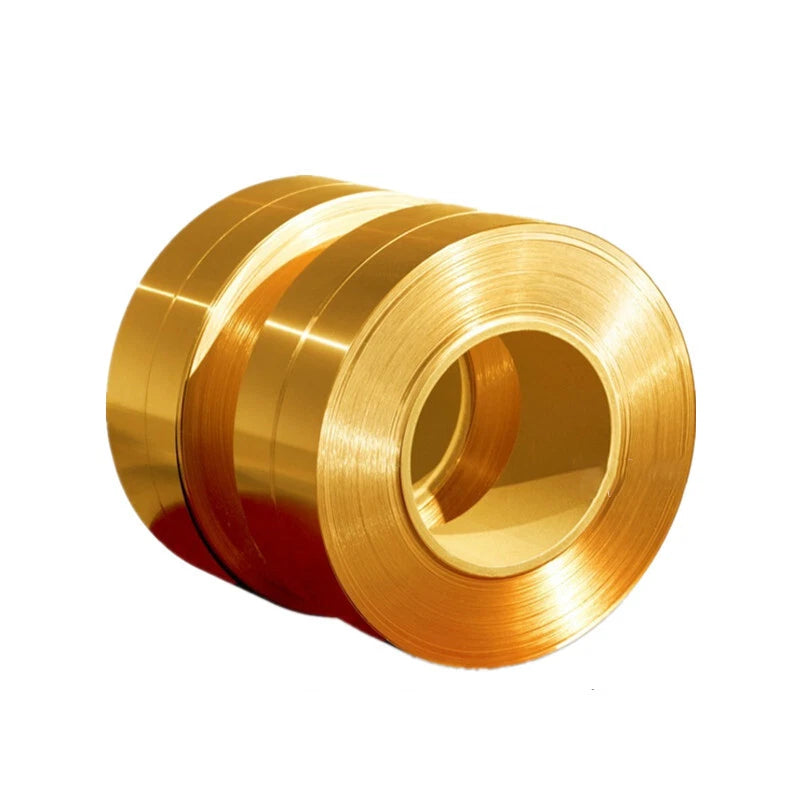
Each roll is made from brass alloy with a smooth, bright finish. Thickness options range from 0.1 mm to 0.5 mm (approximately 0.004 in to 0.020 in) and width options span 10 mm to 50 mm (approximately 0.39 in to 1.97 in). Lengths are available in 1 M, 2 M, 3 M, 5 M, and 10 M rolls, so you can order exactly what your build requires.
Typical applications include precision shimming and gap-filling in mechanical assemblies, decorative brass inlay strips for woodworking and furniture, custom gasket cutting for plumbing or HVAC repairs, and thin conductive strips for electronics prototyping and craft projects requiring a solderable metal surface.
16 thickness-width combinations (0.1/0.2/0.3/0.5 mm × 10/20/30/50 mm) paired with 5 length options give you 80 variants to match your exact project spec.
Rolled to a uniform thickness across the full length of each roll, ensuring repeatable results when cutting shims, gaskets, or decorative strips.
Thin brass foil cuts cleanly with scissors, a craft knife, or tin snips and bends without cracking, making it accessible for hand-tool-only workshops.
Brass accepts standard rosin-core and acid-core solder, making these strips suitable for electronics enclosures, grounding straps, and conductive craft projects.
Brass offers good resistance to atmospheric corrosion and moisture, making it a reliable choice for both indoor decorative work and light outdoor applications.
Supplied as a continuous roll rather than pre-cut pieces, so you cut only what you need and store the remainder without kinking or creasing.
| Material | Brass alloy (copper-zinc) |
|---|---|
| Finish | Bright / natural brass |
| Thickness Options | 0.1 mm, 0.2 mm, 0.3 mm, 0.5 mm |
| Width Options | 10 mm, 20 mm, 30 mm, 50 mm |
| Length Options | 1 M, 2 M, 3 M, 5 M, 10 M |
| Form Factor | Continuous roll |
| Workability | Hand-cuttable, bendable, solderable |
| Weight | See variant options |
| Corrosion Resistance | Good (atmospheric and moisture) |
| Recommended Tools | Scissors, craft knife, tin snips, soldering iron |
For shimming loose joints or filling small gaps, 0.1 mm or 0.2 mm is usually sufficient. For gaskets or structural shims that need to hold under moderate load, 0.3 mm or 0.5 mm provides more rigidity. If you are unsure, start with 0.2 mm — it is the most versatile option for general DIY metalwork.
For thin accent lines in woodworking, 10 mm or 20 mm widths are the most common choice. For wider banding or border inlays, 30 mm or 50 mm gives you more coverage per cut. You can also score and fold a wider strip to create a custom width on-site.
Brass foil in the 0.1–0.5 mm range is not a structural material, but it handles light mechanical stress well. It is commonly used for shims, gaskets, and spring contacts where flexibility and moderate strength are needed. For applications requiring high tensile strength, a thicker brass plate or a different alloy would be more appropriate.
Yes. Brass does not rust (it contains no iron) and offers good resistance to atmospheric corrosion and moisture. Over time it may develop a natural patina, which can be preserved or polished away depending on your aesthetic preference. For highly corrosive environments such as salt spray, consider a protective lacquer coating.
Yes. Brass is solderable with standard rosin-core or acid-core solder. Clean the surface with isopropyl alcohol or fine abrasive paper before soldering to remove any oxidation and ensure a strong bond. A flux pen is recommended for best results on thin foil.
For straight cuts, use a metal ruler and a sharp craft knife or score-and-snap method on a cutting mat. Scissors work well for thinner gauges (0.1–0.2 mm). For thicker gauges (0.3–0.5 mm), tin snips or aviation snips give a cleaner edge. Avoid tearing — always cut in a single smooth stroke.
For single-use shimming tasks, a 1 M roll is usually more than enough. For ongoing workshop use or multiple gaskets, a 5 M or 10 M roll offers better value per meter. The roll format means you can cut exactly what you need and store the rest flat or re-rolled without waste.