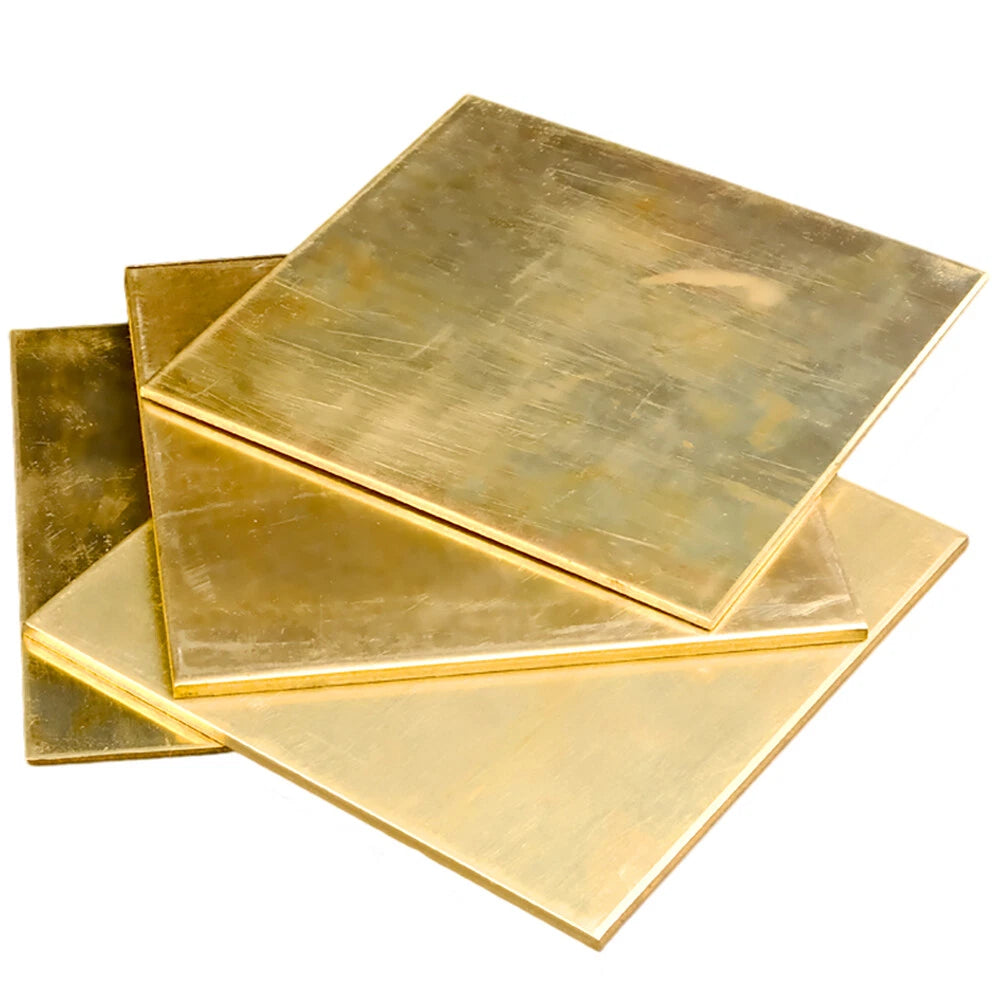
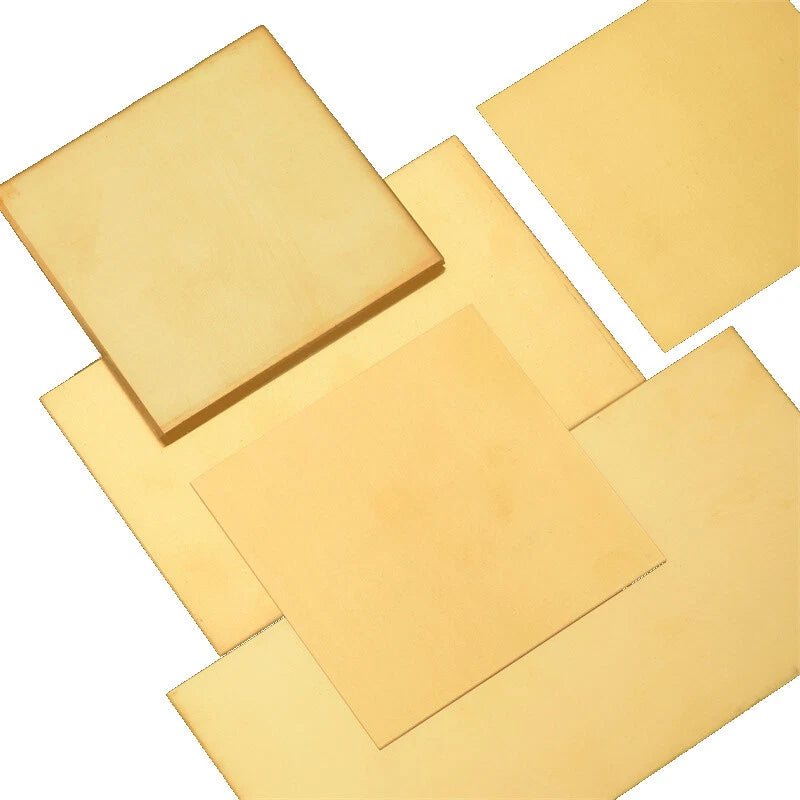
Brass Square/plate/sheet 0.6mm To 6.0mm - Brass Sheet Metal Guillotine Cut

No reviews

Price:
Sale price$4.66 USD
Stock:
In stock (500 units), ready to be shipped

Payment & Security

Ach Direct Debit Amazon American Express Apple Pay Bancontact BLIK Diners Club Discover EPS Google Pay iDEAL Wero JCB Maestro Mastercard Multibanco MobilePay PayPal Przelewy24 Shop Pay Twint Union Pay USDC Visa

Your payment information is processed securely. We do not store credit card details nor have access to your credit card information.

Limited Offer — Spend More, Save More
Spend $55+
Save $5
Spend $100+
Save $10
Spend $200+
Save $25
HomeDIYer DIY Expert Support

DIY Expert Support

Get fitment advice & recommendations

Mon–Fri  8:30 AM – 8:00 PM
24-Hour Fast Ship
Arrives in 3–14 Days
Worldwide Shipping
30-Day Returns
1 tree planted with every purchase

Description

Brass Sheet Metal Guillotine Cut — Precision Flat Stock for Metalworking & Fabrication

When your project demands a clean, burr-free edge and a consistent alloy composition, sourcing the right brass flat stock can be a frustrating bottleneck. Whether you are a hobbyist machinist, a jewellery maker, or a professional fabricator, inconsistent thickness and ragged shear lines waste time and material. These guillotine-cut brass sheets are sized and sheared to order, giving makers and engineers a reliable starting point for every build.

Each piece is cut from C260 cartridge brass (70% copper / 30% zinc), delivering a warm golden finish and excellent machinability. Thickness options run from 0.5 mm (approximately 0.020 in) up to 6 mm (approximately 0.236 in), and sheet dimensions range from compact 50 × 50 mm (approx. 2 × 2 in) squares up to 300 × 300 mm (approx. 11.8 × 11.8 in) panels. All pieces are supplied flat and degreased, ready for immediate use.

Typical applications include custom shims and spacers for precision engineering, decorative inlay work and engraving blanks for craft projects, electrical contact strips and bus-bar prototyping, and structural gusset plates for scale-model or architectural model making. The wide thickness range makes these sheets equally suited to thin-gauge etching work and heavier structural fabrication tasks.

⚙️ Compatibility: Suitable for CNC milling, laser engraving, hand sawing, drilling, bending, and soldering. Compatible with standard metalworking lubricants and cutting fluids.

✅ Key Features of These Brass Sheet Metal Guillotine Cut Pieces

  • 📐 Guillotine-Sheared Edges — Each sheet is cut on a precision guillotine press, producing straight, square edges with minimal burr, reducing finishing time on your workbench.
  • 🔩 Wide Thickness Range — Available from 0.5 mm to 6 mm in nine increments (0.5 / 0.6 / 0.8 / 1 / 1.2 / 1.5 / 2 / 2.5 / 3 / 4 / 5 / 6 mm), covering thin-gauge etching through structural plate work.
  • 🟡 C260 Cartridge Brass Alloy — 70/30 copper-zinc composition offers a balance of strength, ductility, and corrosion resistance superior to pure copper for most indoor and sheltered outdoor applications.
  • 📏 Multiple Sheet Sizes — Nine size options from 50 × 50 mm up to 300 × 300 mm (and 200 × 300 mm rectangular), letting you order exactly the blank you need and minimise offcut waste.
  • Flat & Degreased Surface — Sheets are supplied flat-packed and degreased, ready for immediate marking, machining, or finishing without additional preparation steps.
  • 🔧 Versatile Workability — Brass machines, drills, bends, and solders cleanly. Suitable for CNC routing, laser engraving, hand-tool fabrication, and electrical prototyping without specialist tooling.

📐 Technical Specifications — Brass Sheet Metal Flat Stock

Material Brass (C260 / CZ108 cartridge brass, 70% Cu / 30% Zn)
Finish Mill finish, degreased
Thickness Range 0.5 mm – 6 mm (0.020 in – 0.236 in)
Available Thicknesses 0.5 / 0.6 / 0.8 / 1 / 1.2 / 1.5 / 2 / 2.5 / 3 / 4 / 5 / 6 mm
Sheet Sizes (W × L) 50×50 / 50×100 / 50×200 / 100×100 / 100×150 / 100×200 / 200×200 / 200×300 / 300×300 mm
Cut Method Guillotine shear (straight, square edges)
Tensile Strength (typical) Approx. 300–400 MPa (varies by thickness and temper)
Hardness (typical) Approx. 55–75 HRB
Melting Point Approx. 900–940 °C (1650–1720 °F)
Electrical Conductivity Approx. 28% IACS
Quantity per Pack See variant options (1, 2, or 4 pieces)
Tolerance See variant options

❓ Frequently Asked Questions

How do I choose the right thickness for my project?

For decorative engraving, etching, or thin shims, 0.5–1 mm is typically sufficient. For structural brackets, gusset plates, or load-bearing components, 2–6 mm provides the rigidity needed. If you are unsure, a 1–1.5 mm sheet is a versatile starting point for most hobby and light engineering tasks.

Is this brass strong enough for structural or load-bearing use?

C260 cartridge brass has a typical tensile strength of 300–400 MPa, making it suitable for light structural applications such as brackets, hinges, and spacers. For heavy-load or high-stress environments, thicker gauges (3–6 mm) are recommended. It is not intended as a structural steel replacement.

How does brass resist corrosion compared to copper or steel?

Brass forms a stable oxide layer that resists atmospheric corrosion well in dry and indoor environments. It outperforms mild steel significantly in humid conditions and is comparable to copper for general corrosion resistance. For marine or highly acidic environments, additional sealing or plating is advisable.

Can I cut or drill these sheets with standard workshop tools?

Yes. Brass is one of the most machinable metals. Thin sheets (0.5–1.5 mm) can be cut with tin snips, a jigsaw, or a CNC router. Thicker sheets (2–6 mm) are best cut with a bandsaw, angle grinder, or CNC mill. Standard HSS drill bits work well; use a cutting lubricant for cleaner holes and longer tool life.

Are these sheets compatible with laser engraving machines?

Thin brass sheets (0.5–1 mm) can be marked with a fibre laser engraver. CO₂ lasers generally cannot cut or engrave bare brass without a coating (such as Cermark or black spray paint). For deep engraving or cutting, a fibre laser or CNC router is the recommended tool.

What size should I order for a custom shim or spacer?

Select the smallest sheet size that accommodates your finished part dimensions, adding at least 5–10 mm on each side for clamping and cutting allowance. For example, a 40 × 40 mm shim is best cut from a 50 × 50 mm blank. This minimises waste while giving you enough material to work with safely.

Do the sheets arrive flat, or will I need to flatten them?

Sheets are dispatched flat-packed and degreased. Thinner gauges (0.5–1 mm) may develop minor transit bow in larger sizes; if flatness is critical, place the sheet on a flat surface and apply gentle pressure, or pass it through a roller. Thicker sheets (2 mm and above) are inherently rigid and arrive flat.

🛒 Select your thickness and sheet size above, then add to cart.

You may also like

Recently viewed