The chain is fine...but I ordered the wrong size. Nine links of the chain I ordered equals six of the size I wanted. My error...
How can I straighten out the springs? I can't use them coil uo as is.
Your payment information is processed securely. We do not store credit card details nor have access to your credit card information.
Get fitment advice & recommendations
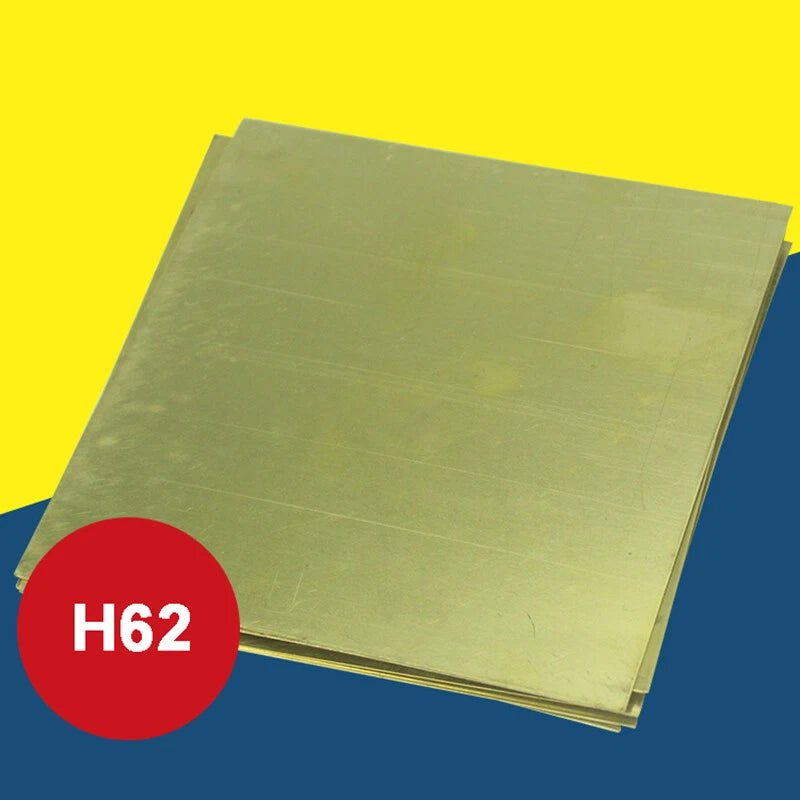
When your project demands a material that machines cleanly, solders reliably, and holds up in humid or corrosive environments, standard steel sheet often falls short. Makers, hobbyists, and small-shop fabricators working on electrical contacts, decorative trim, shim stock, or custom brackets need a flat metal stock that delivers consistent thickness and predictable workability — that's exactly where these H62 brass sheet metal strips come in.
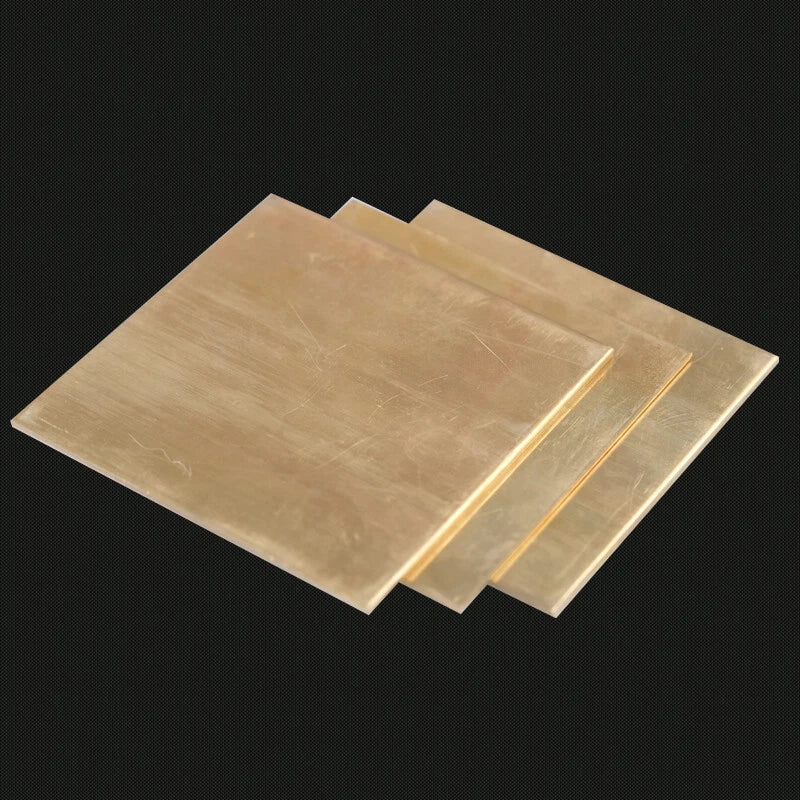
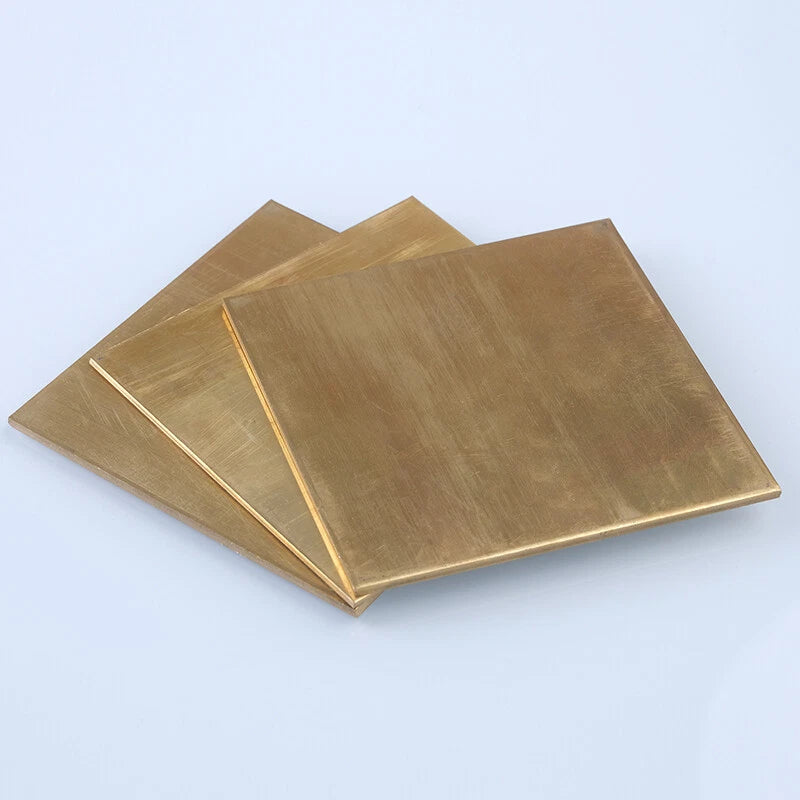
Each piece is cut from H62-grade brass alloy, a copper-zinc composition known for its balance of strength and ductility. Thickness options range from 0.8 mm to 3 mm (approximately 1/32" to 1/8"), and sheet sizes span from compact 35×50 mm (roughly 1-3/8" × 2") up to 200×300 mm (approximately 7-7/8" × 11-3/4"). Edges are sheared flat, and surfaces are mill-finished with a characteristic warm golden tone.
Typical applications include custom shim stock for machinery alignment, electrical bus bar blanks and contact strips, decorative inlay and engraving stock for woodworking projects, and prototype bracket fabrication for electronics enclosures — all use cases where a machinable, solderable, non-ferrous flat stock is the right call.
Composed of approximately 62% copper and 38% zinc, H62 offers a reliable combination of tensile strength (typically 330–440 MPa), good ductility, and natural corrosion resistance — suitable for both indoor and mildly outdoor applications.
Choose from 0.8 mm, 1 mm, 1.5 mm, 2 mm, or 3 mm to match your shim, bracket, or decorative stock requirements. Each thickness is held to close tolerance for consistent layering and stacking.
Six size options from 35×50 mm up to 200×300 mm let you select the smallest blank that covers your part, minimizing waste and keeping costs down on prototype runs.
H62 brass conducts electricity well, making these strips a practical choice for bus bars, grounding straps, contact plates, and other low-voltage electrical fabrication tasks.
Brass machines with less tool wear than stainless steel and accepts solder readily without flux-intensive preparation, speeding up assembly in electronics and plumbing prototype work.
Available in 1, 4, 10, or 20-piece packs depending on the size and thickness combination, so you can order exactly what a single project needs or stock up for repeat production runs.
| Material | H62 Brass (Copper-Zinc Alloy) |
|---|---|
| Copper Content | Approximately 62% |
| Thickness Range | 0.8 mm / 1 mm / 1.5 mm / 2 mm / 3 mm (approx. 1/32" – 1/8") |
| Sheet Size Options | 35×50 mm, 100×100 mm, 150×150 mm, 100×200 mm, 200×200 mm, 200×300 mm |
| Surface Finish | Mill finish (warm golden tone) |
| Tensile Strength | Typically 330–440 MPa |
| Hardness | See variant options |
| Corrosion Resistance | Good — suitable for indoor and mildly humid environments |
| Machinability | Good — compatible with CNC, laser (fiber), drill press, hand tools |
| Solderability | Excellent |
| Pack Quantity | 1 / 4 / 10 / 20 pcs (varies by size/thickness combination) |
For shim stock and fine gap-filling, 0.8 mm or 1 mm is typically sufficient. For structural brackets, mounting plates, or parts that will be drilled and tapped, 2 mm or 3 mm provides the rigidity needed. If you're making decorative inlay or engraving blanks, 1 mm to 1.5 mm balances workability with durability.
Select the smallest size that covers your finished part with a small margin for clamping or fixturing. For example, if your part is 80×80 mm, the 100×100 mm sheet gives you a 10 mm border on each side. Ordering the closest size reduces waste and cost.
H62 brass resists oxidation and mild moisture well, making it suitable for sheltered outdoor applications such as under-eave fixtures or covered enclosures. For prolonged direct exposure to rain or salt air, consider applying a clear lacquer coat or choosing a marine-grade alloy instead.
Yes. Thinner sheets (0.8 mm–1 mm) can be cut with aviation snips or a bench shear. Thicker sheets (1.5 mm–3 mm) are best cut with a jigsaw fitted with a metal-cutting blade, a band saw, or a CNC router with a carbide end mill. Always wear eye protection and deburr cut edges before handling.
H62 brass has good electrical conductivity (approximately 26–28% IACS), making it a practical choice for bus bars, grounding straps, contact plates, and terminal blanks in low-voltage DC applications. It is not recommended as a primary conductor in high-current AC circuits where pure copper or aluminum bus bar is the standard.
Yes. H62 brass solders readily with standard rosin-core or acid-core solder and a propane or butane torch. For brazing, use a brass or silver brazing rod with an appropriate flux. Clean the surface with fine abrasive or acetone before joining to ensure a strong bond.
If you're prototyping a single part, the 1-piece option keeps costs low. For production runs, jigs, or projects requiring multiple identical blanks, the 4, 10, or 20-piece packs offer a lower per-piece cost and reduce reorder frequency. Check the variant selector for available pack sizes for your chosen thickness and sheet size combination.