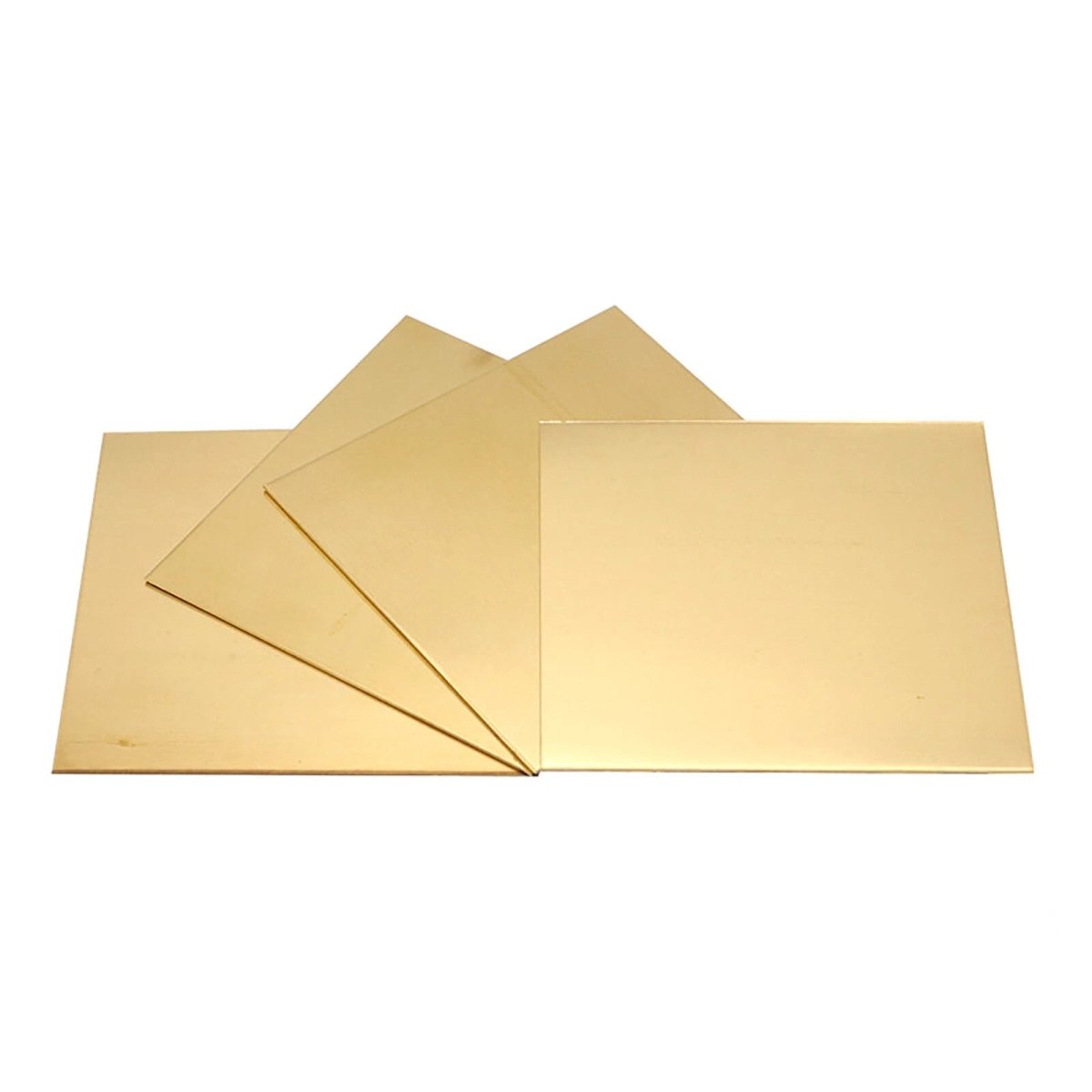
Brass Sheet Plate 0.8mm 1mm 1.2mm 1.5mm 2mm 2.5mm 3mm 4mm 5mm 6mm

No reviews

Price:
Sale price$5.47 USD
Stock:
In stock (500 units), ready to be shipped

Payment & Security

Ach Direct Debit Amazon American Express Apple Pay Bancontact BLIK Diners Club Discover EPS Google Pay iDEAL Wero JCB Maestro Mastercard Multibanco MobilePay PayPal Przelewy24 Shop Pay Twint Union Pay USDC Visa

Your payment information is processed securely. We do not store credit card details nor have access to your credit card information.

Quantity Discount Promotion
🎯 BULK DISCOUNT: Buy More, Save More!
Buy 2 Items
5% OFF
Buy 4 Items
10% OFF
Buy 6 Items
15% OFF
Expert

DIY Expert Support

Get fitment advice & recommendations

Mon-Fri, 8:30AM-8PM
24-Hour Fast Ship
🚚
Arrives in 3-14 days
🌍
Global Reach
↩️
30-Day Returns
🌱 1 tree planted with every purchase

Description

Brass Sheet Plate — Precision-Cut Stock for DIY Fabrication & Metalwork

When your project demands a material that machines cleanly, solders reliably, and holds tight tolerances, finding the right brass sheet plate in the exact thickness you need can be a frustrating hunt. Whether you are a hobbyist building custom enclosures, a maker fabricating shims and spacers, or a small-shop engineer prototyping brackets, having a ready supply of accurately sized brass stock saves time and reduces waste.

These brass sheet plates are made from C260 cartridge brass (70% copper, 30% zinc), offering a balance of workability and strength. Thickness options run from 0.5 mm (0.020 in) up to 6 mm (0.236 in), and sheet sizes range from 50 mm × 100 mm (approx. 2 in × 4 in) up to 300 mm × 300 mm (approx. 11.8 in × 11.8 in), giving you a precise blank without paying for excess material.

Typical applications include custom shim stock for machinery alignment, decorative inlay panels for woodworking and furniture, electrical contact blanks for DIY electronics, heat-spreader plates in small thermal management assemblies, and engraving or etching blanks for signage and art projects.

🔧 Compatible with standard metalworking tools — tin snips, band saws, drill presses, and CNC routers. Suitable for soldering, brazing, and light forming operations.

✅ Key Features of These Brass Sheet Plates

  • 📐 Wide Thickness Range — 0.5 mm through 6 mm (0.020 in – 0.236 in) in a single listing, so you can match the exact gauge your project requires without ordering from multiple suppliers.
  • ✂️ Multiple Sheet Sizes — Eight size options from 50 × 100 mm up to 300 × 300 mm let you choose the smallest blank that covers your part, minimising offcuts and cost.
  • ⚙️ C260 Cartridge Brass Alloy — 70/30 copper-zinc composition delivers excellent machinability, consistent ductility for bending and forming, and reliable solderability for electrical and plumbing applications.
  • 🛡️ Corrosion-Resistant Surface — Brass naturally resists oxidation in indoor and mildly humid environments, making these plates suitable for decorative panels, instrument components, and long-term shim applications.
  • 🔩 Flat, Mill-Finished Stock — Sheets arrive with a consistent mill finish, flat within typical commercial tolerances, ready for layout, drilling, or further surface treatment such as polishing or patination.
  • 📦 Single-Piece or Small-Batch Ordering — Each variant is sold individually, so you can order exactly the quantity you need for prototyping or repair work without committing to bulk minimums.

📐 Technical Specifications — Brass Sheet Plate

Material C260 Cartridge Brass (70% Cu / 30% Zn)
Thickness Options 0.5 mm, 0.8 mm, 1 mm, 1.2 mm, 1.5 mm, 2 mm, 2.5 mm, 3 mm, 4 mm, 5 mm, 6 mm
Sheet Size Options 50×100 mm, 50×200 mm, 100×100 mm, 100×150 mm, 100×200 mm, 200×200 mm, 200×300 mm, 300×300 mm
Surface Finish Mill finish (as-rolled)
Hardness (typical) See variant options
Tensile Strength (typical) See variant options
Temper See variant options
Flatness Tolerance Commercial standard (ASTM B36)
Colour Golden yellow
Machinability Rating Excellent (rated ~100 on standard brass machinability scale)
Solderability Excellent
Quantity per Order 1 piece per variant selected

❓ Frequently Asked Questions

How do I choose the right thickness for my project?

Thinner sheets (0.5–1 mm) work well for shims, gaskets, decorative inlays, and light-duty electrical contacts. Mid-range thicknesses (1.2–2.5 mm) suit structural brackets, enclosure panels, and instrument components. Thicker plates (3–6 mm) are appropriate for heavy-duty spacers, bearing surfaces, and parts that will be machined or tapped. If you are unsure, select the variant closest to your design dimension — brass is easy to file or sand down slightly.

Is this brass strong enough for load-bearing or structural use?

C260 cartridge brass has a typical tensile strength in the range of 300–500 MPa depending on temper, which is adequate for many light structural and mechanical applications such as brackets, spacers, and bearing plates. For heavy dynamic loads or high-stress environments, consult an engineer to confirm suitability. Thicker variants (4–6 mm) provide significantly more rigidity and load capacity than thinner gauges.

Will these sheets rust or corrode over time?

Brass does not rust (rust is specific to iron-based metals). In indoor and mildly humid environments, brass develops a stable oxide layer that slows further corrosion. In marine or highly humid conditions, brass may develop a green patina (verdigris) over time. If a bright finish is required long-term, apply a clear lacquer or wax coating after polishing. For outdoor or wet environments, consider whether a more corrosion-resistant alloy such as naval brass or stainless steel would be more appropriate.

What tools do I need to cut or drill these sheets?

Thin sheets (0.5–1.5 mm) can be cut with aviation tin snips, a sharp utility knife and straightedge, or a jigsaw with a fine-tooth metal blade. Thicker sheets (2 mm and above) are best cut with a band saw, circular saw with a non-ferrous metal blade, or a CNC router. For drilling, use standard HSS twist drill bits with a slow feed rate and cutting fluid to prevent work-hardening. Always deburr cut edges with a file or deburring tool.

Are these sheets compatible with soldering and brazing?

Yes. C260 brass has excellent solderability and is routinely used in plumbing fittings, electrical contacts, and instrument manufacturing. Use a rosin-core or water-soluble flux with standard 60/40 or lead-free solder for electrical work. For brazing, use a silver-bearing brazing alloy and appropriate flux. Clean the surface with fine abrasive paper or acetone before joining to ensure a strong bond.

Can I bend or form these sheets without cracking?

C260 cartridge brass in mill-annealed or half-hard temper bends well with a minimum bend radius of approximately 1× the sheet thickness for thin gauges. Thicker sheets (3 mm and above) require a larger bend radius and may need annealing (heating to dull red and quenching in water) before forming to restore ductility. Always bend across the rolling direction where possible to reduce the risk of cracking.

Which size should I order if I need a custom shape cut from the sheet?

Choose the smallest sheet size that fully contains your finished part dimensions, adding at least 5–10 mm on each edge as a cutting allowance. For example, if your finished part is 85 mm × 130 mm, the 100 mm × 150 mm variant gives you adequate margin. Ordering the smallest sufficient blank keeps cost down and reduces waste.

🛒 Select your Thickness and Size above, then add to cart.

You may also like

Recently viewed