
The chain is fine...but I ordered the wrong size. Nine links of the chain I ordered equals six of the size I wanted. My error...
How can I straighten out the springs? I can't use them coil uo as is.
Your payment information is processed securely. We do not store credit card details nor have access to your credit card information.
Get fitment advice & recommendations
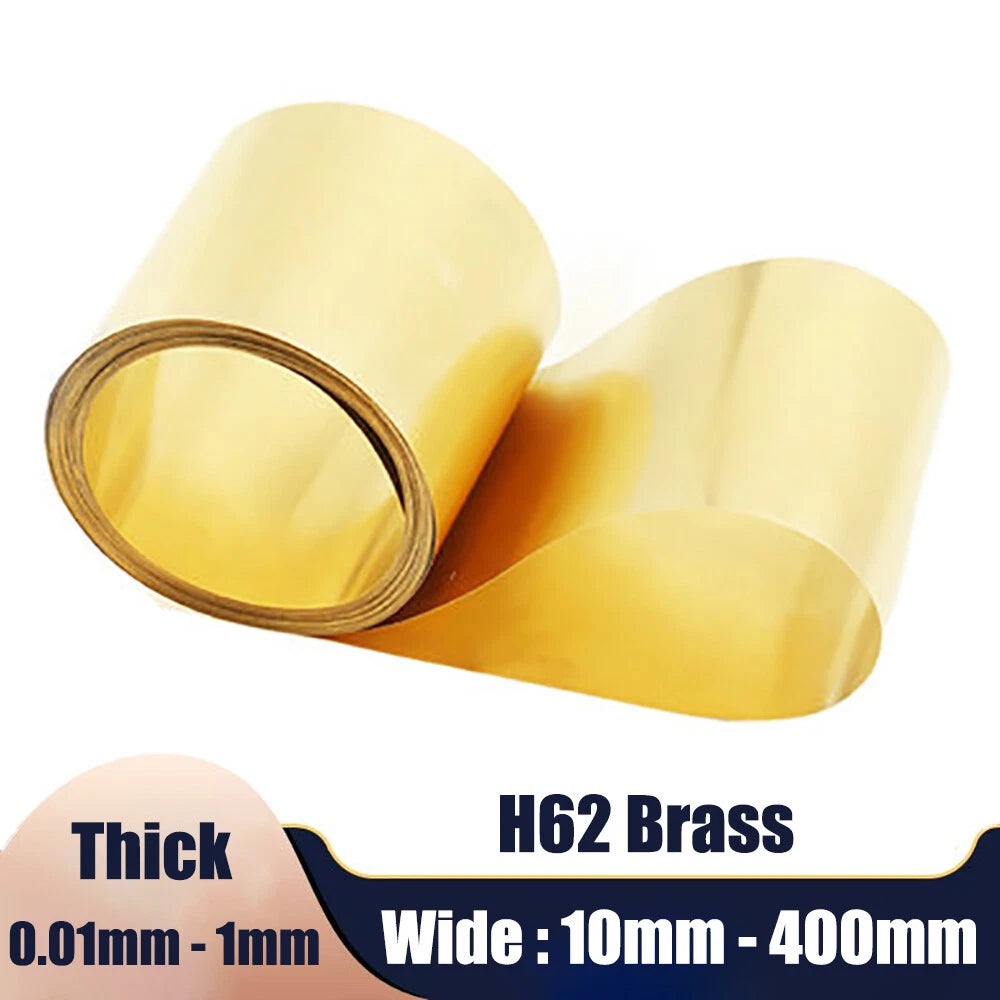
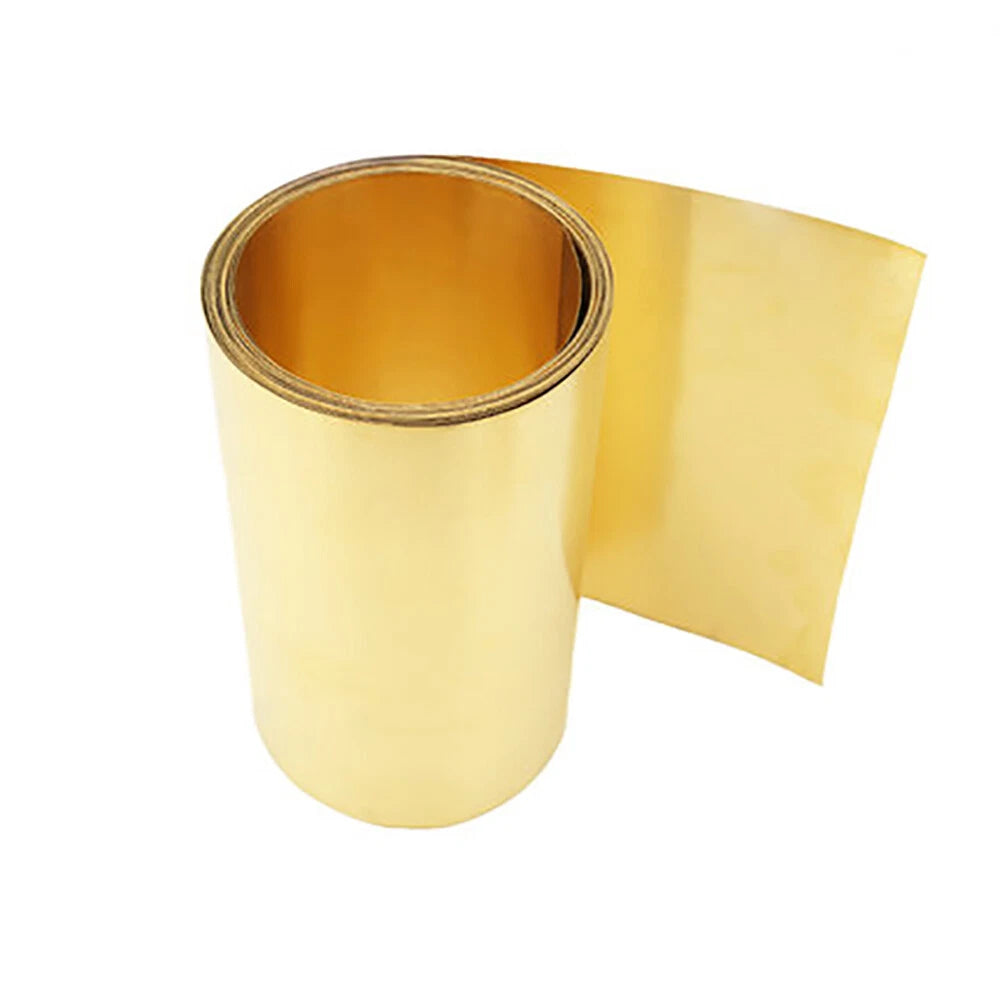
When a project demands exact tolerances and a material that holds its shape under pressure, finding the right brass sheet roll in the correct thickness and width can be a real challenge. Whether you are a machinist shimming a bearing housing, a hobbyist building a scale model, or a craftsperson adding decorative metalwork, this brass sheet roll gives you the dimensional accuracy you need without ordering custom-cut stock.
Each roll is made from C26000 cartridge brass (approximately 70% copper, 30% zinc), offering a balance of formability and strength. Thickness options range from 0.01 mm to 1 mm (0.0004 in to 0.039 in) and widths span 10 mm to 400 mm (0.39 in to 15.75 in). Length options include 500 mm, 1 m, 2 m, 5 m, and 10 m, so you can order exactly what your job requires.
Typical applications include precision shim stock for machinery alignment, thin brass foil for etching and engraving, gasket material for low-pressure fluid systems, decorative inlay strips for woodworking, and flexible electrical contacts in DIY electronics projects.
| Material | Brass (C26000 / CuZn30, approx. 70% Cu / 30% Zn) |
|---|---|
| Thickness Range | 0.01 mm – 1 mm (0.0004 in – 0.039 in) |
| Width Range | 10 mm – 400 mm (0.39 in – 15.75 in) |
| Length Options | 500 mm / 1 m / 2 m / 5 m / 10 m |
| Thickness Tolerance | Typically ±10% of nominal thickness |
| Surface Finish | Mill finish (smooth, bright rolled) |
| Hardness | See variant options |
| Tensile Strength | See variant options |
| Colour | Golden yellow (natural brass) |
| Machinability | Good — suitable for cutting, bending, etching, and soldering |
| Operating Temperature | Up to approximately 200 °C (392 °F) for most applications |
| Form | Flat roll / strip |
For shim stock and precision gap-filling, choose a thickness equal to or slightly less than the gap you need to fill — common shim thicknesses are 0.05 mm, 0.1 mm, and 0.2 mm. For decorative inlay or craft work, 0.1–0.3 mm is easy to cut and bend by hand. For structural brackets or gaskets that must resist deformation, 0.5 mm or thicker is recommended. If you are unsure, order a thinner gauge first; you can always stack multiple layers.
Yes — gauges up to approximately 0.1 mm can be cut cleanly with sharp household scissors or a craft knife and steel ruler. For 0.2–0.4 mm, metal-cutting scissors (aviation snips) or a guillotine paper cutter work well. Gauges of 0.5 mm and above are best cut with metal shears, a hacksaw, or a CNC router. Always deburr cut edges with a fine file or sandpaper for safety.
Brass has good natural corrosion resistance in dry and mildly humid indoor environments. In outdoor or marine environments, brass can develop a patina (verdigris) over time. For long-term outdoor exposure, we recommend applying a clear lacquer or wax coating after installation. For highly corrosive environments (salt spray, acids), consider stainless steel or copper alternatives instead.
Brass solders readily with standard 60/40 tin-lead solder or lead-free solder using a soldering iron (for thin gauges) or a propane torch (for thicker gauges). For stronger joints, silver solder with a flux rated for brass gives excellent results. Clean the surface with fine abrasive paper or flux before soldering to remove any oxidation. Brass can also be bonded with two-part epoxy adhesives rated for metal.
No — brass, copper, and bronze are distinct alloys. Brass (this product) is a copper-zinc alloy with a golden-yellow colour, good machinability, and moderate strength. Pure copper sheet is reddish-orange, softer, and has higher electrical and thermal conductivity. Bronze is a copper-tin alloy, typically harder and more wear-resistant than brass. Choose brass when you need a balance of workability, appearance, and corrosion resistance.
Yes — brass has reasonable electrical conductivity (approximately 28% IACS) and is commonly used for low-current contacts, spring contacts, and EMI shielding in DIY electronics. For high-current applications, pure copper sheet offers better conductivity. Thin brass foil (0.05–0.1 mm) is particularly popular for RF shielding enclosures and grounding straps in hobbyist radio and audio projects.
Measure the widest piece you need to cut from the sheet and select the next available width above that measurement. For length, add up the total linear length of all pieces you plan to cut, then add 5–10% for cutting losses and test cuts. Ordering a longer roll (5 m or 10 m) is more economical per metre if you have multiple pieces to cut. The variant selector above shows all available thickness × width × length combinations.





