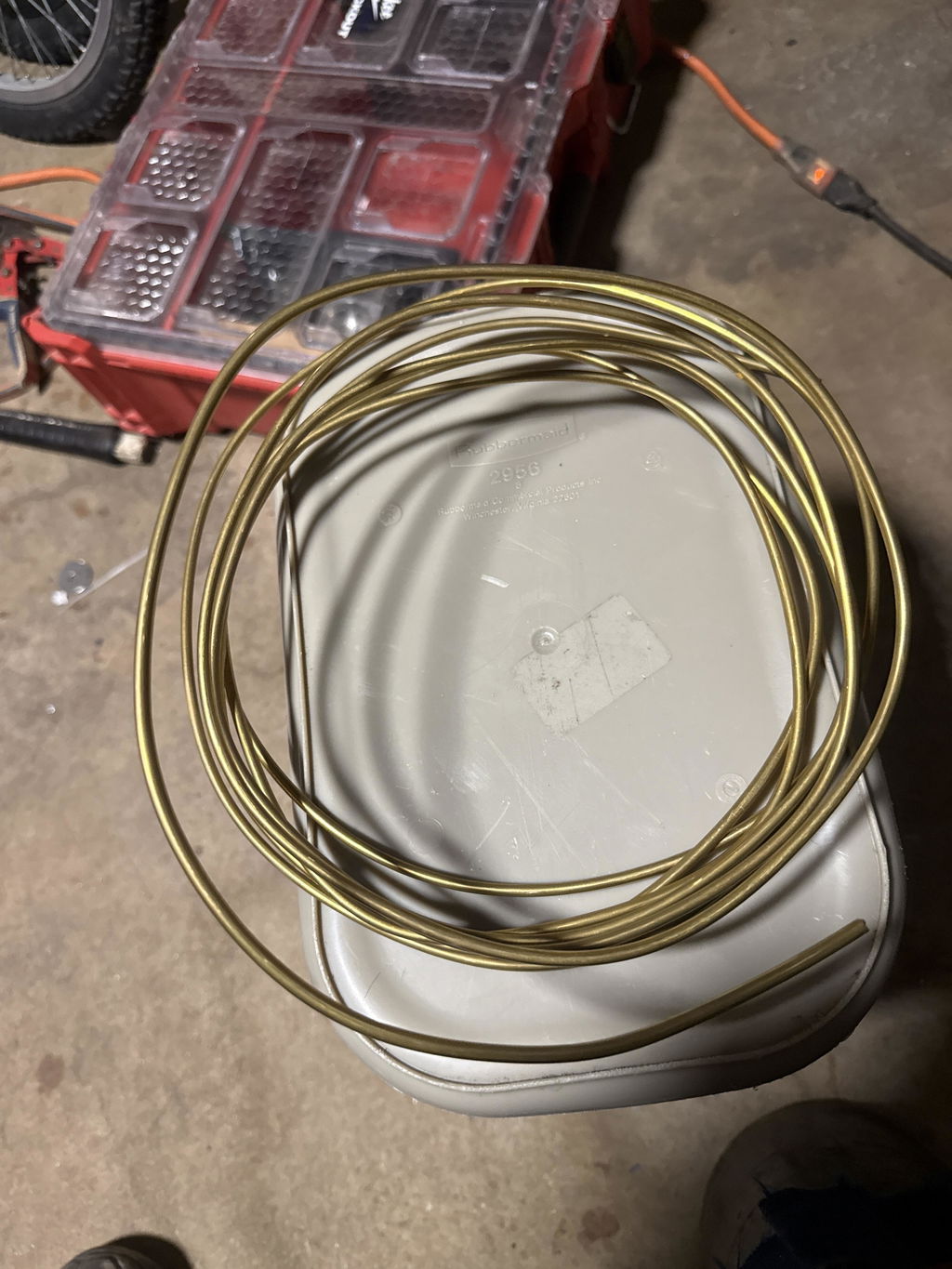
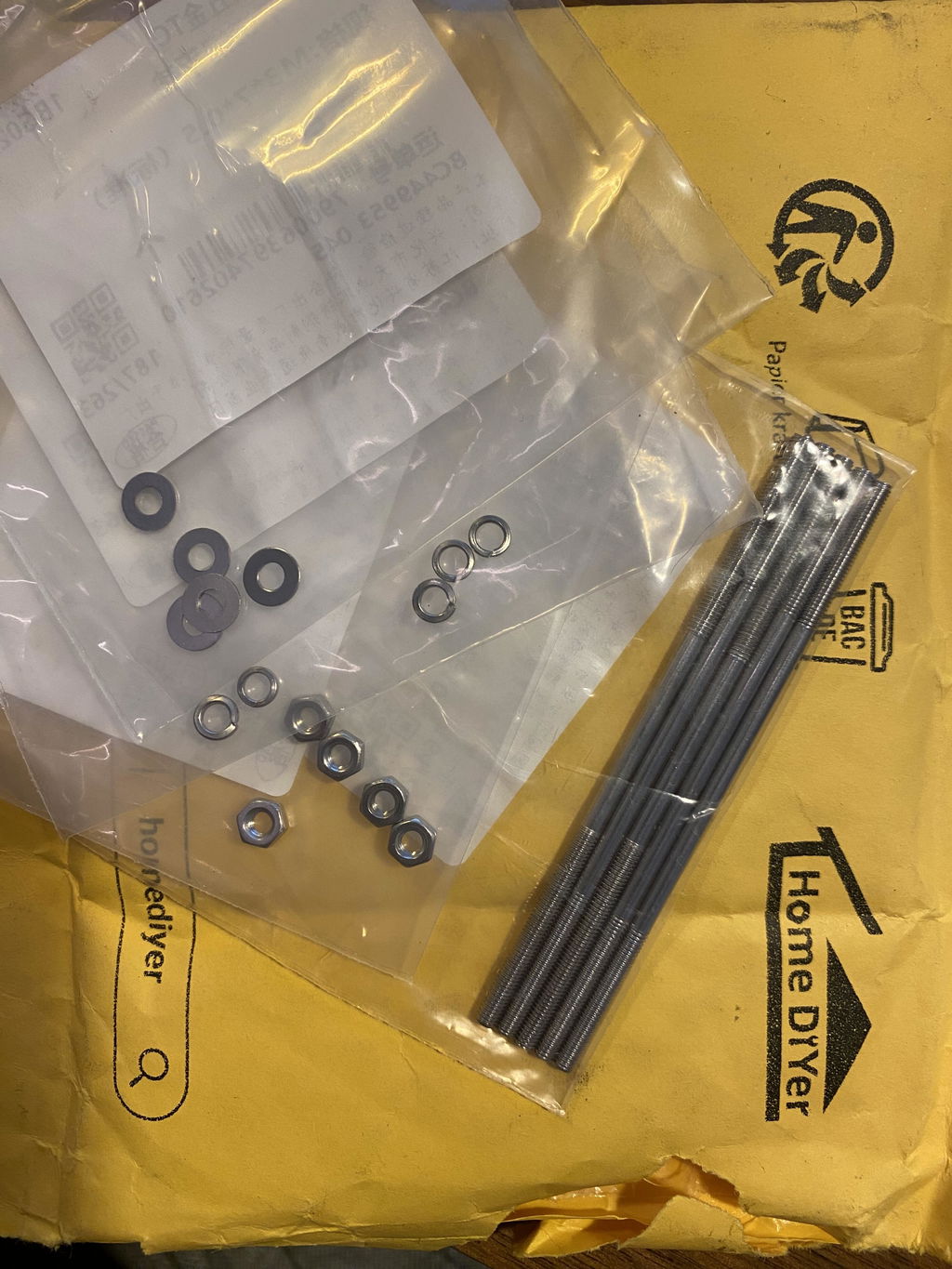
The chain is fine...but I ordered the wrong size. Nine links of the chain I ordered equals six of the size I wanted. My error...
How can I straighten out the springs? I can't use them coil uo as is.
Your payment information is processed securely. We do not store credit card details nor have access to your credit card information.
Get fitment advice & recommendations
When your project demands a thin, workable metal that holds its shape without cracking, finding the right gauge can be a challenge. Whether you're a maker, model builder, jeweler, or repair technician, this 0.2mm brass sheet roll gives you the exact material you need — cut to a usable length and ready to work with straight out of the pack.
This brass foil strip is made from copper-zinc alloy (brass), rolled to a consistent 0.2mm (approx. 0.008 in) thickness. Width options range from 10mm to 300mm (approx. 0.39 in to 11.81 in), and length options are 500mm (approx. 19.7 in) or 1000mm / 1 metre (approx. 39.4 in). The surface has a smooth, bright finish typical of rolled brass flat stock.
Typical applications include thin brass shim stock for mechanical clearance adjustment, decorative inlay strips for woodworking and furniture, flexible gasket material for low-pressure seals, craft foil for etching and embossing projects, and repair patches for sheet metal restoration work.
| Material | Brass (Copper-Zinc Alloy) |
|---|---|
| Thickness | 0.2mm (approx. 0.008 in) |
| Width | 10mm – 300mm (approx. 0.39 in – 11.81 in) — See variant options |
| Length | 500mm or 1000mm (approx. 19.7 in or 39.4 in) — See variant options |
| Surface Finish | Smooth, bright rolled finish |
| Form | Flat strip / sheet roll |
| Temper | See variant options |
| Tensile Strength | See variant options |
| Electrical Conductivity | Conductive (brass alloy) |
| Corrosion Resistance | Good — suitable for indoor and light outdoor use |
| Solderability | Yes — compatible with standard soft solder and brazing alloys |
| Quantity per Pack | 1 piece per variant |
Select a width that matches or slightly exceeds the dimension you need to cover. For shim stock, choose a width equal to the bearing or gap width. For decorative inlay, measure your channel width and pick the closest match. All widths are 0.2mm thick — only the width and length vary between variants.
Yes, for light-duty shimming tasks such as adjusting clearances in hinges, bearings, or machinery, 0.2mm brass provides adequate rigidity while remaining thin enough to fine-tune tolerances. For heavy-load or high-vibration environments, consider stacking multiple strips or using a thicker gauge.
Brass is a copper-zinc alloy with inherent corrosion resistance. It will not rust like steel. Over time, exposure to air and moisture may cause natural patination (darkening or greening), which can be prevented with a clear lacquer coat or metal wax. For wet or outdoor environments, periodic sealing is recommended.
Yes. Brass solders and brazes well with standard soft solder (tin-lead or lead-free) and silver brazing alloys. Clean the surface with flux before soldering for best adhesion. The thin 0.2mm gauge heats quickly, so use a low-heat iron or brief torch contact to avoid warping.
At 0.2mm thickness, this strip cuts easily with tin snips, heavy-duty scissors, a craft knife and steel rule, or a rotary cutter on a cutting mat. For straight precision cuts, a metal shear or guillotine gives the cleanest edge. Avoid standard paper scissors as the metal edge may damage the blades.
Yes. Brass is electrically conductive and is commonly used for grounding strips, EMI shielding, contact springs, and bus bar applications in low-current electronics. Ensure surfaces are clean and free of oxidation before making electrical contact. For high-current applications, verify the cross-sectional area meets your current-carrying requirements.
Absolutely. The smooth bright finish and thin gauge make this brass foil strip well-suited for jewellery blanks, embossing, dry-point etching, and decorative metalwork. It can be stamped, pierced, filed, and polished with standard jewellery tools. Narrower widths (10–30mm) are particularly popular for bracelet blanks and pendant strips.