
The chain is fine...but I ordered the wrong size. Nine links of the chain I ordered equals six of the size I wanted. My error...
How can I straighten out the springs? I can't use them coil uo as is.
Your payment information is processed securely. We do not store credit card details nor have access to your credit card information.
Get fitment advice & recommendations
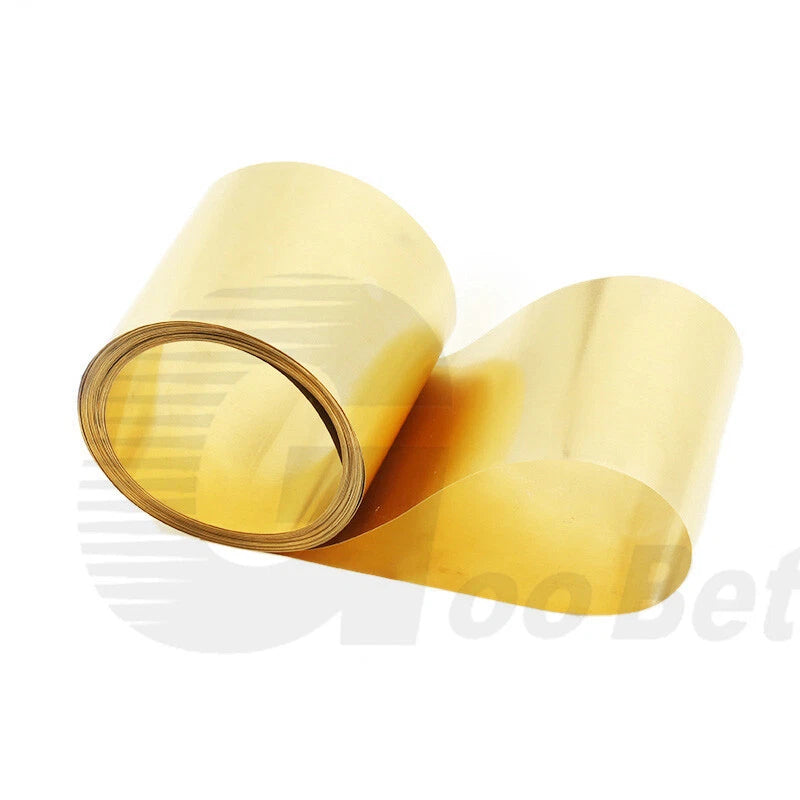
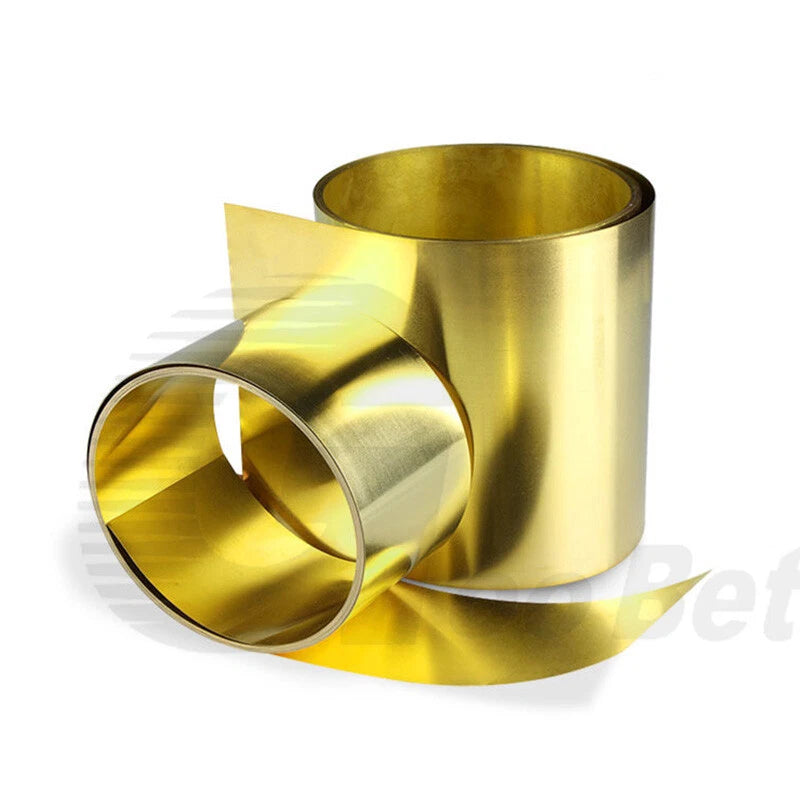
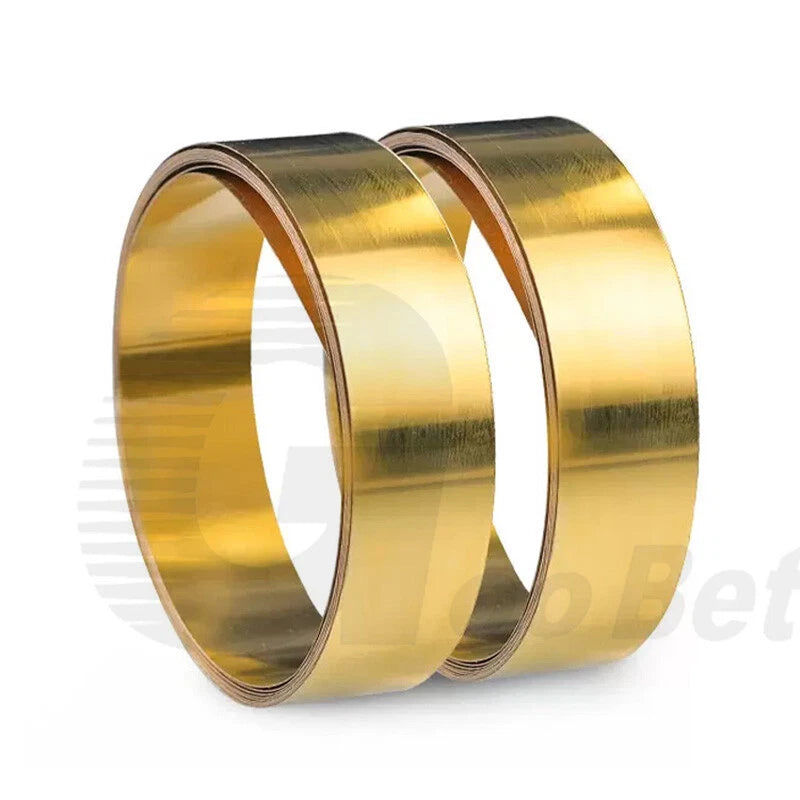
When your project demands a thin, workable metal strip that holds its shape without cracking or corroding, standard hardware store stock rarely delivers the right dimensions. Makers, machinists, hobbyists, and repair technicians who need a reliable thin brass foil in exact widths will find this roll-form sheet stock a practical solution for both bench work and field repairs.
Each strip is made from brass alloy (nominally C260 cartridge brass or equivalent), offering a balance of ductility and moderate strength. The sheet is 0.4mm (approximately 0.016 in) thick, available in widths from 10mm (≈0.39 in) to 300mm (≈11.81 in), and in lengths of 500mm (≈19.69 in) or 1000mm (≈39.37 in). The roll format keeps the strip flat-packable and easy to cut to final length with tin snips or a utility knife.
Typical use cases include precision shimming between mechanical components, thin backing plates for woodworking inlays, decorative banding on furniture or jewelry boxes, and electrical grounding strips in DIY electronics enclosures — all applications where a thin brass shim strip or brass foil roll is the right call.
| Material | Brass alloy (C260 or equivalent) |
|---|---|
| Thickness | 0.4mm (≈0.016 in) |
| Width Range | 10mm – 300mm (≈0.39 in – 11.81 in) |
| Length Options | 500mm (≈19.69 in) or 1000mm (≈39.37 in) |
| Finish | Mill finish (smooth rolled surface) |
| Hardness | See variant options |
| Tensile Strength | See variant options |
| Temper | See variant options |
| Weight per Strip | See variant options |
| Corrosion Resistance | Good — suitable for indoor and low-humidity environments |
| Workability | Cuttable with tin snips or utility knife; solderable and brazeable |
| Packaging | Roll-form, flat-packed |
Measure the span you need to cover or shim, then select the next width up to allow for trimming. For shimming applications, match the width to the bearing or joint face. For decorative banding, choose a width that matches your inlay channel. All widths are 0.4mm thick, so only the width and length differ between variants.
At 0.4mm, this strip is well-suited for light-duty shimming — aligning machine beds, leveling fixtures, or filling small gaps in woodworking joints. It is not intended for load-bearing structural applications where thicker plate stock would be required. For precision shimming under moderate compressive loads, 0.4mm brass performs reliably.
Brass does not rust (it contains no iron), but it can develop a natural patina (oxidation) over time when exposed to air and moisture. For indoor, dry, or mildly humid environments, the strip will maintain its appearance for years. In high-humidity or outdoor environments, applying a clear lacquer or wax coating will extend the surface life significantly.
Yes. Brass is one of the most solderable and brazeable metals. Use standard rosin-core solder with a soldering iron for light electrical or craft joints, or silver brazing alloy with a torch for stronger mechanical joints. Clean the surface with flux before soldering to ensure a reliable bond.
For widths up to about 50mm, a sharp utility knife and a metal straightedge work well — score and snap, or cut through in multiple passes. For wider strips (60mm–300mm), tin snips or aviation snips give a clean edge. A bench-mounted guillotine shear produces the cleanest, straightest cut. Avoid using a hacksaw on thin foil as it tends to distort the edge.
Yes. The 500mm length variant (currently available in 200mm width) is the same 0.4mm thickness and the same brass alloy as all 1000mm variants. The only difference is the cut length. Choose 500mm if you need a shorter piece and want to avoid cutting waste from a full 1000mm strip.
Absolutely. The smooth mill finish takes polishing, patination chemicals (liver of sulfur, ammonia fuming), and lacquer coatings well. It is widely used for jewelry box banding, model making, etching blanks, repoussé work, and decorative inlays in woodworking. The 0.4mm gauge is thin enough to cut with scissors for narrow widths in craft applications.





