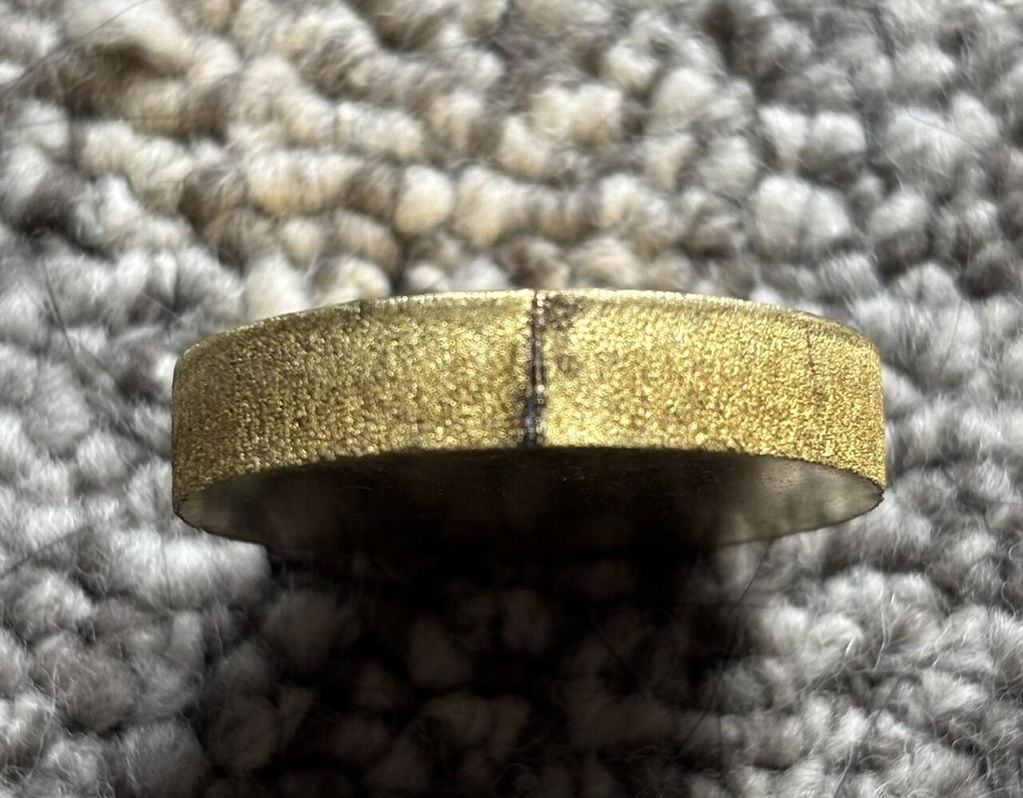
The chain is fine...but I ordered the wrong size. Nine links of the chain I ordered equals six of the size I wanted. My error...
How can I straighten out the springs? I can't use them coil uo as is.
Your payment information is processed securely. We do not store credit card details nor have access to your credit card information.
Get fitment advice & recommendations
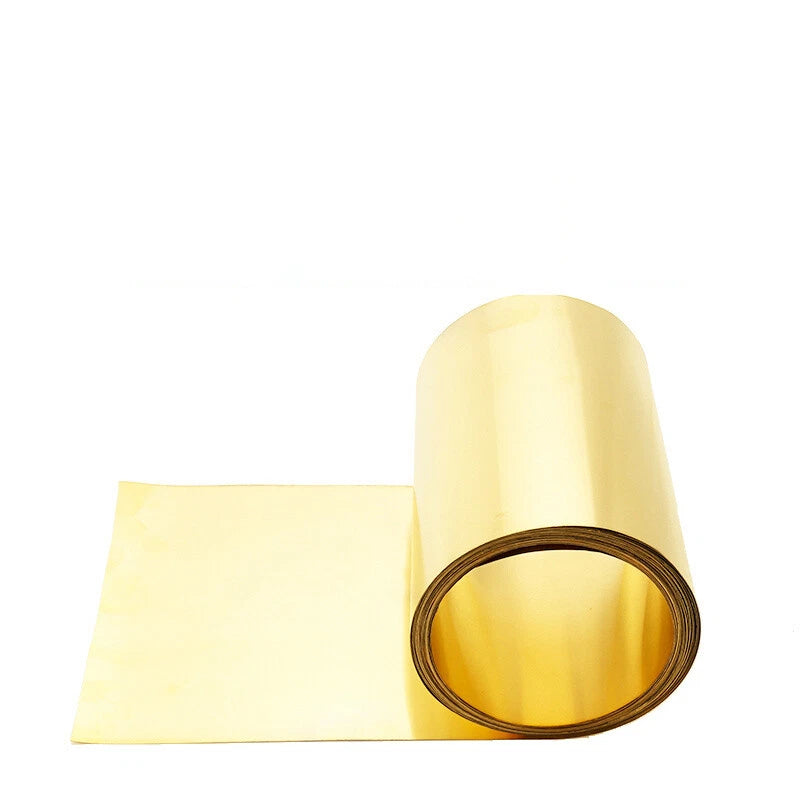
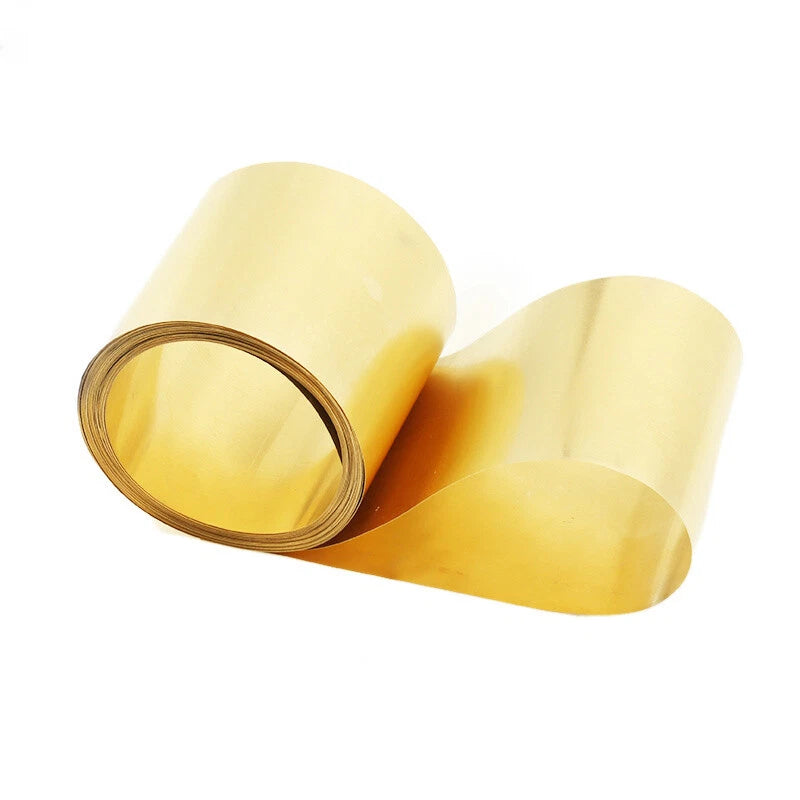
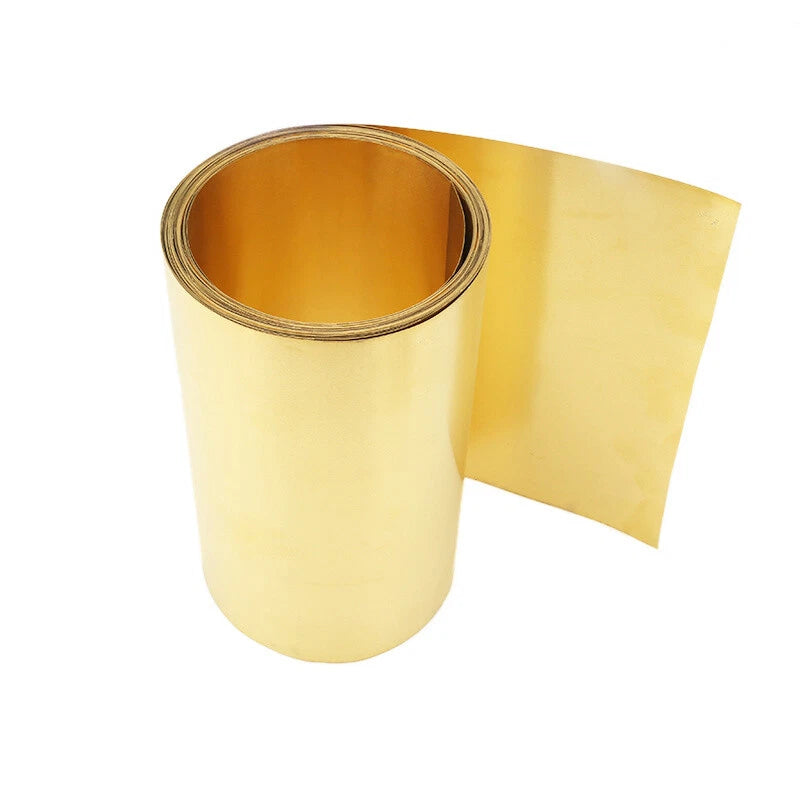
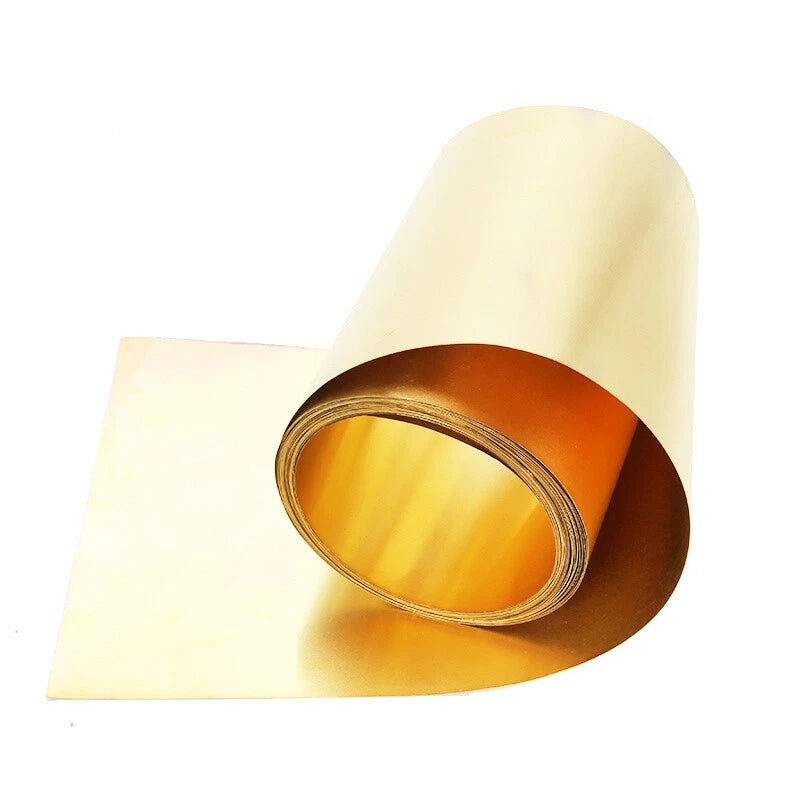
When a worn bearing seat, a loose hinge, or a misaligned mechanical joint demands an exact-thickness spacer, grabbing the wrong material wastes time and money. Makers, repair technicians, and hobbyists who need a reliable, workable metal shim turn to brass sheet roll for its consistent gauge, clean edges, and ease of cutting without specialist tools.
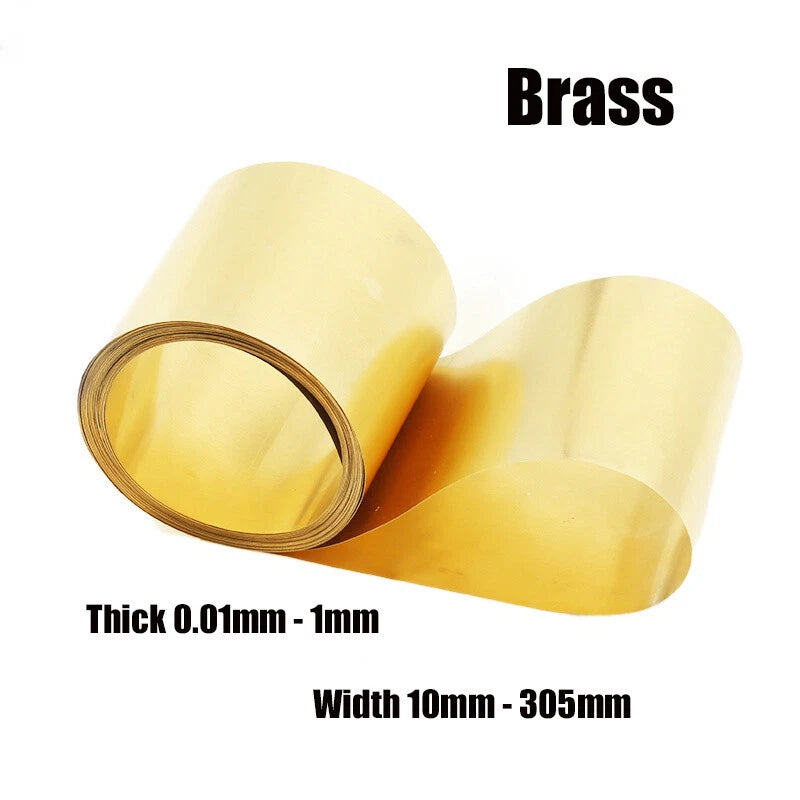
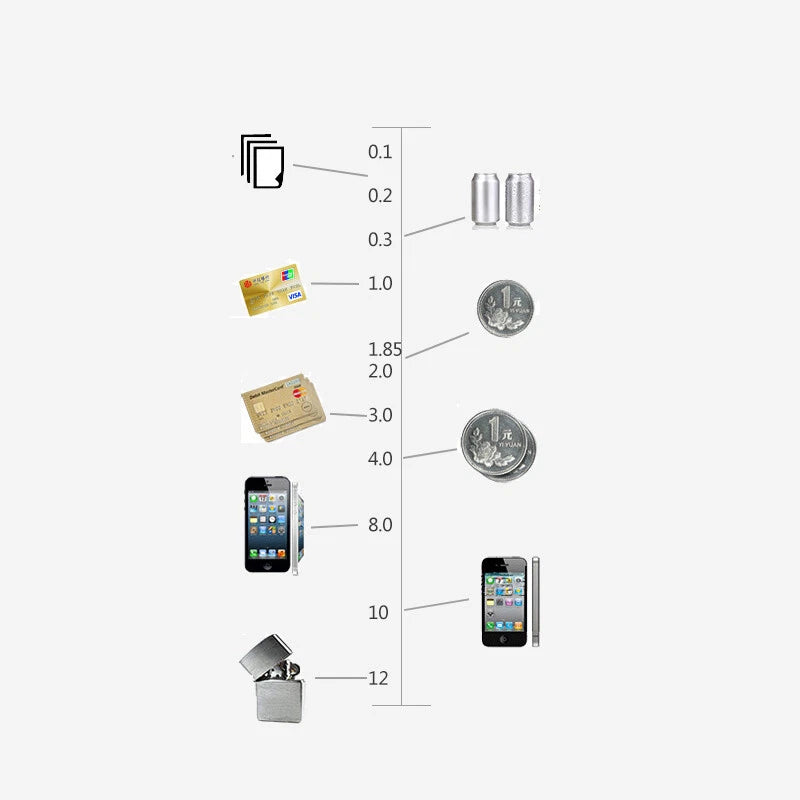
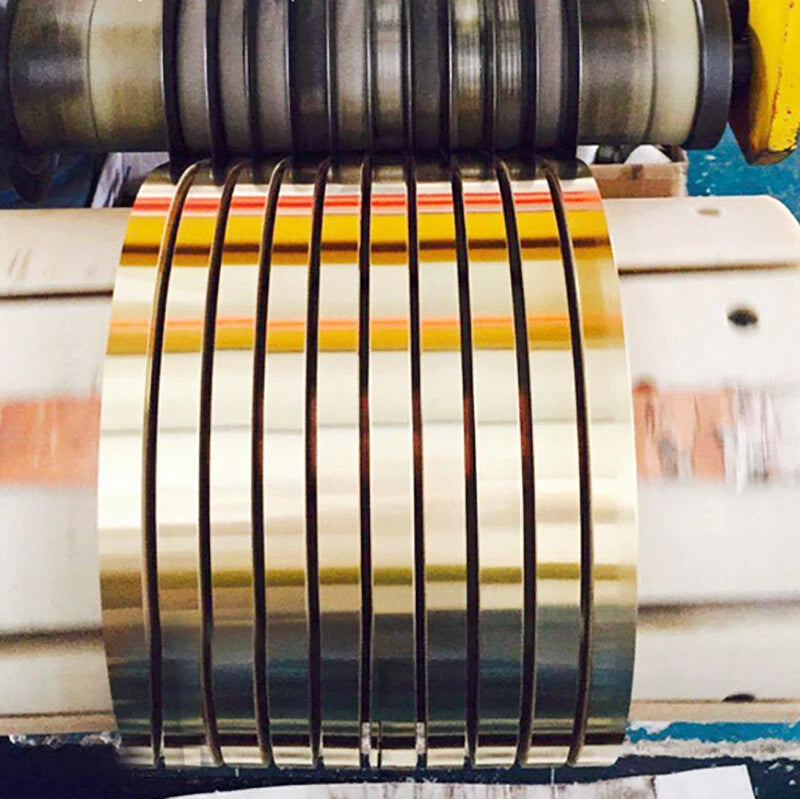
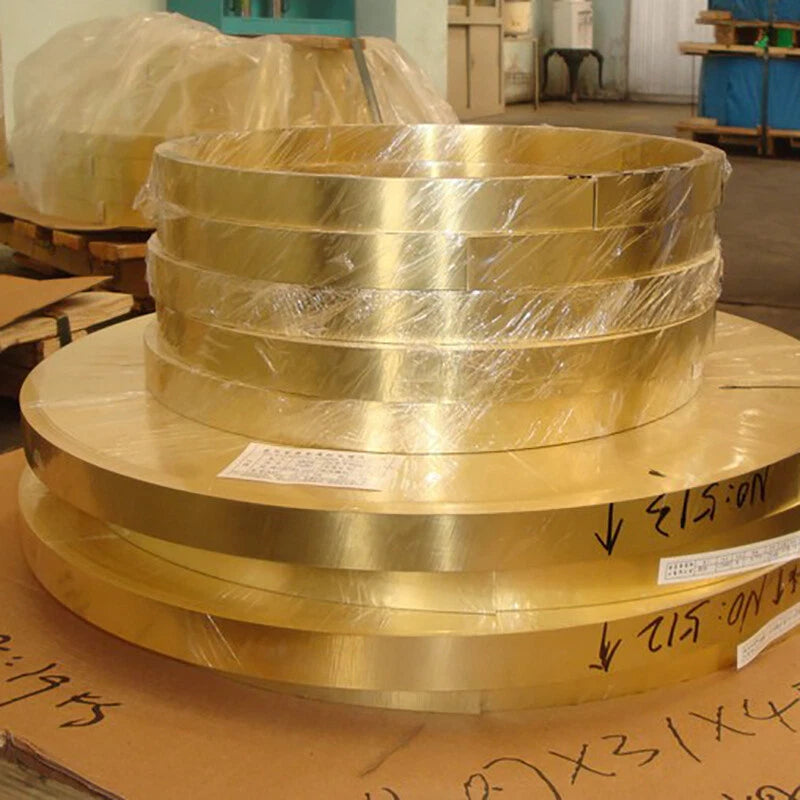
This brass shim strip is made from C26000 cartridge brass (70% copper / 30% zinc), rolled to a uniform thickness of 0.4 mm (approx. 1/64 in) and slit to a width of 100 mm (approx. 3.94 in). Available lengths run from 1 M through to 5 M (approx. 3.3 ft – 16.4 ft), giving you the right amount for small one-off jobs or larger ongoing projects.
Typical applications include shimming bearing housings and shaft fits, fabricating custom gaskets for fluid systems, lining clock or instrument mechanisms, crafting decorative metalwork and jewellery blanks, and protecting surfaces during welding or forming operations — all scenarios where a consistent 0.4 mm brass shim strip delivers measurable results.
Rolled to a consistent 0.4 mm (approx. 1/64 in) thickness across the full width, ensuring repeatable shimming and spacing without measuring each section.
A 100 mm (3.94 in) width gives ample material for most shim, gasket, and fabrication tasks while keeping the roll compact and easy to handle.
70/30 brass offers a practical balance of tensile strength (typically 300–400 MPa), ductility, and corrosion resistance — far more workable than steel shim at this gauge.
At 0.4 mm, the strip cuts cleanly with household scissors or tin snips and bends without cracking, making it accessible for bench work and field repairs alike.
Brass resists oxidation in ambient and mildly humid environments, making it suitable for indoor mechanical assemblies, instrument work, and decorative applications where rust is a concern.
Choose from 1 M, 2 M, 3 M, 4 M, or 5 M rolls to match your project scope — order exactly what you need without paying for excess material.
| Material | Brass (C26000 / 70-30 cartridge brass) |
|---|---|
| Item Type | Metal Sheet / Shim Strip Roll |
| Thickness | 0.4 mm (approx. 1/64 in) |
| Width | 100 mm (approx. 3.94 in) |
| Available Lengths | 1 M / 2 M / 3 M / 4 M / 5 M |
| Finish | Mill finish (bright rolled) |
| Tensile Strength | Typically 300–400 MPa |
| Hardness | See variant options |
| Temper | See variant options |
| Corrosion Resistance | Good — suitable for ambient and mildly humid environments |
| Workability | Cuts with scissors / tin snips; bends without cracking |
| Compatible Joining Methods | Soldering, brazing, adhesive bonding |
Measure the total linear length of shim material your project requires, then add 10–15% for trimming waste. For a single bearing shim or gasket, 1 M is usually sufficient. For ongoing workshop use or multiple joints, 3 M–5 M rolls offer better value per metre.
At 0.4 mm, C26000 brass has a tensile strength of typically 300–400 MPa, making it suitable for light-to-medium load shimming such as bearing housings, hinge adjustments, and instrument mechanisms. For heavy-load structural applications, a thicker gauge is recommended.
Brass does not rust (it contains no iron). In ambient and mildly humid indoor environments it develops a slow patina over time. For wet or outdoor exposure, consider applying a clear lacquer or protective coating to maintain the bright finish.
Yes. C26000 brass is well-suited to soft soldering with standard rosin-core solder and to silver brazing. Clean the surface with flux before joining to ensure a strong bond. Avoid overheating, as thin sheet can warp at sustained high temperatures.
At 0.4 mm thickness, the strip cuts cleanly with household scissors, tin snips, or a sharp craft knife and steel rule. For curved cuts, aviation snips work well. No power tools are required for straight cuts.
No — this is brass (a copper-zinc alloy), not pure copper. Brass is harder and springier than pure copper, making it better for structural shimming and gaskets. Pure copper is softer and more electrically conductive. Choose brass when you need dimensional stability; choose copper for electrical or thermal conductivity applications.
Absolutely. The bright mill finish and warm gold tone of brass make it popular for jewellery blanks, etching, engraving, model-making, and decorative inlay work. It can be polished, patinated, or painted to suit your design.