The chain is fine...but I ordered the wrong size. Nine links of the chain I ordered equals six of the size I wanted. My error...
How can I straighten out the springs? I can't use them coil uo as is.
Your payment information is processed securely. We do not store credit card details nor have access to your credit card information.
Get fitment advice & recommendations
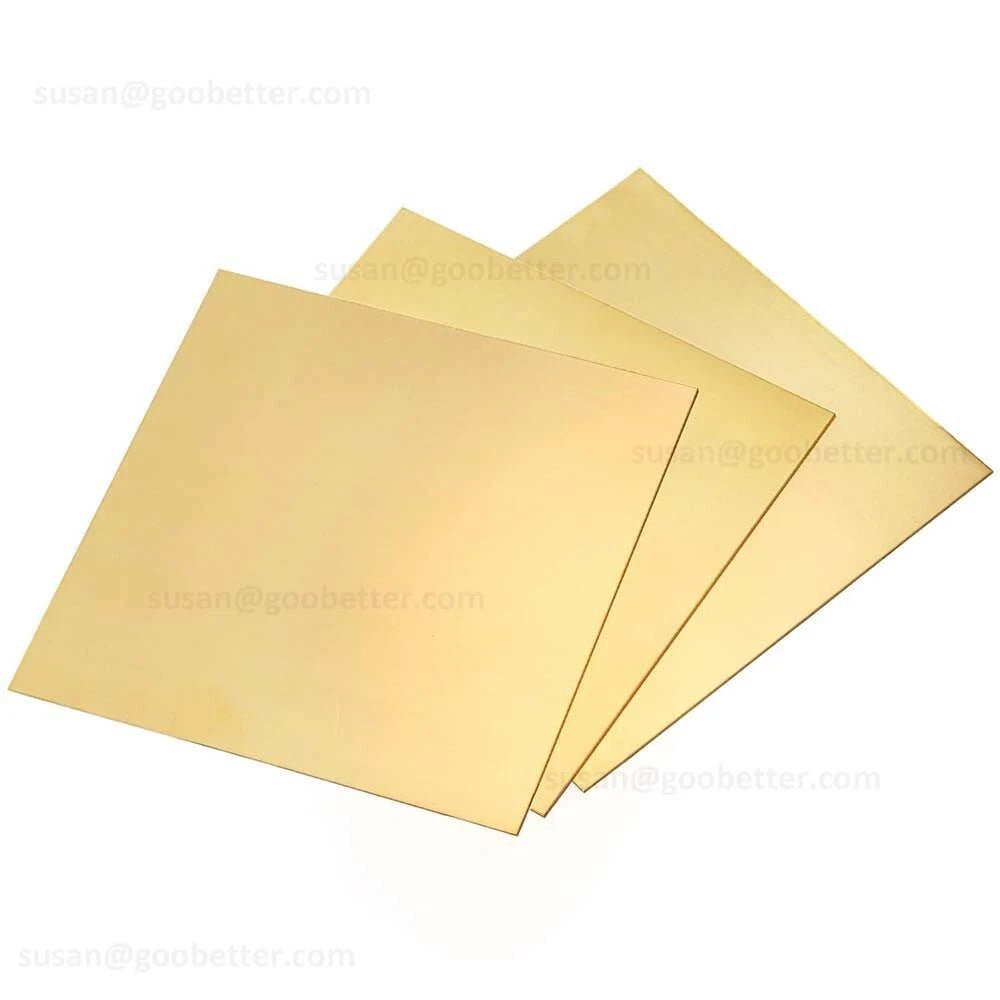
Finding a flat, consistent metal sheet that holds fine detail without warping is a constant challenge for jewellers, model makers, and precision hobbyists. This brass sheet is stocked in a wide range of thicknesses and cut sizes so you can order exactly what your project demands — no oversized offcuts, no guesswork on gauge.
Each piece is a solid brass sheet available in thicknesses from 0.3mm to 6mm (approximately 0.012" to 0.236") and sheet sizes ranging from 10mm × 10mm up to 300mm × 300mm (roughly 0.4" × 0.4" to 11.8" × 11.8"). The alloy is a standard yellow brass composition offering a balance of workability and structural rigidity across all gauges.
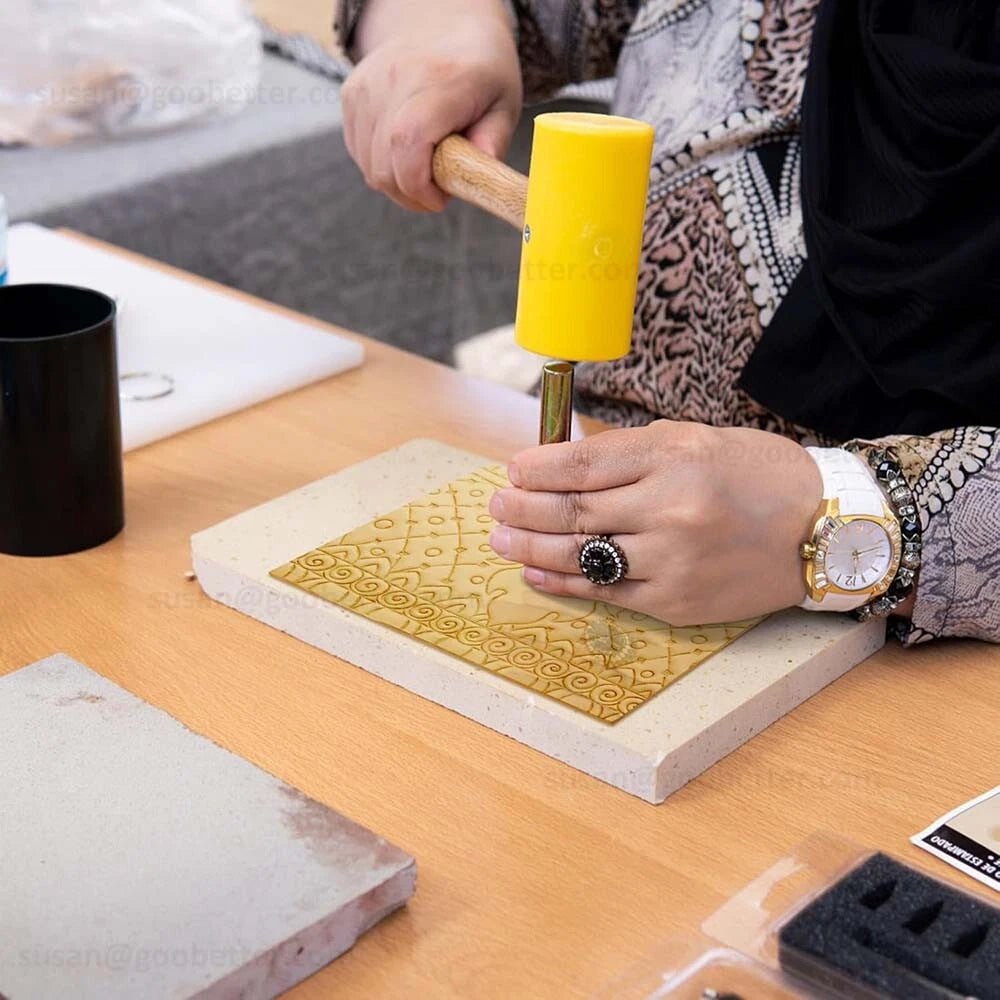
Typical applications include hand-fabricated jewellery components and bezels, architectural scale model cladding and structural elements, etched or engraved decorative panels, shim stock for mechanical fitting and alignment, and small-batch prototype parts for electronics enclosures or craft hardware.
Available from ultra-thin 0.3mm foil-weight up to structural 6mm plate, covering virtually every gauge needed for jewellery, modelling, and light engineering.
Sheet sizes span from compact 10mm × 10mm squares to large 300mm × 300mm panels, letting you order the exact footprint your project requires.
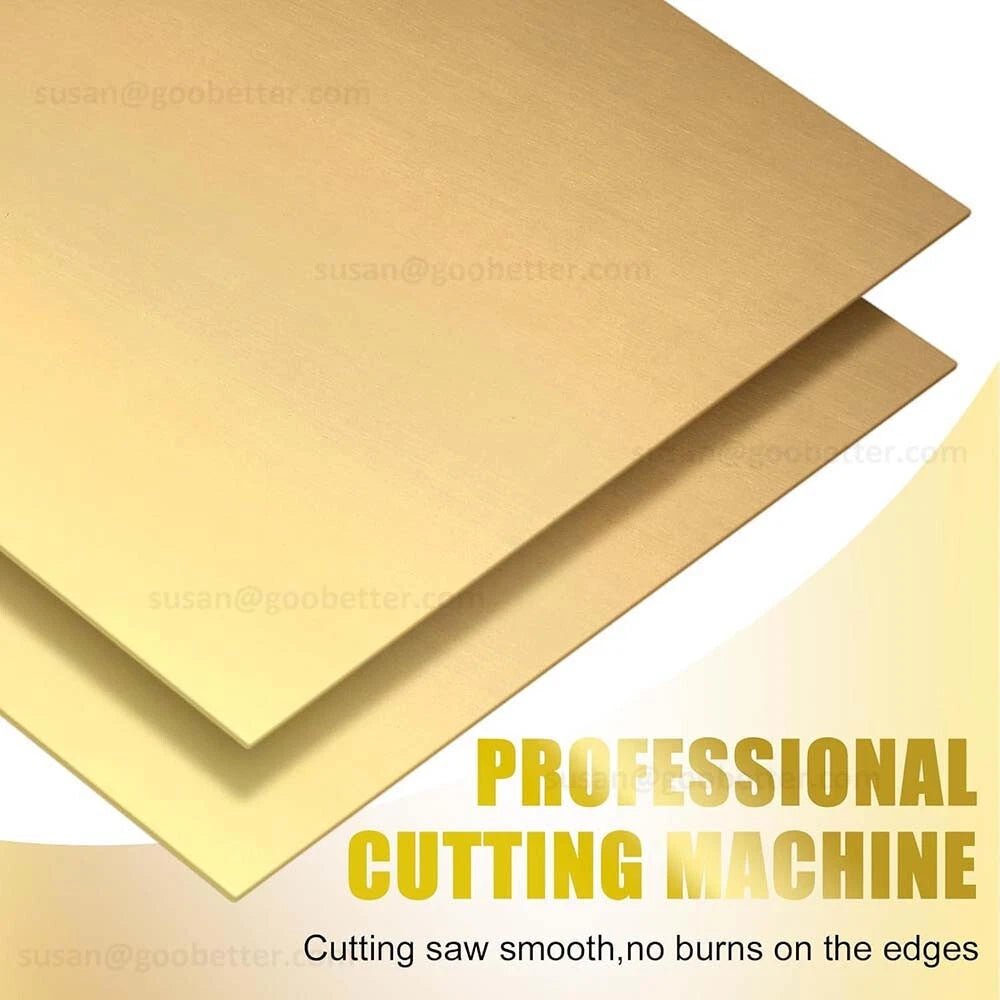
Sheets are supplied flat and true, reducing prep time for engraving, etching, or precision fitting work where surface planarity matters.
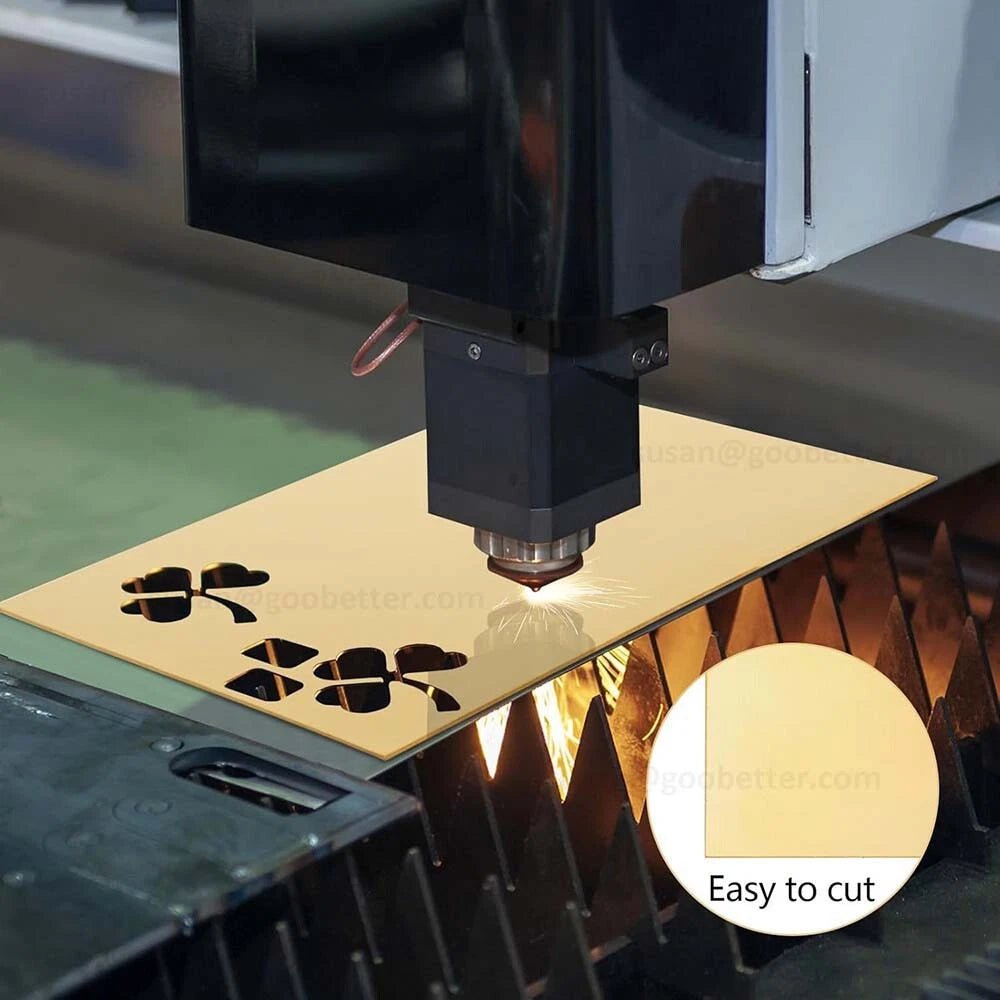
Brass machines, saws, files, and solders cleanly. Thinner gauges (0.3mm–1mm) bend and form without cracking; thicker gauges (2mm–6mm) hold shape under load.
The natural yellow brass surface polishes to a bright finish, patinas to an antique gold tone, or accepts chemical treatments — ideal for decorative and jewellery applications.
Order one sheet in the exact size and thickness you need, or combine multiple variants in a single order to cover a full project bill of materials.
| Material | Brass (yellow brass alloy) |
|---|---|
| Thickness Range | 0.3mm – 6mm (0.012" – 0.236") |
| Sheet Size Range | 10mm × 10mm – 300mm × 300mm |
| Surface Finish | Mill finish (unpolished) |
| Colour | Yellow brass (natural) |
| Workability | Machinable, solderable, brazeable, cold-formable |
| Corrosion Resistance | Moderate; suitable for indoor and sheltered applications |
| Typical Applications | Jewellery making, scale modelling, etching, shim stock, prototype parts |
| Available Thicknesses | 0.3 / 0.5 / 0.6 / 0.8 / 1 / 1.2 / 1.5 / 2 / 2.5 / 3 / 4 / 5 / 6 mm |
| Weight | See variant options |
For most jewellery components such as pendants, bezels, and decorative elements, 0.5mm–1mm is the most versatile range — thin enough to cut and file easily, yet rigid enough to hold its shape. Use 0.3mm for very fine filigree or layered work, and 1.2mm–2mm for structural pieces like rings or clasps that need to withstand regular handling.
Yes. Sheets up to approximately 1mm can be cut cleanly with jeweller's snips, a jeweller's saw, or a sharp craft knife and straight edge. Thicker gauges (2mm and above) are best cut with a hacksaw, angle grinder, or CNC router. All thicknesses can be drilled with standard HSS drill bits using cutting fluid.
Brass has moderate corrosion resistance and will develop a natural patina (verdigris) when exposed to moisture and air over time. For outdoor applications, a clear lacquer or wax coating is recommended to slow patination. For fully weatherproof requirements, consider stainless steel or aluminium instead.
Yes. Brass solders and brazes very well. Use silver solder or hard solder for jewellery work, and standard soft solder (with appropriate flux) for electrical or light mechanical applications. Ensure the surface is clean and flux is applied before heating for best results.
For architectural and vehicle scale models, 0.3mm–0.5mm sheets in 50mm × 100mm to 100mm × 200mm sizes are the most commonly used. Thicker gauges (1mm–3mm) suit structural frames and load-bearing model components. The 200mm × 300mm and 300mm × 300mm sheets are ideal when you need to cut multiple parts from a single piece.
The sheets arrive with a mill finish. To polish, start with 400-grit wet-and-dry sandpaper, progress through 800 and 1200 grit, then buff with a metal polishing compound. For an antique patina, apply a liver of sulphur solution or ammonia fuming — both are standard jewellery finishing techniques that work well on brass.
Brass can be laser-etched with a fibre laser. CO₂ lasers generally require a coating (such as Cermark or dry moly spray) to mark brass effectively. For chemical etching, brass responds well to ferric chloride solution, making it a popular choice for PCB-style decorative etching and jewellery surface texturing.