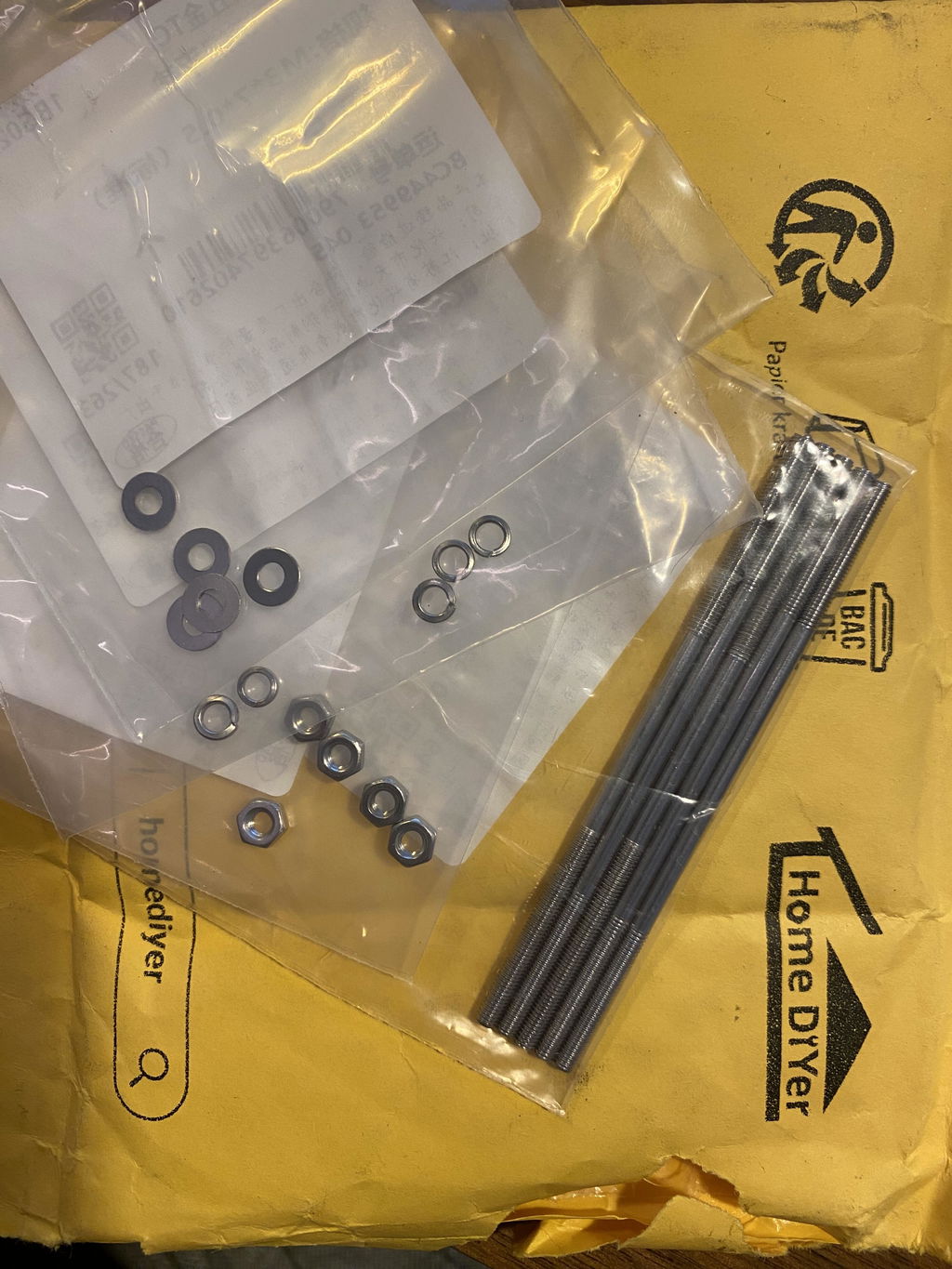

The chain is fine...but I ordered the wrong size. Nine links of the chain I ordered equals six of the size I wanted. My error...
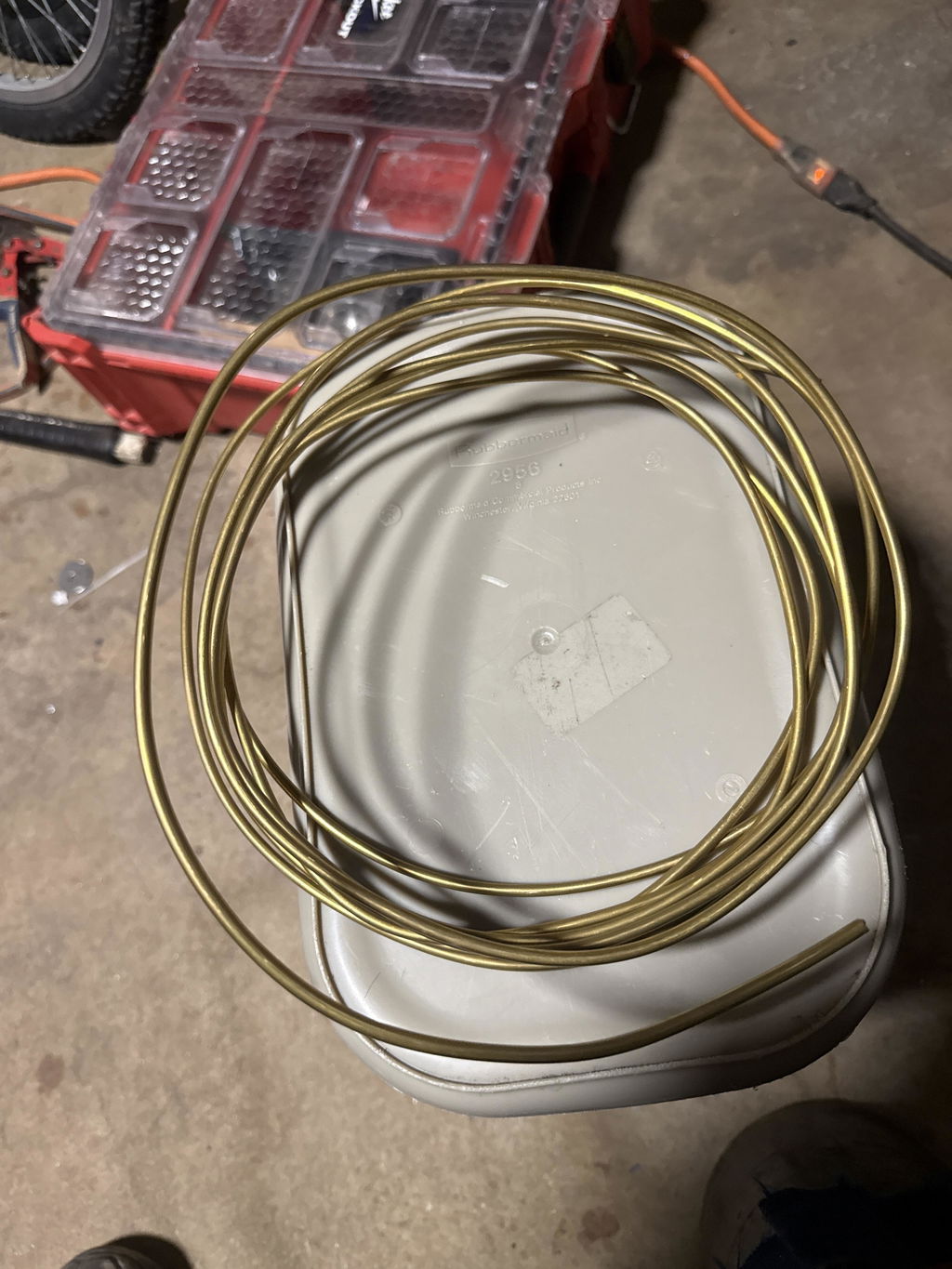
How can I straighten out the springs? I can't use them coil uo as is.
Your payment information is processed securely. We do not store credit card details nor have access to your credit card information.
Get fitment advice & recommendations
When your project demands a flat, burr-free metal blank that arrives ready to work, sourcing the right brass sheet metal in the exact thickness and footprint can be a real bottleneck. Whether you are a hobbyist building decorative inlays, a maker fabricating enclosures, or a small workshop cutting shims and gaskets, this brass square plate sheet is sized and cut to order so you spend less time at the bandsaw and more time building.
Each piece is cut from C260 cartridge brass alloy (CuZn30, approximately 70% copper / 30% zinc), delivering a warm golden tone, smooth rolled surface, and consistent thickness across the full face. Thickness options span 0.3 mm (≈ 0.012 in) through 5.0 mm (≈ 0.197 in), and sheet dimensions range from compact 10 mm × 10 mm (≈ 0.39 in × 0.39 in) squares up to large 600 mm × 600 mm (≈ 23.6 in × 23.6 in) panels. All edges are guillotine-sheared for straight, clean cuts with minimal distortion.
Typical use cases include precision shim stock and spacer plates for mechanical assemblies, decorative inlay and marquetry panels for woodworking and furniture, RF shielding blanks and grounding straps in electronics enclosures, and custom gasket blanks for low-pressure fluid or gas applications. Long-tail search terms that describe this product well: thin brass sheet for crafts, small brass plate cut to size, brass shim stock square, guillotine cut brass metal sheet.
| Material / Alloy | C260 Cartridge Brass (CuZn30, ~70% Cu / 30% Zn) |
|---|---|
| Thickness Range | 0.3 mm – 5.0 mm (0.012" – 0.197") |
| Sheet Dimensions | 10×10 mm up to 600×600 mm (see variant options) |
| Cut Method | Guillotine shear (straight, clean edges) |
| Surface Finish | Mill-rolled, smooth face, natural brass colour |
| Hardness | Typically H02 (half-hard) to H04 (hard); see variant options |
| Tensile Strength | Typically 340–525 MPa depending on temper |
| Quantity per Pack | 1, 2, or 4 pieces (see variant options) |
| Weight | See variant options |
| Tolerance (Thickness) | Typically ±0.05 mm (see variant options) |
| Tolerance (Length/Width) | Typically ±0.5 mm (see variant options) |
| Applicable Standards | ASTM B36 / BS2870 CZ108 (equivalent) |
For decorative inlays, engraving, and craft work, 0.3 mm–0.6 mm is typically sufficient. Shims and gaskets usually fall in the 0.5 mm–1.5 mm range. Structural brackets, enclosure panels, and load-bearing plates generally call for 2 mm–5 mm. If you are unsure, select the Size (Thickness × Length × Width) option above and compare the listed dimensions to your design drawings.
C260 cartridge brass has a tensile strength of approximately 340–525 MPa depending on temper, making it suitable for light-to-medium mechanical applications such as shims, spacers, brackets, and spring contacts. For heavy structural loads, consider thicker gauges (3 mm–5 mm) or consult an engineer for your specific load case.
Brass does not rust (it contains no iron), and C260 alloy forms a stable oxide patina that resists moisture and mild atmospheric corrosion. For prolonged outdoor or marine exposure, applying a clear lacquer or wax coating is recommended to slow patina development and maintain the bright gold appearance.
Yes. Thinner gauges (0.3 mm–1 mm) can be cut with tin snips, scored and snapped, or processed on a laser cutter or waterjet. Thicker gauges (1.5 mm–5 mm) are best cut with a jigsaw, angle grinder, or CNC router using a carbide bit. Drilling is straightforward with HSS or cobalt bits at moderate speed with cutting fluid. Bending is possible with a sheet metal brake; allow for springback, which is typical of half-hard brass.
Yes. Thin brass sheet (0.3 mm–1.5 mm) cuts cleanly on fiber laser systems and CO₂ lasers with appropriate assist gas (nitrogen recommended). Thicker sheets (2 mm–5 mm) are well-suited to waterjet or CNC milling. Always confirm your machine's rated cutting capacity for brass before processing.
Depending on the size selected, packs of 1, 2, or 4 pieces are available. If you need a single large panel for a one-off project, choose Qty 1. For prototyping where you may need spares, Qty 2 or 4 is cost-effective. The Qty(pcs) option is shown alongside the size selector above — simply pick the combination that matches your needs.
Absolutely. C260 brass solders readily with standard 60/40 or lead-free solder using a rosin flux, and brazes cleanly with silver brazing alloys at temperatures above 600 °C. Clean the surface with fine abrasive or flux before joining to ensure a strong bond. Avoid overheating thin gauges to prevent warping.