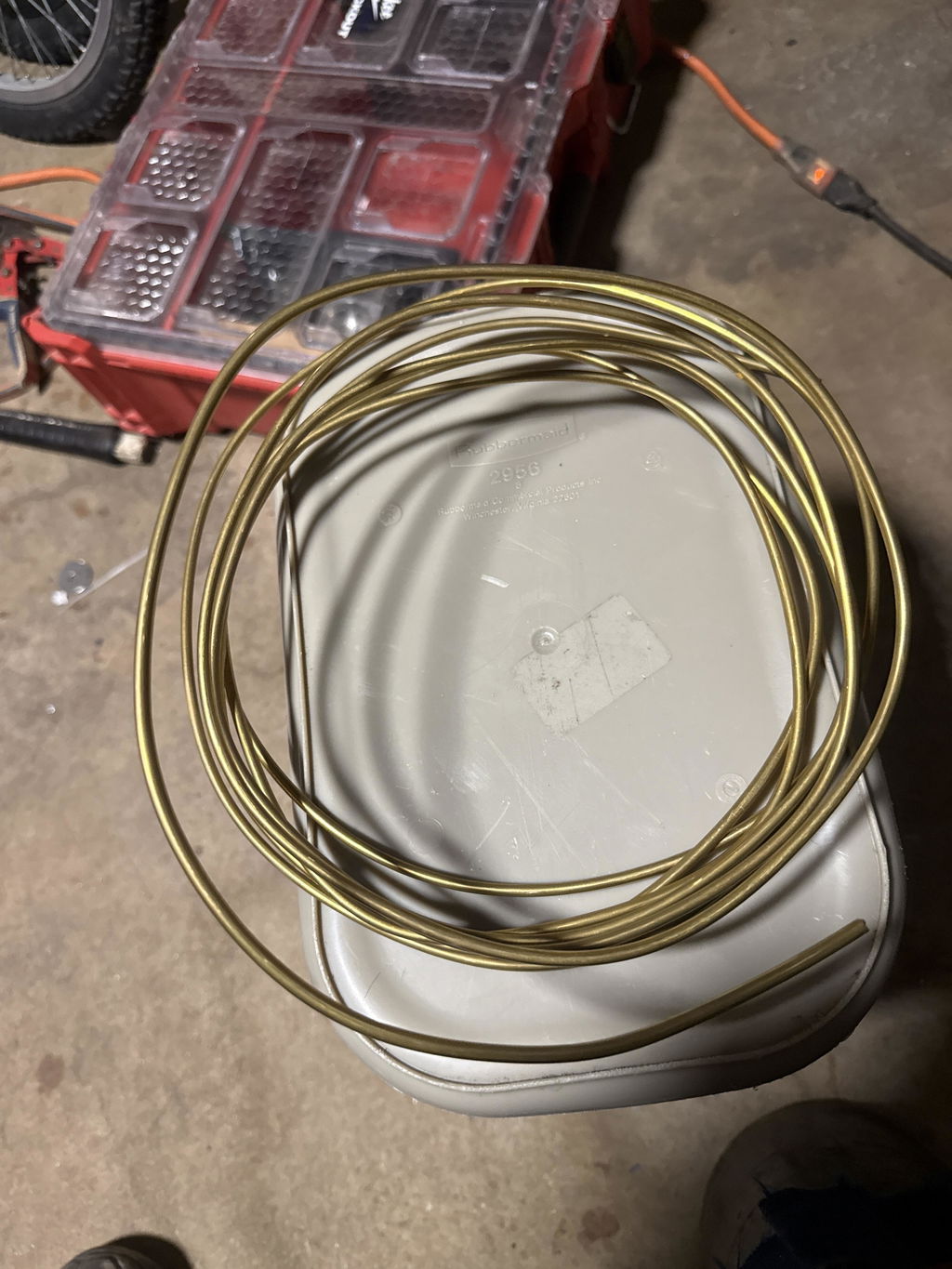

The chain is fine...but I ordered the wrong size. Nine links of the chain I ordered equals six of the size I wanted. My error...
How can I straighten out the springs? I can't use them coil uo as is.
Your payment information is processed securely. We do not store credit card details nor have access to your credit card information.
Get fitment advice & recommendations
When your project demands a metal that holds its shape under repeated stress, resists fatigue, and conducts electricity reliably, standard copper alloys often fall short. Engineers, machinists, and serious DIY makers who work on precision springs, electrical contacts, diaphragms, and tooling inserts need a material that performs at the edge of its spec — and that is exactly where C17200 beryllium copper sheet delivers.
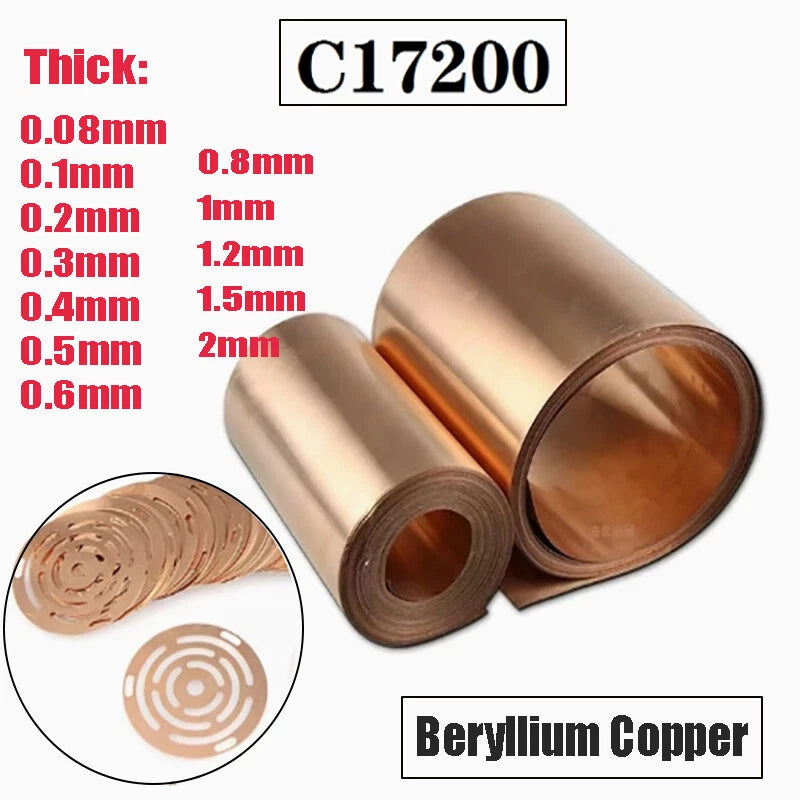
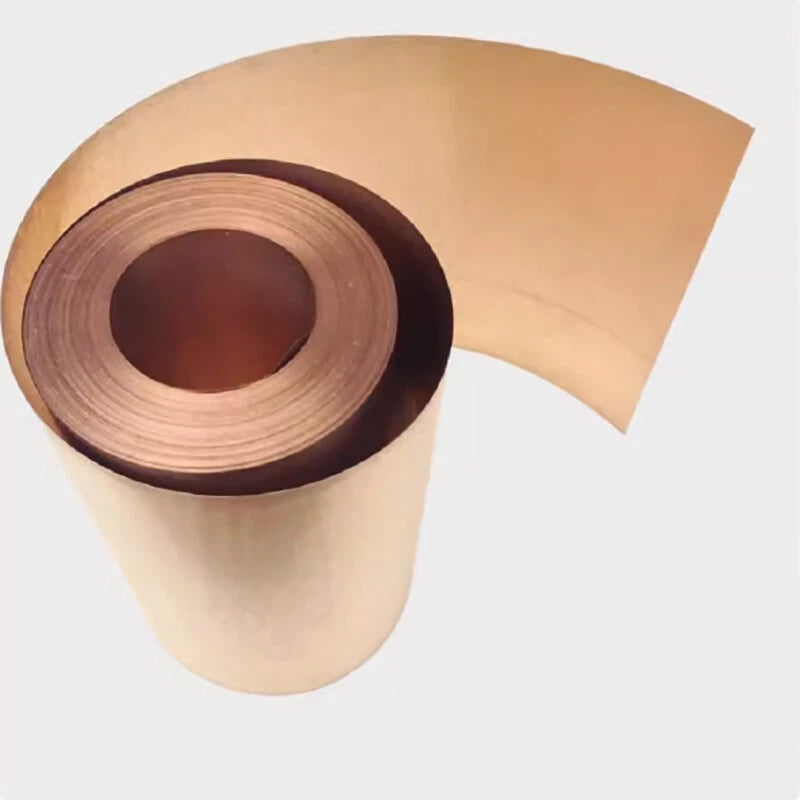
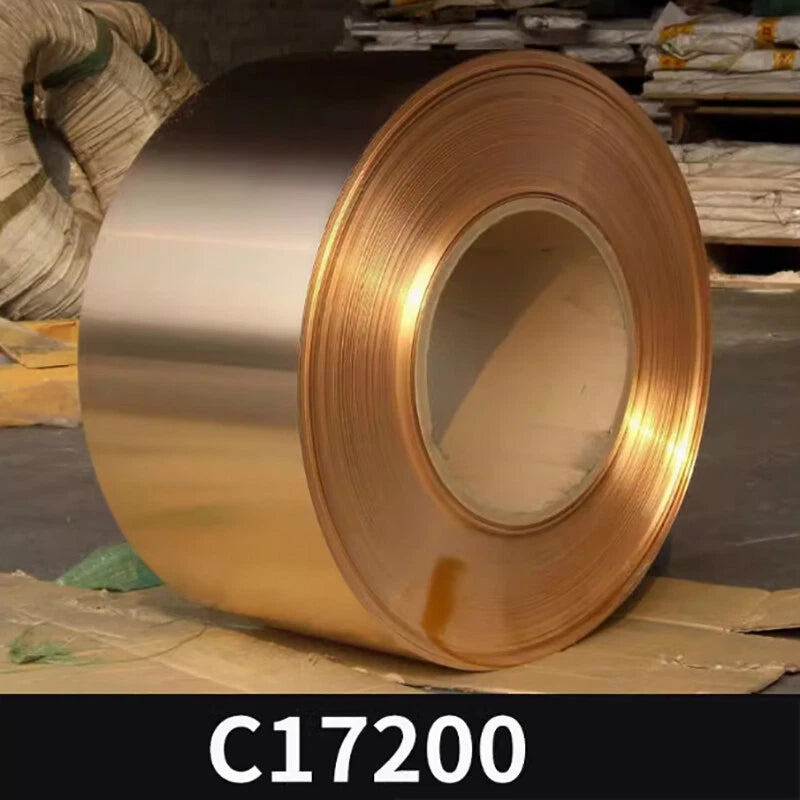
This listing offers C17200 beryllium bronze foil and sheet stock in thicknesses ranging from 0.08 mm (approximately 0.003 in) up to 2.0 mm (approximately 0.079 in), with a standard width of 200 mm (approximately 7.87 in). Shorter 200 mm × 200 mm squares, mid-length 200 mm × 500 mm strips, and full 200 mm × 1000 mm coil-cut lengths are all available as separate size variants.
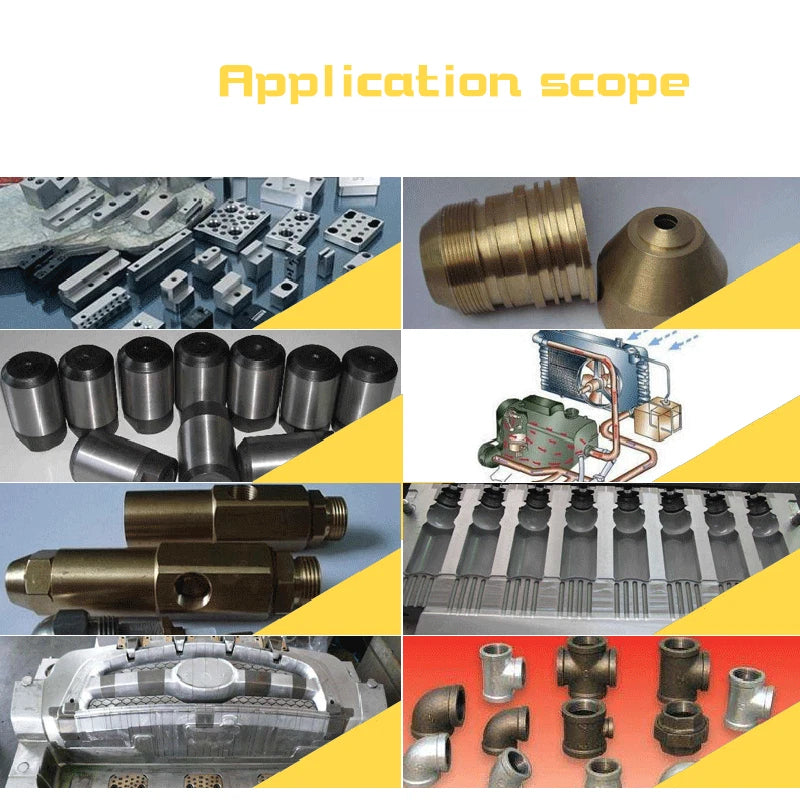
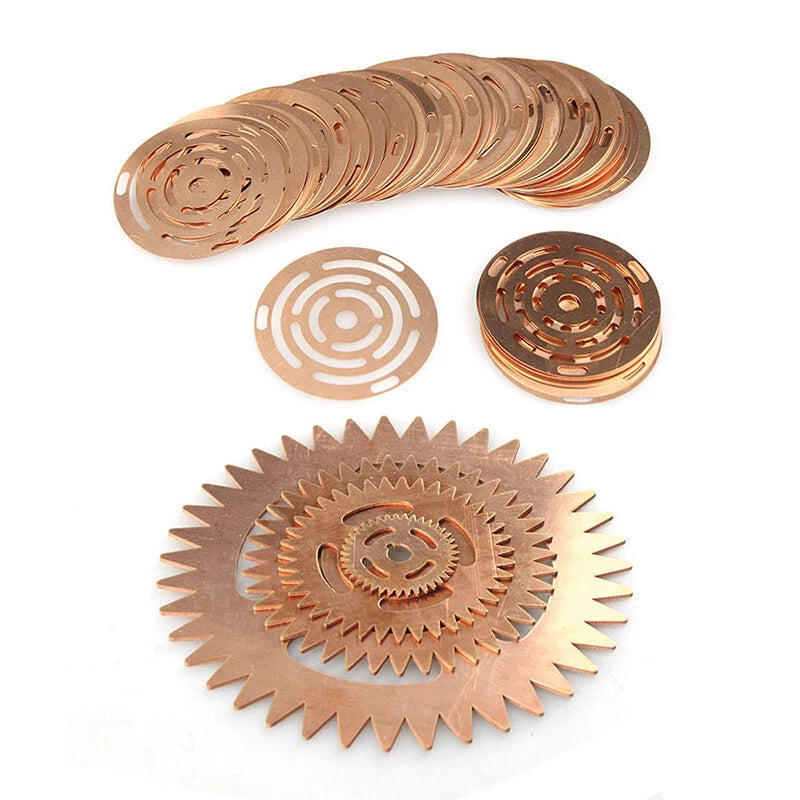
Typical applications include precision compression springs and snap-action contacts in electronic assemblies, thin shim stock for bearing clearance adjustment in small engines and gearboxes, flexible diaphragms in pressure sensors and pneumatic valves, and non-sparking tooling blanks for use in hazardous environments where beryllium copper's spark-resistant properties are required.
Nominally 1.8–2.0% beryllium with cobalt/nickel additions, delivering tensile strength typically in the 1,100–1,400 MPa range in the aged condition — among the highest of any copper alloy.
Available from ultra-thin 0.08 mm foil up to 2.0 mm sheet, covering shim, spring, and structural applications in a single product family.
Conductivity typically 22–28% IACS, making these sheets well-suited for electrical contacts, relay springs, and connector blades where both conductivity and spring-back are required simultaneously.
Retains mechanical properties up to approximately 150–200 °C (300–390 °F), suitable for under-hood automotive sensors, industrial control contacts, and elevated-temperature spring applications.
Resists oxidation, salt spray, and stress-corrosion cracking far better than standard phosphor bronze or brass, extending service life in marine, outdoor, and high-cycle fatigue applications.
Supplied in the solution-annealed (A) condition for easier forming and stamping; can be age-hardened after fabrication to achieve peak strength. Cuts cleanly with carbide tooling or laser.
| Alloy Designation | C17200 (CuBe2, 2.1247) |
|---|---|
| Beryllium Content | 1.80–2.05% |
| Cobalt + Nickel | 0.20–0.60% (min. 0.20% Co) |
| Thickness Range | 0.08 mm – 2.0 mm (0.003 in – 0.079 in) |
| Width | 200 mm (7.87 in) |
| Length Options | 200 mm / 500 mm / 1000 mm |
| Temper / Condition | Solution Annealed (A) — age-hardenable |
| Tensile Strength (aged) | Typically 1,100–1,400 MPa (160–200 ksi) |
| Hardness (aged) | Typically 36–42 HRC |
| Electrical Conductivity | 22–28% IACS |
| Thermal Conductivity | Approx. 105–130 W/(m·K) |
| Max Service Temperature | Approx. 150–200 °C (300–390 °F) |
| Density | Approx. 8.25 g/cm³ (0.298 lb/in³) |
| Surface Finish | See variant options |
| Packaging | 1 Pcs per order (flat or rolled depending on thickness) |
For light-duty snap-action contacts and thin diaphragms, thicknesses of 0.08–0.2 mm are typical. Medium-duty compression springs and relay blades generally use 0.3–0.6 mm. Structural shims, tooling inserts, and heavy-duty spring plates typically call for 0.8–2.0 mm. If you are unsure, calculate the required spring constant using standard beam-deflection formulas with E ≈ 131 GPa for C17200 in the annealed condition.
These sheets are supplied in the solution-annealed (A) condition, which is softer and easier to stamp, bend, and machine. After forming, you can age-harden the part by heating to approximately 315–340 °C (600–645 °F) for 2–3 hours to achieve peak hardness and tensile strength. This two-step process gives you the best of both worlds: easy fabrication followed by maximum performance.
C17200 beryllium copper offers significantly higher tensile strength than phosphor bronze (C51000) and comparable or superior fatigue life to many stainless spring steels, while also providing much better electrical conductivity than stainless. It is the preferred choice when a spring must also carry electrical current — for example, in battery contacts, connector fingers, and relay arms.
Yes. C17200 can be soft-soldered using standard rosin-flux tin-silver or tin-lead solders, and silver-brazed using BAg-series filler metals. Avoid fluxes containing ammonia or amines, as these can cause stress-corrosion cracking in beryllium copper. Always perform soldering or brazing before the final age-hardening step if possible, as the heat from brazing can partially anneal a previously aged part.
Solid beryllium copper sheet is safe to handle with bare hands in its as-received form. The health hazard associated with beryllium arises from inhalation of fine dust or fumes generated during grinding, sanding, or welding. Always machine C17200 with flood coolant or mist suppression, use a HEPA-filtered dust collection system, and wear an appropriate respirator when dry-grinding. Follow your local occupational health regulations for beryllium-containing materials.
The 200 mm × 200 mm square variants are ideal for cutting individual shims on a mill or with a punch. If you need multiple shims or longer strips, the 200 mm × 500 mm or 200 mm × 1000 mm options give you more material per piece and are more economical for batch production. Select the thickness that matches your required clearance — common shim thicknesses are 0.08, 0.1, 0.15, 0.2, and 0.25 mm.
C17200 beryllium copper has good resistance to atmospheric corrosion, salt spray, and fresh water. It is widely used in marine electrical connectors and outdoor sensor housings. For prolonged immersion in seawater or exposure to strong acids, a protective plating (nickel, gold, or tin) is recommended. Avoid contact with ammonia-based cleaners or fertilizers, which can cause stress-corrosion cracking in copper alloys.