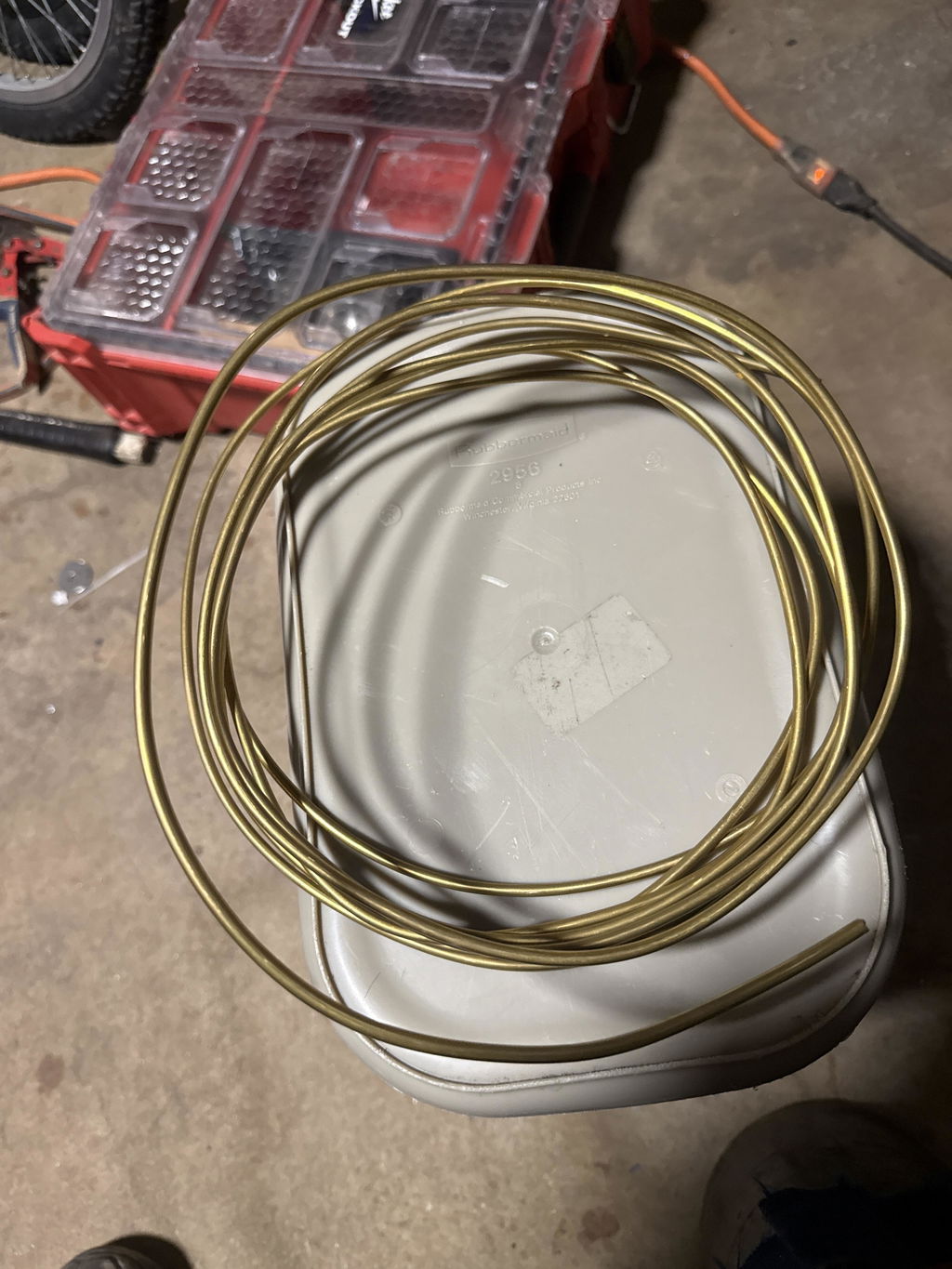
The chain is fine...but I ordered the wrong size. Nine links of the chain I ordered equals six of the size I wanted. My error...
How can I straighten out the springs? I can't use them coil uo as is.
Your payment information is processed securely. We do not store credit card details nor have access to your credit card information.
Get fitment advice & recommendations
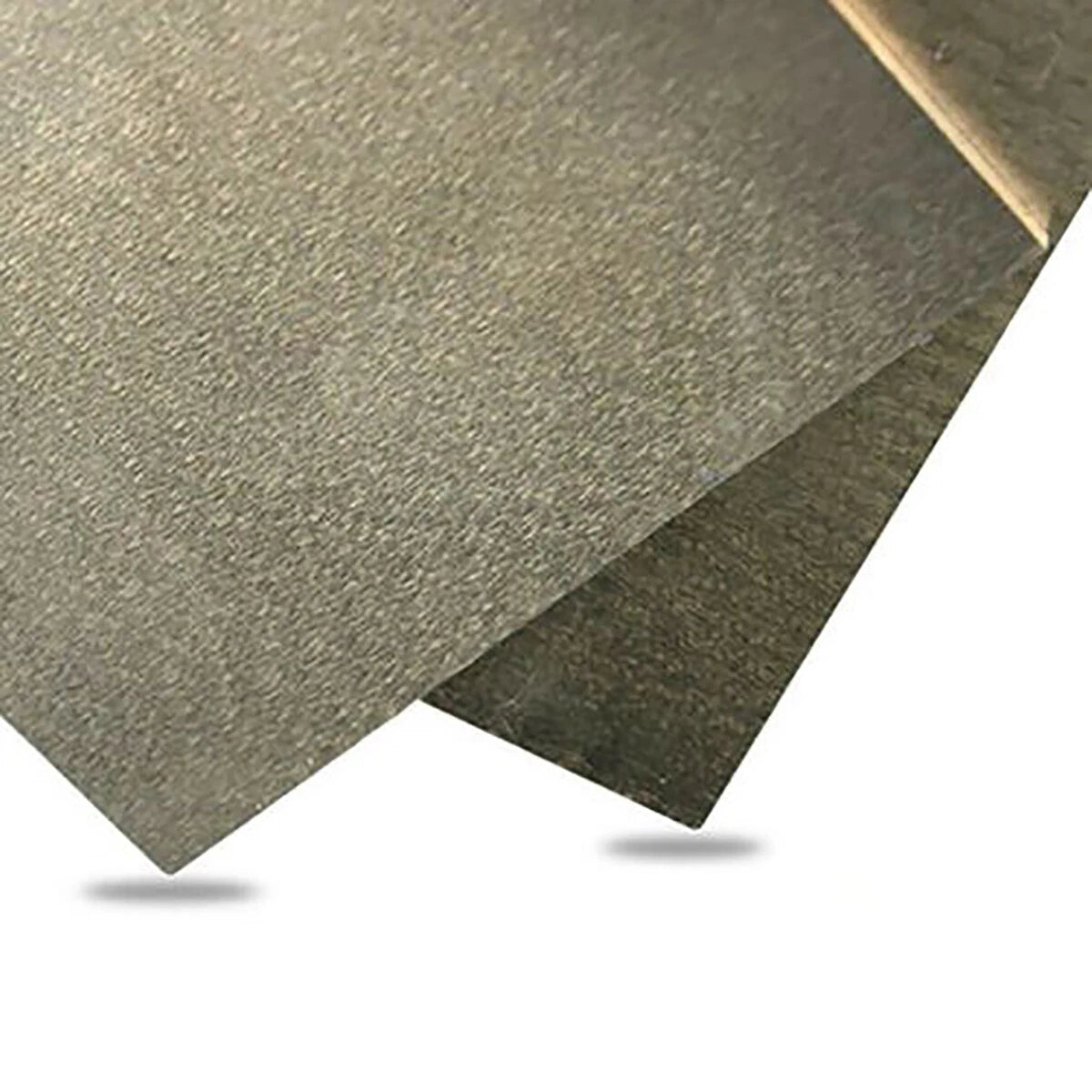
When your project demands a flat plate that combines the electrical conductivity of copper with the wear resistance of tungsten carbide, standard sheet metal simply falls short. Engineers, EDM machinists, and electrical contact fabricators rely on carbide copper alloy plates to deliver consistent performance under high heat and repeated mechanical stress — without warping or rapid erosion.
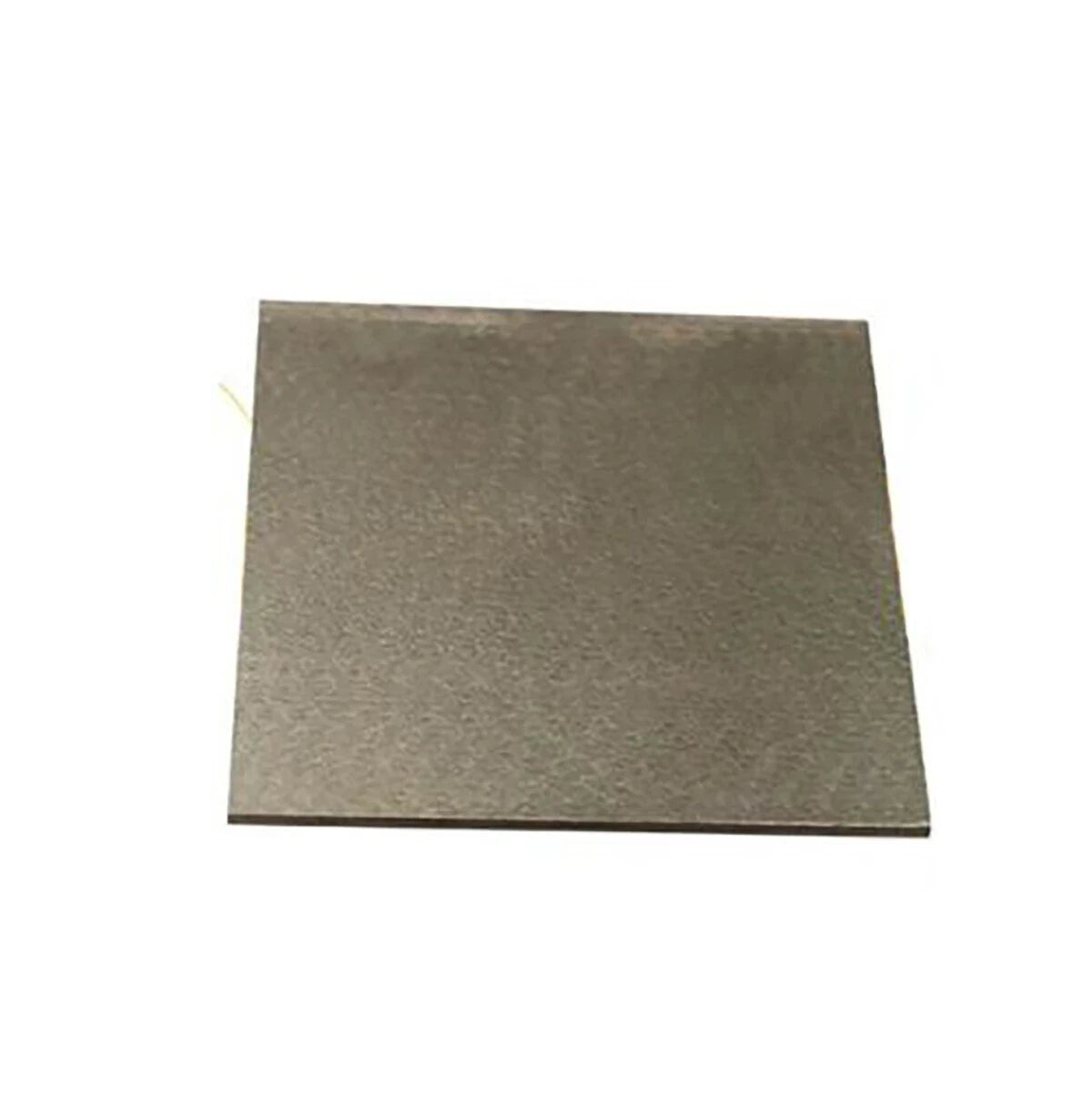
These carbide copper flat plates measure 100×100mm (approximately 3.94×3.94 inches) and are available in two alloy grades — W80Cu20 (80% tungsten, 20% copper) and W70Cu30 (70% tungsten, 30% copper) — with thickness options of 1mm (~0.04 in), 4mm (~0.16 in), 5mm (~0.20 in), 6mm (~0.24 in), and 8mm (~0.31 in). Each piece is sold individually (1 PCS per pack) and cut to a uniform square format for immediate use or further machining.
Typical applications include EDM electrode blanks for tungsten copper EDM machining, electrical contact substrates in high-voltage switching gear, heat sink base plates in power electronics assemblies, and resistance welding electrode tips requiring low erosion rates and stable arc performance.
Choose W80Cu20 for maximum hardness and arc erosion resistance, or W70Cu30 for slightly higher conductivity and easier machinability — both grades are sintered to a dense, uniform microstructure.
Each plate is cut to a consistent 100×100mm footprint, making it straightforward to fixture, clamp, or further machine to your exact electrode or contact geometry.
Select from 1mm, 4mm, 5mm, 6mm, or 8mm thickness to match your electrode depth requirements or contact stack height without unnecessary material removal.
The copper matrix provides a continuous conductive network through the tungsten skeleton, delivering low bulk resistivity suitable for EDM discharge and electrical contact applications.
Tungsten's high melting point combined with copper's thermal conductivity allows these plates to dissipate heat rapidly, resisting deformation and surface cracking under repeated thermal cycling.
The sintered tungsten-copper matrix resists oxidation and chemical attack better than pure copper sheet, extending service life in humid or mildly corrosive industrial environments.
| Material Grade | W80Cu20 / W70Cu30 (Tungsten-Copper Alloy) |
|---|---|
| Tungsten Content | W80Cu20: 80 wt% W | W70Cu30: 70 wt% W |
| Copper Content | W80Cu20: 20 wt% Cu | W70Cu30: 30 wt% Cu |
| Plate Dimensions | 100 × 100 mm (3.94 × 3.94 in) |
| Thickness Options | 1 mm / 4 mm / 5 mm / 6 mm / 8 mm |
| Density (typical) | W80Cu20: ~15.0–15.6 g/cm³ | W70Cu30: ~13.8–14.5 g/cm³ |
| Hardness (typical) | W80Cu20: ~230–260 HB | W70Cu30: ~200–230 HB |
| Electrical Conductivity | W80Cu20: ~28–32% IACS | W70Cu30: ~35–40% IACS |
| Thermal Conductivity | See variant options |
| Surface Condition | Sintered, ground flat (typical) |
| Packing Quantity | 1 PCS per order unit |
| Weight per Piece | See variant options |
W80Cu20 contains more tungsten, giving it higher hardness (~230–260 HB) and better arc erosion resistance — ideal for EDM electrodes and high-wear electrical contacts. W70Cu30 has a higher copper content, which improves electrical and thermal conductivity and makes it slightly easier to machine, making it a good choice for heat sink bases and lower-wear contact applications.
For shallow cavity EDM work, 1mm or 4mm plates are commonly used as starting stock. Deeper cavities or electrodes requiring significant Z-axis depth typically call for 6mm or 8mm blanks. Choose a thickness at least 1–2mm greater than your finished electrode depth to allow for fixturing and surface grinding.
Yes. Tungsten-copper alloys are machinable with sharp carbide end mills and grinding wheels. W70Cu30 machines more freely than W80Cu20 due to its higher copper content. Use low feed rates, sharp tooling, and adequate coolant to achieve clean edges and minimize tool wear. Wire EDM is also a common and effective method for cutting these plates to shape.
Tungsten-copper alloys offer better oxidation resistance than pure copper, but they are not fully corrosion-proof in highly aggressive environments. For indoor industrial use, switchgear enclosures, or controlled-humidity settings, these plates perform reliably over extended service periods. For outdoor or salt-spray environments, consider applying a protective coating after machining.
Yes. The 100×100mm square format can be machined down to standard electrode tip geometries (flat, dome, or truncated cone) to fit most resistance welding electrode holders. W80Cu20 is the more common grade for welding electrodes due to its superior hardness and low erosion rate under repeated welding cycles.
Pure copper sheet offers maximum conductivity but is soft and erodes quickly under arc discharge or mechanical wear. Carbide copper (tungsten-copper alloy) sacrifices some conductivity in exchange for dramatically higher hardness, arc erosion resistance, and thermal stability — making it the preferred choice for EDM electrodes, electrical contacts, and heat-loaded components where pure copper would deform or wear out rapidly.
In most cases, yes — one 100×100mm plate provides enough material to machine one or more electrode blanks or contact substrates, depending on your finished part dimensions. For batch production or larger electrodes, consider ordering multiple pieces. Each unit in this listing ships as 1 PCS.