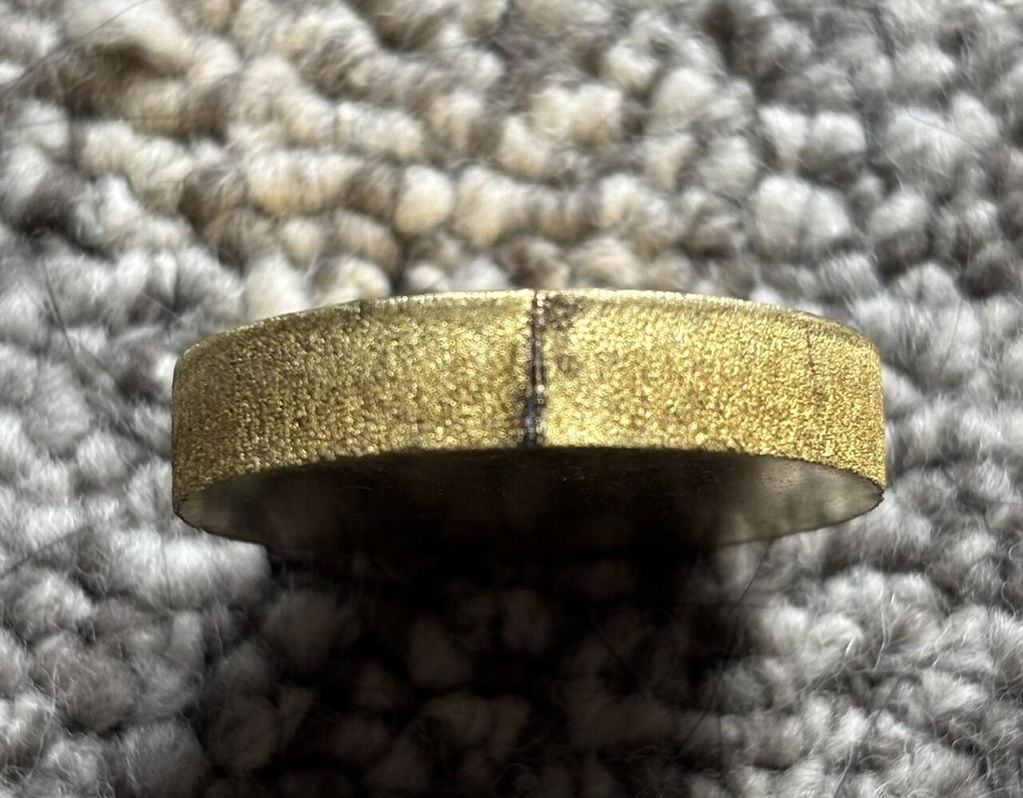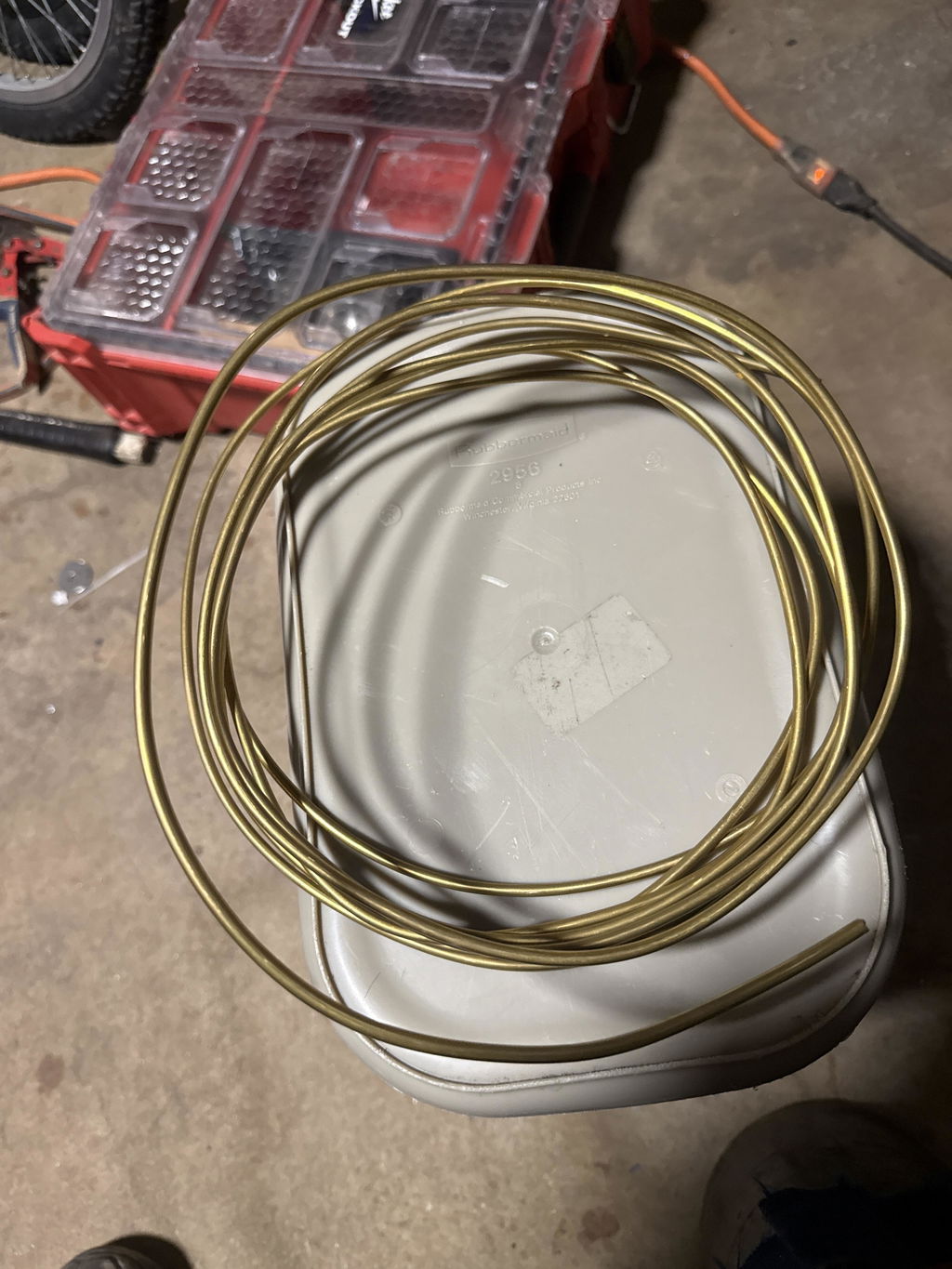
The chain is fine...but I ordered the wrong size. Nine links of the chain I ordered equals six of the size I wanted. My error...
How can I straighten out the springs? I can't use them coil uo as is.
Your payment information is processed securely. We do not store credit card details nor have access to your credit card information.
Get fitment advice & recommendations
When a worn or undersized ball causes play in a bearing race, valve seat, or linear guide, the entire assembly loses accuracy and service life. Engineers, machinists, and maintenance technicians who need a reliable source of carbon steel ball bearings in exact diameters — without ordering a full factory reel — will find the right size here.
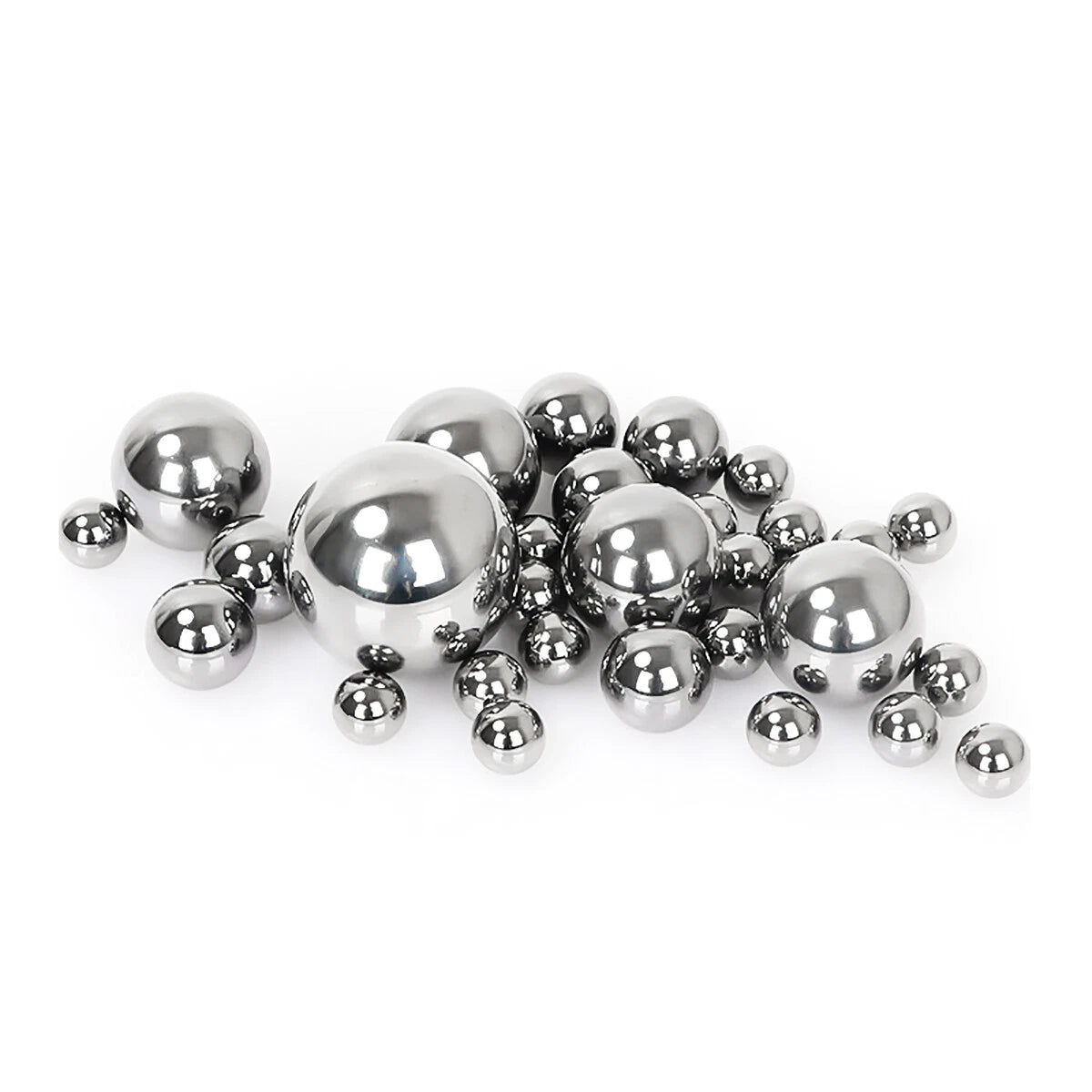
These carbon steel ball bearings are manufactured from high-carbon bearing steel and are available in diameters ranging from 1 mm (0.039 in) to 65 mm (2.559 in), with both metric and inch-fraction sizes represented. Each listing ships in your chosen pack quantity — from a single ball for a one-off repair to packs of 500 for production or maintenance stock.
Typical applications include replacement balls in deep-groove and angular-contact bearing housings, check-valve seats in hydraulic and pneumatic circuits, ball-screw and linear-rail recirculation paths, and load-distribution elements in jigs and fixtures. The wide size range also makes these carbon steel ball bearings suitable for hobbyist CNC builds, 3D-printer axis assemblies, and custom mechanical linkages.
| Material | High-carbon bearing steel |
|---|---|
| Diameter Range | 1 mm – 65 mm (0.039 in – 2.559 in) |
| Available Sizes | See variant options |
| Surface Finish | Ground and polished spherical surface |
| Hardness | See variant options |
| Pack Quantities | Pack of 1 / 5 / 10 / 20 / 50 / 100 / 200 / 500 |
| Corrosion Resistance | Standard carbon steel — not stainless; protect from moisture in storage |
| Typical Tolerance Grade | See variant options / Contact us to confirm |
| Application | Bearing replacement, valve seats, ball screws, linear guides, jigs |
Measure the existing ball with a micrometer or refer to the bearing manufacturer's datasheet. The ball diameter must match the race groove radius — using an oversized or undersized ball increases contact stress and accelerates wear. If you are replacing a full complement of balls, replace all balls with the same diameter and grade to maintain even load distribution.
Carbon steel balls are commonly used in check valves, ball-type pressure-relief valves, and low-pressure hydraulic circuits where the fluid is compatible with carbon steel. They are not recommended for applications involving water, salt water, or aggressive chemicals without additional corrosion protection. For corrosive media, consider stainless steel balls instead.
Carbon steel has limited corrosion resistance compared to stainless steel. Store balls in a dry environment and apply a light oil film if they will be exposed to humidity before installation. For outdoor, washdown, or food-grade environments, stainless steel or ceramic balls are a more appropriate choice.
Yes, provided the diameter matches the original specification exactly. Bearing manufacturers publish ball complement data in their technical catalogs. Replacing with the correct diameter and a comparable hardness grade restores the bearing's load capacity. If the original balls show fatigue spalling, also inspect the inner and outer races before reassembly.
For planned maintenance on a single machine, Pack of 5 or Pack of 10 covers most bearing complements. For production lines with multiple identical machines, Pack of 100 or Pack of 500 reduces per-unit cost and ensures availability during unplanned downtime. Each size and pack combination has a unique SKU, making it straightforward to set reorder points in your inventory system.
Yes. The size range includes both metric diameters (e.g., 3 mm, 6 mm, 10 mm) and inch-fraction equivalents (e.g., 3.175 mm = 1/8 in, 6.35 mm = 1/4 in, 9.525 mm = 3/8 in, 12.7 mm = 1/2 in, 25.4 mm = 1 in). Select the diameter that matches your drawing dimension — the variant selector lists all available sizes.
Carbon steel bearing balls are typically hardened to approximately 60–66 HRC depending on the grade and heat treatment. For the specific hardness value of a particular size, please contact us to confirm — we can provide material certification data for bulk orders.