Carbon Steel Ball Bearings Precision Solid Steel Ball for Industrial Machinery

No reviews

Price:
Sale price$4.07 USD
Stock:
In stock (500 units), ready to be shipped

Payment & Security

Ach Direct Debit Amazon American Express Apple Pay Bancontact BLIK Diners Club Discover EPS Google Pay iDEAL Wero JCB Maestro Mastercard Multibanco MobilePay PayPal Przelewy24 Shop Pay Twint Union Pay USDC Visa

Your payment information is processed securely. We do not store credit card details nor have access to your credit card information.

Limited Offer — Spend More, Save More
Spend $55+
Save $5
Spend $100+
Save $10
Spend $200+
Save $25
HomeDIYer DIY Expert Support

DIY Expert Support

Get fitment advice & recommendations

Mon–Fri  8:30 AM – 8:00 PM
24-Hour Fast Ship
Arrives in 3–14 Days
Worldwide Shipping
30-Day Returns
1 tree planted with every purchase

Description

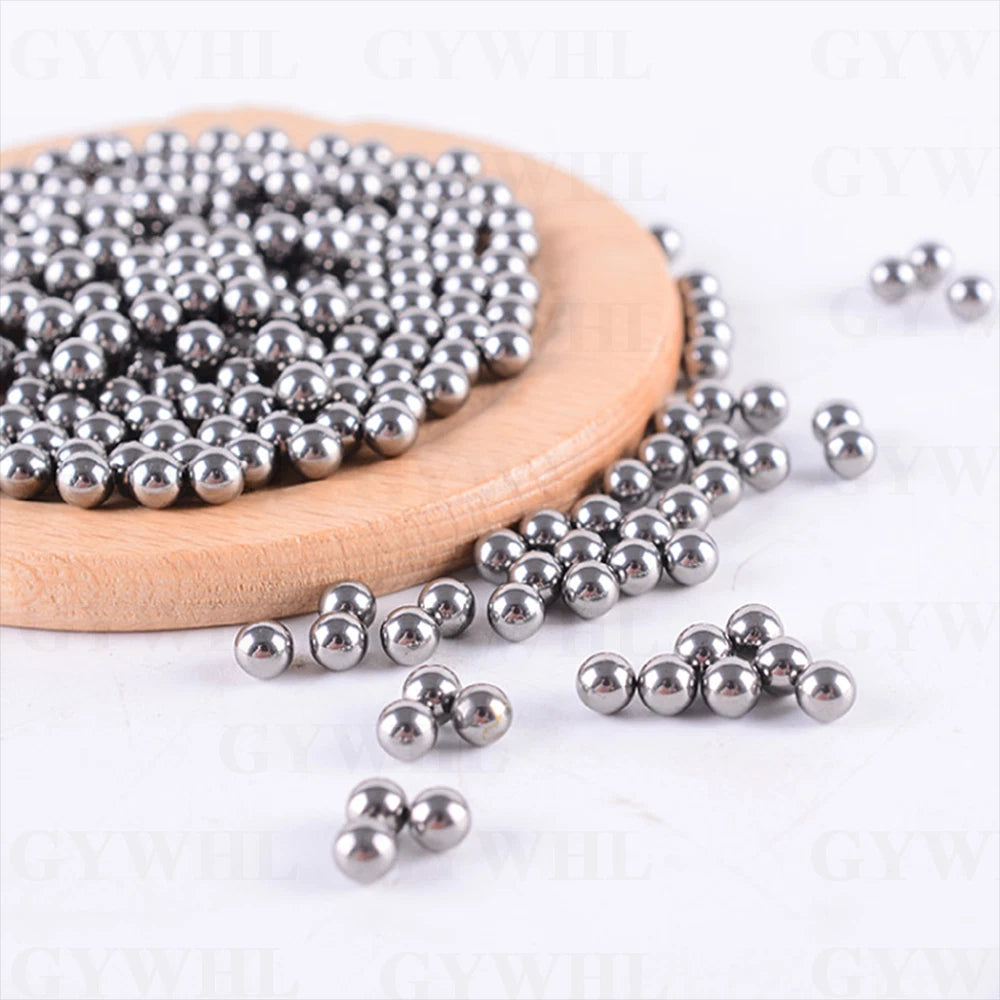
Carbon Steel Ball Bearings — Precision Solid Steel Balls for Industrial Machinery & DIY Applications

When a worn bearing seat, a sticking valve, or a misaligned linear guide brings a project to a halt, sourcing the exact ball diameter quickly is the real bottleneck. Machinists, maintenance technicians, and serious DIYers who work with tight tolerances need a reliable source for precision-ground carbon steel ball bearings across a wide size range — without ordering a full factory reel.

These carbon steel ball bearings are solid, precision-ground spheres manufactured to close dimensional tolerances. Available in diameters from 0.8 mm (approx. 1/32 in) up to 50 mm (approx. 1-31/32 in), they are sold individually or in packs of 2, 5, 10, 50, or 100 pieces to match both prototype and production-volume needs. The carbon steel construction delivers a hardness typically in the 60–66 HRC range, suitable for load-bearing and rolling-contact applications.

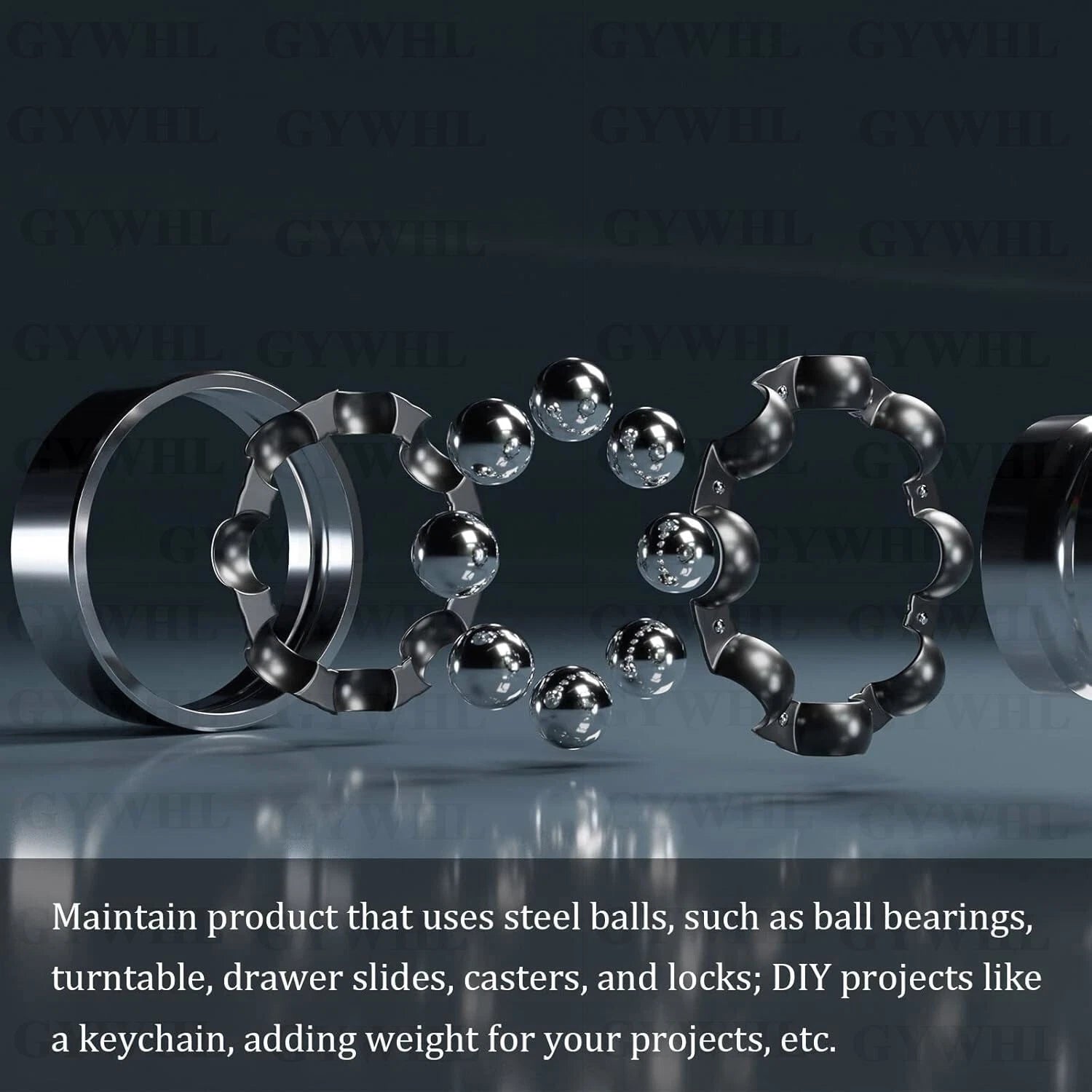
Typical use cases include replacement rolling elements in deep-groove ball bearings and thrust bearings, check-ball seats in hydraulic and pneumatic valves, linear motion guide systems, jig and fixture locating pins, and hobbyist CNC or robotics builds where off-the-shelf bearing assemblies are too large or too expensive.

⚙️ Compatibility: These solid steel balls are unassembled rolling elements. Verify the required ball diameter against your bearing bore, valve seat, or housing specification before ordering. Mixed metric and inch sizes are available — see variant options for the full size list.

✅ Key Features of These Carbon Steel Ball Bearings

  • 📏Wide Diameter Range: 43 sizes from 0.8 mm to 50 mm cover metric and common inch-equivalent dimensions (e.g., 1.588 mm ≈ 1/16 in, 3.175 mm ≈ 1/8 in, 9.525 mm ≈ 3/8 in, 12.7 mm ≈ 1/2 in).
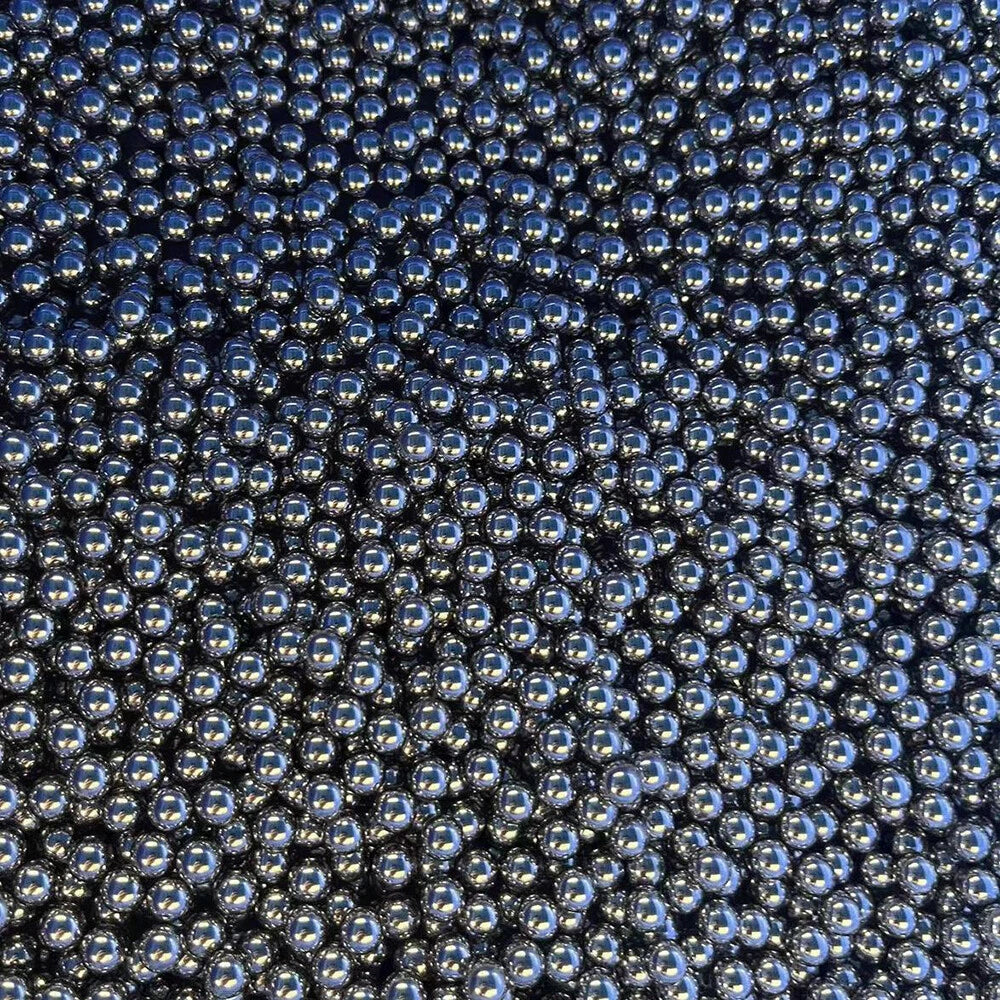
  • 🔩Precision-Ground Spherical Form: Close roundness and surface finish tolerances support smooth rolling contact and consistent load distribution in bearing raceways and valve seats.
  • 🛡️Carbon Steel Construction: Through-hardened carbon steel provides the compressive strength and wear resistance needed for rolling-element and sliding-contact duty cycles.
  • 📦Flexible Pack Quantities: Order 1, 2, 5, 10, 50, or 100 pieces per diameter — prototype quantities available alongside bulk packs for production or maintenance stock.
  • 🔄Direct Replacement Compatibility: Solid ball dimensions conform to standard rolling-element sizing, making these suitable as drop-in replacements in most open or shielded bearing assemblies of the same bore diameter.
  • 🏭Broad Application Fit: Suited for industrial machinery, hydraulic systems, linear guides, check valves, jigs, fixtures, and small-scale mechanical assemblies where a specific ball diameter is required.

📐 Technical Specifications — Carbon Steel Ball Bearings

Material Carbon Steel (through-hardened)
Hardness Typically 60–66 HRC (varies by diameter)
Surface Finish Precision-ground; smooth spherical surface
Diameter Range 0.8 mm – 50 mm (see variant options)
Form Factor Solid sphere (unassembled rolling element)
Corrosion Resistance Standard carbon steel — not stainless; protect from moisture in storage
Pack Quantities 1, 2, 5, 10, 50, 100 pcs (see variant options)
Dimensional Standard See variant options
Weight (per piece) See variant options

❓ Frequently Asked Questions

How do I choose the correct ball diameter for my bearing?

Measure the inner diameter of the bearing raceway groove or the valve seat bore using a micrometer or digital caliper. The ball diameter must match the groove radius closely — typically the ball OD equals the raceway groove radius multiplied by approximately 1.03–1.05 for a standard fit. If you are replacing existing balls, measure a removed ball directly with a micrometer for the most accurate result. Refer to the bearing manufacturer's datasheet for the specified ball diameter if available.

Are these balls strong enough for load-bearing applications?

Through-hardened carbon steel balls in the 60–66 HRC range are the standard rolling element material for general-purpose deep-groove and thrust ball bearings. They handle the compressive and Hertzian contact stresses typical of radial and axial loads in industrial machinery. For very high-speed spindle applications or corrosive environments, consider chrome steel (52100) or stainless steel alternatives instead.

Will these rust? How should I store them?

Carbon steel is not stainless and will oxidize if exposed to moisture or humidity over time. Store unused balls in a dry environment, ideally in a sealed container with a desiccant packet. A light coat of machine oil or anti-corrosion spray is recommended for long-term storage. If your application involves water, coolant, or outdoor exposure, stainless steel balls are a more appropriate choice.

Are these compatible with standard bearing assemblies?

Yes — these are unassembled solid spheres sized to standard rolling-element dimensions. They are suitable as replacement balls in open, shielded, or sealed deep-groove ball bearings, thrust bearings, and angular contact bearings of the matching diameter. Confirm the ball diameter against the bearing manufacturer's specification before installation, as raceway groove geometry must match the ball size for correct load distribution.

Can I use these in hydraulic or pneumatic check valves?

Carbon steel balls are commonly used as check-ball seats in hydraulic and pneumatic valve bodies where the fluid is oil-based or dry air. Verify that the ball diameter matches the valve seat bore and that the system fluid is compatible with carbon steel (i.e., non-aqueous). For water-based hydraulic fluids or aggressive media, stainless steel check balls are recommended to prevent corrosion of the seating surface.

How do I decide between ordering individual pieces vs. a bulk pack?

For prototyping, repair, or one-off replacements, ordering 1–5 pieces lets you confirm fit and function before committing to larger quantities. For production runs, scheduled maintenance kits, or stocking a workshop, packs of 10, 50, or 100 pieces offer a lower per-unit cost. The price per ball decreases with larger pack quantities — compare the variant prices to find the most cost-effective option for your volume.

What is the difference between the metric and inch-equivalent sizes listed?

Several sizes in the range correspond to common inch fractions: 1.588 mm ≈ 1/16 in, 3.175 mm ≈ 1/8 in, 4.76 mm ≈ 3/16 in, 9.525 mm ≈ 3/8 in, 12.7 mm ≈ 1/2 in, 15.8 mm ≈ 5/8 in, 17.4 mm ≈ 11/16 in. If your equipment uses inch-dimensioned bearings, select the millimeter equivalent that matches your measured ball diameter. When in doubt, measure the existing ball with a micrometer rather than relying on nominal size markings on the housing.

🛒 Select your diameter and pack quantity above, then add to cart.


You may also like

Recently viewed