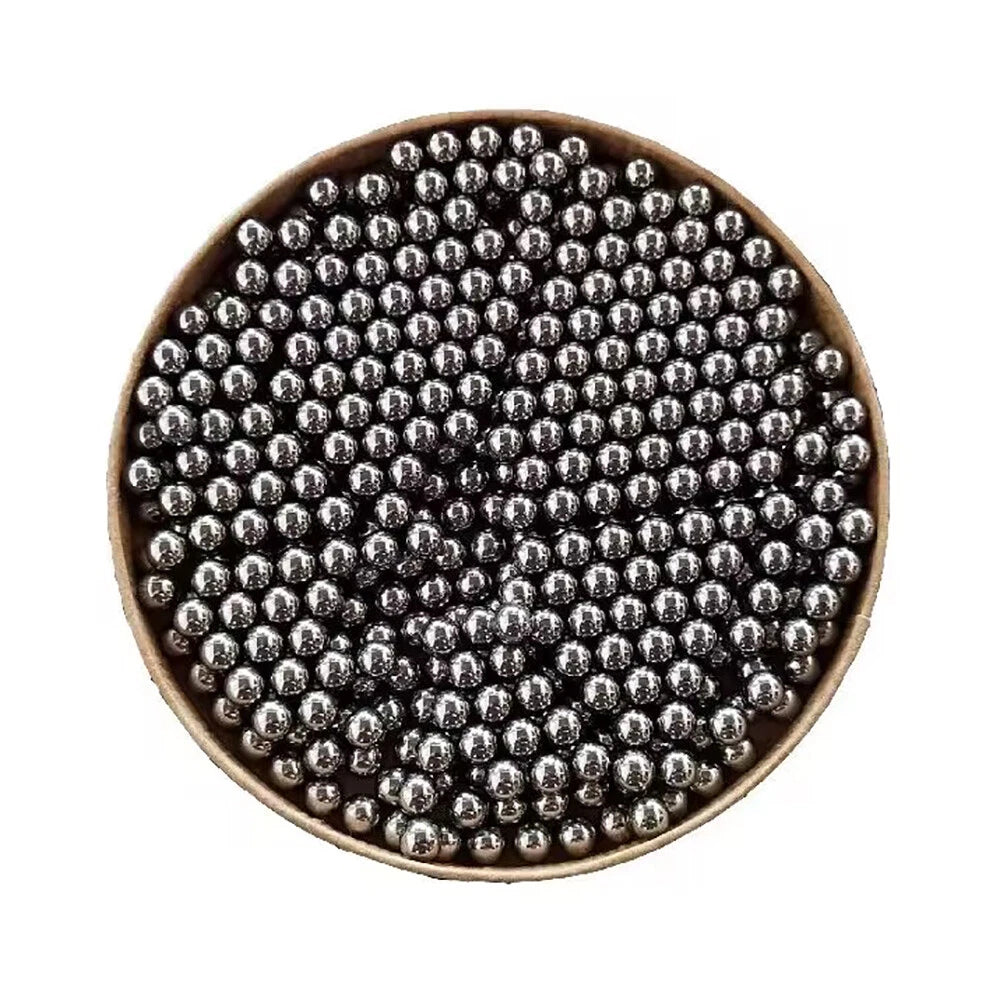
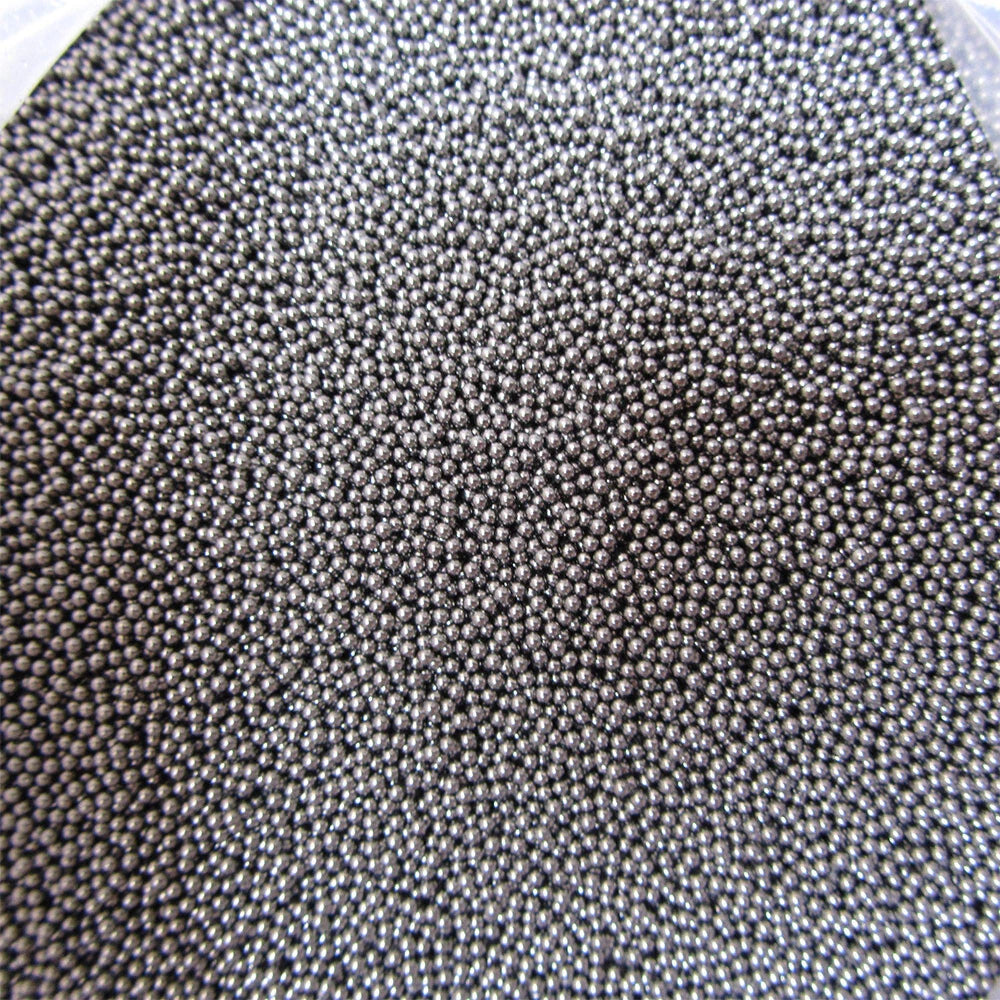
Carbon Steel Balls Bicycle Loose Balls Bearings 1/4", 7/32", 5/32", 3/16", 1/8"

No reviews

Price:
Sale price$2.69 USD
Stock:
In stock (500 units), ready to be shipped

Payment & Security

Ach Direct Debit Amazon American Express Apple Pay Bancontact BLIK Diners Club Discover EPS Google Pay iDEAL Wero JCB Maestro Mastercard Multibanco MobilePay PayPal Przelewy24 Shop Pay Twint Union Pay USDC Visa

Your payment information is processed securely. We do not store credit card details nor have access to your credit card information.

Limited Offer — Spend More, Save More
Spend $55+
Save $5
Spend $100+
Save $10
Spend $200+
Save $25
HomeDIYer DIY Expert Support

DIY Expert Support

Get fitment advice & recommendations

Mon–Fri  8:30 AM – 8:00 PM
24-Hour Fast Ship
Arrives in 3–14 Days
Worldwide Shipping
30-Day Returns
1 tree planted with every purchase

Description

Carbon Steel Loose Ball Bearings — Consistent Roundness for Smooth Rolling

When a worn headset, bottom bracket, or wheel hub starts introducing drag and play into your ride, the culprit is often degraded or undersized loose balls. Cyclists, mechanics, and DIY equipment builders who need an exact replacement or a bulk supply of carbon steel balls will find this listing covers the widest practical size range in a single place.

These carbon steel loose ball bearings are available in metric diameters from φ1mm (≈0.039") up to φ13mm (≈0.512"), as well as common imperial sizes including 1/8", 3/16", 7/32", and 1/4". Each ball is manufactured from carbon steel, offering a balance of hardness and toughness suited to radial and thrust load applications. Quantity options run from a single sample piece through 50, 100, 200, and 500-piece packs.

Typical use cases include bicycle headset and bottom bracket repacking, wheel hub servicing, small machinery and skateboard bearing replacement, and prototype or hobby mechanical assemblies requiring carbon steel loose ball bearings in precise metric or imperial diameters.

⚙️ Compatibility Note: Match the ball diameter exactly to your bearing race groove. Measure your existing balls with a micrometer before ordering. Both metric (φ1–13mm) and imperial (1/8", 3/16", 7/32", 1/4") sizes are available — select the correct Size option above.

✅ Key Features of These Carbon Steel Loose Ball Bearings

🔩Carbon Steel Construction
Hardened carbon steel provides the surface hardness needed to resist deformation under radial and axial loads in bicycle and light machinery applications.
📏Wide Size Range — φ1mm to φ13mm
Covers the most common metric diameters plus imperial standards (1/8", 3/16", 7/32", 1/4"), reducing the need to source from multiple suppliers.
🎯Consistent Spherical Tolerance
Uniform roundness across the batch ensures even load distribution within the race, reducing vibration and extending race life.
🚲Bicycle Bearing Compatible
Sized to fit standard cup-and-cone headsets, bottom brackets, and wheel hubs that use loose ball retainer or caged configurations.
📦Flexible Pack Quantities
Order a single sample to verify fit, or choose 50, 100, 200, or 500-piece packs for workshop stock or bulk repacking jobs.
🔄Broad Application Compatibility
Suitable for bicycles, inline skates, small conveyor systems, hobby robotics, and any application requiring carbon steel loose ball bearings in standard diameters.

📐 Technical Specifications — Carbon Steel Loose Ball Bearings

Material Carbon Steel
Diameter Range (Metric) φ1mm – φ13mm (see variant options)
Diameter Range (Imperial) 1/8", 3/16", 7/32", 1/4" (see variant options)
Surface Finish See variant options
Hardness See variant options
Pack Quantity 1 / 50 / 100 / 200 / 500 pcs (see variant options)
Condition New
Typical Applications Bicycle headsets, bottom brackets, wheel hubs, light machinery, hobby assemblies
Load Type Radial and thrust (light to moderate)
Corrosion Resistance Contact us to confirm

❓ Frequently Asked Questions

How do I choose the correct ball diameter for my bicycle bearing?

Remove one existing ball from the bearing race and measure its diameter with a digital micrometer or caliper. Match that measurement to the closest size in the variant list. For cup-and-cone bicycle bearings, common sizes are 1/4" (6.35mm) for front hubs, 3/16" (4.76mm) for rear hubs and headsets, and 1/8" (3.175mm) for some older headsets. When in doubt, measure — do not estimate by eye.

Are these balls hardened enough for bicycle bearing use?

Carbon steel balls used in bearing applications are typically hardened to resist surface fatigue under rolling contact stress. These balls are suited to the moderate loads found in bicycle headsets, bottom brackets, and wheel hubs. For high-speed industrial spindle bearings or heavy radial loads, chrome steel (52100) balls are generally preferred. If you need hardness certification data, please contact us to confirm.

Will carbon steel balls rust if exposed to water?

Carbon steel is susceptible to surface oxidation when exposed to moisture without a protective coating or grease. For bicycle applications, always pack the bearing race with a water-resistant grease before installation. If you ride in wet conditions frequently, consider regreasing more often. For environments with continuous water exposure, stainless steel balls may be a better long-term choice — contact us to confirm availability.

Can I mix balls of different sizes in the same bearing race?

No. All balls in a single bearing race must be the same diameter. Mixing sizes creates uneven load distribution, accelerates race wear, and introduces play and vibration. If you are unsure of the correct size, measure all existing balls and replace the full set with balls of the same measured diameter.

How many balls do I need to repack a bicycle headset or hub?

The number varies by component. A typical threaded headset uses 11–22 balls per race (top and bottom), while a standard front hub uses 9–10 balls per side and a rear hub uses 9–11 balls per side. Count the balls removed from your bearing before ordering, then add 10–20% extra to account for any that are damaged or lost. The 50-piece pack is usually sufficient for a full headset repack; the 100-piece pack covers a complete hub service.

Are imperial and metric sizes interchangeable?

Only when the dimensions match exactly. For example, 1/4" equals 6.35mm and φ6.35mm balls are interchangeable. However, φ6mm and 1/4" are not interchangeable — the 0.35mm difference will cause improper fit and accelerated wear. Always verify the exact diameter before substituting a metric size for an imperial one or vice versa.

What is the difference between loose balls and caged (retainer) bearings?

Loose balls sit directly in the cup-and-cone race without a retainer, allowing more balls to fill the race and increasing load capacity. Caged bearings hold balls in a fixed retainer ring, making installation easier and preventing ball drop-out during assembly. Most traditional threaded bicycle headsets and cup-and-cone hubs use loose balls. Cartridge bearings (sealed units) are a separate category and are not compatible with loose ball replacement.

🛒 Select your Size and Quantity above, then add to cart.


You may also like

Recently viewed