The chain is fine...but I ordered the wrong size. Nine links of the chain I ordered equals six of the size I wanted. My error...
How can I straighten out the springs? I can't use them coil uo as is.
Your payment information is processed securely. We do not store credit card details nor have access to your credit card information.
Get fitment advice & recommendations
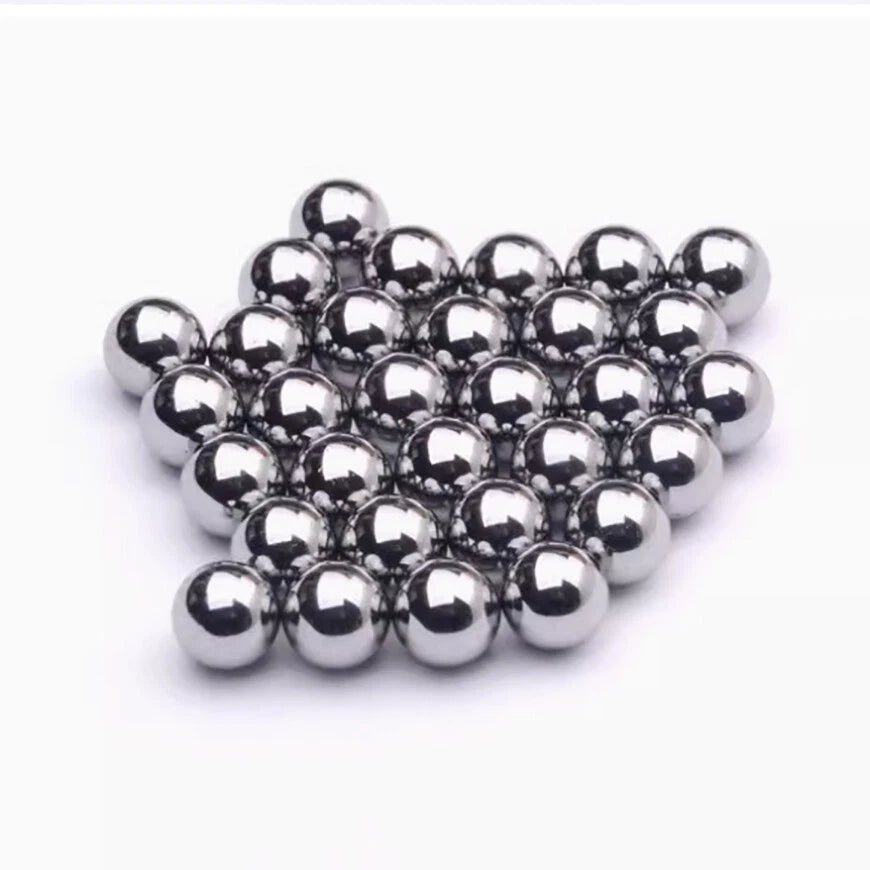
When a worn bearing seat, a leaking valve seat, or a DIY linear-motion build demands a replacement ball that fits exactly right, even a 0.01 mm deviation causes noise, premature wear, or seal failure. Machinists, maintenance technicians, and serious home-shop builders who need a reliable source of precision-grade steel balls in bulk will find this listing covers the widest diameter range in a single SKU family.
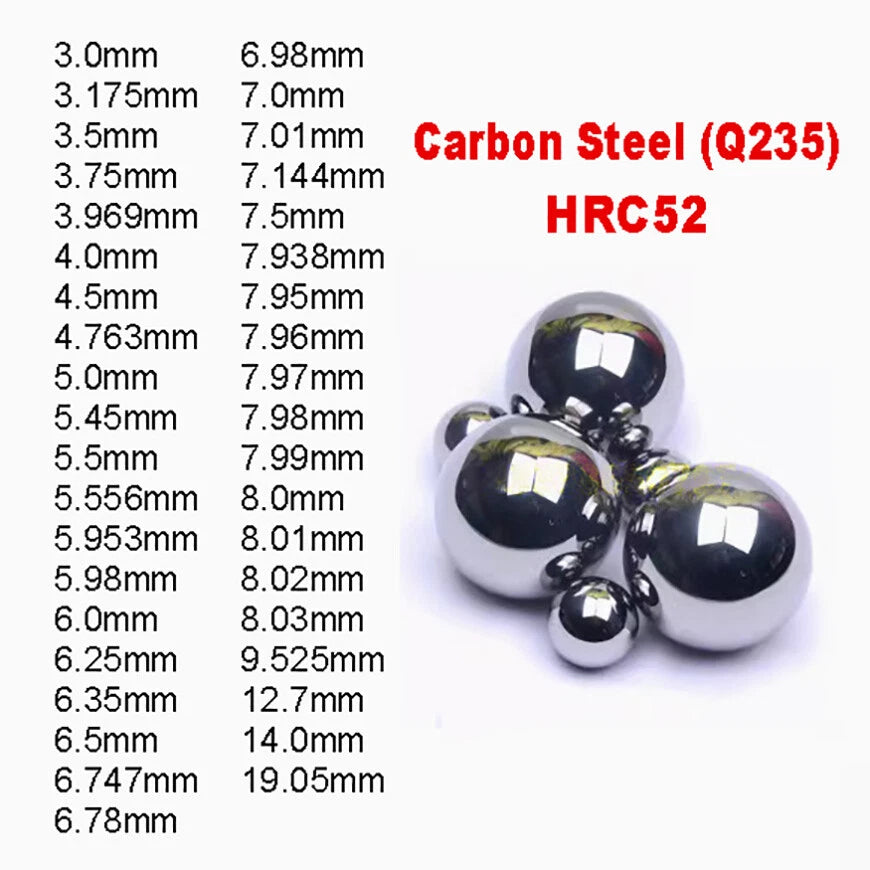
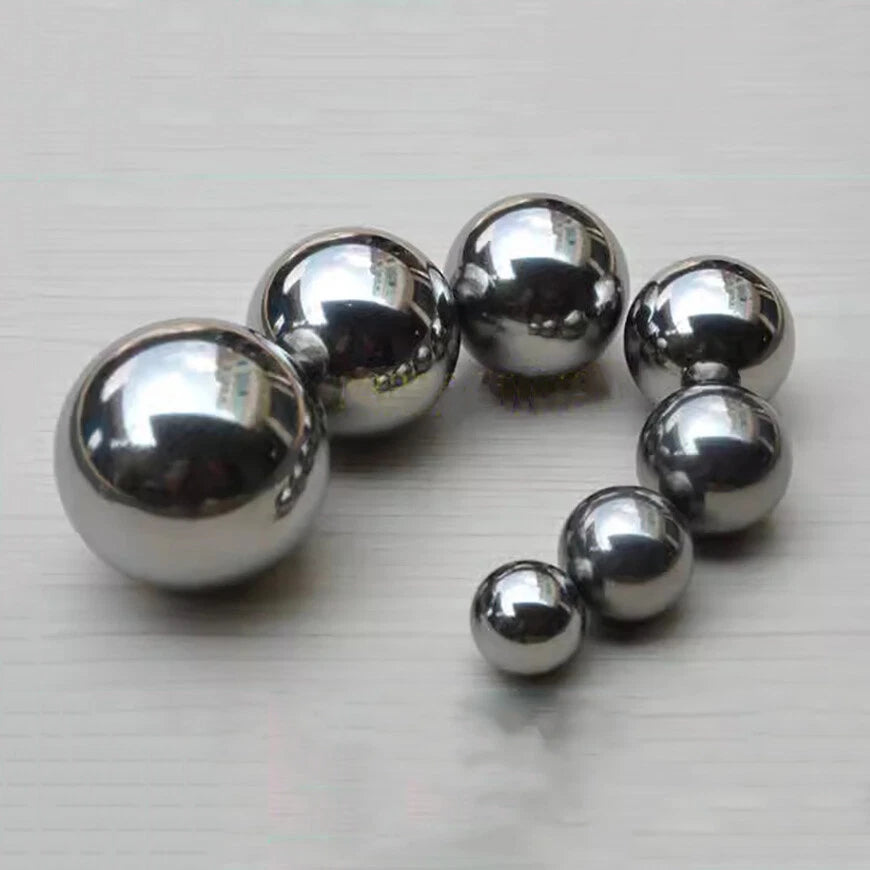
Each order contains 1 kg of carbon steel (Q235) precision balls manufactured to ABEC G100 grade. Diameters span 3.0 mm (approx. 0.118 in) through 19.05 mm (approx. 0.750 in), with grain counts per kilogram ranging from approximately 9,080 grains at 3.0 mm down to approximately 35 grains at 19.05 mm. Select your exact diameter from the variant options above.
Typical use cases include replacement rolling elements in radial ball bearings, check-ball seats in hydraulic and pneumatic valves, load-distribution balls in drawer slides and linear guides, and ballast or grinding media in small-scale laboratory or workshop equipment. Long-tail applications such as "bulk steel balls for bearing repair" and "G100 carbon steel balls for valve seats" are well served by the tight G100 roundness tolerance of this product.
| Material | Carbon Steel (Q235) |
|---|---|
| Grade | G100 (ABEC equivalent) |
| Diameter Range | 3.0 mm – 19.05 mm (approx. 0.118" – 0.750") |
| Diameter (selected) | See variant options |
| Packing Weight | 1 kg per order |
| Approximate Grain Count | See variant options (35 – 9,080 grains/kg) |
| Surface Finish | Smooth, bright steel finish |
| Hardness | See variant options |
| Roundness Tolerance | G100 grade (≤ 0.025 mm deviation, typical) |
| Corrosion Resistance | Low (carbon steel; not recommended for wet or corrosive environments without additional protection) |
| Typical Applications | Radial ball bearings, valve seats, linear guides, grinding media |
Measure the bore or seat diameter of your existing bearing or valve using a digital caliper. The ball diameter should match the original specification exactly — even a 0.05 mm mismatch can cause excessive play or binding. Cross-reference your bearing's part number (e.g., 608, 6200) with its rolling-element diameter in the manufacturer's datasheet, then select the matching variant above.
G100 is an ABEC-equivalent precision grade indicating that the ball's diameter deviation and sphericity error are within 0.025 mm. This is suitable for general-purpose bearings, valve seats, linear guides, and most DIY machinery. For ultra-high-speed spindles or precision instruments requiring tighter tolerances (G10–G25), a higher grade may be needed. Contact us to confirm suitability for critical applications.
Carbon steel (Q235) has low inherent corrosion resistance. In dry, indoor environments these balls perform well. For wet, humid, or chemically exposed environments, surface rust can develop over time. If corrosion resistance is required, consider stainless steel ball alternatives. Applying a light machine oil coating can extend service life in mildly damp conditions.
The approximate grain count is listed in each variant name (e.g., "3.0 mm — approx. 9,080 grains"). These counts are based on average ball weight and may vary by ±2% due to natural manufacturing tolerances. If you need a precise count for a specific project, we recommend ordering slightly more than your calculated requirement.
Yes, carbon steel balls are commonly used as grinding media in small laboratory or workshop ball mills for grinding soft to medium-hardness materials. Ensure the mill liner material is compatible with carbon steel to avoid contamination. For grinding hard ceramics or abrasive minerals, hardened steel or ceramic media may be more appropriate.
Yes. The diameter range includes both metric sizes (e.g., 3.0, 4.0, 5.0, 6.0, 8.0 mm) and common inch-fraction equivalents (e.g., 3.175 mm = 1/8", 4.763 mm = 3/16", 6.35 mm = 1/4", 7.938 mm = 5/16", 9.525 mm = 3/8", 12.7 mm = 1/2", 19.05 mm = 3/4"). Select the diameter that matches your housing specification.
Q235 carbon steel balls typically have a surface hardness in the range of 55–62 HRC after standard heat treatment, though exact values depend on the manufacturing batch. If your application requires a specific hardness certification, please contact us to confirm before ordering.