The chain is fine...but I ordered the wrong size. Nine links of the chain I ordered equals six of the size I wanted. My error...
How can I straighten out the springs? I can't use them coil uo as is.
Your payment information is processed securely. We do not store credit card details nor have access to your credit card information.
Get fitment advice & recommendations
When a worn bearing causes wobble, noise, or premature failure in your project, finding the exact replacement diameter matters. Whether you are a hobbyist repairing a skateboard, a robotics builder sourcing chrome steel ball bearings for a custom actuator, or a maintenance technician restocking a parts bin, having the right size on hand eliminates costly downtime.
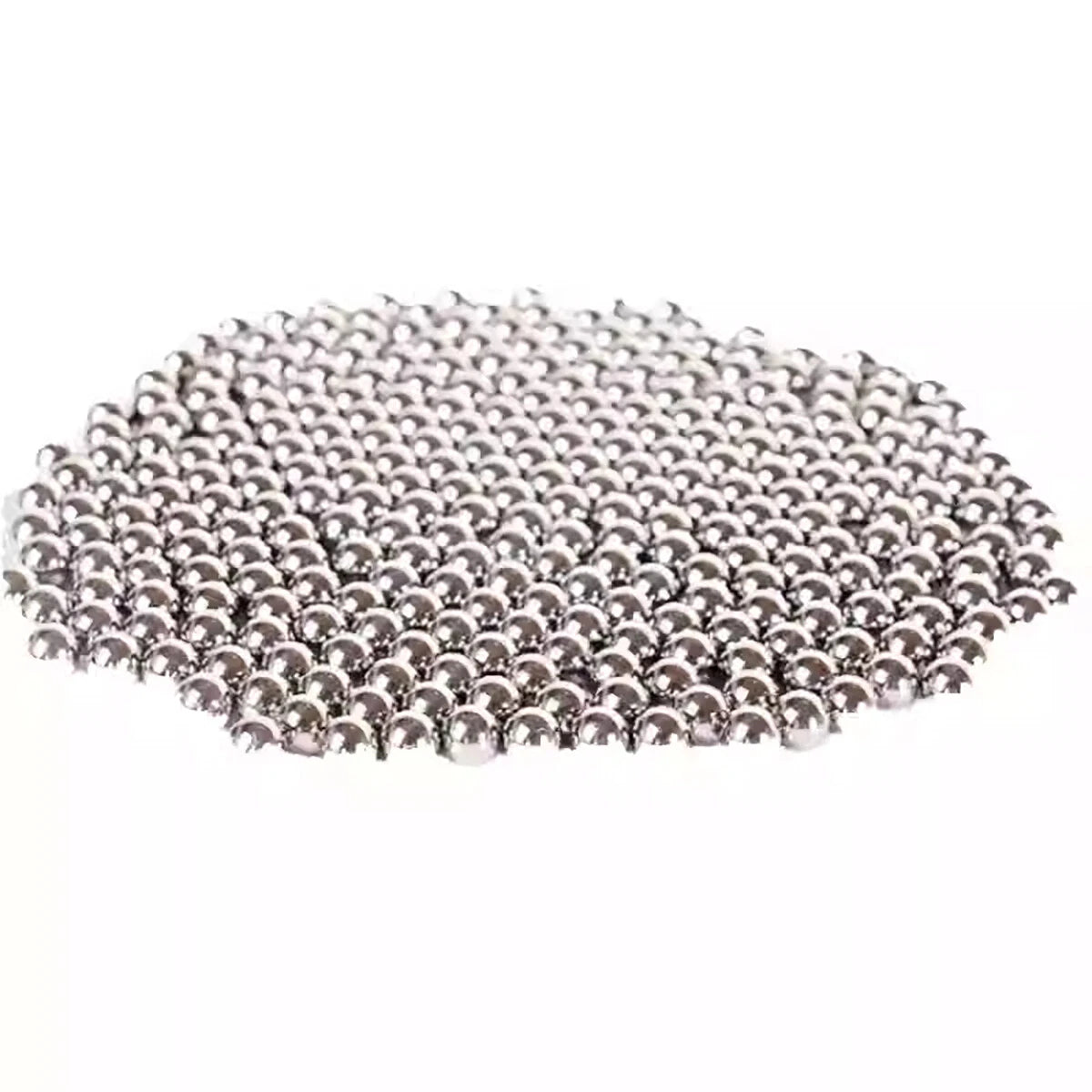
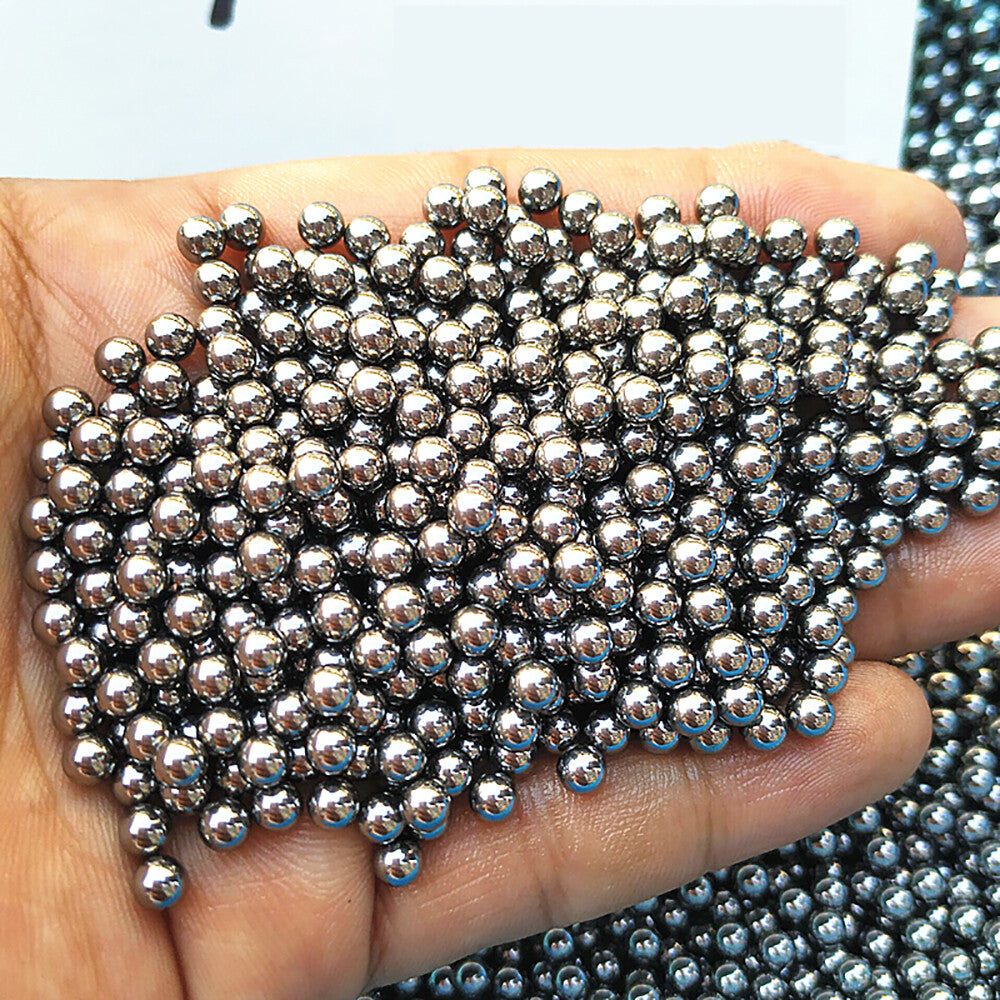
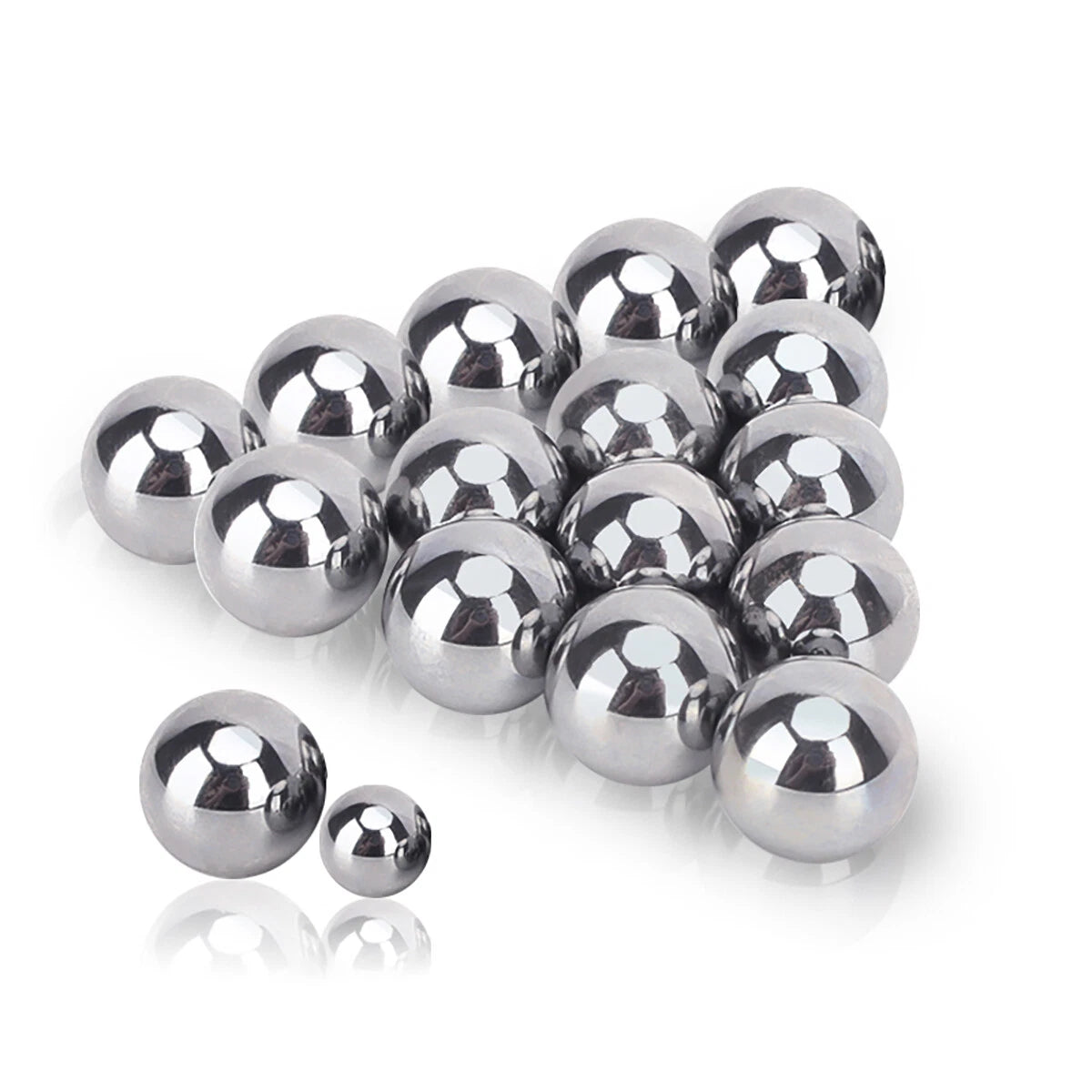
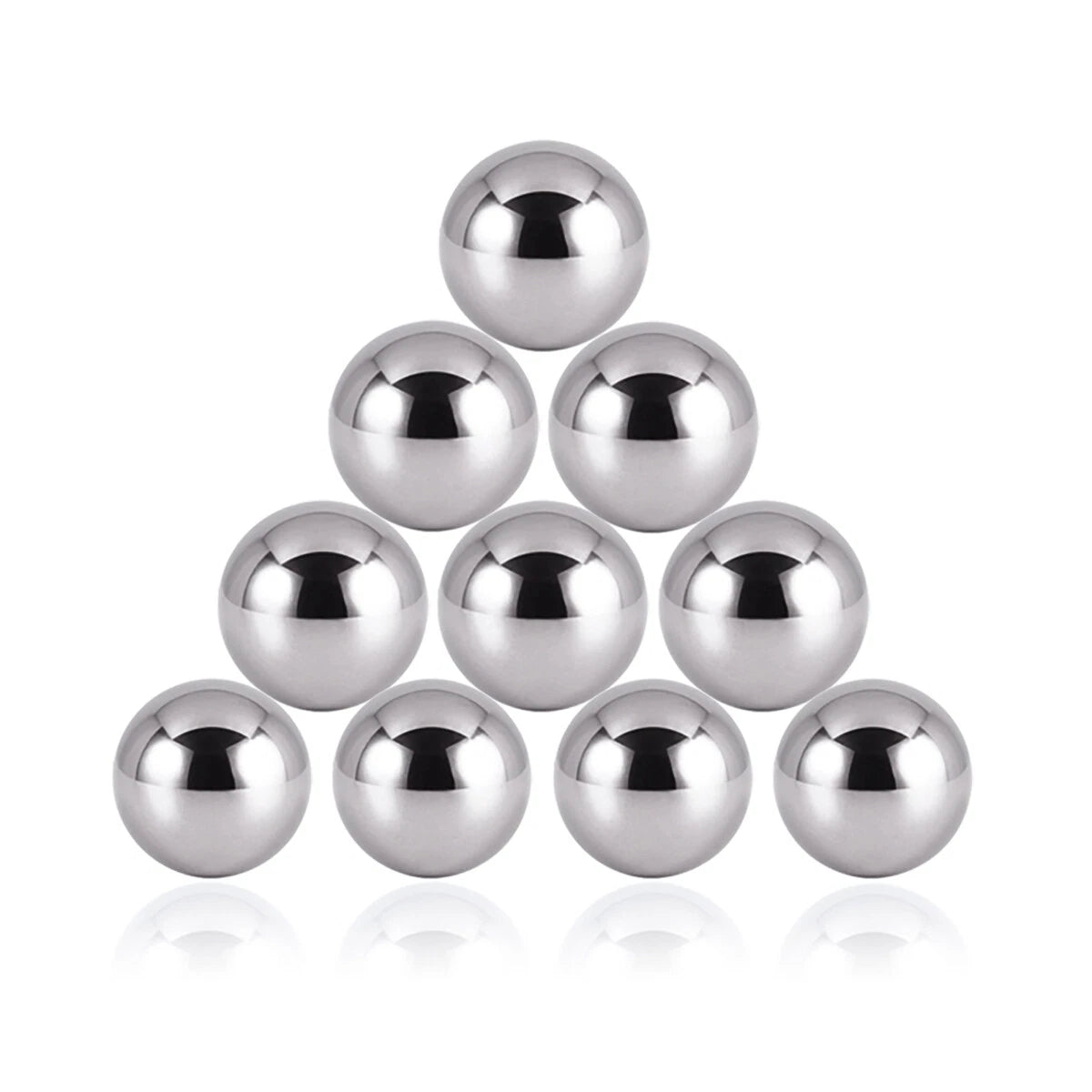
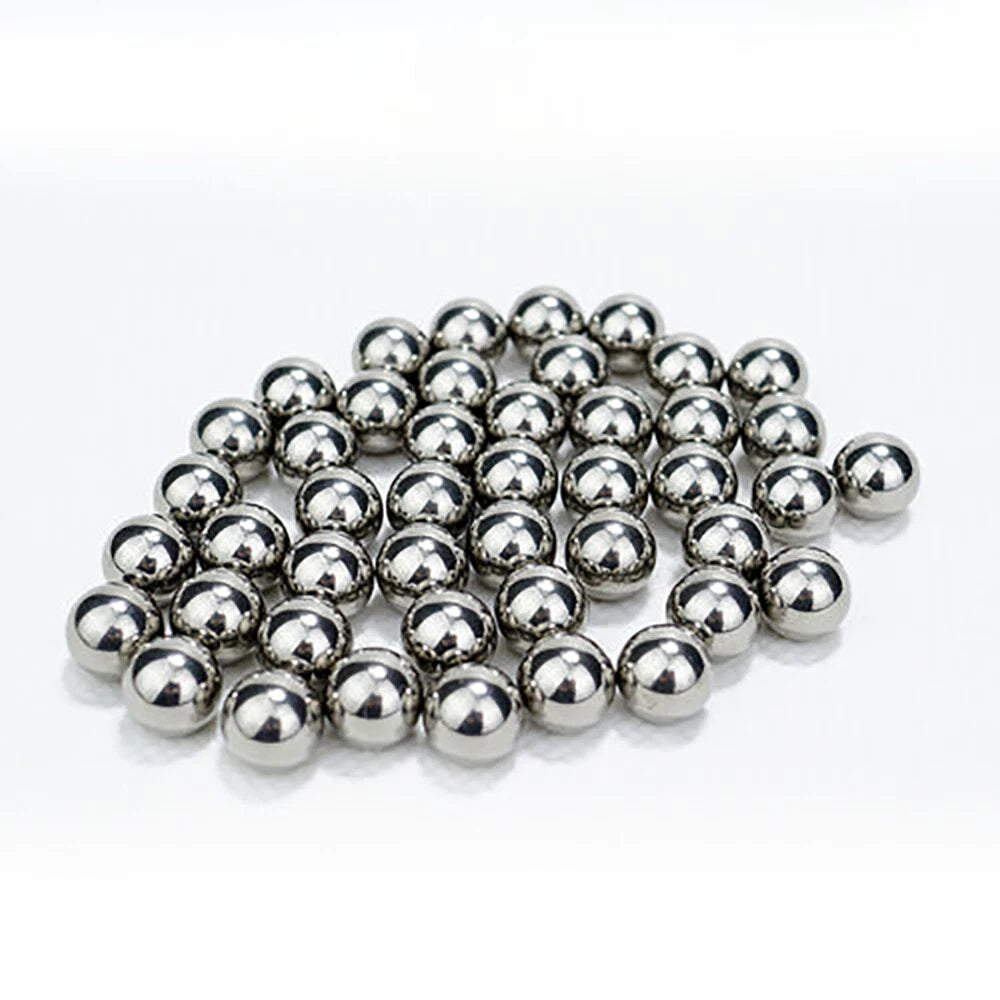
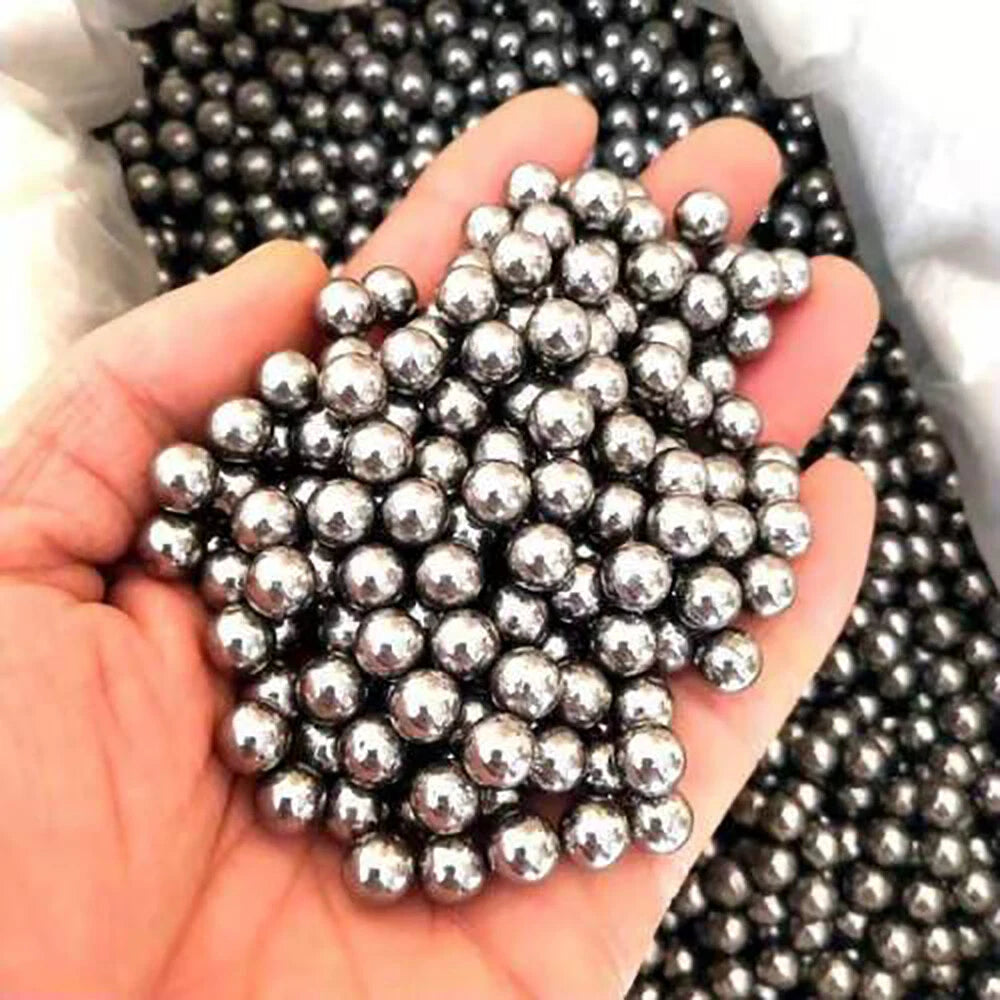
These precision loose bearing balls are manufactured from chrome steel (GCr15 / 52100 equivalent), offering a hardened surface for long service life. Diameters span 1 mm through 15 mm (approximately 0.039 in – 0.591 in), covering both metric and fractional inch sizes including 1/8", 5/32", 3/16", 1/4", 5/16", 3/8", 7/16", 1/2", 9/16", and more. Quantity options range from as few as 5 pieces up to 20,000 pieces per order.
Common use cases include replacing loose balls in radial ball bearings for bicycle hubs and bottom brackets, filling thrust bearing assemblies in lazy-susan turntables, sourcing chrome steel ball bearings for 3D printer linear rails, and restocking precision balls for small engine governor assemblies or drawer-slide mechanisms.
Available from 1 mm to 15 mm, including fractional inch equivalents (1/8", 3/16", 1/4", 5/16", 3/8", 7/16", 1/2", 9/16"), covering the most common metric and imperial bearing sizes.
Made from GCr15 chrome steel (equivalent to AISI 52100), providing a hardened, wear-resistant surface suited for moderate-load radial and thrust applications.
Order from 5 pcs for a quick repair up to 20,000 pcs for production restocking — quantity options scale with your project needs and budget.
Manufactured to tight sphericity tolerances typical of Grade 10–25 balls, ensuring smooth rolling action and reduced vibration in assembled bearings.
Suitable for bicycle hubs, skateboard bearings, drawer slides, lazy-susan assemblies, robotics joints, 3D printer carriages, and small engine governor mechanisms.
Per-piece cost decreases significantly at higher quantities — ideal for workshops, repair shops, and makers who need a reliable supply of precision balls on hand.
| Material | Chrome Steel (GCr15 / AISI 52100 equivalent) |
|---|---|
| Diameter Range | 1 mm – 15 mm (0.039 in – 0.591 in) |
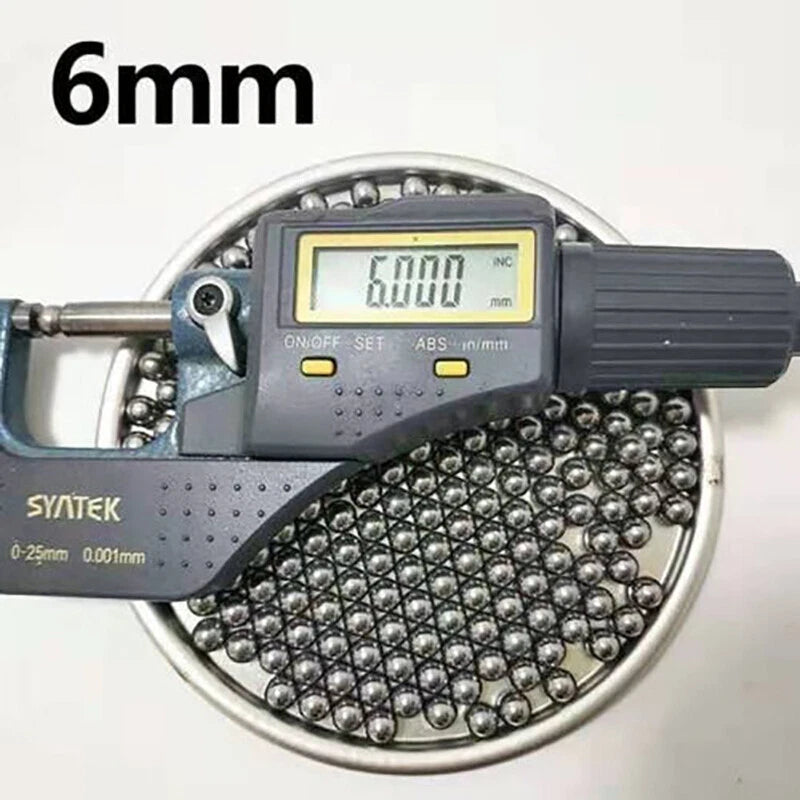
| Available Diameters | 1, 1.5, 2, 2.5, 3, 3.175 (1/8"), 3.5, 3.969 (5/32"), 4, 4.5, 4.763 (3/16"), 4.8, 5, 5.5, 5.556 (7/32"), 5.9, 5.953 (15/64"), 6, 6.35 (1/4"), 6.5, 6.6, 6.747 (17/64"), 6.8, 7, 7.144 (9/32"), 7.5, 7.938 (5/16"), 8, 8.1, 8.5, 8.731 (11/32"), 9, 9.525 (3/8"), 10, 10.319 (13/32"), 10.5, 11, 11.113 (7/16"), 11.5, 11.906 (15/32"), 12, 12.3, 12.5, 12.7 (1/2"), 13, 13.5 (17/32"), 14, 14.288 (9/16"), 14.5, 15 mm |
| Surface Finish | Bright / Mirror-polished |
| Hardness | Typically 60–66 HRC (see variant options for confirmed grade) |
| Grade (Roundness) | See variant options |
| Quantity Options | 5, 10, 20, 50, 100, 200, 500, 1000, 2000, 5000, 10000, 20000 pcs (availability varies by diameter) |
| Application Type | Radial bearings, thrust bearings, linear guides, custom housings |
| Corrosion Resistance | Moderate (chrome steel; not stainless — apply light oil for storage) |
Measure the inner diameter of your bearing race with a caliper, or check the bearing's part number — the last digits typically indicate ball diameter. Match that measurement to the diameter option in the dropdown above. If your bearing uses fractional inch balls (e.g., 1/4"), select the corresponding fractional size listed (e.g., 6.35 mm / 1/4").
Chrome steel (GCr15 / AISI 52100) is the industry-standard material for precision ball bearings. With a typical hardness of 60–66 HRC, these balls handle moderate radial and thrust loads well in applications such as bicycle hubs, drawer slides, and small machinery. For heavy industrial loads or high-speed spindles, confirm the grade rating matches your engineering requirements.
Chrome steel offers moderate corrosion resistance but is not stainless. For outdoor or wet environments, apply a light coat of bearing grease or oil before installation and during storage. If your application requires full corrosion immunity, consider stainless steel balls instead.
Yes — as long as you select the correct diameter. These are loose precision balls intended to replace or supplement balls in open-type radial bearings, thrust washers, and custom housings. They are not pre-assembled into a bearing unit. Verify the ball diameter and quantity per bearing before ordering.
The number of balls varies by bearing size and type. Common small bearings (e.g., 608 skate bearing) use 7–8 balls; bicycle cup-and-cone hubs typically use 9–11 balls per side. Count the existing balls before disassembly, or look up your bearing's specification sheet. We recommend ordering a few extra to account for any that are lost or damaged during service.
For a single repair, a pack of 5–50 pcs is usually sufficient. For workshop restocking or small-batch production, 200–1,000 pcs offers a good balance of cost and shelf space. For high-volume manufacturing or resale, packs of 2,000–20,000 pcs provide the lowest per-piece cost. Select your diameter and quantity in the dropdowns above.
Yes. Chrome steel precision balls are commonly used in MGN-series linear rail carriages and V-slot wheel bearings. Select the diameter that matches your carriage's ball specification — typically 2 mm, 3 mm, or 3.175 mm (1/8") for most desktop 3D printer rails. Check your carriage's documentation or measure the existing balls with a micrometer for the most accurate fit.