Chrome Steel Ball Bearings Grade 10 — Tight Tolerances for Bikes, Skates & Precision Machinery
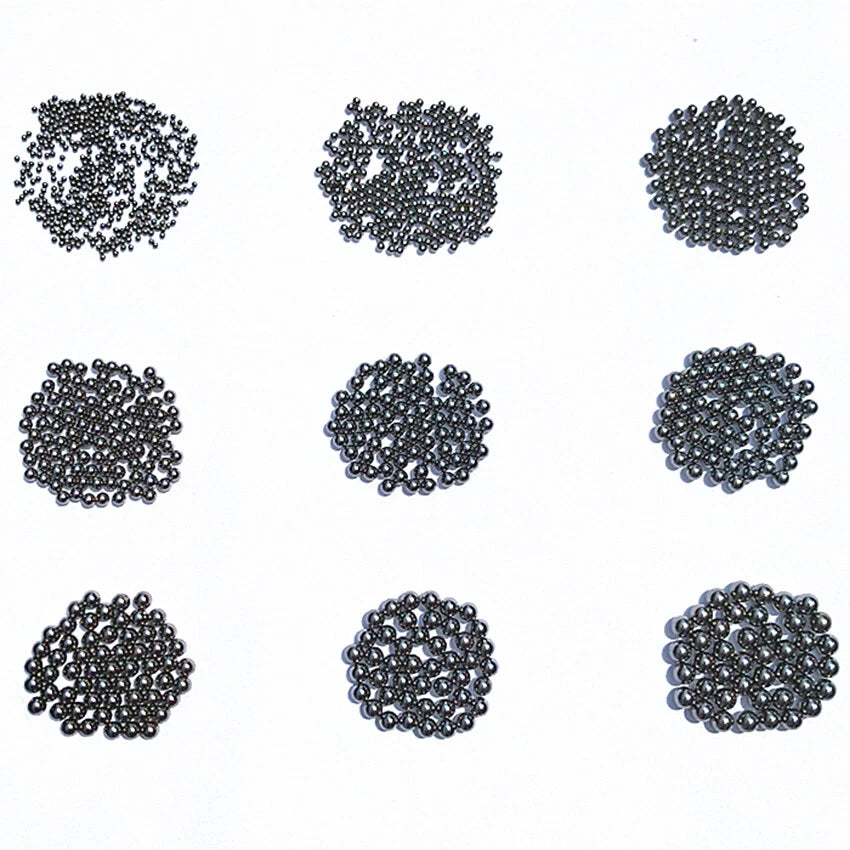
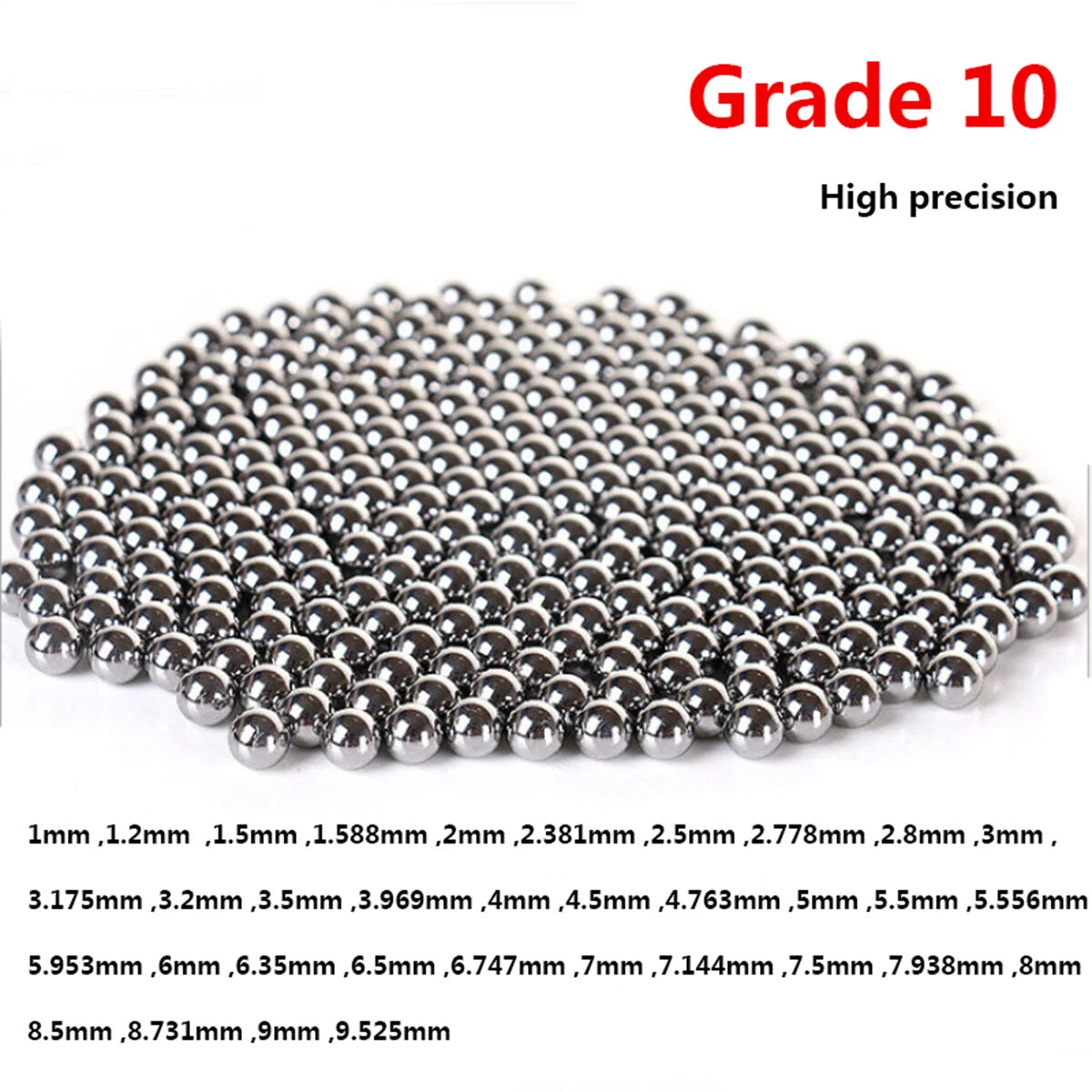
When a worn or undersized ball bearing causes wobble, noise, or premature wear in your drivetrain, hub, or precision instrument, finding the exact replacement diameter matters. These Grade 10 chrome steel ball bearings are stocked in 34 sizes from 1mm to 9.525mm (including fractional inch equivalents such as 1/16", 1/8", 1/4", and 3/8"), so cyclists, skaters, and engineers can match the original spec without compromise.
Each ball is manufactured from through-hardened GCr15 chrome steel (equivalent to AISI 52100), delivering a surface hardness of approximately 60–66 HRC. Diameters span 1mm through 9.525mm (roughly 0.039" to 0.375"), with roundness and surface finish held to Grade 10 tolerances per ISO 3290. Packs are available from 10 to 500 pieces to suit single-repair jobs and workshop restocking alike.
Typical applications include bicycle wheel hubs and bottom brackets, inline skate and skateboard bearings, small electric motor spindles, drawer-slide and caster assemblies, and laboratory or optical instrument pivots where low runout is critical. The broad size range also makes these balls a reliable source for replacing chrome steel ball bearings in vintage or specialty equipment where OEM parts are discontinued.
⚙️ Compatibility: Suitable for open or shielded bearing housings requiring Grade 10 chrome steel balls. Verify your housing bore and ball complement count before ordering. Not intended for food-grade or corrosive-environment applications — consider stainless steel balls for those uses.
✅ Key Features of These Chrome Steel Ball Bearings
🎯 Grade 10 Precision
Roundness deviation held to ≤0.25 µm per ISO 3290 Grade 10, ensuring smooth, low-vibration rotation in demanding applications.
🔩 GCr15 Chrome Steel
Through-hardened alloy steel (AISI 52100 equivalent) with surface hardness of approximately 60–66 HRC for extended service life under load.
📐 34 Sizes in One Listing
Covers 1mm to 9.525mm including fractional inch equivalents (1/16", 5/64", 1/8", 7/64", 3/16", 1/4", 9/32", 5/16", 3/8"), reducing the need to source from multiple suppliers.
🚲 Bicycle & Skate Ready
Sized to match common hub, bottom bracket, and headset ball complements. Drop-in replacement for worn chrome steel balls in cup-and-cone systems.
📦 Flexible Pack Quantities
Choose from 10, 20, 50, 100, 200, 300, or 500 pieces — order just enough for a single repair or stock up for workshop use.
✨ Bright Polished Finish
Mirror-polished surface reduces friction and noise, and allows quick visual inspection for contamination or damage during maintenance.
📐 Technical Specifications — Chrome Steel Ball Bearings
| Material |
GCr15 Chrome Steel (AISI 52100 equivalent) |
| Grade |
Grade 10 (ISO 3290) |
| Surface Hardness |
Approximately 60–66 HRC |
| Diameter Range |
1mm – 9.525mm (0.039" – 0.375") |
| Available Sizes |
1, 1.2, 1.5, 1.588, 2, 2.381, 2.5, 2.778, 2.8, 3, 3.175, 3.2, 3.5, 3.969, 4, 4.5, 4.763, 5, 5.5, 5.556, 5.953, 6, 6.35, 6.5, 6.747, 7, 7.144, 7.5, 7.938, 8, 8.5, 8.731, 9, 9.525 mm |
| Roundness Tolerance |
≤0.25 µm (Grade 10 per ISO 3290) |
| Surface Finish |
Mirror polished |
| Finish / Coating |
Bright (uncoated chrome steel) |
| Pack Quantities |
10, 20, 50, 100, 200, 300, 500 pieces |
| Typical Applications |
Bicycle hubs, bottom brackets, inline skates, small motors, casters, precision instruments |
| Corrosion Resistance |
Moderate (suitable for dry or lightly lubricated environments; not for wet or corrosive conditions) |
| Weight |
See variant options |
❓ Frequently Asked Questions
How do I find the correct ball diameter for my bicycle hub or bottom bracket?
Remove the existing balls and measure one with a digital caliper. Most cup-and-cone front hubs use 3/16" (4.763mm) or 1/4" (6.35mm) balls; rear hubs commonly use 1/4" balls; older bottom brackets often use 1/4" or 5/16" (7.938mm) balls. Cross-reference your measurement with the sizes listed in this product to select the correct variant.
What does Grade 10 mean, and is it suitable for my application?
Grade 10 refers to the ISO 3290 precision classification, where a lower number indicates tighter tolerances. Grade 10 balls have a maximum roundness deviation of 0.25 µm and are appropriate for standard bicycle, skate, and light industrial bearings. Applications requiring sub-micron precision (such as high-speed spindles or optical instruments) may need Grade 3 or Grade 5 balls.
Are these balls corrosion-resistant? Can I use them in wet conditions?
GCr15 chrome steel provides moderate corrosion resistance when properly lubricated, but it is not stainless steel. For applications exposed to water, salt spray, or corrosive chemicals — such as marine hardware or food-processing equipment — stainless steel balls (AISI 440C or similar) are the appropriate choice. For bicycle use in wet weather, apply a quality bearing grease and re-grease regularly.
How many balls do I need to replace a full bearing complement?
The number of balls varies by bearing type and size. A typical cup-and-cone front hub uses 9–10 balls per side; a rear hub uses 9 balls per side; a headset cup uses 11–18 balls depending on diameter. Always replace the full complement on both sides simultaneously to ensure even load distribution and prevent premature wear.
Can I mix these chrome steel balls with stainless steel or ceramic balls in the same bearing?
Mixing ball materials in a single bearing complement is not recommended. Different materials have different hardness, thermal expansion coefficients, and surface finishes, which leads to uneven load sharing, accelerated wear, and increased noise. Replace all balls in a complement with the same material and grade.
What lubrication should I use with these chrome steel balls?
For bicycle hubs and bottom brackets, a medium-viscosity bearing grease (such as a lithium-complex or polyurea grease) is standard. For higher-speed applications like small motors, a light machine oil or low-viscosity grease reduces drag. Avoid petroleum-based solvents that can wash out grease. Re-lubricate at regular service intervals to prevent corrosion and wear.
Do the fractional-inch sizes (e.g., 1/4", 3/8") correspond exactly to the millimeter listings?
Yes. The fractional-inch sizes are manufactured to their exact inch dimension and listed with the millimeter equivalent for reference: 1/16" = 1.588mm, 3/32" = 2.381mm, 7/64" = 2.778mm, 1/8" = 3.175mm, 5/32" = 3.969mm, 3/16" = 4.763mm, 7/32" = 5.556mm, 15/64" = 5.953mm, 1/4" = 6.35mm, 17/64" = 6.747mm, 9/32" = 7.144mm, 5/16" = 7.938mm, 11/32" = 8.731mm, 3/8" = 9.525mm. Select the size that matches your original ball measurement.
🛒 Select your Size and Qty above, then add to cart.