The chain is fine...but I ordered the wrong size. Nine links of the chain I ordered equals six of the size I wanted. My error...
How can I straighten out the springs? I can't use them coil uo as is.
Your payment information is processed securely. We do not store credit card details nor have access to your credit card information.
Get fitment advice & recommendations
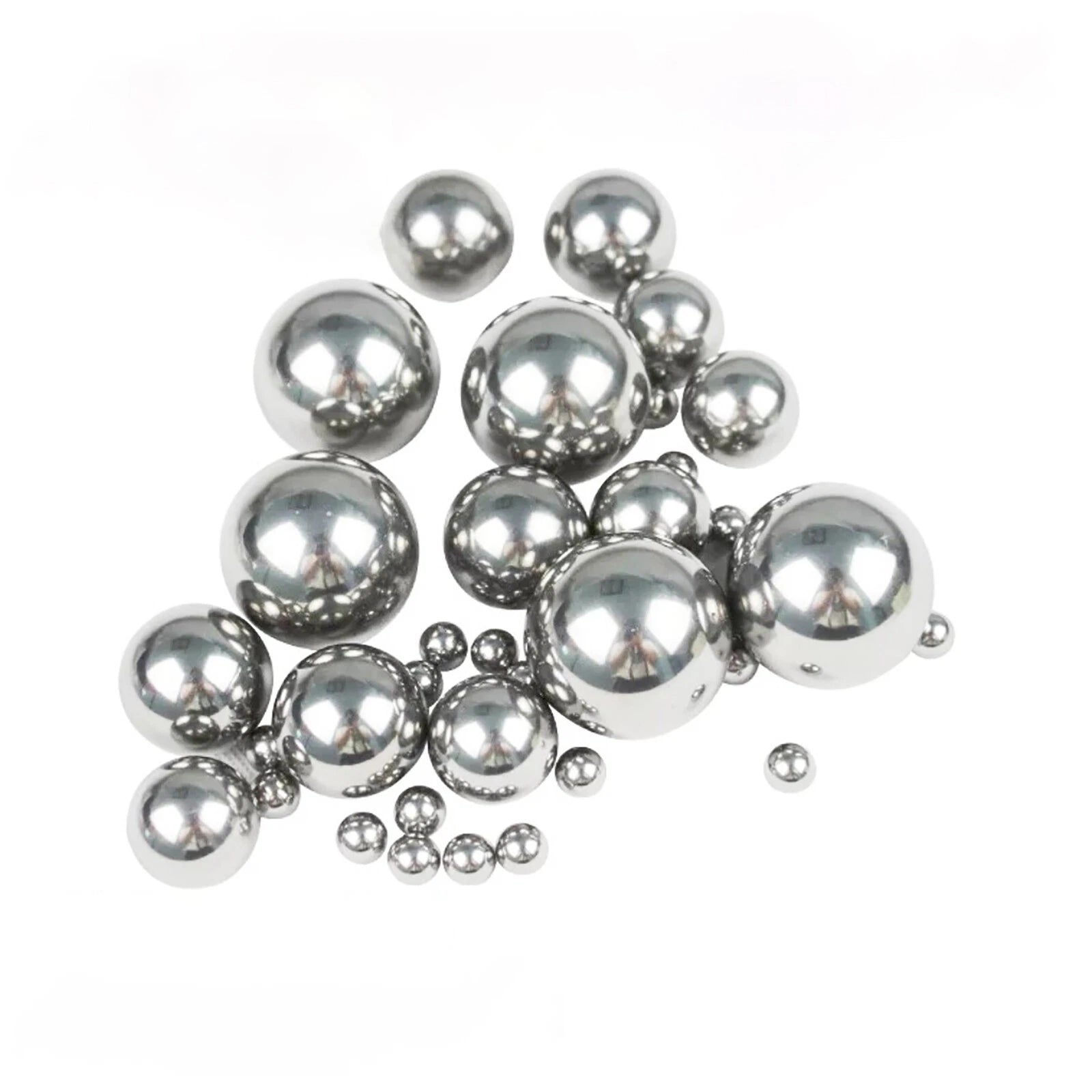
When a worn or undersized bearing causes vibration, noise, or premature failure in a machine, finding the exact replacement diameter is critical. Engineers, maintenance technicians, and precision hobbyists who work with spindles, motors, pumps, and custom assemblies need chrome steel ball bearings that hold tight tolerances across a wide size range — and that is exactly what these Grade 10 chrome steel ball bearings deliver.
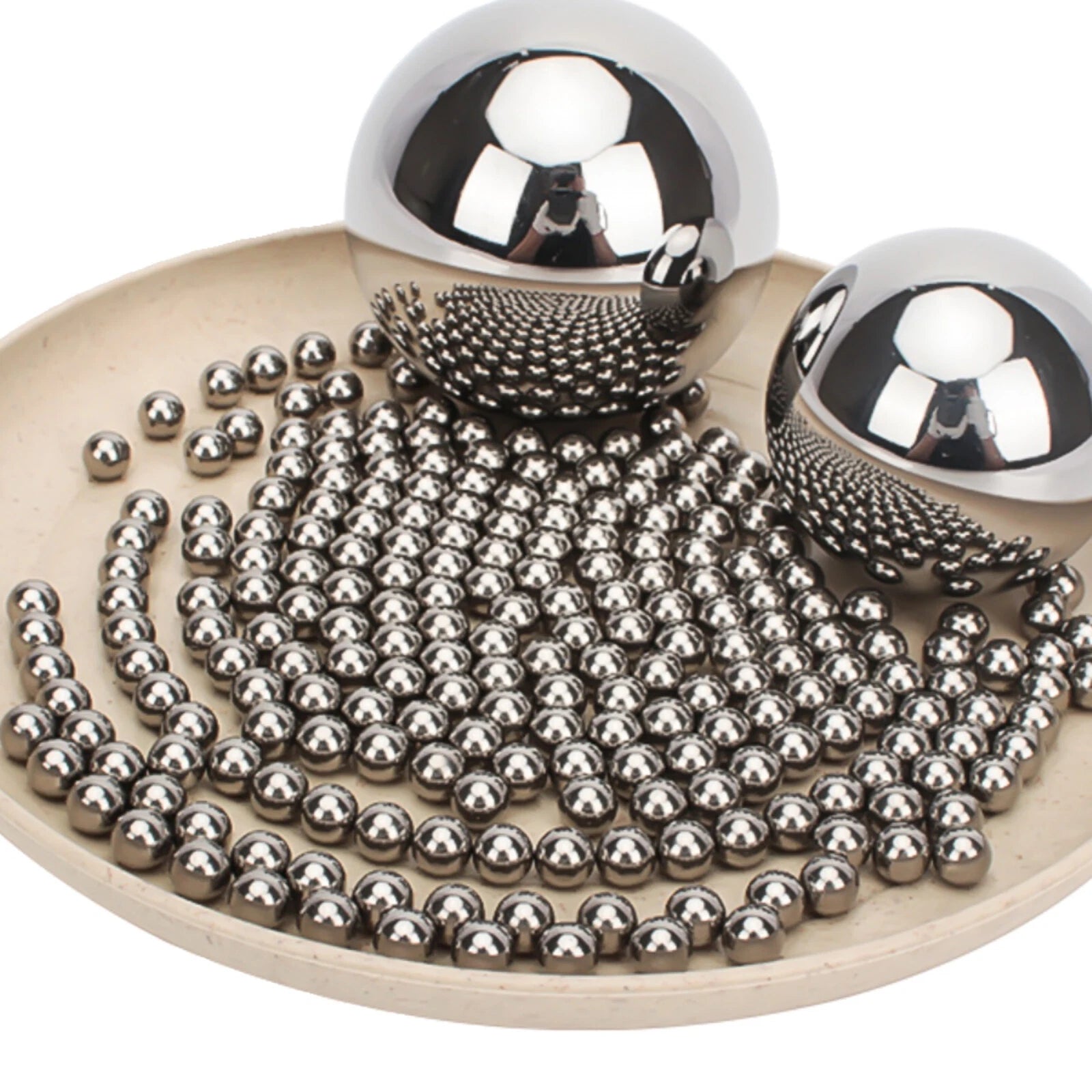
Each ball is manufactured from chrome steel (GCr15 / AISI 52100 equivalent), a through-hardened alloy known for its uniform carbide structure and fatigue resistance. Diameters span 1.0 mm (0.039 in) through 9.525 mm (0.375 in), with many intermediate sizes available to cover both metric and inch-based designs. Quantities are offered in 100, 200, and 500-piece packs to suit prototyping runs and production restocking alike.
Typical use cases include replacement rolling elements in deep-groove ball bearings and angular-contact bearings, loose balls for custom linear slides and V-groove guides, check-valve seats in hydraulic and pneumatic circuits, and precision lapping or grinding media where consistent sphericity is required.
Form deviation ≤ 0.25 µm and surface roughness Ra ≤ 0.025 µm per ISO 3290-1, ensuring smooth, low-noise rotation in high-speed and precision-load applications.
Through-hardened to 60–66 HRC, this alloy provides a dense, uniform carbide structure that resists fatigue cracking under cyclic radial and axial loads.
Available from 1.0 mm to 9.525 mm with many intermediate sizes, covering both metric and fractional-inch designs in a single product listing.
Tight roundness control minimises runout and vibration, making these balls suitable as replacement rolling elements in deep-groove, angular-contact, and thrust bearing assemblies.
The polished chrome steel surface resists mild oxidation in dry and lightly lubricated environments. Apply grease or oil for extended service life in humid or wash-down conditions.
Choose 100, 200, or 500-piece packs to match prototyping, maintenance, or production-volume requirements without over-ordering.
| Material | Chrome Steel (GCr15 / AISI 52100 equivalent) |
|---|---|
| Grade | Grade 10 (ISO 3290-1) |
| Hardness | 60–66 HRC (through-hardened) |
| Form Deviation | ≤ 0.25 µm |
| Surface Roughness | Ra ≤ 0.025 µm |
| Diameter Range | 1.0 mm – 9.525 mm (0.039 in – 0.375 in) |
| Available Diameters | See variant options |
| Pack Quantities | 100 Pcs / 200 Pcs / 500 Pcs |
| Finish | Polished bright |
| Lubrication | Unlubricated (dry); apply grease or oil before use |
| Operating Temperature | Typically –20 °C to +120 °C (–4 °F to +248 °F) |
| Certification / Standard | ISO 3290-1 Grade 10 |
Measure the inner race groove diameter of your bearing with a micrometer or caliper, then select the ball diameter that matches the original specification. For replacement applications, the ball diameter is typically stamped on the bearing shield or listed in the manufacturer's datasheet. If you are designing a custom assembly, the ball diameter should be 60–70% of the groove radius for optimal load distribution.
ISO 3290-1 defines ball grades by form deviation (roundness error). Grade 10 allows a maximum deviation of 0.25 µm, placing it in the precision category suitable for most industrial and instrument-grade bearings. Grade 3 (0.08 µm) and Grade 5 (0.13 µm) are used in ultra-precision spindles, while Grade 25 (0.65 µm) and above are standard commercial grades. Grade 10 offers a practical balance of accuracy and cost for the majority of machine-tool, motor, and pump applications.
Yes. Chrome steel balls can run in stainless steel, carbon steel, or ceramic races provided the hardness differential is appropriate. When pairing with ceramic races, ensure the ball hardness (60–66 HRC) is within the design specification of the race material. For corrosive environments where stainless races are used, consider switching to stainless steel balls (AISI 440C) for better galvanic compatibility.
These balls are supplied dry (unlubricated). For bearing applications, apply a thin film of grease (e.g., lithium-based NLGI 2) or light machine oil before assembly. In check-valve or lapping applications, lubrication requirements depend on the specific process. Dry running in a loaded bearing will accelerate wear and is not recommended.
Chrome steel (GCr15 / 52100) is not inherently corrosion-resistant and will rust if exposed to water, cleaning agents, or high humidity without adequate lubrication or protective coating. For food-grade or wash-down environments, stainless steel (AISI 440C) or ceramic balls are the appropriate choice. If chrome steel must be used, apply a food-safe grease and inspect regularly for surface oxidation.
The number of balls per bearing varies by bearing size and design — typically 6 to 12 balls for small deep-groove bearings (6000–6200 series) and up to 20+ for larger or angular-contact types. Check your bearing's datasheet or count the existing balls before ordering. The 100, 200, and 500-piece packs allow you to stock enough for multiple bearing rebuilds or production runs.
Many of the intermediate sizes correspond to fractional-inch equivalents (e.g., 3.175 mm = 1/8 in, 6.35 mm = 1/4 in) or to specific bearing series that use non-standard metric dimensions. Always verify the exact diameter required by your bearing specification — substituting even a 0.005 mm oversize ball can cause excessive preload, heat, and premature failure.