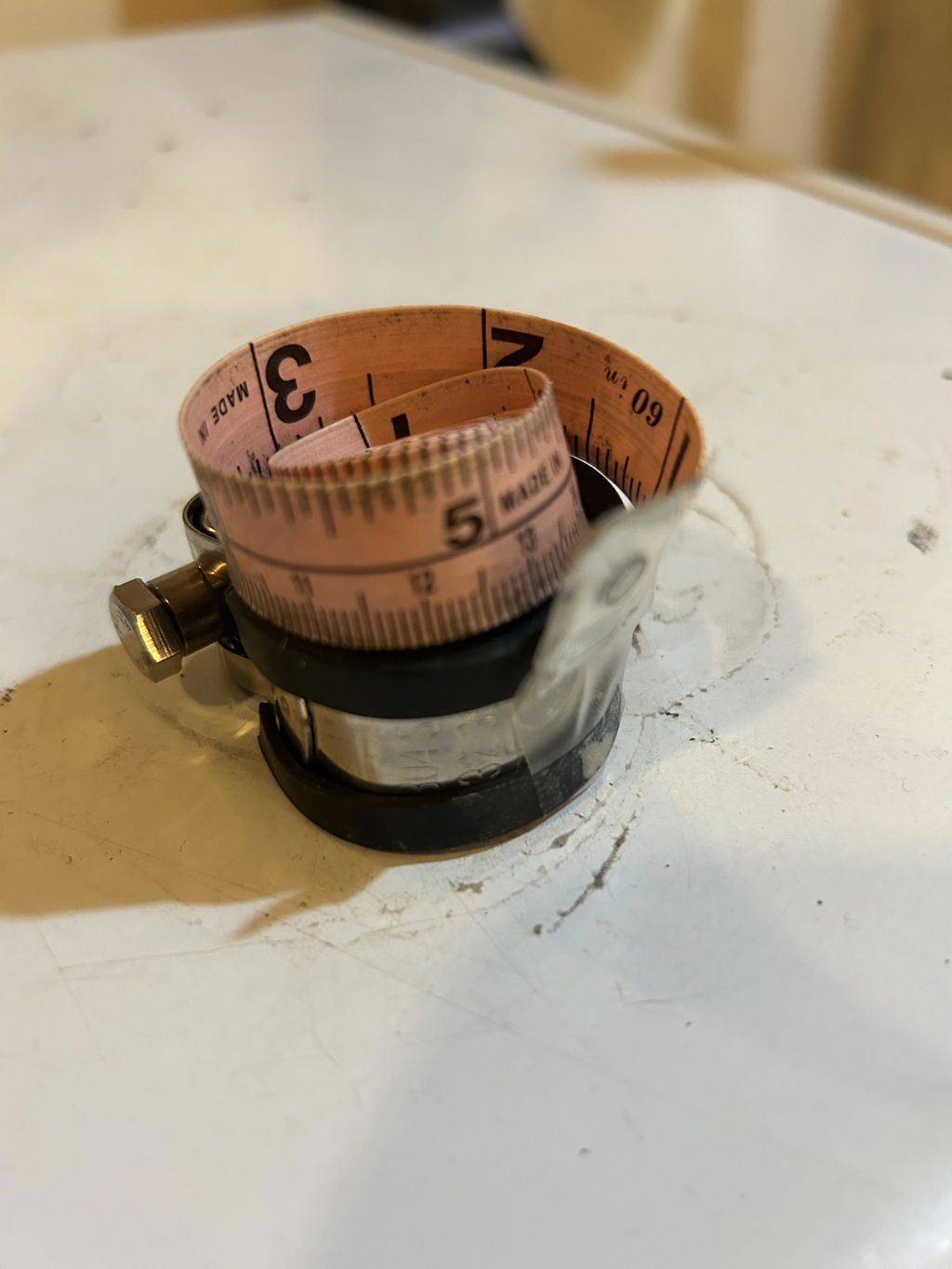
The chain is fine...but I ordered the wrong size. Nine links of the chain I ordered equals six of the size I wanted. My error...
How can I straighten out the springs? I can't use them coil uo as is.
Your payment information is processed securely. We do not store credit card details nor have access to your credit card information.
Get fitment advice & recommendations
When a worn or undersized ball causes vibration, noise, or premature bearing failure, finding the exact replacement diameter quickly is critical. Machinists, maintenance technicians, and serious DIYers who work with linear slides, angular-contact bearings, ball valves, and precision jigs need chrome steel bearing balls that hold tight tolerances without sourcing from a specialty distributor.
These chrome steel precision bearing balls are manufactured from through-hardened GCr15 (AISI 52100 equivalent) chrome steel. Available diameters span 1mm through 30mm — covering both metric steps (1mm, 1.2mm, 1.5mm, 2mm … 30mm) and fractional-inch equivalents (1.588mm / 1/16", 2.381mm / 3/32", 3.175mm / 1/8", 3.969mm / 5/32", 4.763mm / 3/16", 5.556mm / 7/32", 5.953mm / 15/64", and more). Quantity options range from 1 piece up to 1,000 pieces per order.
Typical applications include replacing balls in deep-groove radial bearings, thrust bearings, and ball-screw assemblies; seating in ball valves and check valves for fluid control; use as gauge balls and reference spheres in metrology fixtures; and as rolling elements in custom DIY linear-motion or robotics builds where off-the-shelf bearing units are too large.
| Material | GCr15 Chrome Steel (AISI 52100 equivalent) |
|---|---|
| Hardness | Typically 60–66 HRC (through-hardened) |
| Diameter Range | 1mm – 30mm (metric & fractional-inch equivalents) |
| Grade / Tolerance Class | G10–G25 (see variant options for exact grade) |
| Surface Finish | Bright polished; Ra ≤ 0.05 µm (small diameters) |
| Finish / Coating | Bare polished steel (no plating) |
| Quantity Options | 1 pc / 100 pcs / 500 pcs / 1,000 pcs |
| Weight per Ball | See variant options |
| Applicable Standards | ISO 3290 / ABMA Std 10 (ball bearing steel balls) |
| Recommended Lubrication | Grease (NLGI 2) or light machine oil |
Remove one ball from the bearing and measure it with a micrometer or digital caliper. Match that measurement to the diameter listed in the variant selector. For fractional-inch bearings (common in older or imperial-standard equipment), cross-reference the decimal equivalent — for example, 3/16" = 4.763mm, 1/4" = 6.35mm. If you are unsure, contact us with your bearing part number and we can advise.
Ball grade refers to the maximum allowable deviation from a perfect sphere. G10 balls have a roundness tolerance of 0.25 µm and are used in precision spindles and instrument bearings. G25 balls (0.625 µm tolerance) are suitable for standard radial bearings, ball valves, and most DIY or maintenance applications. For general replacement work, G25 is sufficient; for high-speed or high-precision spindles, specify G10 or better.
Yes — chrome steel balls run well against chrome steel, stainless steel (52100 or 440C), and most ceramic raceways. The hardness of GCr15 (60–66 HRC) is compatible with standard bearing-grade raceways. Avoid pairing with soft aluminum or brass raceways, as the steel balls will wear the softer material over time.
Chrome steel (GCr15 / 52100) is not stainless and will oxidize if left unprotected in humid environments. For storage, keep balls in a sealed container with a light coat of machine oil or VCI (vapor corrosion inhibitor) paper. In service, use NLGI 2 grease or a light mineral oil. If your application involves water or corrosive media, consider stainless steel (440C) balls instead.
Yes, for dry or lightly lubricated fluid-control applications with non-corrosive media (oils, fuels, compressed air). Confirm the seat diameter and ball diameter match your valve specification. For water, steam, or corrosive chemical service, stainless steel or PTFE-coated balls are a better choice to prevent rust contamination.
The minimum order is 1 piece for larger diameters (20mm and above) and 500 pieces for small diameters (1mm–6mm). Each variant is a single diameter — to order multiple diameters, add each size as a separate line item to your cart. Bulk packs of 100, 500, or 1,000 pieces are available for the most common sizes and offer a lower per-ball cost.
Bearings manufactured to ISO/DIN standards use metric balls; bearings to ABMA/ANSI standards often use inch-fraction balls. Check your bearing's part number prefix: SKF, FAG, NSK, NTN, and Koyo metric series use metric balls. Timken, RBC, and older American-made bearings frequently use inch-fraction balls. When in doubt, measure the existing ball with a micrometer — the decimal reading will match one of the listed diameters directly.