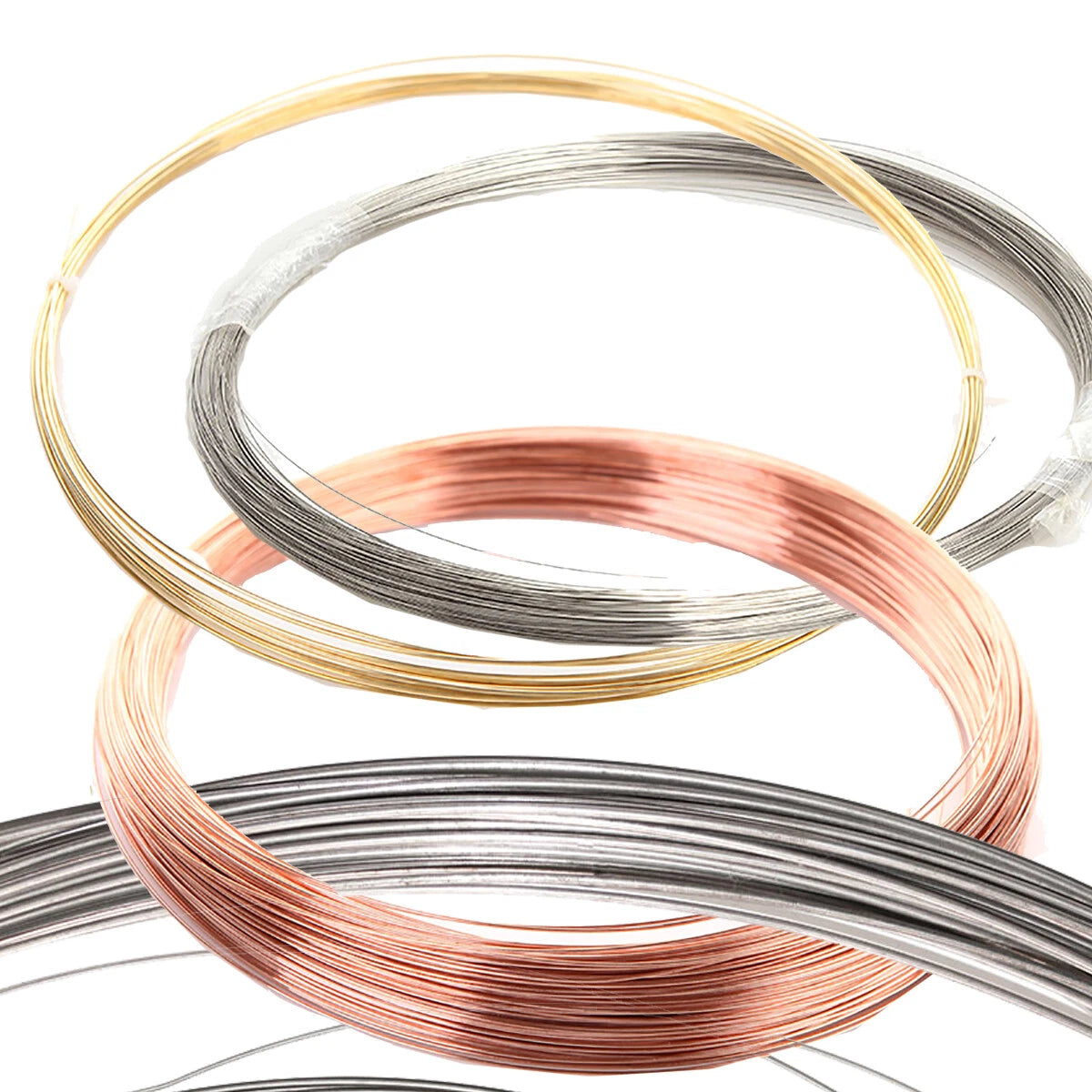
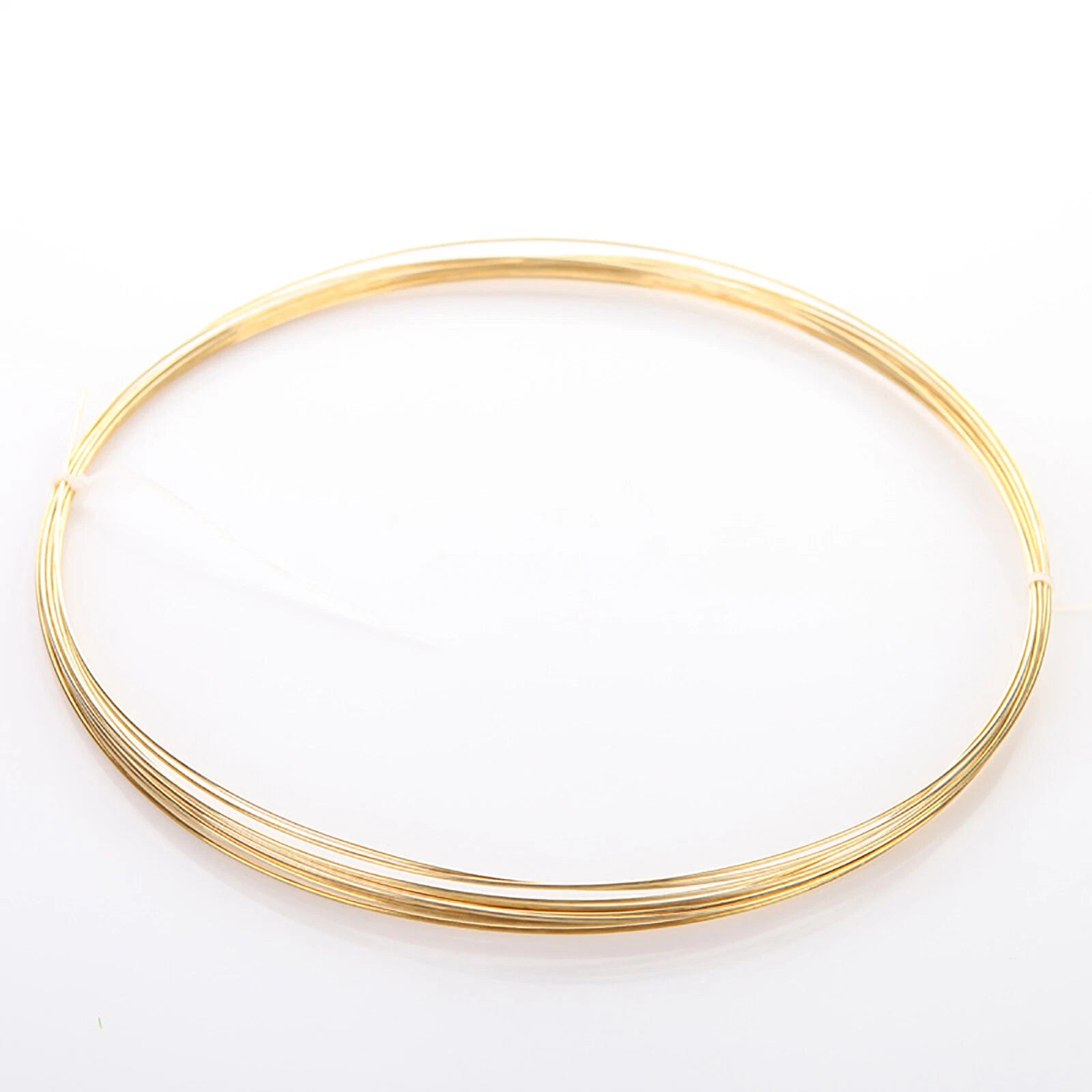
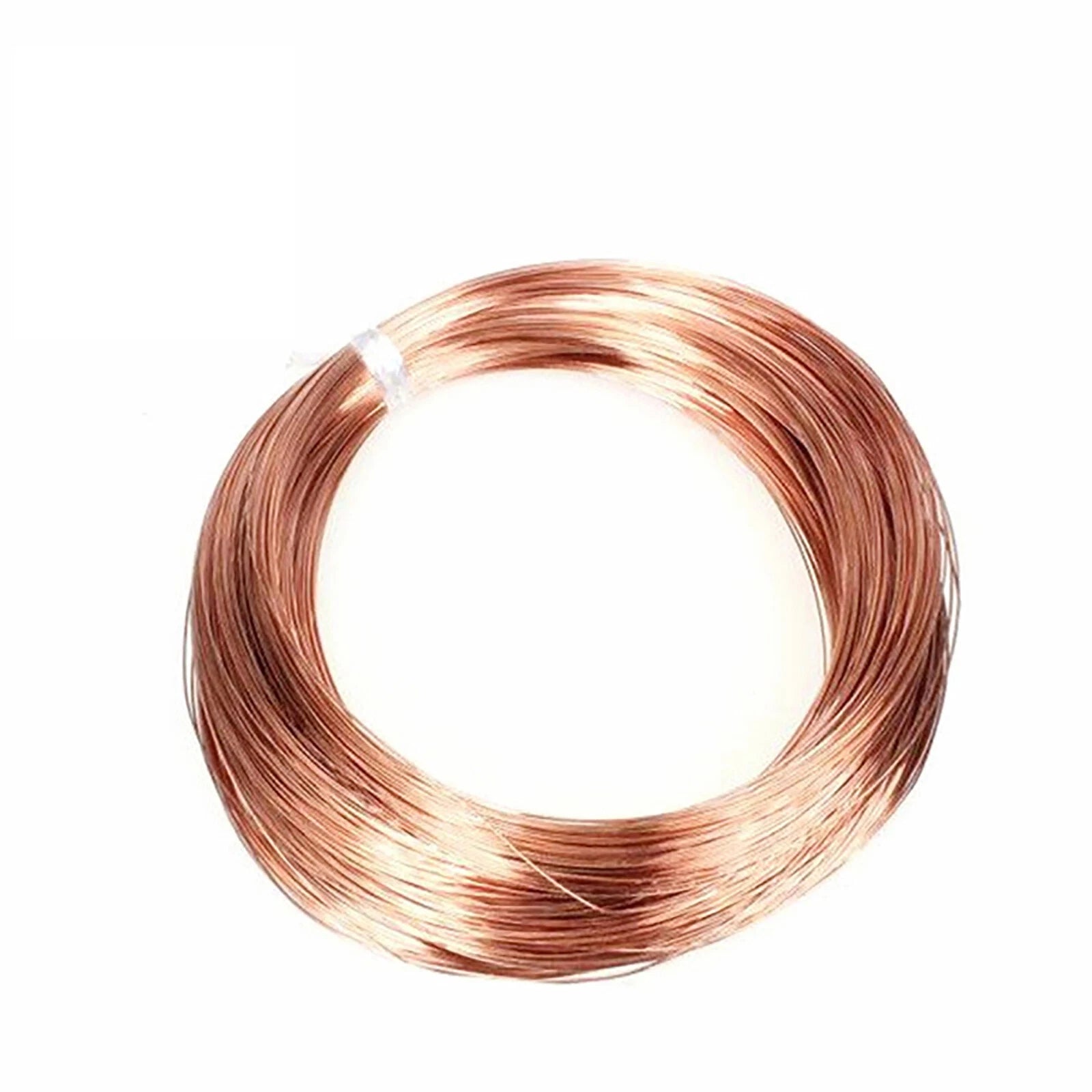
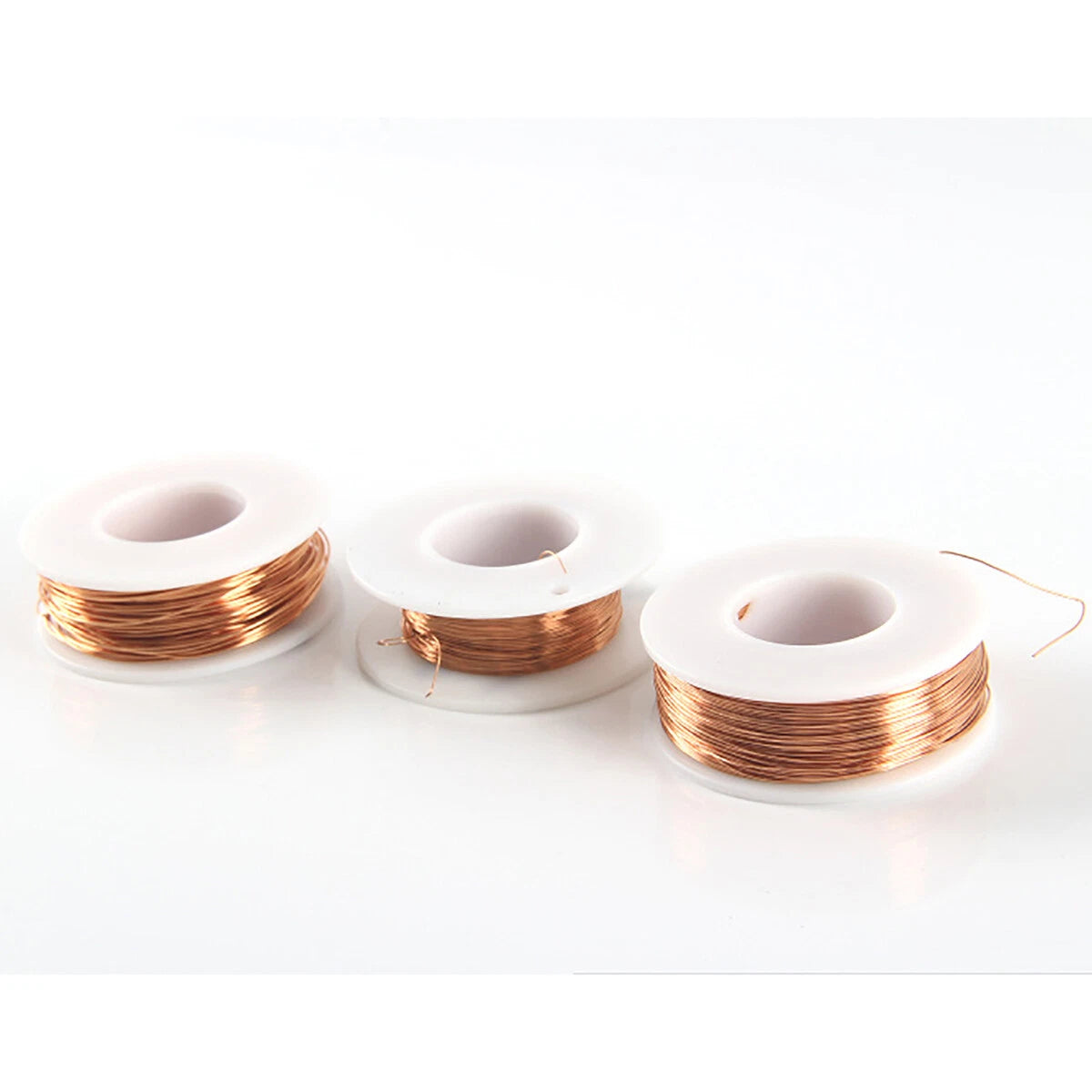
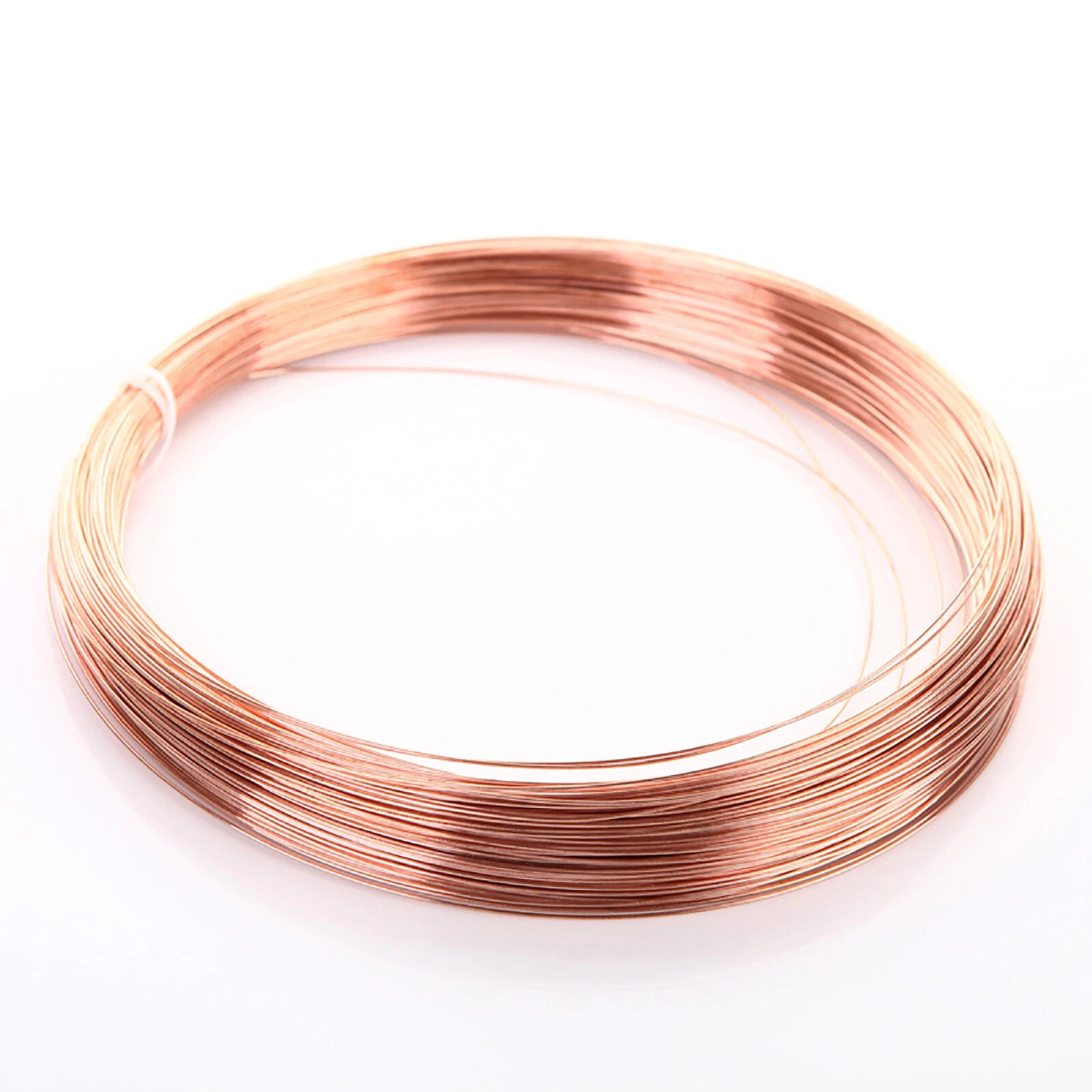
Copper Cable-Brass-304 Stainless Steel- Wires Round Solid Uncoated

No reviews

Price:
Sale price$8.51 USD
Stock:
In stock (500 units), ready to be shipped

Payment & Security

Ach Direct Debit Amazon American Express Apple Pay Bancontact Diners Club Discover Google Pay iDEAL Wero Mastercard PayPal Shop Pay USDC Visa

Your payment information is processed securely. We do not store credit card details nor have access to your credit card information.

Quantity Discount Promotion
🎯 BULK DISCOUNT: Buy More, Save More!
Buy 2 Items
5% OFF
Buy 4 Items
10% OFF
Buy 6 Items
15% OFF
Expert

DIY Expert Support

Get fitment advice & recommendations

Mon-Fri, 8:30AM-8PM
24-Hour Fast Ship
🚚
Arrives in 3-14 days
🌍
Global Reach
↩️
30-Day Returns
🌱 1 tree planted with every purchase

Description

Round Solid Wire in Copper, Brass, Stainless Steel & Titanium — Precision Stock for Every Project

When a repair, fabrication, or craft project demands reliable bare wire that won't let you down mid-job, choosing the wrong alloy or diameter wastes time and money. Hobbyists, makers, electricians, and small-shop fabricators who need consistent, uncoated round solid wire in exact diameters will find this listing covers the most-requested metal types in one place.

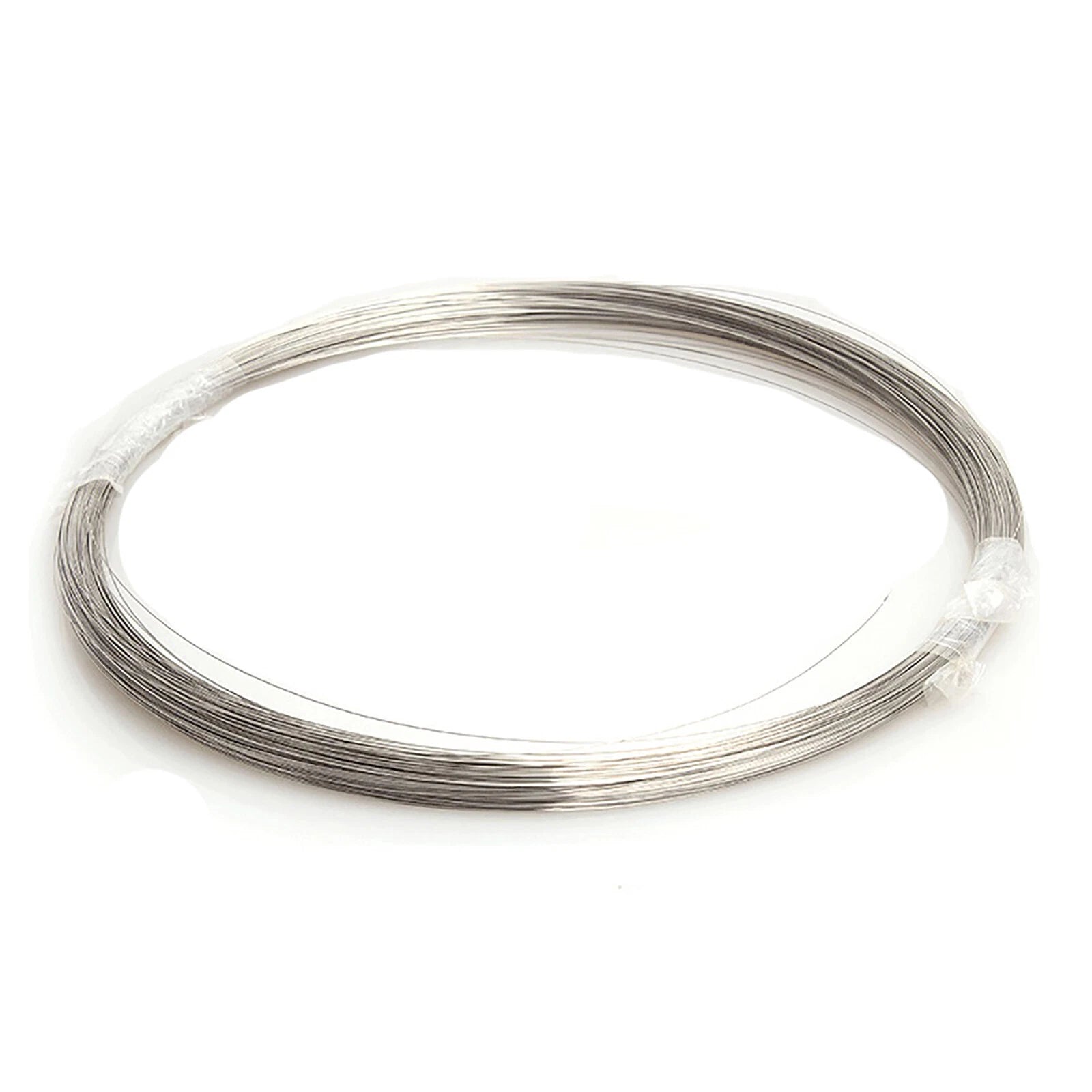
Each spool or cut length is a round, solid, uncoated wire available in four alloys — T2 copper, brass, 304 stainless steel, and TA2 titanium — across diameters ranging from Ø0.2 mm (~0.008 in) to Ø6 mm (~0.236 in) and lengths of 1 M or 100 M. All wire is supplied in its natural, bright finish with no additional coating or plating.

Typical applications include electrical grounding and bonding wire runs, jewelry-making and wire-wrapping frames, DIY sculpture armatures, small-diameter welding filler stock, corrosion-resistant marine tie wire, and general workshop binding or forming tasks where a specific alloy property — conductivity, hardness, or corrosion resistance — is required.

⚙️ Compatibility note: Wire diameter and alloy must match your application's mechanical and electrical requirements. Verify diameter tolerance with your tooling or connector spec before ordering.

✅ Key Features of These Round Solid Metal Wires

  • 🔩 Four alloy choices in one listing — T2 copper (high conductivity), brass (machinability + corrosion resistance), 304 stainless steel (strength + oxidation resistance), and TA2 titanium (lightweight + superior corrosion resistance) let you match the wire to the job without sourcing from multiple suppliers.
  • 📏 Wide diameter range — Ø0.2 mm through Ø6 mm covers fine jewelry wire, medium-gauge binding wire, and heavier structural or welding filler applications in a single product family.
  • 📦 Flexible length options — Choose 1 M for small repairs or sample testing, or 100 M for production runs and ongoing workshop stock, reducing per-meter cost on larger orders.
  • Uncoated bright finish — No lacquer, enamel, or plating means the wire is ready for soldering, welding, anodizing, or direct electrical contact without stripping or pre-treatment.
  • 🛡️ Solid cross-section — Unlike stranded cable, solid round wire holds its shape when bent, making it suitable for forming, sculpting, and applications where the wire must retain a set position.
  • Alloy-specific performance — T2 copper delivers electrical conductivity ≥99.9% IACS; 304 stainless resists rust in damp or mildly corrosive environments; brass offers easy cutting and threading; TA2 titanium provides a strength-to-weight ratio suited to aerospace and marine DIY builds.

📐 Technical Specifications — Round Solid Metal Wire

Product Form Round, solid, uncoated wire
Available Materials T2 Copper, Brass, 304 Stainless Steel, TA2 Titanium
Diameter Range Ø0.2 mm – Ø6 mm (approx. 0.008 in – 0.236 in)
Available Lengths 1 M / 100 M
Surface Finish Bright, uncoated (no plating or lacquer)
Copper Grade T2 (≥99.9% Cu)
Stainless Steel Grade 304 (18-8 Cr-Ni)
Titanium Grade TA2 (commercially pure, Grade 2 equivalent)
Brass Alloy See variant options
Tensile Strength See variant options
Hardness / Temper See variant options
Packaging Coil or straight length (see variant options)

❓ Frequently Asked Questions

Which diameter should I choose for jewelry wire-wrapping?

For most wire-wrapping and jewelry frames, Ø0.2 mm–Ø0.6 mm copper or brass wire provides enough flexibility to wrap tightly around stones or beads without snapping. Heavier structural frames typically use Ø1 mm–Ø2 mm. If you need a stiffer armature, step up to Ø4 mm–Ø5 mm.

Is 304 stainless steel wire strong enough for outdoor tie-wire applications?

Yes. 304 stainless steel contains 18% chromium and 8% nickel, giving it good resistance to atmospheric oxidation and mild moisture exposure. It is widely used for garden trellising, marine tie wire, and outdoor structural binding where carbon steel would rust. For highly saline or chloride-rich environments, 316 stainless would be a stronger choice, but 304 performs well in most outdoor DIY settings.

Can T2 copper wire be used for electrical grounding or bonding?

T2 copper has an electrical conductivity of ≥99.9% IACS, making it suitable for low-voltage grounding, bonding straps, and hobbyist electrical projects. For code-compliant residential or commercial wiring, always verify that the wire gauge meets the applicable electrical standard (e.g., NEC in the US) and that the installation is performed by a licensed electrician.

What is the difference between T2 copper and brass for my project?

T2 copper is nearly pure copper, offering the highest electrical and thermal conductivity of the four alloys listed. Brass is a copper-zinc alloy that is harder, more machinable, and more corrosion-resistant than pure copper, but has lower conductivity. Choose copper for electrical or heat-transfer applications; choose brass when you need a wire that machines cleanly, threads well, or resists tarnish in decorative applications.

Why choose TA2 titanium wire over stainless steel?

TA2 titanium (Grade 2 commercially pure titanium) is roughly 45% lighter than 304 stainless steel at comparable diameters, while offering excellent corrosion resistance — including resistance to saltwater and many acids. It is the preferred choice for weight-sensitive builds, marine environments, and applications where biocompatibility matters (e.g., body jewelry or medical-adjacent DIY). Stainless steel is generally more cost-effective for standard workshop use.

How do I select the right length — 1 M or 100 M?

The 1 M option is ideal for single repairs, prototyping, or testing a new diameter before committing to a larger quantity. The 100 M option suits ongoing production, workshop stock replenishment, or projects requiring continuous runs without joins. If you are unsure how much you need, calculate your total run length and add 10–15% for waste and test cuts.

Is the wire supplied straight or on a coil?

Thinner diameters (typically Ø0.2 mm–Ø2 mm) are generally supplied on a coil or spool for compact storage. Heavier diameters may be supplied as straight lengths. Please refer to the variant description or contact us to confirm the packaging format for your specific diameter and length combination.

🛒 Select your diameter, material, and length above, then add to cart.

You may also like

Recently viewed